Fallen Beauty
by Erika Robuck
On This Page
Description
"Upstate New York, 1928. Laura Kelley and the man she loves sneak away from their judgmental town to attend a performance of the scandalous Ziegfeld Follies. But the dark consequences of their night of daring and delight reach far into the future.... That same evening, Bohemian poet Edna St. Vincent Millay and her indulgent husband hold a wild party in their remote mountain estate, hoping to inspire her muse. Millay declares her wish for a new lover who will take her to unparalleled heights show more of passion and poetry, but for the first time, the man who responds will not bend completely to her will.... Two years later, Laura, an unwed seamstress struggling to support her daughter, and Millay, a woman fighting the passage of time, work together secretly to create costumes for Millay's next grand tour. As their complex, often uneasy friendship develops amid growing local condemnation, each woman is forced to confront what it means to be a fallen woman...and to decide for herself what price she is willing to pay to live a full life"-- show lessTags
Recommendations


Member Reviews
What could be more fitting on Pulitzer Prize winning poet Edna St. Vincent Millay's 122nd birthday than a book about the poet herself and the young woman who so understood the heart of Millay's poetry that she created the exquisite costumes that Millay wore on her readings around the country.
It's 1928, the middle of Prohibition, the Roaring Twenties and the era of flappers, a seemingly wild and giddy time where licentiousness laughs and thumbs its nose against the strict convention and staid morals of much of the era. Laura Kelley is just nineteen. She works in the dress shop that her parents started in the sleepy little town of Austerlitz, NY. She's generally a good daughter, but she has one secret. She's in love with a man she cannot show more have. And as the novel opens, she sneaks out of the home she shares with her widower father and her younger sister to meet this man and to see the scandalous Ziegfeld Follies. The evening is magical and Laura is swept up in it. But it has repercussions that last forever.
Edna St. Vincent Millay, who preferred to be called Vincent, is living nearby to Austerlitz at Steepletop House. Neither she nor her husband cares to hide the parties and debauchery that take place there from the judgmental town, bringing friends and lovers to their mountaintop retreat as often as the muse requires. Vincent is in search of a new lover who will inspire her words and enflame her body. She finds such a lover in a young poet named George Dillon but he is neither as compliant nor as accommodating to the famous poet as her previous lovers have been.
A couple of years further on in the midst of the Great Depression, Laura is struggling to support her daughter in the dress shop and is still keeping the baby's father's name secret. She has retreated from the town as much as the town has branded her for her indiscretion. Vincent glimpses Laura on the day that her sister marries. She is standing to the side of the bride and groom with a lonely and melancholy expression on her face and she captures the imagination of the poet, who is still struggling with her lover's intransigence. Eventually introduced to Laura's sister Marie and her husband, Everette, a rising politician, Millay invites them to Steepletop to one of her famous parties where she intentionally entices Everette into her bed, an invitation he does not refuse. And with this action, she forges a bond between herself and Laura, one built on anger and loyalty but also ultimately desperation and creative desire.
Robuck has drawn Millay as a sensuous, extravagant, demanding woman. She lives a bohemian life without care for the mores of society but she feels deeply and is easily wounded. She loves with her whole heart but can be unthinking and capriciously cruel. She is a study in opposites. Laura, on the other hand, is a mostly conventional woman whose only transgression ends up defining her. She dreams of more but is bound first by the opinion of the town and then by her loyalty and love for her family, so she pushes that dream down under the more prosaic need to feed and clothe herself and her daughter. Her capacity for love is boundless but she has been damaged by her secret lover's silent disavowal of her and their daughter, losing the ability to trust openly and learning to fear the withholding of forgiveness.
Robuck has taken two very different, and yet in some ways similar, "fallen beauties" whose lives intersected in interesting ways and contrasted them with each other. Even the structure of the novel reflects that contrast, narrated in the first person first by Laura and then by Vincent in each chapter. This gives the reader insight into what drives each character and how they view not only their own lives but those of the people around them. And it showcases both the cost of convention and the cost of creative freedom. Robuck has done a good job of describing and detailing what it cost women in particular to live in the 1920s and 30s. She's created a surprisingly sympathetic portrait of Millay, who despite her oftentimes selfish and unthinking excesses flouting society's tight rules, was actually a fragile and emotionally insecure genius who craved love and devotion. Although each woman's back story was necessary, especially to show Laura's fierce determination to avoid Millay and then extreme reluctance to do as bidden despite her desperate financial straits, in terms of narrative pace, it took too long for the women to meet. Once they did though, the pacing picked up and although the reader knew that Laura must eventually ignore her scruples and make the luscious creations asked of her, the tension of the interactions between Laura and Vincent and how their relationship would eventually play out was compelling. A tale of creativity, redemption, and convention, readers intrigued by Millay and her scandalous lifestyle as well as those who are fascinated by the cost that society extracts on those who ignore its rules will quite enjoy this historical fiction. show less
It's 1928, the middle of Prohibition, the Roaring Twenties and the era of flappers, a seemingly wild and giddy time where licentiousness laughs and thumbs its nose against the strict convention and staid morals of much of the era. Laura Kelley is just nineteen. She works in the dress shop that her parents started in the sleepy little town of Austerlitz, NY. She's generally a good daughter, but she has one secret. She's in love with a man she cannot show more have. And as the novel opens, she sneaks out of the home she shares with her widower father and her younger sister to meet this man and to see the scandalous Ziegfeld Follies. The evening is magical and Laura is swept up in it. But it has repercussions that last forever.
Edna St. Vincent Millay, who preferred to be called Vincent, is living nearby to Austerlitz at Steepletop House. Neither she nor her husband cares to hide the parties and debauchery that take place there from the judgmental town, bringing friends and lovers to their mountaintop retreat as often as the muse requires. Vincent is in search of a new lover who will inspire her words and enflame her body. She finds such a lover in a young poet named George Dillon but he is neither as compliant nor as accommodating to the famous poet as her previous lovers have been.
A couple of years further on in the midst of the Great Depression, Laura is struggling to support her daughter in the dress shop and is still keeping the baby's father's name secret. She has retreated from the town as much as the town has branded her for her indiscretion. Vincent glimpses Laura on the day that her sister marries. She is standing to the side of the bride and groom with a lonely and melancholy expression on her face and she captures the imagination of the poet, who is still struggling with her lover's intransigence. Eventually introduced to Laura's sister Marie and her husband, Everette, a rising politician, Millay invites them to Steepletop to one of her famous parties where she intentionally entices Everette into her bed, an invitation he does not refuse. And with this action, she forges a bond between herself and Laura, one built on anger and loyalty but also ultimately desperation and creative desire.
Robuck has drawn Millay as a sensuous, extravagant, demanding woman. She lives a bohemian life without care for the mores of society but she feels deeply and is easily wounded. She loves with her whole heart but can be unthinking and capriciously cruel. She is a study in opposites. Laura, on the other hand, is a mostly conventional woman whose only transgression ends up defining her. She dreams of more but is bound first by the opinion of the town and then by her loyalty and love for her family, so she pushes that dream down under the more prosaic need to feed and clothe herself and her daughter. Her capacity for love is boundless but she has been damaged by her secret lover's silent disavowal of her and their daughter, losing the ability to trust openly and learning to fear the withholding of forgiveness.
Robuck has taken two very different, and yet in some ways similar, "fallen beauties" whose lives intersected in interesting ways and contrasted them with each other. Even the structure of the novel reflects that contrast, narrated in the first person first by Laura and then by Vincent in each chapter. This gives the reader insight into what drives each character and how they view not only their own lives but those of the people around them. And it showcases both the cost of convention and the cost of creative freedom. Robuck has done a good job of describing and detailing what it cost women in particular to live in the 1920s and 30s. She's created a surprisingly sympathetic portrait of Millay, who despite her oftentimes selfish and unthinking excesses flouting society's tight rules, was actually a fragile and emotionally insecure genius who craved love and devotion. Although each woman's back story was necessary, especially to show Laura's fierce determination to avoid Millay and then extreme reluctance to do as bidden despite her desperate financial straits, in terms of narrative pace, it took too long for the women to meet. Once they did though, the pacing picked up and although the reader knew that Laura must eventually ignore her scruples and make the luscious creations asked of her, the tension of the interactions between Laura and Vincent and how their relationship would eventually play out was compelling. A tale of creativity, redemption, and convention, readers intrigued by Millay and her scandalous lifestyle as well as those who are fascinated by the cost that society extracts on those who ignore its rules will quite enjoy this historical fiction. show less
I love Edna St. Vincent Millay’s poems because they are simply worded and very direct. When I saw this book offered for selection on Amazon Vine I snatched it up quickly. All that I knew about the poet is that she was an American poetess.
Fallen Beauty by Erika Robuck is a painful and beautiful look at Edna’s life with historical facts with an added imagined friendship between her and a town seamstress. The invention of the seamstress, Laura Kelley, provides a way of comparing Edna’s psychological struggles to those of single mother raising her child in the 1928 to 1937 in upstate New York. Edna seems like a lost soul who craves excitement, beauty and novelty while her poor counterpart wants acceptance, forgiveness and family. It show more seems impossible for any friendship between them but there seems to be recognition by both of them about the other. The seamstress had made one mistake that made her a fallen beauty. She ignored her father’s rules and slipped out for a night of fun and excitement with a man she could never marry. She slipped on a beautiful golden gown that she made herself and a three stranded pearl necklace and along with newly bobbed hair. From that joyful and daring evening she became pregnant and thought that she would pay for her error the rest of her life.
On the same night Edna St. Vincent Millay threw a party with wild people, plenty of drink and hopes of finding a new lover. She loved extravagant clothes, surrounding and exciting people. When I was reading about Edna, I felt very uncomfortable, mostly at the beginning of the book but better after she met Laura. After that Edna seems to be not as selfish and egocentric as I had first thought. With Laura, I felt a down to earth quality and a strong love for her sister and her daughter, Grace. She was burdened by her sin but there was hope in her soul.
The author researched for the facts of Edna’s life thoroughly and even visited Millay's home, Steepltop. Her feelings about her experience at Steepletop are reflected clearly in this story. It is an emotional journey to read this book. The only thing that I didn’t like was that it took a smidge too long for the two to meet.
I recommend this book to all lovers of Historical Fiction and those curious about Edna St. Vincent Millay’s life. show less
Fallen Beauty by Erika Robuck is a painful and beautiful look at Edna’s life with historical facts with an added imagined friendship between her and a town seamstress. The invention of the seamstress, Laura Kelley, provides a way of comparing Edna’s psychological struggles to those of single mother raising her child in the 1928 to 1937 in upstate New York. Edna seems like a lost soul who craves excitement, beauty and novelty while her poor counterpart wants acceptance, forgiveness and family. It show more seems impossible for any friendship between them but there seems to be recognition by both of them about the other. The seamstress had made one mistake that made her a fallen beauty. She ignored her father’s rules and slipped out for a night of fun and excitement with a man she could never marry. She slipped on a beautiful golden gown that she made herself and a three stranded pearl necklace and along with newly bobbed hair. From that joyful and daring evening she became pregnant and thought that she would pay for her error the rest of her life.
On the same night Edna St. Vincent Millay threw a party with wild people, plenty of drink and hopes of finding a new lover. She loved extravagant clothes, surrounding and exciting people. When I was reading about Edna, I felt very uncomfortable, mostly at the beginning of the book but better after she met Laura. After that Edna seems to be not as selfish and egocentric as I had first thought. With Laura, I felt a down to earth quality and a strong love for her sister and her daughter, Grace. She was burdened by her sin but there was hope in her soul.
The author researched for the facts of Edna’s life thoroughly and even visited Millay's home, Steepltop. Her feelings about her experience at Steepletop are reflected clearly in this story. It is an emotional journey to read this book. The only thing that I didn’t like was that it took a smidge too long for the two to meet.
I recommend this book to all lovers of Historical Fiction and those curious about Edna St. Vincent Millay’s life. show less
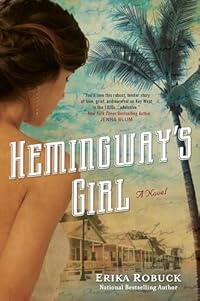
Erika Robuck has written several novels pairing famous authors, Hemingway, Fitzgerald, and now Millay, with ordinary people. Except ordinary is hardly a word to describe them. Because these other people are very strong characters as well. While I liked Hemingway's Girl and Call Me Zelda, Fallen Beauty is by far my favorite.
I don't know much about Edna St. Vincent Millay, but this book has definitely painted a good picture of her. Millay was far ahead of her time. In today's day and age, we wouldn't think much about her lifestyle, but in 1920 she was quite a character. She was not afraid to live out loud. In the book Millay has almost an obsessive behavior about wanting to get close to the main character, Laura Kelley. She believes show more Laura will be the muse to her writing.
Laura grew up in a small town, where everyone seemed to live a perfect life on the outside. She is shunned by most of the town when she has a baby out of wedlock. My heart broke for this character. She suffers a great deal in this book, but she also finds her strength. And I've never so badly wanted to punch fictional characters before. Even in the end, Robuck gives you an understanding of why some of the characters act that way, and you can't help but pity them.
Fallen Beauty evoked an array of emotions from me. I was hooked from the first page to the last. I also loved the time period in which this book took place. There is something about the glitz and glamour of the twenties that draws you in. This is a great read, and I can't wait to read Erika Robuck's next book!
Read more at http://www.2readornot2read.com/2014/02/fallen-beauty-blog-tour-review-and.html#g... show less
I don't know much about Edna St. Vincent Millay, but this book has definitely painted a good picture of her. Millay was far ahead of her time. In today's day and age, we wouldn't think much about her lifestyle, but in 1920 she was quite a character. She was not afraid to live out loud. In the book Millay has almost an obsessive behavior about wanting to get close to the main character, Laura Kelley. She believes show more Laura will be the muse to her writing.
Laura grew up in a small town, where everyone seemed to live a perfect life on the outside. She is shunned by most of the town when she has a baby out of wedlock. My heart broke for this character. She suffers a great deal in this book, but she also finds her strength. And I've never so badly wanted to punch fictional characters before. Even in the end, Robuck gives you an understanding of why some of the characters act that way, and you can't help but pity them.
Fallen Beauty evoked an array of emotions from me. I was hooked from the first page to the last. I also loved the time period in which this book took place. There is something about the glitz and glamour of the twenties that draws you in. This is a great read, and I can't wait to read Erika Robuck's next book!
Read more at http://www.2readornot2read.com/2014/02/fallen-beauty-blog-tour-review-and.html#g... show less
In Erika Robuck's tale, you will find passion, intrigue, romance, and feel a sizzling energy during a very difficult time in two women's lives. First we are introduced to Laura. She is the daughter of a dress-maker who suddenly dies and Laura must find a way to take over the business. In the mean time, her sister is planning to marry an upcoming political figure and Laura has just found out she is pregnant with her forbidden lover's child. The other woman in the story goes by many names including Vincent, but is really Edna St. Vincent Millay, the famous poet. She and her husband live a "progressive" life in the mountains near a small village in upstate New York. They have lots of wild parties that include sex and alcohol. The people of show more the community are horrified to have such debauchery take place so near their homes and have shunned Millay from their lives as well as anyone who takes part in the wild parties.
The story begins in 1928, a time when family loyalty, responsibility and respect are the driving forces behind everyone's choices. When Laura falls in love with someone who is not available, their one night of passion leads to a child that she is forced to raise on her own, much to the glaring eyes of the people in her community. She watches as her shop bell no longer rings and orders stop coming in. Desperate for a way to pay her bills, she agrees to make costumes for the flagrant poet. Even though she is already shunned by her community and friends, Laura must take this risk to be able to keep her shop and take care of her daughter.
Each chapter we are told the story from both Laura's and Vincent's perspective. I was mainly interested in Laura's story. She was a women that I would have chosen as a friend. She had a deep care and concern for others and was passionate about her clothing designs. Vincent on the other hand, was selfish, dramatic, and narcissistic. I found her whining to be nauseating and annoying. In her world, there are no rules and she is in charge. She has no care of what others think and was extremely full of herself. I was glad her parts of the book were short. I am not a huge poetry fan, but for those that are, they will appreciate that Millay's poems are sprinkled throughout the story.
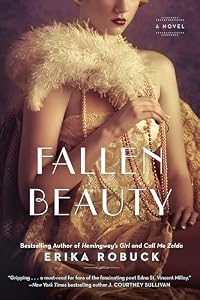
When I was approached to review this book, the first thing that drew me to it was the cover. I have always felt that the cover truly is the first part in the sale of a book and this one definitely catches the eye and will make you pick it up. It is just gorgeous. I love the title, FALLEN BEAUTY as it tells so much about both Laura and Millay. Even though it was used to describe Laura in the book, it can equally be used to paint a picture of Millay's life throughout the story. As we travel through ten years in these two women's lives, we are treated to heartache and love, growth and change. How did the two women fare by the end of the story? You will have to read to find out.
My favorite line from the book actually came from Vincent's story. I read an uncorrected proof and can't state for sure that this part of the book made the final cut, but I hope it did.
"If my life was a quilt, there would be squares I'd want torn out."
Don't we all wish we could recreate past incidents in our lives? Those blocks of a quilt tell our story and no matter the pain, the blocks must remain.
In the beginning, I wasn't sure I liked the book, but it grew on me as I turned the pages. I was reading it fast at first because I had a deadline, but as I neared the last third of the book, I was turning the pages more to find out what would happen. If you can get past the sordid life of Edna St. Vincent Millay, you will find much about this novel to love. show less
The story begins in 1928, a time when family loyalty, responsibility and respect are the driving forces behind everyone's choices. When Laura falls in love with someone who is not available, their one night of passion leads to a child that she is forced to raise on her own, much to the glaring eyes of the people in her community. She watches as her shop bell no longer rings and orders stop coming in. Desperate for a way to pay her bills, she agrees to make costumes for the flagrant poet. Even though she is already shunned by her community and friends, Laura must take this risk to be able to keep her shop and take care of her daughter.
Each chapter we are told the story from both Laura's and Vincent's perspective. I was mainly interested in Laura's story. She was a women that I would have chosen as a friend. She had a deep care and concern for others and was passionate about her clothing designs. Vincent on the other hand, was selfish, dramatic, and narcissistic. I found her whining to be nauseating and annoying. In her world, there are no rules and she is in charge. She has no care of what others think and was extremely full of herself. I was glad her parts of the book were short. I am not a huge poetry fan, but for those that are, they will appreciate that Millay's poems are sprinkled throughout the story.
When I was approached to review this book, the first thing that drew me to it was the cover. I have always felt that the cover truly is the first part in the sale of a book and this one definitely catches the eye and will make you pick it up. It is just gorgeous. I love the title, FALLEN BEAUTY as it tells so much about both Laura and Millay. Even though it was used to describe Laura in the book, it can equally be used to paint a picture of Millay's life throughout the story. As we travel through ten years in these two women's lives, we are treated to heartache and love, growth and change. How did the two women fare by the end of the story? You will have to read to find out.
My favorite line from the book actually came from Vincent's story. I read an uncorrected proof and can't state for sure that this part of the book made the final cut, but I hope it did.
"If my life was a quilt, there would be squares I'd want torn out."
Don't we all wish we could recreate past incidents in our lives? Those blocks of a quilt tell our story and no matter the pain, the blocks must remain.
In the beginning, I wasn't sure I liked the book, but it grew on me as I turned the pages. I was reading it fast at first because I had a deadline, but as I neared the last third of the book, I was turning the pages more to find out what would happen. If you can get past the sordid life of Edna St. Vincent Millay, you will find much about this novel to love. show less
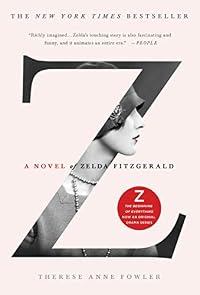
Some time ago I read Hemingway's Girl by Erika Robuck and loved it so much I was anxious to read this one. This is her third book featuring a famous person from the Roaring Twenties; the other was about Zelda Fitzgerald and I haven't had a chance to read that one yet.
As in the others, Robuck creates a fictional woman who becomes involved (or ensnared) in the life of a real eccentric artistic type. In this one it is Edna St. Vincent Millay who can hardly be overdone in eccentricity. Our fictional heroine is Laura Kelley, a small town seamstress who has an illegitimate child. The little girl, named Grace, is adorable and a delight for her mother, but both are shunned by the holier-than-thou leading citizens of the town. The father isn't show more named but we know he still lives in the town, and I had the wrong man in mind until near the end of the book.
Out in the country nearby is a large house where Millay and her husband live. The townspeople gossip tirelessly about the wild drunken parties that go on there, especially since they know men who have been seduced by the poet. Apparently Millay and her husband have an "open" marriage, anathema to the rest of the world in that part of upstate New York.
Laura's only friend is her sister but that relationship is strained as well. When no one will bring work to Laura and her electricity is shut off for nonpayment of the bills, Millay asks her to make an at home gown for her. She pays ahead of time and Laura relishes working with rich fabrics, but she is afraid to let anyone know that she is sewing for the "witch." More orders follow for Laura's own designs. Such rewarding work.
Although I loved the character of Laura and enjoyed the up-tight townspeople, the real reason to read the book is this look at Edna St. Vincent Millay. I had read something about her before so I knew what kind of person she was, but I believe fiction is the way to really get to know her and her lifestyle. She was so self-centered it's hard to believe, but that's the way it was.
Highly recommended
Source: Amazon Vine show less
As in the others, Robuck creates a fictional woman who becomes involved (or ensnared) in the life of a real eccentric artistic type. In this one it is Edna St. Vincent Millay who can hardly be overdone in eccentricity. Our fictional heroine is Laura Kelley, a small town seamstress who has an illegitimate child. The little girl, named Grace, is adorable and a delight for her mother, but both are shunned by the holier-than-thou leading citizens of the town. The father isn't show more named but we know he still lives in the town, and I had the wrong man in mind until near the end of the book.
Out in the country nearby is a large house where Millay and her husband live. The townspeople gossip tirelessly about the wild drunken parties that go on there, especially since they know men who have been seduced by the poet. Apparently Millay and her husband have an "open" marriage, anathema to the rest of the world in that part of upstate New York.
Laura's only friend is her sister but that relationship is strained as well. When no one will bring work to Laura and her electricity is shut off for nonpayment of the bills, Millay asks her to make an at home gown for her. She pays ahead of time and Laura relishes working with rich fabrics, but she is afraid to let anyone know that she is sewing for the "witch." More orders follow for Laura's own designs. Such rewarding work.
Although I loved the character of Laura and enjoyed the up-tight townspeople, the real reason to read the book is this look at Edna St. Vincent Millay. I had read something about her before so I knew what kind of person she was, but I believe fiction is the way to really get to know her and her lifestyle. She was so self-centered it's hard to believe, but that's the way it was.
Highly recommended
Source: Amazon Vine show less
I have to say that I really liked this book. It's the first that I've read by Erika Robuck but it won't be my last. She spins a wonderful tale that revolves around an unwed mother in an unforgiving town and the literary powerhouse Edna St. Vincent Millay. Laura is a seamstress who creates art in her clothing designs. Millay is in desperate need of a new muse. The result is memorable and quite satisfying. I will be recommending this book to anyone who loves historical fiction.
Enjoyed this historical novel set in in the 1920's. Good story of survival in a small town during this transition in ideas and morals in America. Liked how the author wrapped everything up in the end. Quite surprised at the portrayal of Edna St. Vincent Millay. Need to look things up about her!!!
Members
- Recently Added By
Author Information

10+ Works 1,444 Members
Erika Robuck self-published her first novel Receive Me Falling. Her other novels include Hemingway's Girl, Call Me Zelda, and Fallen Beauty. She is a contributor to Grand Central, a short story anthology set at Grand Central Terminal in New York, following World War II. She also writes about and reviews historical fiction at her blog, Muse, and is show more a contributor to fiction blog, Writer Unboxed. (Bowker Author Biography) show less
Common Knowledge
- Original publication date
- 2014
- People/Characters
- Edna St. Vincent Millay
Classifications
Statistics
- Members
- 165
- Popularity
- 197,814
- Reviews
- 14
- Rating
- (3.75)
- Languages
- English
- Media
- Paper, Ebook
- ISBNs
- 3
- ASINs
- 1