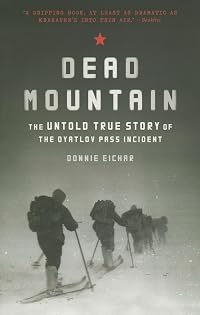
Dead Mountain: The Untold True Story of the Dyatlov Pass Incident
by Donnie Eichar, J. C. Gabel
On This Page
Description
A New York Times and Wall Street Journal bestseller — What happened that night on Dead Mountain? The mystery of Dead Mountain: In February 1959, a group of nine experienced hikers in the Russian Ural Mountains died mysteriously on an elevation known as Dead Mountain. Eerie aspects of the incident—unexplained violent injuries, signs that they cut open and fled the tent without proper clothing or shoes, a strange final photograph taken by one of the hikers, and elevated levels of radiation show more found on some of their clothes—have led to decades of speculation over what really happened.As gripping and bizarre as Hunt for the Skin Walker: This New York Times bestseller, Dead Mountain: The Untold True Story of the Dyatlov Pass Incident, is a gripping work of literary nonfiction that delves into the mystery of Dead Mountain through unprecedented access to the hikers' own journals and photographs, rarely seen government records, dozens of interviews, and the author's retracing of the hikers' fateful journey in the Russian winter.
You'll love this real-life tale: Dead Mountain is a fascinating portrait of young adventurers in the Soviet era, and a skillful interweaving of the hikers' narrative, the investigators' efforts, and the author's investigations. Here for the first time is the real story of what happened that night on Dead Mountain.
. show less
Tags
Recommendations



































Member Recommendations
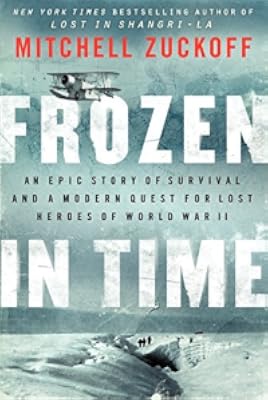
sweetbug Both stories of mountaineering adventures gone terribly, terribly wrong.
Member Reviews
The Dyatlov Pass Incident is one of those weird fortean moments in history. In 1959, nine young ski-hikers died in the frozen wilderness of the north Ural mountains. They were all experienced in the outdoors, and their bodies were found hundreds of meters from their tent, bootless, without their outer layers. The tent had been slashed from the inside, but was mostly intact. An investigation was inconclusive, an "outside compelling force" had caused the deaths. Into the vacuum flooded speculation: natural phenomenon like wind or avalanche didn't match the evidence at the site. Another group could have been responsible, either local Mani hunters or escape convicts, but there were no humans within 50 km of the place where the hikers died. show more Things got weirder: super-weapon tests, military experiments, UFOs and yetis.
Eichar is an American documentary film-maker who became fascinating by the incident, and out of pocket, funded a expedition back to where they died. In this book, he reconstruct the last journey of the Dyatlov Pass group, the innocent camaraderie of Soviet tourists in 1959 (in the USSR, the word is more like adventurer than fanny packs and buses). Eichar does a decent job reconstructing this, but I can't shake the feeling that he's not the right person. While he has a ear for narrative, and a rigorous skepticism, he doesn't speak Russian and he's not an outdoorsman, and I feel like there are dimensions missing.
Eichar does have an explanation, and it's not aliens. An atmospheric phenomenon called Kármán vortex street sent snow devils whirling off a nearby peak. The vortexes thrummed in infrasound, ultralow vibrations associated with psychological unease, and even extreme distress. Their nerves flaring for no perceptible reason, the Dyatlov group broke under the strain and ran into the night, where they met their deaths from cold and falling.
Ultimately, we'll never know what really happened, but Eichar makes a solid guess. show less
Eichar is an American documentary film-maker who became fascinating by the incident, and out of pocket, funded a expedition back to where they died. In this book, he reconstruct the last journey of the Dyatlov Pass group, the innocent camaraderie of Soviet tourists in 1959 (in the USSR, the word is more like adventurer than fanny packs and buses). Eichar does a decent job reconstructing this, but I can't shake the feeling that he's not the right person. While he has a ear for narrative, and a rigorous skepticism, he doesn't speak Russian and he's not an outdoorsman, and I feel like there are dimensions missing.
Eichar does have an explanation, and it's not aliens. An atmospheric phenomenon called Kármán vortex street sent snow devils whirling off a nearby peak. The vortexes thrummed in infrasound, ultralow vibrations associated with psychological unease, and even extreme distress. Their nerves flaring for no perceptible reason, the Dyatlov group broke under the strain and ran into the night, where they met their deaths from cold and falling.
Ultimately, we'll never know what really happened, but Eichar makes a solid guess. show less
I first heard about the Dyatlov Pass Incident a few years ago, and since then I’ve been fascinated by this unsolved Soviet-era mystery.
The backstory: In January 1959, a group of 10 hikers (eight men & two women), mostly current and former students from Ural Polytechnical Institute, set out on a skiing expedition through the northern Ural Mountains in Russia. Nine of them died under suspicious circumstances on February 1 or 2, all of them having abandoned their tent during the night in sub-zero temps without shoes or proper outerwear. The 10th hiker survived because he had turned back for home days earlier due to health issues.
What would cause all nine experienced hikers to run from their only shelter in the dark of night without show more adequate protection from the freezing elements? What about the internal injuries found on a few of the hikers, along with radiation in their clothing? In May of 1959, the lead investigator concluded that the party died due to an “unknown compelling force,” but of course that really doesn’t answer anything.
The author’s account of this tragedy in DEAD MOUNTAIN is thoughtful, compelling, and well-researched. He tackles the main theories about what may have happened, including avalanche, murdered by outsiders, secret weapons testing, UFOs, and even Yeti attack. In the end he presents his own theory of events which I found quite plausible.
I loved the inclusion of expedition photos and diary entries from the hikers, which added a deeper human element to the telling of the Dyatlov Group’s tragic story. A captivating and haunting read for unsolved mystery fans. show less
The backstory: In January 1959, a group of 10 hikers (eight men & two women), mostly current and former students from Ural Polytechnical Institute, set out on a skiing expedition through the northern Ural Mountains in Russia. Nine of them died under suspicious circumstances on February 1 or 2, all of them having abandoned their tent during the night in sub-zero temps without shoes or proper outerwear. The 10th hiker survived because he had turned back for home days earlier due to health issues.
What would cause all nine experienced hikers to run from their only shelter in the dark of night without show more adequate protection from the freezing elements? What about the internal injuries found on a few of the hikers, along with radiation in their clothing? In May of 1959, the lead investigator concluded that the party died due to an “unknown compelling force,” but of course that really doesn’t answer anything.
The author’s account of this tragedy in DEAD MOUNTAIN is thoughtful, compelling, and well-researched. He tackles the main theories about what may have happened, including avalanche, murdered by outsiders, secret weapons testing, UFOs, and even Yeti attack. In the end he presents his own theory of events which I found quite plausible.
I loved the inclusion of expedition photos and diary entries from the hikers, which added a deeper human element to the telling of the Dyatlov Group’s tragic story. A captivating and haunting read for unsolved mystery fans. show less
In January 1959, a group of 10 experienced Russian hikers took a trek together in the northern Ural Mountains. The route they were traveling was the highest difficulty -- a Grade III -- because they wanted to be certified to lead expeditions. They were to document their journey in photographs and journals for the certification. All were quite bright -- engineering and economics students. They were all fit and loved trekking through the mountains. But this trip would be different. This time, only one of them would return home.
Dead Mountain: The Untold True Story of the Dyatlov Pass Incident details the Russian students' mysterious deaths.
I first heard about this strange, unsolved mystery on a podcast. The hosts gave the facts and then show more discussed different theories as to what happened to the students. This book was mentioned in their list of source material. After reading it, I can understand why. Author Donnie Eichar became obsessed with the story himself after hearing it, and traveled to Russia to talk with people that knew the group and to hike to the area where their bodies were found. He met the families of some of the students and even interviewed Yuri Yudin, the student who survived because he was not healthy enough to complete the entire trip.
Eichar outlines in his book that the families of the hikers had to beg local officials to begin looking for the missing students when they failed to return from their trip on time. The officials said that they supposed the group was just delayed...that the trip took longer than they intended and that they would just be coming back late. But the families persisted. When the time stretched to more than two weeks with no word from the missing students, helicopters and people were sent to the area to search for the missing group. First their campsite and tent were found. The tent was torn and covered in snow. Personal belongings were still inside, including boots, skis and other necessities. The search continued until the first bodies were discovered nearly a mile from their campsite. Strangely enough, most were wearing no boots and a couple of the bodies wore only undergarments. Why would they have fled their camp into the bitterly cold winter night without wearing boots or proper clothing? Five bodies were found relatively quickly, but the remaining bodies were not recovered until spring.
The mystery is compelling. Nine young fit people trekked into the mountains, only to be found days later dead in the snow, having fled their camp in the middle of the night. Some had strange injuries including a skull fracture, a missing tongue and eye injuries. There have been many theories over the decades since the incident.....severe wind shear, an avalanche, yeti, UFOs, Soviet military weapons testing, an unknown assailant.....
The photographs in the book are haunting. Beautiful pictures of a group of University friends enjoying a long journey in the mountains. Smiling, laughing, posing.....more serious photos meant to show proper formation and dress for the mountain guide certification they all wanted. Then photos of the search parties, the damaged tent, personal belongings strewn over the snow.....and frozen bodies.
What happened that cold, snowy night in the Ural Mountains? The story is truly fascinating and Donnie Eichar presents well-researched facts and information about the group, their trip and his journey to Russia to walk the same path.
I'm not really expert enough to form an educated opinion about the different theories. But I do know it had to be something terrifying and sudden for the entire group of skilled survivalists to run from their tent without even putting on warm clothes first.
I definitely recommend this book for anyone who enjoys reading about unsolved mysteries, unexplained deaths and life in Soviet Russia. Eichar does not include any graphic photos of the bodies. It is all documented in a respectful manner. The book is well-written and an interesting account of the incident. In the end after all his research, trips to Russia and meetings with scientists, the book closes with Eichar's opinion about what might have caused the nine experienced hikers to die. I found his conclusion interesting and plausible.
For more information on the author and his book,check out his website at: http://deadmountainbook.com/ show less
Dead Mountain: The Untold True Story of the Dyatlov Pass Incident details the Russian students' mysterious deaths.
I first heard about this strange, unsolved mystery on a podcast. The hosts gave the facts and then show more discussed different theories as to what happened to the students. This book was mentioned in their list of source material. After reading it, I can understand why. Author Donnie Eichar became obsessed with the story himself after hearing it, and traveled to Russia to talk with people that knew the group and to hike to the area where their bodies were found. He met the families of some of the students and even interviewed Yuri Yudin, the student who survived because he was not healthy enough to complete the entire trip.
Eichar outlines in his book that the families of the hikers had to beg local officials to begin looking for the missing students when they failed to return from their trip on time. The officials said that they supposed the group was just delayed...that the trip took longer than they intended and that they would just be coming back late. But the families persisted. When the time stretched to more than two weeks with no word from the missing students, helicopters and people were sent to the area to search for the missing group. First their campsite and tent were found. The tent was torn and covered in snow. Personal belongings were still inside, including boots, skis and other necessities. The search continued until the first bodies were discovered nearly a mile from their campsite. Strangely enough, most were wearing no boots and a couple of the bodies wore only undergarments. Why would they have fled their camp into the bitterly cold winter night without wearing boots or proper clothing? Five bodies were found relatively quickly, but the remaining bodies were not recovered until spring.
The mystery is compelling. Nine young fit people trekked into the mountains, only to be found days later dead in the snow, having fled their camp in the middle of the night. Some had strange injuries including a skull fracture, a missing tongue and eye injuries. There have been many theories over the decades since the incident.....severe wind shear, an avalanche, yeti, UFOs, Soviet military weapons testing, an unknown assailant.....
The photographs in the book are haunting. Beautiful pictures of a group of University friends enjoying a long journey in the mountains. Smiling, laughing, posing.....more serious photos meant to show proper formation and dress for the mountain guide certification they all wanted. Then photos of the search parties, the damaged tent, personal belongings strewn over the snow.....and frozen bodies.
What happened that cold, snowy night in the Ural Mountains? The story is truly fascinating and Donnie Eichar presents well-researched facts and information about the group, their trip and his journey to Russia to walk the same path.
I'm not really expert enough to form an educated opinion about the different theories. But I do know it had to be something terrifying and sudden for the entire group of skilled survivalists to run from their tent without even putting on warm clothes first.
I definitely recommend this book for anyone who enjoys reading about unsolved mysteries, unexplained deaths and life in Soviet Russia. Eichar does not include any graphic photos of the bodies. It is all documented in a respectful manner. The book is well-written and an interesting account of the incident. In the end after all his research, trips to Russia and meetings with scientists, the book closes with Eichar's opinion about what might have caused the nine experienced hikers to die. I found his conclusion interesting and plausible.
For more information on the author and his book,check out his website at: http://deadmountainbook.com/ show less
I really enjoyed this one! I really like survivalist non-fiction literature, and I stumbled upon this recently when looking into Everest and K2 non-fiction texts. This one struck me as interesting right off the bat because this storyline has been so shrouded in mystery. I reminded me of the Titanic event but a mountaineering expedition. The crazy thing about the Titanic situation is that SO many things can be explained now, in the 21st century. Why did the lookouts not see the iceberg until it was RIGHT THERE!? Well, there's a scientific explanation for that. This true story is very comparable to that situation and just as fatal (though without the staggeringly high numbers). Donnie Eichar weaves his narrative storyline with the show more original one as he follows the original path and interviews experts. The most interesting pieces come together at the end. I was left 100% convinced that "THAT" was what happened that day (the "that" you'll have to find out for yourself). I was really happy that, as real life would have it, Donnie and his small team were able to come up with a legitimate solution to the problem that was this mystery. By the time I got to the end, I felt like there was closure and I was satisfied. In other words, thankfully, this is not a non-fiction mystery story where you don't ever end up finding out 'who dun it,' and I was very grateful for that.
So why did I give it a 4 and not a 5? There were some lolling moments for me here and there, when I was needed a bit more action to perk me up, and it just wasn't happening. That is no fault of the author's, and we can't go back and recreate history to make it more 'exciting' for us when we want it to be. So my rating is not based necessarily off of the author's abilities to write or the story in and of itself (both of which are fantastic), but the fact that I personally had moments where, as I read, I told myself to "focus, perk up, have another cup of coffee so you can get to the good stuff!"
Great read! Would recommend it to anyone who likes survivalist types of books, fiction or otherwise, enjoys unsolved mysteries, or likes the outdoors and enjoys hearing about others pushing themselves to their limits! show less
So why did I give it a 4 and not a 5? There were some lolling moments for me here and there, when I was needed a bit more action to perk me up, and it just wasn't happening. That is no fault of the author's, and we can't go back and recreate history to make it more 'exciting' for us when we want it to be. So my rating is not based necessarily off of the author's abilities to write or the story in and of itself (both of which are fantastic), but the fact that I personally had moments where, as I read, I told myself to "focus, perk up, have another cup of coffee so you can get to the good stuff!"
Great read! Would recommend it to anyone who likes survivalist types of books, fiction or otherwise, enjoys unsolved mysteries, or likes the outdoors and enjoys hearing about others pushing themselves to their limits! show less
Thorough recounting of not only the hiker's journey, but also of the search party's efforts and the investigations (past and present) into this mysterious tragedy ends with a very plausible and well argued hypothesis.
During the night of 1959 February 1-2, nine experienced young hikers who had encamped on a remote mountain in the Urals left their tent in such a hurry that they were half clothed. None of them made it back alive, six of them dying from hypothermia, three from injuries sustained in falling down a ravine. The mystery, of course, is why they fled from warm safety to cold death. There were no obvious reasons. The Soviet prosecutor who investigated the case memorably concluded that "an unknown compelling force should be considered the cause of the hikers' deaths."
Donnie Eichar is an American documentary filmmaker who recently became fascinated by the case. He tells two narratives in parallel chapters. In one, he gives a fairly straight show more narrative of the hikers' last trek up to the day of the catastrophe, followed by the story of the recovery operation and the official investigation. He can do the former fairly accurately because the hikers documented their activities in a group diary and in photographs. They were hoping to become certified as Grade III hikers and needed to prove to the certification committee that they had not only made the hike but made it in the approved manner. Eichar quotes from the diaries and more poignantly reproduces many of the photographs. They looked like good kids. What happened to them was so sad.
Eichar describes in the second narrative his own investigations, which included traveling to Russia, meeting with local experts, meeting with surviving relatives, and, best of all, interviewing the tenth hiker, the young man who turned back just before the others entered the wilderness. He persuades three Russian enthusiasts of the case to take him to the site of the tragedy. In the process, he creates the material for a decent travel account, which he provides.
Of course no reader, including me, expects him to do all this research and not offer his own conjecture at to what happened. He dismisses the popular theories: an attack by the local indigenous people, an avalanche, high winds, armed intruders, and effects from weapons testing. He doesn't waste time on UFOs and Yetis. He finally gets an idea from a popular physics magazine and, impressively, gets a renowned expert on the phenomena to agree with him. The "unknown compelling force" was "infrasound generated by [a] Kármán vortex street." Huh? The high wind around a dome shape projection on the mountain created a sonic effect that had a devastating impact on the human brain. It has not only been created artificially but it has been observed in nature. The kids never had a chance. show less
Donnie Eichar is an American documentary filmmaker who recently became fascinated by the case. He tells two narratives in parallel chapters. In one, he gives a fairly straight show more narrative of the hikers' last trek up to the day of the catastrophe, followed by the story of the recovery operation and the official investigation. He can do the former fairly accurately because the hikers documented their activities in a group diary and in photographs. They were hoping to become certified as Grade III hikers and needed to prove to the certification committee that they had not only made the hike but made it in the approved manner. Eichar quotes from the diaries and more poignantly reproduces many of the photographs. They looked like good kids. What happened to them was so sad.
Eichar describes in the second narrative his own investigations, which included traveling to Russia, meeting with local experts, meeting with surviving relatives, and, best of all, interviewing the tenth hiker, the young man who turned back just before the others entered the wilderness. He persuades three Russian enthusiasts of the case to take him to the site of the tragedy. In the process, he creates the material for a decent travel account, which he provides.
Of course no reader, including me, expects him to do all this research and not offer his own conjecture at to what happened. He dismisses the popular theories: an attack by the local indigenous people, an avalanche, high winds, armed intruders, and effects from weapons testing. He doesn't waste time on UFOs and Yetis. He finally gets an idea from a popular physics magazine and, impressively, gets a renowned expert on the phenomena to agree with him. The "unknown compelling force" was "infrasound generated by [a] Kármán vortex street." Huh? The high wind around a dome shape projection on the mountain created a sonic effect that had a devastating impact on the human brain. It has not only been created artificially but it has been observed in nature. The kids never had a chance. show less
I seem to be going "every other" with liking books. This one didn't work for me. I thought I was going to read a mountaineering/exploration type book, which I tend to love. Instead this read more like true crime/unsolved mysteries.
The story is that a group of 9 young men and women in 1950s Soviet Union set out on a winter hiking trip into the Ural Mountains. They are experienced hikers trying for their Class 3 hiking certification - the highest level. They don't return on time and a rescue mission is sent out to look for them. What the rescue team finds is horrific. An empty tent with only the hikers' possessions - food in middle of being eaten, coats, boots, and 3 slashes in the back of the tent. They begin to find the bodies of the show more hikers in small groups, all over a mile from their tent. All deceased. All without boots/shoes.
What happened was never solved and an American writer decides to investigate. He goes to Russia several times to conduct interviews and retrace part of their route. The book became too much about him.
The book ends with the writer's version about what happened. I wasn't convinced at all.
Very unsatisfying. Also felt sort of voyeuristic and like it wasn't this random American's job to be investigating this. show less
The story is that a group of 9 young men and women in 1950s Soviet Union set out on a winter hiking trip into the Ural Mountains. They are experienced hikers trying for their Class 3 hiking certification - the highest level. They don't return on time and a rescue mission is sent out to look for them. What the rescue team finds is horrific. An empty tent with only the hikers' possessions - food in middle of being eaten, coats, boots, and 3 slashes in the back of the tent. They begin to find the bodies of the show more hikers in small groups, all over a mile from their tent. All deceased. All without boots/shoes.
What happened was never solved and an American writer decides to investigate. He goes to Russia several times to conduct interviews and retrace part of their route. The book became too much about him.
The book ends with the writer's version about what happened. I wasn't convinced at all.
Very unsatisfying. Also felt sort of voyeuristic and like it wasn't this random American's job to be investigating this. show less
Members
- Recently Added By
Lists

Books Read in 2021
5,361 works; 114 members

Weirdo Nonfiction
138 works; 3 members
Author Information
3 Works 963 Members
7 Works 1,014 Members
All Editions
Common Knowledge
- Canonical title
- Dead Mountain: The Untold True Story of the Dyatlov Pass Incident
- Original publication date
- 2013
- People/Characters
- Igor Dyatlov; Yuri Doroshenko; Lyudmila Dubinina; Georgiy Krivonischenko; Alexander Kolevatov; Zinaida Kolmogorova (show all 12); Rustem Slobodin; Nikolai Thibeaux-Brignolles; Semyon Zolotaryov; Yuri Yudin; Donnie Eichar; Yury Kuntsevich
- Important places
- Kholat Syakhl, Russia; Ural Mountains
- Important events
- Dyatlov Pass Incident (1959-2)
- Epigraph
- "If I could ask God just one question it would be what really happened to my friends that night?" –Yuri Yudin
- Dedication
- To my son Dashiel, never stop wondering. And to my beautiful Julia, without you it would not be. I love you. –D.E.
- First words
- Two figures trudge across a snowy expanse.
- Original language
- English
- Canonical DDC/MDS
- 914.743
- Canonical LCC
- GV199.44.R82
Classifications
- Genres
- General Nonfiction, Nonfiction, History
- DDC/MDS
- 914.743 — History & geography Geography & travel Geography of and travel in Europe Russia and neighbouring east European countries Eastern area of European Russia Latvia
- LCC
- GV199.44 .R82 — Geography, Anthropology and Recreation Recreation. Leisure Recreation. Leisure Outdoor life. Outdoor recreation Hiking. Pedestrian tours
- BISAC
Statistics
- Members
- 963
- Popularity
- 27,507
- Reviews
- 50
- Rating
- (3.85)
- Languages
- English
- Media
- Paper, Audiobook, Ebook
- ISBNs
- 4
- ASINs
- 8