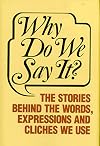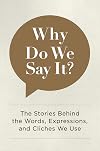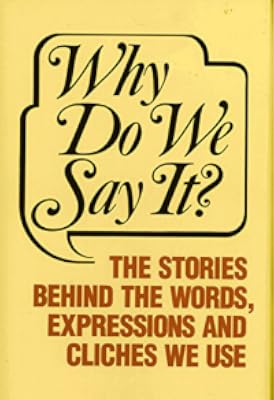
Why Do We Say It?: The Stories Behind the Words, Expressions and Cliches We Use
by Castle Books
On This Page
Description
Alphabetically arranged entries trace the origins of hundreds of unusual words and expressions.Tags
Recommendations



















Member Reviews
How did lollypops get their name? What's long about a longshoreman? Why do we pass the buck? The answers are in this fascinating volume. The intriguing origins of hundreds of unusual words and expressions are here, organized in a handy alphabetical format. Useful for reference and fun just for browsing. Why Do We Say It? is also a great way to expand your vocabulary and enjoy doing it.
A gift, with the fuller description being "the stories behind the words, expressions and cliches we use." Found it to be interesting, but not something one would read cover to cover. Is arranged alphabetically should one wish to look up a certain phrase.
They seem to sometimes just guess or make things up.
The historical and linguistic origins on many common sayings.
A fun book, keep it handy.
The stories behind the words expressions and cliches we use.
How did lollypops get their name?
What's long about a longshoreman?
Why do we pass the buck?
The answers are in this fascinating volume. The intriguing origins of hundreds of unusual words and expressions are here, organized in a handy alphabetical format. Useful for reference and fun just for browsing. Why Do We Say It? is also a great way to expand your vocabulary and enjoy doing it.
How did lollypops get their name?
What's long about a longshoreman?
Why do we pass the buck?
The answers are in this fascinating volume. The intriguing origins of hundreds of unusual words and expressions are here, organized in a handy alphabetical format. Useful for reference and fun just for browsing. Why Do We Say It? is also a great way to expand your vocabulary and enjoy doing it.
Ratings
Members
- Recently Added By
Author Information
15 Works 739 Members
Common Knowledge
- Canonical title
- Why Do We Say It?: The Stories Behind the Words, Expressions and Cliches We Use
- Original publication date
- 1986-08-01; 1984
- First words
- Why do we use "A-1" to mean "the very best"?
- Last words
- (Click to show. Warning: May contain spoilers.)The German zwei means "two" and backen means "to bake."
- Original language
- English
Classifications
Statistics
- Members
- 591
- Popularity
- 49,666
- Reviews
- 6
- Rating
- (3.31)
- Languages
- English
- Media
- Paper
- ISBNs
- 3
- UPCs
- 1
- ASINs
- 2