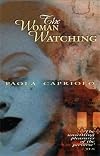
The Woman Watching
by Paola Capriolo
On This Page
Description
Vulpius, a much-admired young actor in a provincial theatre company, develops an obsession with an unknown spectator whose gaze seems only for him, at first kindling fresh fervour in his mastery of each role, then chilling his heart in the search for artistic perfection.Tags
Recommendations



















Member Reviews
The story of the artist who gets too involved in his work and starts to value art over life is an old one but Capriolo gives it a couple twists in her well-written and slightly creepy book. Vulpius, an actor in a provincial theater company, becomes obsessed with an unknown woman in the audience who appears to be looking only at him. Unable to discover her identity, he devotes himself to perfecting his role but gradually alienates the audience, the other actors, his girlfriend Dora and humanity in general. The boundaries between reality and illusion start to blur for Vulpius, who finds everyday life a pale imitation of the theater. The story is tense and addictive but also meditative; spare but lush; with a straightforward plot but an show more ambiguous and elusive meaning. Capriolo’s narrative is overt and frequently calls attention to the artifice of the story but it fits well with the overall theme.
Vulpius becomes obsessed with the craft of acting but not in the crazy, passionate Method way – instead he has cold, theoretical ideas which are more about repetitive rituals, transformation and a more perfect approximation of reality. He forces Dora to take part in his obsession in some slightly disturbing scenes. It’s almost like an abusive relationship except that his abuse is so bizarre and, as the narrator notes, he’s not cruel but coldly indifferent to other people’s thoughts and feelings. In his efforts to plumb the depths of the theater, Vulpius becomes an observer like the unknown woman. He also replicates her role as a tormenting specter – he can’t get her out of his mind and obsesses over her; likewise, he becomes a disturbing presence in the cheery actors’ company and regularly torments Dora. In the empty theater, he is almost like a priest of his own weird domain. In fact, the author explicitly draws comparisons with the church. At the opening of the season, Vulpius makes a memorable visit there and another significant scene takes place at the church. The statues and supports in the rococo theater are reminiscent of the ornately decorated church and Vulpius’ obsession with the rituals of the theater, empty or significant, have their counterparts in the church. Life and death are regularly played out on the stage and are of course the main functions of the church. The play that is performed at the opening is Don Juan which turns out to be very appropriate. Vulpius, in his cold detachment, is more like the stone statue which brings destruction than any of the living characters.
Capriolo has an idiosyncratic style – at once omniscient and limited. The narrator is overt about her role and there’s a verisimilitude in her describing that the story is only one possible explanation of what really happened to Vulpius, Dora and the company. There are frequent interruptions of the story, comments on what will happen or what has happened, speculations about what would happen if only something was changed or regret at the way things turned out. The view changes from the narrator to Vulpius or Dora and often these shifts are noted by the narrator. This style will not be for all tastes but fits well with the story. The artifice of the narrative echoes the artifice of the theater and the narrator is also a sometimes controlling observer. There is a strong use of symbolism but it is brought up simply and is not intrusive. In addition to the conscious commentary on the narrative, Capriolo favors long, complex, ornamented sentences. I don’t think her style is for everyone but it worked very well for me. show less
Vulpius becomes obsessed with the craft of acting but not in the crazy, passionate Method way – instead he has cold, theoretical ideas which are more about repetitive rituals, transformation and a more perfect approximation of reality. He forces Dora to take part in his obsession in some slightly disturbing scenes. It’s almost like an abusive relationship except that his abuse is so bizarre and, as the narrator notes, he’s not cruel but coldly indifferent to other people’s thoughts and feelings. In his efforts to plumb the depths of the theater, Vulpius becomes an observer like the unknown woman. He also replicates her role as a tormenting specter – he can’t get her out of his mind and obsesses over her; likewise, he becomes a disturbing presence in the cheery actors’ company and regularly torments Dora. In the empty theater, he is almost like a priest of his own weird domain. In fact, the author explicitly draws comparisons with the church. At the opening of the season, Vulpius makes a memorable visit there and another significant scene takes place at the church. The statues and supports in the rococo theater are reminiscent of the ornately decorated church and Vulpius’ obsession with the rituals of the theater, empty or significant, have their counterparts in the church. Life and death are regularly played out on the stage and are of course the main functions of the church. The play that is performed at the opening is Don Juan which turns out to be very appropriate. Vulpius, in his cold detachment, is more like the stone statue which brings destruction than any of the living characters.
Capriolo has an idiosyncratic style – at once omniscient and limited. The narrator is overt about her role and there’s a verisimilitude in her describing that the story is only one possible explanation of what really happened to Vulpius, Dora and the company. There are frequent interruptions of the story, comments on what will happen or what has happened, speculations about what would happen if only something was changed or regret at the way things turned out. The view changes from the narrator to Vulpius or Dora and often these shifts are noted by the narrator. This style will not be for all tastes but fits well with the story. The artifice of the narrative echoes the artifice of the theater and the narrator is also a sometimes controlling observer. There is a strong use of symbolism but it is brought up simply and is not intrusive. In addition to the conscious commentary on the narrative, Capriolo favors long, complex, ornamented sentences. I don’t think her style is for everyone but it worked very well for me. show less
Ratings
Members
- Recently Added By
Lists

the play's the thing... (novels themed around the theatre + acting)
34 works; 5 members

Actors
65 works; 5 members
Author Information

44+ Works 313 Members
Common Knowledge
- Canonical title
- The Woman Watching
- Original title
- La spettatrice
- Original publication date
- 1995
- People/Characters*
- Vulpius
- First words*
- Nessuno può dire con esattezza come si sia compiuto il destino di Vulpius, quali eventi, quali pensieri, abbiano scandito la sua vicenda.
- Original language*
- italiano
*Some information comes from Common Knowledge in other languages. Click "Edit" for more information.
Classifications
- Genres
- Fiction and Literature, General Fiction, Romance
- DDC/MDS
- 853.914 — Literature & rhetoric Italian, Romanian & related literatures Italian fiction 1900- 20th Century 1945-1999
- LCC
- PQ4863 .A6635 .S64 — Language and Literature French, Italian, Spanish and Portuguese literatures Italian literature Individual authors, 1961-2000
- BISAC
Statistics
- Members
- 24
- Popularity
- 1,110,681
- Reviews
- 1
- Rating
- (3.25)
- Languages
- 6 — Dutch, English, Greek, Italian, Spanish, Swedish
- Media
- Paper
- ISBNs
- 5