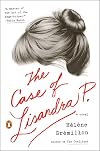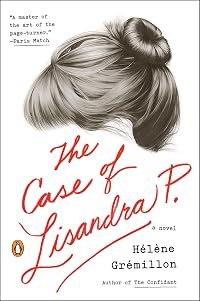
The Case of Lisandra P.
by Hélène Grémillon
On This Page
Description
The acclaimed author of The Confidant returns with a gripping psychological novel for fans of The Girl on the Train and The Silent Wife about a wife's secrets, a husband accused of murder, and a marriage gone terribly wrong. Buenos Aires, 1987. When a beautiful young woman named Lisandra is found dead at the foot of a six-story building, her husband, a psychoanalyst, is immediately arrested for her murder. Convinced of Vittorio's innocence, one of his patients, Eva Maria, is drawn into the show more investigation seemingly by chance. As she combs through secret recordings of Vittorio's therapy sessions in search of the killer--could it be the powerful government figure? the jealous woman? the musician who's lost his reason to live?--Eva Maria must confront her most painful memories, and some of the darkest moments in Argentinian history. In breathless prose that captures the desperate spinning of a frantic mind, Hélène Grémillon blurs the lines of past and present, personal and political, reality and paranoia in this daring and compulsively readable novel. show lessTags
Recommendations

































Member Reviews
I found The Case of Lisandra P. by Hélène Grémillon to be powerful, disturbing, and difficult to read for more than one reason. The cover claims it's a page-turner, but the only time I turned pages quickly was when I honestly couldn't handle what the author was putting in front of me. Otherwise, it took me a while to commit to it because it seemed to be about a therapist accused of murdering his wife whose only ally is a patient who tries hard to be remote and unlikable. I tend to avoid reading stories that advance through transcriptions of therapy sessions because too often it's a lazy device to provide insight into a character (usually a messed-up cop who we're supposed to sympathize with) and the first of these sessions (a show more messed-up person who isn't a cop) made me wonder if I should be reading something else. But the second session had an irresistible hook in it for someone who likes crime fiction to involve social issues. The book is set a few years after Argentina returned to "democracy" after a brutal military dictatorship that made dissidents disappear violently and without a trace (sometimes seizing their children and raising them, perversely, as their own, passing on their distorted and vile worldview to innocents). The government has decided to put all that behind them by essentially pardoning everyone involved and giving them anonymity. The main character has been seeing the therapist to deal with the trauma of her daughter's disappearance, in large part because she has no idea whether people around her who seem so benign may have actually tortured and killed her daughter. The novel provides an appropriately chilling sense of how dreadful that would be. It also provides a neatly tied-up and ironic ending that upends the idea that there is any way to give a story about this time and place a sense of resolution. There was a certain amount of sensationalism in the ending that felt off to me, but everything between the opening pages and the closing ones seemed brutally true - a kind of truth that offers no reconciliation, because there was none. show less
This was an interesting book about a young woman found dead by her husband, Vittorio, outside of their 6-floor apartment window. Vittorio is arrested for her murder. Vittorio is a psychoanalyst and he convinces one of his patients, Eva Maria, to help him find the real murderer. Eva Maria was Vittorio’s patient due to the disappearance and murder of her daughter, Stella, which took place five years earlier.
At the beginning of the book, it states that the novel is based on a true story, yet after the book ends, it doesn’t say anything about the true events, other than that the character of Miguel is based on the testimony of Miguel Angel Estrella. Estrella is an Argentine pianist who was imprisoned and tortured by the Civic-military show more dictatorship of Uruguay in 1977. The chapter involving Miguel is one of the most powerful chapters of the book.
The novel is more than just a complex mystery to be solved. The author uses the book to give a detailed picture of the political history of Argentina. Eva Maria believes her daughter, Stella, was a victim of the country’s “dirty war”. During that time, death planes were used. Desaparecidos were drugged, dragged onto planes, stripped naked and thrown out of the planes into the Rio de la Plata to drown. The horror of the torture, both physical and psychological, of the prisoners is brutally brought to life. There were also children whose parents had been killed and who were stolen and adopted illegally.
The author does a wonderful job of plotting out this intricate mystery. There are plenty of suspenseful twists and turns. I’m surprised to see it compared to “The Girl on the Train” and “The Silent Wife”. I think this book is a much more multilevel literary achievement than either of those books. The only thing I didn’t like too much about the book was that at times it read like a journalistic account (the author has been a journalist). Also, the book is written mostly in conversation, which made it feel like reading a screen play. However, on the other hand, Ms. Gremillon does a great job of showing the tangled web of the human mind. I found it quite engrossing.
This book was given to me by the publisher through First to Read in return for an honest review. show less
At the beginning of the book, it states that the novel is based on a true story, yet after the book ends, it doesn’t say anything about the true events, other than that the character of Miguel is based on the testimony of Miguel Angel Estrella. Estrella is an Argentine pianist who was imprisoned and tortured by the Civic-military show more dictatorship of Uruguay in 1977. The chapter involving Miguel is one of the most powerful chapters of the book.
The novel is more than just a complex mystery to be solved. The author uses the book to give a detailed picture of the political history of Argentina. Eva Maria believes her daughter, Stella, was a victim of the country’s “dirty war”. During that time, death planes were used. Desaparecidos were drugged, dragged onto planes, stripped naked and thrown out of the planes into the Rio de la Plata to drown. The horror of the torture, both physical and psychological, of the prisoners is brutally brought to life. There were also children whose parents had been killed and who were stolen and adopted illegally.
The author does a wonderful job of plotting out this intricate mystery. There are plenty of suspenseful twists and turns. I’m surprised to see it compared to “The Girl on the Train” and “The Silent Wife”. I think this book is a much more multilevel literary achievement than either of those books. The only thing I didn’t like too much about the book was that at times it read like a journalistic account (the author has been a journalist). Also, the book is written mostly in conversation, which made it feel like reading a screen play. However, on the other hand, Ms. Gremillon does a great job of showing the tangled web of the human mind. I found it quite engrossing.
This book was given to me by the publisher through First to Read in return for an honest review. show less
I received an ARC of this book from the publisher in exchange for a review. This did not effect my opinions of the book or the review itself.
I wanted to like this book so much more than I actually did.
It has a really intriguing premise. The wife of a psychoanalyst is found dead, having fallen (or been pushed) from the window of the home they shared. A patient of the husband takes it upon herself to solve the mystery and free who she believes to be an innocent man.
Where this book went astray for me was, first and foremost, in the formatting. This is an ARC copy, but nonetheless there were so many errors in the formatting it constantly took me out of the story.
Paragraphs would suddenly be broken up by the end of a sentence that began in a show more different paragraph.
The story itself would be written in pages long paragraphs, no indentations, no line breaks, frequently with no identification of who was speaking when, or where in time or space the characters were.
The title and the author's name would randomly appear in the middle of a page nowhere near the front of the book.
I think, at least in my opinion, the author did not know exactly what they were trying to accomplish with this book. Page after page would be filled with philosophical repetitive ramblings on topics such as sex, love, and gender, which would eventually lead my attention to wander. There was subplot after subplot that, with the formatting, ended up being confusing and sometimes tedious.
What the author did right, for me as a reader at least, were the two twists at the end. I was so happy to see the book returning not only to its promised mystery format, but providing me with a surprise that brought me right back into the story. I also felt the author did a good job weaving the heartbreaking history of Argentina's "disappeared" into the story.
Would I recommend this book? Sadly, no. The ending unfortunately could not make up for everything else. show less
I wanted to like this book so much more than I actually did.
It has a really intriguing premise. The wife of a psychoanalyst is found dead, having fallen (or been pushed) from the window of the home they shared. A patient of the husband takes it upon herself to solve the mystery and free who she believes to be an innocent man.
Where this book went astray for me was, first and foremost, in the formatting. This is an ARC copy, but nonetheless there were so many errors in the formatting it constantly took me out of the story.
Paragraphs would suddenly be broken up by the end of a sentence that began in a show more different paragraph.
The story itself would be written in pages long paragraphs, no indentations, no line breaks, frequently with no identification of who was speaking when, or where in time or space the characters were.
The title and the author's name would randomly appear in the middle of a page nowhere near the front of the book.
I think, at least in my opinion, the author did not know exactly what they were trying to accomplish with this book. Page after page would be filled with philosophical repetitive ramblings on topics such as sex, love, and gender, which would eventually lead my attention to wander. There was subplot after subplot that, with the formatting, ended up being confusing and sometimes tedious.
What the author did right, for me as a reader at least, were the two twists at the end. I was so happy to see the book returning not only to its promised mystery format, but providing me with a surprise that brought me right back into the story. I also felt the author did a good job weaving the heartbreaking history of Argentina's "disappeared" into the story.
Would I recommend this book? Sadly, no. The ending unfortunately could not make up for everything else. show less
Wow! That's how I describe this book. I loved following Eva Maria as she was investigating the death of her psychoanalyst's wife and trying to help prove Vittorio's innocence. I kept trying to figure it out and figured there was a twist but it wasn't as I expected. I had to keep reading to find out who the true murderer was! Very intriguing and edge of your seat type of book! You just never know what to expect! I also enjoyed the Argentinian history that was inserted into the story and how well it fit.
I received a digital copy of this book courtesy of the First to Read Program in exchange for my honest review.
I received a digital copy of this book courtesy of the First to Read Program in exchange for my honest review.
3.5 When I began this book I almost gave up on it numerous times. I was quite bored in the beginning and had a hard time figuring out exactly what I was reading, (of course I do this quite a bit with e-books in general because I dislike them, but I digress), but then slowly the plot picked up speed and I was truly engrossed in the story.
It's an unorthodox murder mystery involving the death of a psychiatrist's wife and his arrest for her murder. We learn the facts of the death and the players involved through Eva Maria, a patient of the doctor. Her back story also comes to light while we follow her along on this "investigation:
Good book, but I wonder if it would have read more like a thriller if I was able to read it in its original show more language. show less
It's an unorthodox murder mystery involving the death of a psychiatrist's wife and his arrest for her murder. We learn the facts of the death and the players involved through Eva Maria, a patient of the doctor. Her back story also comes to light while we follow her along on this "investigation:
Good book, but I wonder if it would have read more like a thriller if I was able to read it in its original show more language. show less
It's 1987, Buenos Aires, 1987 and Lisandra is found dead at the bottom of a 6 storey building. When her husband, a psychoanalyst, is arrested, one of his patients, Eva Maria, decides to prove his innocence.
Found it very difficult to care if he was guilty or innocent.
Free book from Goodreads.
Found it very difficult to care if he was guilty or innocent.
Free book from Goodreads.
Une violente surprise pour ce début d’année. Bon, pas vraiment joyeux, joyeux… plutôt à conserver pour un jour de pluie
Mar 17, 2022 (Edited)French
Members
- Recently Added By
Author Information

8 Works 462 Members
Some Editions
Common Knowledge
- Canonical title
- The Case of Lisandra P.
Classifications
Statistics
- Members
- 88
- Popularity
- 363,650
- Reviews
- 8
- Rating
- (3.58)
- Languages
- 6 — Dutch, English, French, German, Italian, Romanian
- Media
- Paper, Audiobook, Ebook
- ISBNs
- 12
- ASINs
- 2