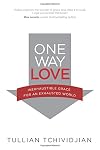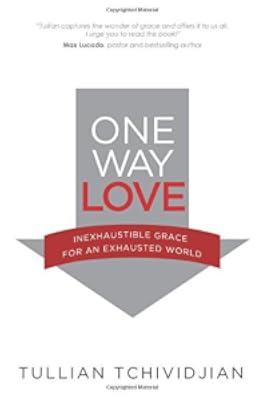
One Way Love: Inexhaustible Grace for an Exhausted World
by Tullian Tchividjian
On This Page
Description
Real life is long on law and short on grace-the demands never stop, the failures pile up, and fear sets in. Life requires many things from us-a stable marriage, successful children, a certain quality of life. Anyone living inside the guilt, anxiety, and uncertainty of daily life knows that the weight of life is heavy. We are all in need of some relief. Bestselling author Tullian Tchividjian is convinced our exhausted world needs a fresh encounter with God's inexhaustible grace-His one-way show more love. Sadly, however, Christianity is perceived as being a vehicle for good behavior and clean living-and the judgments that result from them-rather than the only recourse for those who have failed over and over and over again. Tchividjian convincingly shows that Christianity is not about good people getting better. If anything, it is good news for bad people coping with their failure to be good. In this "manifesto," Tchividjian calls the church back to the heart of the Christian faith-grace. It is time for us to abandon our play-it-safe religion, and to get drunk on grace. Two hundred-proof, unflinching grace. It's shocking and scary, unnatural and undomesticated … but it is also the only thing that can set us free and light the church-and the world-on fire. show lessTags
Recommendations




Member Reviews
I have never before read a book by Tullian Tchividjian(pronounced: nobody really knows...I like to trail off as I say it and hope no one calls me on it). I have read many blogs and comments by him and heard a few interviews. I have always been interested in what he said if not thoroughly convinced to agree with him. I have been encouraged by his focus on grace and intrigued by his emphasis on Law/Gospel(a seemingly distinctly Lutheran doctrine) and his assertion of "two types of legalism" as opposed to the legalism/licentiousness contrast that has typically been presented to me. I was pleased to find all of this in "One Way Love", and much more.
Tullian presents the case that we all, Christians and non-Christians alike, are driven by show more performance. We live in a world of conditionality, where it is always true that "accomplishment precedes acceptance;achievement precedes approval". This leads to a life driven by perfectionism, where failure leads to hopelessness and despair. Tullian contrasts this with the biblical message of One Way Love-love that is unconditional, not based on reciprocity. This is Grace. Goodness directed towards someone not based on what they have done and will do or can do, but simply based on the goodness of the Giver. Tullian expounds on this with some personal stories and statements about God's love and grace that will prick at the fleshly heart of the reader. There will be plenty of moments of initial dissent that blissfully lead to grateful agreement and a sense of "Why have I not known that longer?!?"
Tullian spends a good deal of time dealing with the Law/Gospel disticntion and answering the charge of "antinomianism" that is often leveled against those who preach "radical grace". He borrows an argument from J. Gresham Machen about how it is really a low view of Law, not a high view, that leads to legalism. Only those with a low view of God's Law feel like they have any chance of keeping it, whereas those who know their inability to keep the Law will constantly cling to grace and throw themselves at the mercy of our just Judge.
This leads to an area where I, and many, have struggled. How does the preaching and focus on grace keep from leading someone to a disregard for holy living? Or, put differently, does focusing on grace lead to sinful living and a lack of sanctification? Tullian does a beautiful job showing how grace is, not only a motivator but, the only sustainable and acceptable motivator for good works. It was very encouraging and I will be returning to this section to, let's say, utilize some of his thinking and his presentation on grace as a motivator for holy living.
What I found in this book is what I have found in Tullian's teaching, an overwhelming focus on God and His amazing grace. I was encouraged, repeatedly, to come to the well of grace and drink freely and to share that grace with others. Tullian encouraged me to be more gracious to myself and others by being less focused on myself and others. His constant effort to shift the reader's focus to God and away from self and circumstance, frees the reader to be gracious, to find our everything in the crucified and risen Christ. One Way Love reminds the reader that the Gospel allows the believer to rest easy because the work is finished, and done better than we could ever do anyway.
I received a review copy of this book from the publisher through netgalley.com show less
Tullian presents the case that we all, Christians and non-Christians alike, are driven by show more performance. We live in a world of conditionality, where it is always true that "accomplishment precedes acceptance;achievement precedes approval". This leads to a life driven by perfectionism, where failure leads to hopelessness and despair. Tullian contrasts this with the biblical message of One Way Love-love that is unconditional, not based on reciprocity. This is Grace. Goodness directed towards someone not based on what they have done and will do or can do, but simply based on the goodness of the Giver. Tullian expounds on this with some personal stories and statements about God's love and grace that will prick at the fleshly heart of the reader. There will be plenty of moments of initial dissent that blissfully lead to grateful agreement and a sense of "Why have I not known that longer?!?"
Tullian spends a good deal of time dealing with the Law/Gospel disticntion and answering the charge of "antinomianism" that is often leveled against those who preach "radical grace". He borrows an argument from J. Gresham Machen about how it is really a low view of Law, not a high view, that leads to legalism. Only those with a low view of God's Law feel like they have any chance of keeping it, whereas those who know their inability to keep the Law will constantly cling to grace and throw themselves at the mercy of our just Judge.
This leads to an area where I, and many, have struggled. How does the preaching and focus on grace keep from leading someone to a disregard for holy living? Or, put differently, does focusing on grace lead to sinful living and a lack of sanctification? Tullian does a beautiful job showing how grace is, not only a motivator but, the only sustainable and acceptable motivator for good works. It was very encouraging and I will be returning to this section to, let's say, utilize some of his thinking and his presentation on grace as a motivator for holy living.
What I found in this book is what I have found in Tullian's teaching, an overwhelming focus on God and His amazing grace. I was encouraged, repeatedly, to come to the well of grace and drink freely and to share that grace with others. Tullian encouraged me to be more gracious to myself and others by being less focused on myself and others. His constant effort to shift the reader's focus to God and away from self and circumstance, frees the reader to be gracious, to find our everything in the crucified and risen Christ. One Way Love reminds the reader that the Gospel allows the believer to rest easy because the work is finished, and done better than we could ever do anyway.
I received a review copy of this book from the publisher through netgalley.com show less
I read one way love , in exchange for honest review from FlyBy Blog Promotions.
I chose this book because I do not understand God's Grace and Mercy. The book consists of 10 chapters. In Chapter 1, Introduction, Tullian discussed Performancism, which best fits me sometimes. According to Tullian, Performancism is the mindset that equates our identity and value directly to our performance and accomplishments,(p. 20). We can let our achievements define our identity. Our money, looks, cars, and degrees can set the stage for our worth and value. When the job or car is gone, then our identity is gone.
I used to work at a manufacturing plant. One of the female employees drove a nice racing car, with all the fixes and updates. She got into a car show more accident and the racing car was totaled. She was more upset over the car than her life.
For me, I did not feel complete until I got my bachelor's degree, even though I rarely use it. I felt that I was letting people down because I did not finish college early in life, like you are supposed to. It took 13 years and multiple colleges to get one degree, yet it is a degree without experience, if I don't use it. There is nothing wrong with wanting to achieve the good things in life, but those things should not define us. Tullian said that people spend a lot of time building up their reputation and image but at a cost to others and ourselves (p. 20). Page 20 also says Performancism is a form of worship--we spend our lives frantically propping up our images or reputations, trying to do it all--and do it all well--often at a cost to ourselves and those we love (p. 20). Instead of focusing on the important things, we focus on the things, which can improve our image, instead of dedicating and focusing our lives on God.
The book teaches people about Grace and how to move in God's grace. Tullian says we can not play it safe anymore (p. 25). We need to be saved and bring others to Christ. This will bring a revival to the Christian faith.
Chapter 2 discusses the exhausted world. We have responsibilities. Sometimes we take on too much responsibility. More responsibilities means you have to perform in more roles. You will fail and you will succeed in life. Problems will occur. Plenty of expectations, rewards, and punishments. We get stressed and burnt out. While, grace is pure, simple, irrational, giving, generous, terrifying, and rare, in addition grace is love that seeks you out when you have nothing to give in return (p. 32).
This was a good read. This book must be read slow because it has a lot of knowledge and wisdom. It is available in print and kindle format. Have a blessed day. show less
I chose this book because I do not understand God's Grace and Mercy. The book consists of 10 chapters. In Chapter 1, Introduction, Tullian discussed Performancism, which best fits me sometimes. According to Tullian, Performancism is the mindset that equates our identity and value directly to our performance and accomplishments,(p. 20). We can let our achievements define our identity. Our money, looks, cars, and degrees can set the stage for our worth and value. When the job or car is gone, then our identity is gone.
I used to work at a manufacturing plant. One of the female employees drove a nice racing car, with all the fixes and updates. She got into a car show more accident and the racing car was totaled. She was more upset over the car than her life.
For me, I did not feel complete until I got my bachelor's degree, even though I rarely use it. I felt that I was letting people down because I did not finish college early in life, like you are supposed to. It took 13 years and multiple colleges to get one degree, yet it is a degree without experience, if I don't use it. There is nothing wrong with wanting to achieve the good things in life, but those things should not define us. Tullian said that people spend a lot of time building up their reputation and image but at a cost to others and ourselves (p. 20). Page 20 also says Performancism is a form of worship--we spend our lives frantically propping up our images or reputations, trying to do it all--and do it all well--often at a cost to ourselves and those we love (p. 20). Instead of focusing on the important things, we focus on the things, which can improve our image, instead of dedicating and focusing our lives on God.
The book teaches people about Grace and how to move in God's grace. Tullian says we can not play it safe anymore (p. 25). We need to be saved and bring others to Christ. This will bring a revival to the Christian faith.
Chapter 2 discusses the exhausted world. We have responsibilities. Sometimes we take on too much responsibility. More responsibilities means you have to perform in more roles. You will fail and you will succeed in life. Problems will occur. Plenty of expectations, rewards, and punishments. We get stressed and burnt out. While, grace is pure, simple, irrational, giving, generous, terrifying, and rare, in addition grace is love that seeks you out when you have nothing to give in return (p. 32).
This was a good read. This book must be read slow because it has a lot of knowledge and wisdom. It is available in print and kindle format. Have a blessed day. show less
Tullian nails it in this book. Very well written and something my soul needs to hear everyday. The gospel for believers is something I very much need regularly.
Ratings
Members
- Recently Added By
Author Information

19 Works 2,036 Members
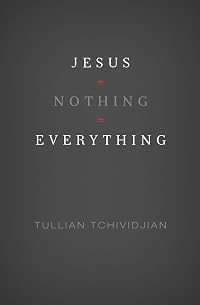
Tullian Tchividjian is the senior pastor of Coral Ridge Presbyterian Church in Fort Lauderdale, Florida; a lecturer at Knox Theological Seminary; the founder of LIBERATE; and a grandson of Billy and Ruth Graham. The author of numerous books, including Jesus + Nothing = Everything and Glorious Ruin, Tchividjian speaks at conferences around the show more world. He and his wife, Kim, have three children. show less
Classifications
Statistics
- Members
- 284
- Popularity
- 113,939
- Reviews
- 4
- Rating
- (3.77)
- Languages
- English
- Media
- Paper, Audiobook, Ebook
- ISBNs
- 5
- ASINs
- 2