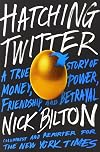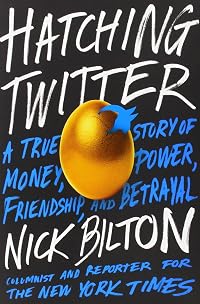
Hatching Twitter: A True Story of Money, Power, Friendship, and Betrayal
by Nick Bilton
On This Page
Description
"Twitter seems like a perfect start-up success story. In barely six years, a small group of young, ambitious programmers in Silicon Valley built an $11.5 billion business out of the ashes of a failed podcasting company. Today Twitter boasts more than 200 million active users and has affected business, politics, media, and other fields in innumerable ways. Now Nick Bilton of the New York Times takes readers behind the scenes with a narrative that shows what happened inside Twitter as it grew show more at exponential speeds. This is a tale of betrayed friendships and high-stakes power struggles as the four founders-Biz Stone, Evan Williams, Jack Dorsey, and Noah Glass-went from everyday engineers to wealthy celebrities, featured on magazine covers, Oprah, The Daily Show, and Time's list of the world's most influential people. Bilton's exclusive access and exhaustive investigative reporting-drawing on hundreds of sources, documents, and internal e-mails-have enabled him to write an intimate portrait of fame, influence, and power. He also captures the zeitgeist and global influence of Twitter, which has been used to help overthrow governments in the Middle East and disrupt the very fabric of the way people communicate"-- show lessTags
Recommendations

















Member Reviews
I've never read about such a group of immature, whiny, backstabbing losers in my life! To think that some reviewers consider them brilliant is really pretty funny. They were mediocre thinkers with mediocre talent who couldn't cut it in real places, like Xerox PARC or Google, so they wind up at a start up, broke and desperate. The one who has had success, Ev, is good for the seed money. He at least founded Blogger, so he actually had done something, which was sold to Google for millions, making him successful. The other three Twitter founders -- Noah, Jack, and Biz -- were pretty much losers. They founded a company called Odeo that was going to take podcasting by storm, but were beaten to the punch by Apple. Jack and Noah drunkenly came show more up with the idea for Twitter one night, as an idea to escape loneliness. Noah came up with the name. And so it began. Ev stayed in the background, Biz handled publicity, Noah was the CEO and Jack was in charge of Engineering. I believe, if my memory serves me. This didn't last long. They had a board with capital invested and soon there was rumbling, with Ev doing his fair share of the rumbling. And so Noah was forced out. Jack was brought on as CEO and Ev as chairman. Biz did what he did best. In a little while, Twitter starts taking off, slowly, very slowly at first, but surely. Jack didn't want hash tags, but they emerged and they were brilliant. However, it became clear to everyone that Jack couldn't run a company. They were losing money left and right, weren't making a dime, everyone was on edge, and Ev and the board had had it up to here. So more backstabbing. And Jack was out the door. To plot his revenge. Ev took over as CEO. After all, he had successfully run Blogger, so why not this? Sounded good. Twitter had bought another company a little while before this happened and Jack had asked their main engineer to become director of ops at Twitter, a position this man didn't feel he was qualified for. After Jack was gone, the board asked him for a briefing. He told them, in a state of disbelief, that there was no backup to the system. That if the system crashed, Twitter was gone. And that Twitter was held together with string and wires to begin with. Not good news. They got to work fixing that. Jack had been in way over his head. [Let me interject here. It's clear that the author HATES Jack in this book, and has a serious man crush on Ev, so you have to take everything written about them with a grain of salt.] Okay. Twitter has grown to millions and millions of users. Hosting many millions of tweets daily. Ev has helped people like Oprah tweet her first tweet live on TV. But Jack has been plotting with one of the board members, who -- and this is never clearly explained -- loves Jack dearly, to get Jack back into the company. I could go on and on, but long story short, Ev is backstabbed by Jack and the board, is shoved out the door, Jack comes back as head honcho, Biz quits, we never hear from Noah again, and Twitter continues on, in spite of total incompetence and arrogance. Good book to read, disgusting people to read about. Cautiously recommended. show less
Hatching Twitter follows the rise of Twitter through the lives of its founders and initial employees. As someone how has followed twitter since the beginning, I thought I knew the story but wow was I wrong. It turns out that there was far more power jockeying and boardroom backstabbing than I ever thought.
The way this story is told is also rather impressive. Rather than just being a telling of facts, you feel like you’re there with the characters in the rooms as ideas are brainstormed or things go right (or more often wrong).
Twitter has played an outsized role in my life. The first startup I worked at where I felt true ownership of my work was a platform to connect Twitter users with advertisers to make money (before promoted Tweets show more were a thing). I remember going to Twitters first (and only) conference, Chirp, right around when Twitter hit 140 employees. I remember sending out a sponsored tweet manually from a Rails console that someone paid $20k to send. I remember having lunch with coworkers and friends on the floor at a Twitter event while Will.i.am had discussions over us.
Twitter holds a number of great memories for me. While this book shed light on some of the darker sides of the company, it also left me feeling how important a part it was (is) for the founders - a feeling I could easily identify with. show less
The way this story is told is also rather impressive. Rather than just being a telling of facts, you feel like you’re there with the characters in the rooms as ideas are brainstormed or things go right (or more often wrong).
Twitter has played an outsized role in my life. The first startup I worked at where I felt true ownership of my work was a platform to connect Twitter users with advertisers to make money (before promoted Tweets show more were a thing). I remember going to Twitters first (and only) conference, Chirp, right around when Twitter hit 140 employees. I remember sending out a sponsored tweet manually from a Rails console that someone paid $20k to send. I remember having lunch with coworkers and friends on the floor at a Twitter event while Will.i.am had discussions over us.
Twitter holds a number of great memories for me. While this book shed light on some of the darker sides of the company, it also left me feeling how important a part it was (is) for the founders - a feeling I could easily identify with. show less
I like this kind of book. It’s an irreverent view of the geeks and misfits who created Twitter, perhaps the most used but least necessary software on the planet. That is, until Elon got a hold of it.
This book was first published in 2013 and so much has changed since then. Twitter (now X, in what has to be the silliest of rebrandings) has become perhaps less relevant than it ever was. Musk has seen the price fall through the floor and see value evaporate.
Fun book if you like business origin stories, but he really needs to do a follow-up, perhaps annually.
This book was first published in 2013 and so much has changed since then. Twitter (now X, in what has to be the silliest of rebrandings) has become perhaps less relevant than it ever was. Musk has seen the price fall through the floor and see value evaporate.
Fun book if you like business origin stories, but he really needs to do a follow-up, perhaps annually.
So many lessons to be learned here.
"Don't hire your friends" might be one.
I think, though, that the troubles that assailed the leadership of Twitter were due as much to lack of good communication as anything else. But I get ahead of myself.
Four young men essentially founded Twitter. The original germ of an idea was Noah Glass's, but it evolved through the work of all four and other employees of the Odeo company. Odeo was the child of Ev Williams, who had made millions when he created Blogger and eventually sold it to Google. It was Ev who financed Twitter for years, while its problems were ironed out and Twitter accounts skyrocketed. Ev paid out of pocket and found investors during those early years when nobody even thought about how show more it was eventually going to make money.
As Twitter gained in popularity and success, however, it was in danger of being run into the ground by an incompetent CEO. Three of the four co-founders were ousted by the company they created - or rather by forces within that company, and the fourth left of his own volition.
Ev was the only one who had previously run a company, and so was competent if not expert in the job. The incredible rapid growth of Twitter would have crushed an experienced CEO, however. Problems with the software and a lack of agreement on the direction the company needed to take led to the ousters. But it was more than that.
In each case, the removal of the person was the subject of many secret meetings. When the move was announced all legal issues were tied up so there was no recourse. In each case, the person was allowed to continue doing what he had been doing all along, even though many disagreed with the direction, until the boom fell.
I think the disagreements should have been openly acknowledged and a time period to change course offered. Then, if that didn't work out, the board could remove the person. It seems to me that this would have been the ethical way to manage the company. The secrecy led to resentment and in one case the return of Jack, who brought back with him all the reasons he was kicked out in the first place.
It is clear that the writer, through his interviews and reading of thousands of messages and other documents, came to favor Ev Williams. The book is more a story of Ev than of anyone else, and he comes across favorably, except that his very real faults are discussed. On the other hand, Jack comes across as the primary villain of the piece. Because Jack also founded Square, one of my favorite things, I find myself a little distressed.
I suspect that if I knew the full story behind any of the mega-startups in recent years I would find similar stories, however. This much was suggested by Bilton in an interview I heard on the radio. I would probably hate them all. I think, though, of Ev and wife Sara's goal with their children: that they raise them so that they never "act this way".
All the cuteness that is Twitter hides an ugly past. show less
"Don't hire your friends" might be one.
I think, though, that the troubles that assailed the leadership of Twitter were due as much to lack of good communication as anything else. But I get ahead of myself.
Four young men essentially founded Twitter. The original germ of an idea was Noah Glass's, but it evolved through the work of all four and other employees of the Odeo company. Odeo was the child of Ev Williams, who had made millions when he created Blogger and eventually sold it to Google. It was Ev who financed Twitter for years, while its problems were ironed out and Twitter accounts skyrocketed. Ev paid out of pocket and found investors during those early years when nobody even thought about how show more it was eventually going to make money.
As Twitter gained in popularity and success, however, it was in danger of being run into the ground by an incompetent CEO. Three of the four co-founders were ousted by the company they created - or rather by forces within that company, and the fourth left of his own volition.
Ev was the only one who had previously run a company, and so was competent if not expert in the job. The incredible rapid growth of Twitter would have crushed an experienced CEO, however. Problems with the software and a lack of agreement on the direction the company needed to take led to the ousters. But it was more than that.
In each case, the removal of the person was the subject of many secret meetings. When the move was announced all legal issues were tied up so there was no recourse. In each case, the person was allowed to continue doing what he had been doing all along, even though many disagreed with the direction, until the boom fell.
I think the disagreements should have been openly acknowledged and a time period to change course offered. Then, if that didn't work out, the board could remove the person. It seems to me that this would have been the ethical way to manage the company. The secrecy led to resentment and in one case the return of Jack, who brought back with him all the reasons he was kicked out in the first place.
It is clear that the writer, through his interviews and reading of thousands of messages and other documents, came to favor Ev Williams. The book is more a story of Ev than of anyone else, and he comes across favorably, except that his very real faults are discussed. On the other hand, Jack comes across as the primary villain of the piece. Because Jack also founded Square, one of my favorite things, I find myself a little distressed.
I suspect that if I knew the full story behind any of the mega-startups in recent years I would find similar stories, however. This much was suggested by Bilton in an interview I heard on the radio. I would probably hate them all. I think, though, of Ev and wife Sara's goal with their children: that they raise them so that they never "act this way".
All the cuteness that is Twitter hides an ugly past. show less
Normally, books have protagonists and antagonists, and you can at least empathize with some of the characters -- in fiction or non-fiction. With this book, you end up solidly hating everyone involved. It's amazing that Twitter exists today if even 10% of this book is accurate.
This is a gossipy book, telling us about the founding story of Twitter. Nick Bilton takes a point of view but and gives a portrait of all the founders, warts and all.
My respect for Ev Williams & Biz Stone grew further after reading this. I was a bit disappointed with Jack Dorsey’s portrayal of being schemer and villain. May be a bit look into his side of the story on why he behaved that way, would have been nice. Like Elizabeth Holmes of Theranos (in Bad Blood), Jack also has the imitation and influence of Steve Jobs in many of his manners and practices. But the sweet irony of the story is: Jack runs Twitter now full-time. I would love know what happened after Dick Costolo took over and how Jack came back to rein in Twitter. show more
Nevertheless, its a fantastic and racy read. This is my second book of Nick after the excellent American Kingpin and the fifth book to know more about Silicon Valley and its history. show less
My respect for Ev Williams & Biz Stone grew further after reading this. I was a bit disappointed with Jack Dorsey’s portrayal of being schemer and villain. May be a bit look into his side of the story on why he behaved that way, would have been nice. Like Elizabeth Holmes of Theranos (in Bad Blood), Jack also has the imitation and influence of Steve Jobs in many of his manners and practices. But the sweet irony of the story is: Jack runs Twitter now full-time. I would love know what happened after Dick Costolo took over and how Jack came back to rein in Twitter. show more
Nevertheless, its a fantastic and racy read. This is my second book of Nick after the excellent American Kingpin and the fifth book to know more about Silicon Valley and its history. show less
It is a super entertaining book about people behind one of the greatest Internet startups of all time. Hatched as a side project and then pivot of podcasts website - Odeo, Twitter was at the right time in the right place, however not really ready for the exponential growth which was waiting for it.
Instead of focusing on Twitter as a product, the author focuses on people behind it, their backgrounds and relationships with each other. Of course when there are so much money and power involved friendships get broken and intrigues start. It is interesting to read how people change exposed to such things and what happens behind the scenes.
However, the story should be taken with the salt of grain as it looks like the author is a bit biased in show more favor of Ev and against Jack.
Moral of the book - people are feeling lonely. Twitter's initial idea was supposed to be the antidote for that. People are still lonely but at least they know "What's happening" faster. show less
Instead of focusing on Twitter as a product, the author focuses on people behind it, their backgrounds and relationships with each other. Of course when there are so much money and power involved friendships get broken and intrigues start. It is interesting to read how people change exposed to such things and what happens behind the scenes.
However, the story should be taken with the salt of grain as it looks like the author is a bit biased in show more favor of Ev and against Jack.
Moral of the book - people are feeling lonely. Twitter's initial idea was supposed to be the antidote for that. People are still lonely but at least they know "What's happening" faster. show less
Members
- Recently Added By
Lists

Dan Luu's Programming book list
46 works; 1 member
Author Information

6 Works 1,362 Members
Nick Bilton is the lead technology writer for the New York Times Bits blog and a reporter for the paper he has also worked in the research and development labs at the times. Where he helps chart the path for the future of news.
Awards and Honors
Distinctions
Notable Lists
Common Knowledge
- Canonical title*
- Inventare Twitter
- People/Characters
- Jack Dorsey
- First words
- "Get out," Evan Williams said to the woman standing in his office doorway
- Last words
- (Click to show. Warning: May contain spoilers.)People who can make him feel a little less alone.
- Original language
- English
- Canonical DDC/MDS
- 006.754
- Canonical LCC
- HM743.T95
*Some information comes from Common Knowledge in other languages. Click "Edit" for more information.
Classifications
- Genres
- Technology, Business, Nonfiction, General Nonfiction, Biography & Memoir
- DDC/MDS
- 006.754 — Computer science, information & general works Computer science, knowledge & systems Special computer methods (AI, barcoding, VR, web design, social media) Multimedia systems Social Programming & Networking Social networking
- LCC
- HM743 .T95 — Social sciences Sociology (General) Sociology Groups and organizations
- BISAC
Statistics
- Members
- 454
- Popularity
- 67,338
- Reviews
- 22
- Rating
- (3.95)
- Languages
- 6 — Dutch, English, German, Italian, Portuguese, Spanish
- Media
- Paper, Audiobook, Ebook
- ISBNs
- 16
- ASINs
- 6