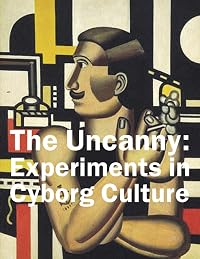
The Uncanny: Experiments in Cyborg Culture
by Bruce Grenville
On This Page
Description
Documenting the image of the cyborg in all its imaginative guises, THE UNCANNY includes essays and excerpts by Allan Antliff, Bruno Bettelheim, Randy Lee Cutler, Freud, William Gibson, Bruce Grenville, Makiko Hara, Donna Haraway, Masanori Oda, Jeanne Randolph and Toshiya Ueno. One of the most persistent and intriguing cultural images of the last century, the cyborg exists at the intersection of science, technology and culture, and is understood here as an uncanny' image that reflects our show more shared fascination and dread of the machine and its presence in our daily lives.' show lessTags
Recommendations










































Member Reviews
Catalogue for an exhibition held at the Vancouver Art Gallery from February 9 to May 26, 2002.
'The Uncanny: Experiments in Cyborg Culture is a dazzling and provocative examination of the cyborg―the concept of man-as-machine―in popular culture. The book collects essays and images, in colour and black-and-white, presenting the image of the cyborg in all its imaginative guises. The title is from a 1919 essay by Sigmund Freud (and included in the book), which deals with the sensation of "uncanniness" as being strange and familiar at the same time. The idea of the cyborg has been in existence for decades, and is one of the most persistent cultural images of the past century. The cyborg is a cypher―an enigmatic image of figure show more that is human but not human, a machine but not a machine. It exists at the intersection of science, technology, and culture. For some, the cyborg is evident in the massive presence of technology; we are constantly aided by machines, whether they are computers, vehicles, or military weapons that extend and amplify our presence in the natural world, or by medical prosthetics, such as pacemakers, artificial limbs, and eyeglasses, that maintain and reinforce our existing physical body. How is one to understand the persistence of this image in the visual arts and popular culture, in science and literature, medicine and cultural theory? This book, in its essays and images, presents the cyborg as an "uncanny" image that reflects our shared fascination and dread of the machine and its presence in our daily lives. The Uncanny complemented a major exhibition at the Vancouver Art Gallery. The book suggests a significant link between the visual arts and popular culture in the evolving representation of the cyborg, beginning as early is the 19th century.'
(Abstract source: arsenalpulp.com) show less
'The Uncanny: Experiments in Cyborg Culture is a dazzling and provocative examination of the cyborg―the concept of man-as-machine―in popular culture. The book collects essays and images, in colour and black-and-white, presenting the image of the cyborg in all its imaginative guises. The title is from a 1919 essay by Sigmund Freud (and included in the book), which deals with the sensation of "uncanniness" as being strange and familiar at the same time. The idea of the cyborg has been in existence for decades, and is one of the most persistent cultural images of the past century. The cyborg is a cypher―an enigmatic image of figure show more that is human but not human, a machine but not a machine. It exists at the intersection of science, technology, and culture. For some, the cyborg is evident in the massive presence of technology; we are constantly aided by machines, whether they are computers, vehicles, or military weapons that extend and amplify our presence in the natural world, or by medical prosthetics, such as pacemakers, artificial limbs, and eyeglasses, that maintain and reinforce our existing physical body. How is one to understand the persistence of this image in the visual arts and popular culture, in science and literature, medicine and cultural theory? This book, in its essays and images, presents the cyborg as an "uncanny" image that reflects our shared fascination and dread of the machine and its presence in our daily lives. The Uncanny complemented a major exhibition at the Vancouver Art Gallery. The book suggests a significant link between the visual arts and popular culture in the evolving representation of the cyborg, beginning as early is the 19th century.'
(Abstract source: arsenalpulp.com) show less
Ratings
Members
- Recently Added By
Lists

Books in the Bibliography of Digital Lethargy by Tung-Hui Hu
151 works; 3 members
Author Information
23+ Works 257 Members
Classifications
- Genres
- Nonfiction, Art & Design, Technology, Science & Nature
- DDC/MDS
- 303.48 — Society, government, & culture Social sciences, sociology & anthropology Social processes Social change Causes of change
- LCC
- NX650 .C92 .U53 — Fine Arts Arts in general Arts in general Special subjects, characters, persons, religious arts, etc.
- BISAC
Statistics
- Members
- 30
- Popularity
- 928,110
- Reviews
- 1
- Rating
- (3.25)
- Languages
- English
- Media
- Paper
- ISBNs
- 1