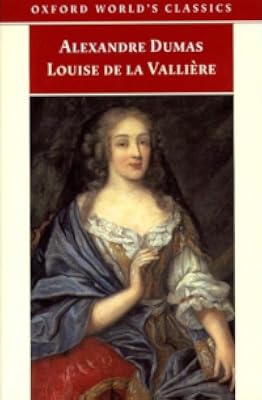
Ten Years Later, Part 2/2 [Abridged]
by Alexandre Dumas
D'Artagnan Romances (Collections and Selections — 3.2)
On This Page
Description
The Vicomte of Bragelonne: Ten Years Later is the final book in Dumas' d'Artagnon Romances trilogy. The book is in four parts, of which this is the third. According to French academic Jean-Yves Tadie, the real subject of the book is the beginning of King Louis XIV's rule..
Tags
Recommendations























Member Reviews
Well it took me months, but I finished it. Does that mean I’m out of love with Dumas and the d’Artagnan romances? No, but I won’t hesitate to call Louise a slog. I read a biography snippet on Dumas that said his success bred an extravagant lifestyle that he had to write furiously to maintain. That causes me to view Louise as a bit of writer’s block. A lot is described and worried over, but not much actually happens as if Dumas was just filling in time until inspiration struck, which thankfully, it did. Not until very near the end though and the stuff in between is just straight-up boring. As a set up, it’s needlessly long, but necessary (I’m sure) to understand the how and why of the next installment which is The Man in the show more Iron Mask.
Every time any of the “four” (as they are called by others in the book) got together it made me smile. Especially to read of little expressions, looks or signals they would use to silently communicate as well as if they’d spoken aloud. Take this - “D’Artagnan answered Athos’s look by an imperceptible movement of the eyelid;” Oh there’s something afoot for sure. Or the part where Porthos tells his host (M. Fouquet) that he has broken his chair and that if he doesn’t get up immediately, he will fall to the floor. I can’t help but love those little bits that Dumas sprinkles in like hiding candy on Easter morning.
Because the focus of this book isn’t really the “four”, but basically three, the whole tone changed. Partially that’s why it was a slog. Raoul, Louis and Louise are very young and act accordingly. Though King of France, Louis admits, late in the book, that he’s really just a child (after d’Artagnan makes him a speech about the place of men of honor in his service...a great speech, btw, d’Artagnan has become quite the orator). All through the book he acts like one and so do the other two. Raoul is just a love-struck ostrich with his head in the sand, afraid of confrontation. Louise is a little girl hiding behind her mother’s skirts to avoid responsibility. In a way, it reads like a typical romantic comedy, full of misunderstandings and missed opportunities, but it’s not overt because of the language and the fact that there are a lot of tortured scenes and detail. That and the few other plot threads weaving in and out keep it from being a focused tale. I’m glad I read it though and will give myself a bit of a break before embarking on the final bit of the saga. show less
Every time any of the “four” (as they are called by others in the book) got together it made me smile. Especially to read of little expressions, looks or signals they would use to silently communicate as well as if they’d spoken aloud. Take this - “D’Artagnan answered Athos’s look by an imperceptible movement of the eyelid;” Oh there’s something afoot for sure. Or the part where Porthos tells his host (M. Fouquet) that he has broken his chair and that if he doesn’t get up immediately, he will fall to the floor. I can’t help but love those little bits that Dumas sprinkles in like hiding candy on Easter morning.
Because the focus of this book isn’t really the “four”, but basically three, the whole tone changed. Partially that’s why it was a slog. Raoul, Louis and Louise are very young and act accordingly. Though King of France, Louis admits, late in the book, that he’s really just a child (after d’Artagnan makes him a speech about the place of men of honor in his service...a great speech, btw, d’Artagnan has become quite the orator). All through the book he acts like one and so do the other two. Raoul is just a love-struck ostrich with his head in the sand, afraid of confrontation. Louise is a little girl hiding behind her mother’s skirts to avoid responsibility. In a way, it reads like a typical romantic comedy, full of misunderstandings and missed opportunities, but it’s not overt because of the language and the fact that there are a lot of tortured scenes and detail. That and the few other plot threads weaving in and out keep it from being a focused tale. I’m glad I read it though and will give myself a bit of a break before embarking on the final bit of the saga. show less
A slight improvement over the silly melodrama that was Ten Years After but still filled with a fair bit of unnecessary fluff. I can now see why these books may have appealed to 19th century readers: Dumas goes to great pains to perpetuate what we now know as "the soap opera". The D'Artagnan Romances are a soap opera. It has all of the right elements: characters in love/conflict/alliance; a plot that is drawn out in small doses over a huge swath of time; some repetition of information to refresh the reader's memories; and the whole heart-ache angst bit. I am not a big fan of soap operas so that is probably why I am struggling a bit with this one. Characters who pose and posture and don't really seem to get down to the business at hand show more without monologuing try my patience. The good news is that Louise de la Valliere did have some good bits that now have me looking forward to reading the last book in the series, The Man in the Iron Mask. I just wish the journey to this point had not involved some 3,600 pages of text. Dumas was as prolific a serial writer as Dickens, if that can be imagined! He must have been paid by the word, just like Dickens' was. ;-)
Now, onwards to The Man in the Iron Mask. show less
Now, onwards to The Man in the Iron Mask. show less
This is probably one of my favorite books. I’m writing this review to encompass the entire “Vicomte de Bragelonne” story which is three books and 260 some chapters.
This book is an epic. It tells the final stories of the Musketeers, the new adventures of Athos’ son, and the beginnings of Louis XIV reign. All of these stories intertwine and all come together to form one complete narrative. The middle volume, Louise de la Valliere, is often called boring which I could see why. It’s primarily a romance and the musketeers are practically nowhere in sight. However, the character development of Louis XIV is engaging in it and it builds to a lot of explosive moments in the final volume (The Man in the Iron Mask). I understand why show more some might not be able to get through the whole book but you have to stick with it and it will all be worth it. This book has suspense, romance, tragedy, betrayal, political intrigue, etc. Essentially everything that you want in a story.
If you’ve read Twenty Years After and are wondering whether you should continue, you must. You’ll be so glad you did. This is a true classic. If you’ve finished this one get onto Man in the Iron Mask asap show less
This book is an epic. It tells the final stories of the Musketeers, the new adventures of Athos’ son, and the beginnings of Louis XIV reign. All of these stories intertwine and all come together to form one complete narrative. The middle volume, Louise de la Valliere, is often called boring which I could see why. It’s primarily a romance and the musketeers are practically nowhere in sight. However, the character development of Louis XIV is engaging in it and it builds to a lot of explosive moments in the final volume (The Man in the Iron Mask). I understand why show more some might not be able to get through the whole book but you have to stick with it and it will all be worth it. This book has suspense, romance, tragedy, betrayal, political intrigue, etc. Essentially everything that you want in a story.
If you’ve read Twenty Years After and are wondering whether you should continue, you must. You’ll be so glad you did. This is a true classic. If you’ve finished this one get onto Man in the Iron Mask asap show less
Having now read the first two volumes of this long novel, I think it would be fair to say that there are problems with it. Is it a musketeers novel which bogs down in court intrigue, or a novel of court intrigue with the muskeers grafted on? Is there a plot?
To be fair, what there is of Dogtagnan et al is interesting but most of the stuff about the court is vapid and devoid of intelligence. For all I know, Dumas may pull both strands together in the final volume but frankly it could all be dealt with much more briefly. I think he’s written at such length because he’s being paid by the word. Then there are those long summary-like paragraphs that begin some chapters. Is this Maquet’s original text that Dumas hasn’t had time to show more expand?
There are also problems with theme. Twenty Years After may have lost the plot, but at least it was thematically whole. Here, however, we have a continuing interest in social status and money but it’s not presented with the same artistry. show less
To be fair, what there is of Dogtagnan et al is interesting but most of the stuff about the court is vapid and devoid of intelligence. For all I know, Dumas may pull both strands together in the final volume but frankly it could all be dealt with much more briefly. I think he’s written at such length because he’s being paid by the word. Then there are those long summary-like paragraphs that begin some chapters. Is this Maquet’s original text that Dumas hasn’t had time to show more expand?
There are also problems with theme. Twenty Years After may have lost the plot, but at least it was thematically whole. Here, however, we have a continuing interest in social status and money but it’s not presented with the same artistry. show less
A middling volume in every respect, there is nothing of the usual Musketeers action and adventure in Louise De La Valliere other than a promise of better to come. Concerned with court intrigue and love affairs, D'Artagnen and his friends are side characters for the vast portion of this novel, whilst Louis and his court plot amongst themselves.
Louise de la Valliere is the middle segment of the third installment of the Three Musketeers series and you can tell. There are court intrigues and a duel or two, but it doesn't fare well as a stand-alone book. Read it to see how Louis and Louise fall in love but savor the bits with Aramis, D'Artangan, and the mysterious prisoner as a promise of much more interesting adventures to follow.
Book 3.3 in the The d'Artagnan Romances
I like this much better than 10 Years Later, book 3.2.
This books is basically a love triangle, political maneuverings, and a set-up for The Man in the Iron Mask.
There is not much action in this installment but there many important and long conversations. It also is setting up for The Man in the Iron Mask to be much, much, much different than the 1998 film.
I like this much better than 10 Years Later, book 3.2.
This books is basically a love triangle, political maneuverings, and a set-up for The Man in the Iron Mask.
There is not much action in this installment but there many important and long conversations. It also is setting up for The Man in the Iron Mask to be much, much, much different than the 1998 film.
Members
- Recently Added By
Author Information

1,609+ Works 98,567 Members
Some Editions
Series

Belongs to Publisher Series
Work Relationships
Is contained in
Common Knowledge
- Canonical title
- Louise de la Vallière; The Vicomte de Bragelonne, or Ten Years Later, Vol 2 (of 2) (of 2); Ten Years Later, Part 2/2 [Abridged]
- Original title
- Le Vicomte de Bragelonne
- Alternate titles
- The Works of Alexandre Dumas Complete in Nine Volumes, Volume Four: The Vicomte De Bragelonne Part Two
- Original publication date
- 1847
- People/Characters
- Athos; Louise de la Valliere; Porthos; Raoul, vicomte de Bragelonne; Aramis; D'Artagnan (show all 11); Louis XIV, 1638-1715; Henriette of England; Marie de Rohan, duchesse de Chevreuse; Nicolas Fouquet; Jean-Baptiste Colbert
- Important places
- Fontainebleau, Seine-et-Marne, Île-de-France, France
- First words
- During all these long and noisy debates between the opposite ambitions of politics and love, one of our characters, perhaps the one least deserving of neglect, was, however, very much neglected, very much forgotten, and excee... (show all)dingly unhappy.
- Last words
- (Click to show. Warning: May contain spoilers.)The King wished to see who had uttered the cry, and whose were the footsteps he had heard; and it was in vain that Montalais sought to retain him, for Louis, quitting his hold of La Vallière, hurried towards the door, too late, however, for Raoul was already at a distance, and the King saw only a kind of shadow turning the angle of the corridor.
- Original language
- French
Classifications
- Genres
- Fiction and Literature, General Fiction, Historical Fiction
- DDC/MDS
- 843.7 — Literature & rhetoric French Literature French fiction Constitutional monarchy 1815–48
- LCC
- PQ2227 .L78 .E5 — Language and Literature French, Italian, Spanish and Portuguese literatures French literature Modern literature 19th century
- BISAC
Statistics
- Members
- 1,096
- Popularity
- 23,136
- Reviews
- 16
- Rating
- (3.60)
- Languages
- 6 — English, French, German, Spanish, Swedish, Turkish
- Media
- Paper, Audiobook, Ebook
- ISBNs
- 79
- ASINs
- 48