On This Page
Description
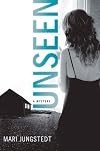
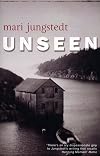
Swedish crime at its best---dark, atmospheric, and chillingThe island of Gotland is in the middle of a busy tourist season and getting ready for Midsummer, the 4th of July of Swedish holidays, when a young woman and her dog are found brutally murdered. The dog has been beheaded and is missing a paw; the woman is naked, covered in gruesome axe wounds, and her panties have been stuffed in her mouth.What looks like a crime committed by the victim's jealous husband keeps the local police force show more on their toes. Then a second victim is found. A serial killer terrorizes tourists and locals alike, and Inspector Anders Knutas has to face additional pressure from the media and local politicians who are worried about bad PR for the island.In his quest for the murderer, he is aided by Johan Berg, an intrepid young journalist from Stockholm who has been sent to cover the incidents and who gets involved with Emma, one of the first victim's close friends. Three women die before Knutas and Berg, each approaching the case in their own way, finally close in on the killer, who has always, until now, been the one unseen by everybody.Jungstedt has written an atmospheric and exciting first mystery in clear, unadorned prose, in the tradition of Henning Mankell, Hakan Nesser, and Karin Fossum." show lessTags
Recommendations

















Member Reviews
Far out, Scandinavian crime month is brilliant! Unseen, had I not read The Ice Princess first, would probably have been my favourite book of 2011, but it is sitting solidly in second spot. This was Jungstedt's first novel, but you would never be able to tell. The story is captivating and full of twists and turns. The stunning climax was unexpected, and Jungstedt effortlessly fits all the pieces of the puzzle together in one of the best endings to a book I've read in a long time.
After a party goes wrong, a woman named Helena and her dog are found brutally murdered on a beach in Gotland, Sweden. Helena and her partner Per were involved in a heated argument the night before, and Per immediately finds himself on top of the suspect list. show more When a crucial piece of evidence points to him, Per is arrested for the murder of Helena. But while locked up, another murder occurs and the authorities and media are forced to start the search again. A murderer is terrorising the small community and the police are baffled as seemingly unconnected women begin piling up. The story is told in the third person, but follows Inspector Anders Knutas and a journalist named Johan as they try to solve the mystery before another woman is killed. When a connection is finally made between the women, Anders and Johan begin a desperate race to save a missing woman before it is too late.
What I liked most about this book is the back story to the characters. That's where the really chilling parts were... Not to downplay the novel, but the characters weren't too detailed and the story itself is quite simple. What makes it a masterpiece are the psychological threads that hold the basic storyline together; the interactions between people and the profound impact these actions can have in shaping the future, and the lengths people will go to extract revenge on those who have wronged them. The killer in this case was a particularly scary breed of psychopath, but intermittent flashbacks their childhood showed a different side to the usual killer - it gave the reader an insight into the psychology of the killer, why they grew up the way they did and how seemingly insignificant actions as a child can haunt us for the rest of our lives.
I've learnt a lot over the past few months about what I like and don't like in crime novels, and I think Unseen is a perfect blend of all the elements I like best. An intelligent story? Check. Lots of surprises? Check. An effortless look at family ties and how events shape us? Check. A highly recommendable novel? Check - now go read it for yourselves! show less
After a party goes wrong, a woman named Helena and her dog are found brutally murdered on a beach in Gotland, Sweden. Helena and her partner Per were involved in a heated argument the night before, and Per immediately finds himself on top of the suspect list. show more When a crucial piece of evidence points to him, Per is arrested for the murder of Helena. But while locked up, another murder occurs and the authorities and media are forced to start the search again. A murderer is terrorising the small community and the police are baffled as seemingly unconnected women begin piling up. The story is told in the third person, but follows Inspector Anders Knutas and a journalist named Johan as they try to solve the mystery before another woman is killed. When a connection is finally made between the women, Anders and Johan begin a desperate race to save a missing woman before it is too late.
What I liked most about this book is the back story to the characters. That's where the really chilling parts were... Not to downplay the novel, but the characters weren't too detailed and the story itself is quite simple. What makes it a masterpiece are the psychological threads that hold the basic storyline together; the interactions between people and the profound impact these actions can have in shaping the future, and the lengths people will go to extract revenge on those who have wronged them. The killer in this case was a particularly scary breed of psychopath, but intermittent flashbacks their childhood showed a different side to the usual killer - it gave the reader an insight into the psychology of the killer, why they grew up the way they did and how seemingly insignificant actions as a child can haunt us for the rest of our lives.
I've learnt a lot over the past few months about what I like and don't like in crime novels, and I think Unseen is a perfect blend of all the elements I like best. An intelligent story? Check. Lots of surprises? Check. An effortless look at family ties and how events shape us? Check. A highly recommendable novel? Check - now go read it for yourselves! show less
One of the best things I have been introduced to here on LT is the concept of reading globally, especially crime novels. Unseen is a great mystery by Swedish author Mari Jungstedt. The story is about a series of murders on the quiet tourist island of Gotland. As three women fall victim one by one, the police are desperately working to find some connection that would explain why this happened to them. By the time the pieces are put together, a fourth woman’s life is in jeopardy.
Along with the steps the police are taking, led by Inspector Anders Knutas, we also are introduced to Johan Berg a journalist who is following the story for a national TV station in Stockholm. The hunt for the killer’s identity unravels slowly, the suspense show more builds and all the while the killer is nearby, “Unseen”.
In common with all Swedish crime novels, this book is very atmospheric, her descriptions of the island were so real I could practically feel the fog.. The author doesn’t sugar-coat the murders but describes them very graphically so that we experience the true horror of such violence. Characters are well developed and interesting and I look forward to reading the next book in this series. show less
Along with the steps the police are taking, led by Inspector Anders Knutas, we also are introduced to Johan Berg a journalist who is following the story for a national TV station in Stockholm. The hunt for the killer’s identity unravels slowly, the suspense show more builds and all the while the killer is nearby, “Unseen”.
In common with all Swedish crime novels, this book is very atmospheric, her descriptions of the island were so real I could practically feel the fog.. The author doesn’t sugar-coat the murders but describes them very graphically so that we experience the true horror of such violence. Characters are well developed and interesting and I look forward to reading the next book in this series. show less
I'm not sure if it was a function of the translation, or if it was the fact that this was Jungstedt's first novel, but Unseen struck me as rather flat and affectless. None of the characters came alive for me, I thought the killer's motive was clichéd and his identity far too obvious. I did like the detail which Jungstedt provided about life on the Swedish island of Gotland, though—it sounds very beautiful and peaceful, and I've added it to the list of places I would like to visit.
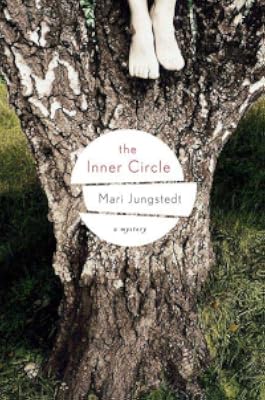
I got confused which is nothing, absolutely nothing, new. But one night, for some reason, I plucked THE INNER CIRCLE by Mari Jungstedt from the stacks, and started reading. Then I got quite convinced I'd already read the book. So I went to check and found UNSEEN, which I then re-read, ending up very struck by the similarities between the two plots. Which got me wondering if there were similarities in all of them, and as I had a number of the books to hand, I thought I'd read them in order and see what was going on.
Still managed to screw up the order completely. Sigh. Oh, and THE INNER CIRCLE was also published as UNKNOWN just to add to the confusion.
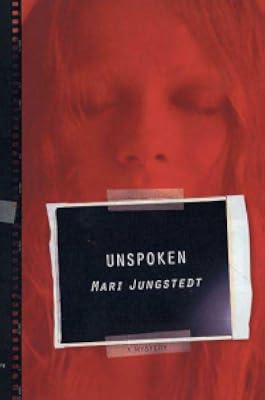
So, anyway, I read UNSEEN, then THE INNER CIRCLE / UNKNOWN, then THE KILLER'S ART and show more finally UNSPOKEN which got me to the end of the books that were here, waiting to be read. Having spread this little exercise out over a couple of months, I was still struck by the similarities - sometimes in plot elements, always in the ongoing personal elements, and overwhelmingly in the way that the journalistic aspects take precedence over the police investigation, although the last part does seem to moderate a little in the final book - UNSPOKEN.
It comes as absolutely no surprise that the author of these books has worked as a journalist as that viewpoint is undoubtedly the strongest in all of these books. Whilst that aspect is obviously written with authority, it does rather skew the investigative aspects of the various cases. The personal complications of this particular journalist's personal life, absolutely did not help this reader as the whole thing lurched too much into melodrama for my liking. Add to that a rather journalistic, rather than storytelling author style and I will admit I was struggling.
A struggle obviously not helped by the idea of reading all of the books in rapid succession. I could really see the similarities after the second book, and the increasing predictability, and to be frank, tediousness of the personal life was increasingly boring and vaguely irritating. I definitely remember reading UNSEEN the first time round (of course I do, the similarities between it and UNKNOWN were what sent me off on this quest after all), and whilst I was not overly impressed at the time, I wasn't put off completely either. By the end of all four books though I have to confess I was increasingly underwhelmed with the series. Not one that I'd avoid, but not one that I'd shunt to the top of the pile by default.
http://www.austcrimefiction.org/review/unseen-mari-jungstedt show less
Still managed to screw up the order completely. Sigh. Oh, and THE INNER CIRCLE was also published as UNKNOWN just to add to the confusion.
So, anyway, I read UNSEEN, then THE INNER CIRCLE / UNKNOWN, then THE KILLER'S ART and show more finally UNSPOKEN which got me to the end of the books that were here, waiting to be read. Having spread this little exercise out over a couple of months, I was still struck by the similarities - sometimes in plot elements, always in the ongoing personal elements, and overwhelmingly in the way that the journalistic aspects take precedence over the police investigation, although the last part does seem to moderate a little in the final book - UNSPOKEN.
It comes as absolutely no surprise that the author of these books has worked as a journalist as that viewpoint is undoubtedly the strongest in all of these books. Whilst that aspect is obviously written with authority, it does rather skew the investigative aspects of the various cases. The personal complications of this particular journalist's personal life, absolutely did not help this reader as the whole thing lurched too much into melodrama for my liking. Add to that a rather journalistic, rather than storytelling author style and I will admit I was struggling.
A struggle obviously not helped by the idea of reading all of the books in rapid succession. I could really see the similarities after the second book, and the increasing predictability, and to be frank, tediousness of the personal life was increasingly boring and vaguely irritating. I definitely remember reading UNSEEN the first time round (of course I do, the similarities between it and UNKNOWN were what sent me off on this quest after all), and whilst I was not overly impressed at the time, I wasn't put off completely either. By the end of all four books though I have to confess I was increasingly underwhelmed with the series. Not one that I'd avoid, but not one that I'd shunt to the top of the pile by default.
http://www.austcrimefiction.org/review/unseen-mari-jungstedt show less
The first of Mari Jungstedt's Gotland murder mysteries, featuring Inspector Knutas and the young journalist Johan Berg. These novels have everything we have come to expect from Scandi noir -- tense plotting, strong characterization, and a powerful sense of place. The island of Gotland, where these novels are set, is a particularly lovely and exotic locale. It plays a major role in the stories.
The Gotland setting puts the contrast between fictional Swedish crime and actual Swedish crime into sharp focus. When I visited Gotland a few years ago, our hotel had a rack of Ms. Jungstedt's novels in the lobby, mostly in Swedish. I told the innkeeper that I wished more had been translated: he laughed and said that her books were very popular, show more but perhaps a little exaggerated. He told me that there had been just one real murder on Gotland in the past 35 years, despite the extraordinariy high fictional crime rate. For Sweden as a whole, there were 93 deaths in 2009 due to manslaughter, assault or murder, in a population of 9.4 million. Fictionally, of course, the place is awash in blood. One is reminded of 1930's Britain, when fictional murder ran rampant, but the country in fact was very law abiding. Ah, well, that's what makes fiction fun. show less
The Gotland setting puts the contrast between fictional Swedish crime and actual Swedish crime into sharp focus. When I visited Gotland a few years ago, our hotel had a rack of Ms. Jungstedt's novels in the lobby, mostly in Swedish. I told the innkeeper that I wished more had been translated: he laughed and said that her books were very popular, show more but perhaps a little exaggerated. He told me that there had been just one real murder on Gotland in the past 35 years, despite the extraordinariy high fictional crime rate. For Sweden as a whole, there were 93 deaths in 2009 due to manslaughter, assault or murder, in a population of 9.4 million. Fictionally, of course, the place is awash in blood. One is reminded of 1930's Britain, when fictional murder ran rampant, but the country in fact was very law abiding. Ah, well, that's what makes fiction fun. show less
First Line: The evening was turning out better than expected.
No couple wants their party to end with thrown punches and jealous accusations, but the party thrown by Per and Helena in their cabin on Gotland ended exactly that way. The next morning, Helena's body is found-- she's been the victim of a brutal axe murder. Normally a quiet island that bustles when all the summer visitors arrive, Gotland puts Inspector Anders Knutas in charge of the investigation. Clues may be slow to piece together, but two more grisly murders follow in rapid succession. Knutas has his work cut out for him, and he has yet to decide if the presence of reporter Johan Berg is more help or hindrance.
After reading two of Johan Theorin's novels which are also set show more on the island of Gotland, I felt as though I were already familiar with the location, but Jungstedt's focus is on the towns and not the natural world. Through her descriptions of communities like Visby, I am now more aware of the history of the area.
I enjoyed Jungstedt's characterizations of Knutas and his wife as well as the reporter Johan Berg, but the secondary characters were two-dimensional and didn't really come to life. I also found the killer's motivations to be a bit cliched, and the police slow to jump at some rather obvious clues.
On the whole, however, I enjoyed Unseen and thought it shows quite a bit of promise. I'll be looking for other books in this series. show less
No couple wants their party to end with thrown punches and jealous accusations, but the party thrown by Per and Helena in their cabin on Gotland ended exactly that way. The next morning, Helena's body is found-- she's been the victim of a brutal axe murder. Normally a quiet island that bustles when all the summer visitors arrive, Gotland puts Inspector Anders Knutas in charge of the investigation. Clues may be slow to piece together, but two more grisly murders follow in rapid succession. Knutas has his work cut out for him, and he has yet to decide if the presence of reporter Johan Berg is more help or hindrance.
After reading two of Johan Theorin's novels which are also set show more on the island of Gotland, I felt as though I were already familiar with the location, but Jungstedt's focus is on the towns and not the natural world. Through her descriptions of communities like Visby, I am now more aware of the history of the area.
I enjoyed Jungstedt's characterizations of Knutas and his wife as well as the reporter Johan Berg, but the secondary characters were two-dimensional and didn't really come to life. I also found the killer's motivations to be a bit cliched, and the police slow to jump at some rather obvious clues.
On the whole, however, I enjoyed Unseen and thought it shows quite a bit of promise. I'll be looking for other books in this series. show less
Gotland is an island off the coast of Sweden that blooms with summer visitors. It is a sought-after holiday destination with cabins, holiday shacks, and a few permanent residents. Visitors come by ferry from Stockholm for weekend getaways and short holidays. It is the sort of place the young generally leave to find work.
Summer is just beginning when Helena, Per and their friends gather in the limestone cottage for a Whitsun weekend holiday. Helena has brought together people they haven't seen for a while, but unfortunately Per's jealousy destroys the evening. Within a matter of hours Helena is dead, killed in the nearby sand dunes by an axe wielding murderer.
At first Per is the obvious suspect, but there are a couple of other show more possibilities among the guests. Within days there is a second murder, a woman of similar age, same "calling card."
The investigation is handled by Inspector Anders Knutas and his team fromVisby, while an investigative journalist, Johan Berg, from Stockholm conducts a parallel inquiry, which seems at times more successful than the police one. Knutas is a methodical investigator, but there are tensions in his team, and he is under pressure to find the murderer before it impacts on Gotland's fragile tourist industry. On the other hand, Berg's mind is not always on the job as he falls in love with a woman linked to the case, but he seems to be able to get people to open up to him in a way that the police can't.
It is Emma, Helena's best friend, one of the guests at the Whitsun weekend, who eventually realises what connects the murders, by then numbering 3, and then the tension really builds.
This was an excellent read. Apart from the murder mystery aspect, it is really a story about relationships on a number of levels, and a tale that points out how our actions from our days of innocence can reach out into the present. show less
Summer is just beginning when Helena, Per and their friends gather in the limestone cottage for a Whitsun weekend holiday. Helena has brought together people they haven't seen for a while, but unfortunately Per's jealousy destroys the evening. Within a matter of hours Helena is dead, killed in the nearby sand dunes by an axe wielding murderer.
At first Per is the obvious suspect, but there are a couple of other show more possibilities among the guests. Within days there is a second murder, a woman of similar age, same "calling card."
The investigation is handled by Inspector Anders Knutas and his team fromVisby, while an investigative journalist, Johan Berg, from Stockholm conducts a parallel inquiry, which seems at times more successful than the police one. Knutas is a methodical investigator, but there are tensions in his team, and he is under pressure to find the murderer before it impacts on Gotland's fragile tourist industry. On the other hand, Berg's mind is not always on the job as he falls in love with a woman linked to the case, but he seems to be able to get people to open up to him in a way that the police can't.
It is Emma, Helena's best friend, one of the guests at the Whitsun weekend, who eventually realises what connects the murders, by then numbering 3, and then the tension really builds.
This was an excellent read. Apart from the murder mystery aspect, it is really a story about relationships on a number of levels, and a tale that points out how our actions from our days of innocence can reach out into the present. show less
Members
- Recently Added By
Lists

Scandinavian Crime Fiction
224 works; 37 members
Nordic Crime Fiction
66 works; 10 members
Scandinavian Crime
90 works; 3 members

Reading List - Scandinavian Fiction
134 works; 3 members

Books Read in 2018
4,360 works; 110 members

Llibres que he llegit el 2014
23 works; 1 member
Author Information

38 Works 3,422 Members
Some Editions
Series

Belongs to Publisher Series
Columna (784)
Common Knowledge
- Canonical title
- Unseen
- Original title
- Den du inte ser
- Original publication date
- 2003 (original Swedish) (original Swedish); 2006 (English translation) (English translation)
- People/Characters*
- Anders Knutas
- Important places
- Gotland, Sweden
- Related movies
- "Der Kommissar und das Meer" - Den du nicht siehst (2007 | TV episode | IMDb)
- First words*
- La tarde discurría mejor de lo que había esperado.
- Original language
- Swedish
*Some information comes from Common Knowledge in other languages. Click "Edit" for more information.
Classifications
- Genres
- Fiction and Literature, Mystery
- DDC/MDS
- 839.738 — Literature & rhetoric German & related literatures Other Germanic literatures Swedish literature Swedish fiction 2000-
- LCC
- PT9877.2 .U64 .U57 — Language and Literature German, Dutch and Scandinavian literatures Swedish literature Individual authors or works 2001-
- BISAC
Statistics
- Members
- 625
- Popularity
- 46,710
- Reviews
- 27
- Rating
- (3.33)
- Languages
- 14 — Catalan, Czech, Danish, Dutch, English, Finnish, French, German, Hungarian, Norwegian (Bokmål), Polish, Portuguese, Spanish, Swedish
- Media
- Paper, Audiobook, Ebook
- ISBNs
- 61
- ASINs
- 8