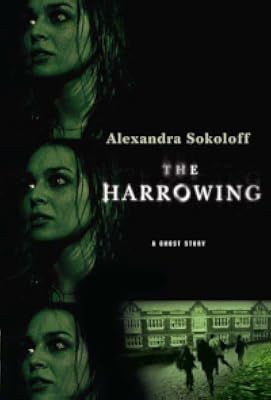
The Harrowing
by Alexandra Sokoloff
On This Page
Description
Baird College's Mendenhall echoes with the footsteps of the last home-bound students heading off for Thanksgiving break, and Robin Stone swears she can feel the creepy, hundred-year-old residence hall breathe a sigh of relief for its long-awaited solitude. Or perhaps it's only gathering itself for the coming weekend. As a massive storm dumps rain on the isolated campus, four other lonely students reveal themselves: Patrick, a handsome jock; Lisa, a manipulative tease; Cain, a brooding show more musician; and finally Martin, a scholarly eccentric. Each has forsaken a long weekend at home for their own secret reasons. The five unlikely companions establish a tentative rapport, but they soon become aware of a sixth presence disturbing the ominous silence that pervades the building. Are they the victims of a simple college prank taken way too far, or is the unusual energy evidence of something genuine—and intent on using the five students for its own terrifying ends? It's only Thursday afternoon, and they have three long days and dark nights before the rest of the world returns to find out what's become of them. But for now it's just the darkness keeping company with five students nobody wants and no one will miss. show lessTags
Recommendations
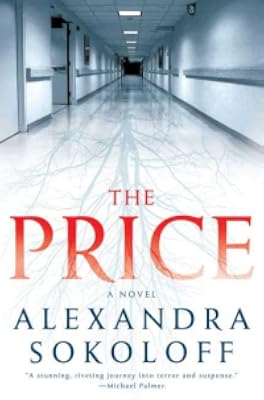
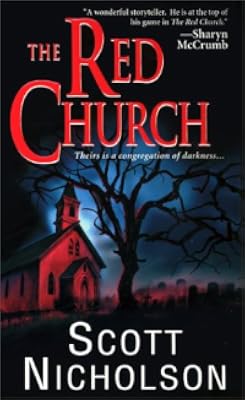
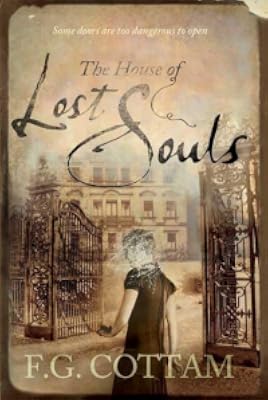
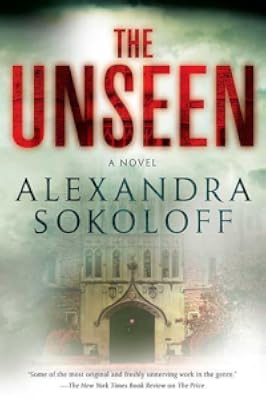


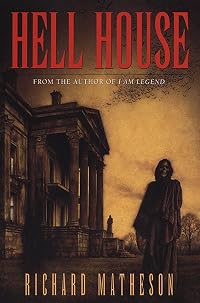
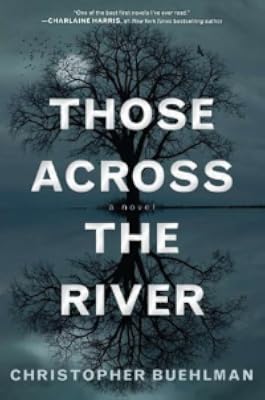
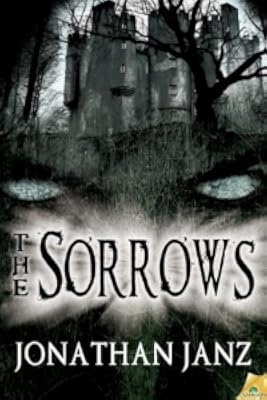
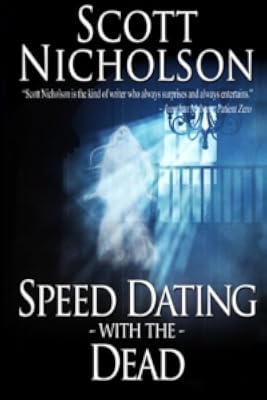







Member Recommendations
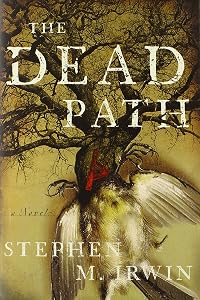
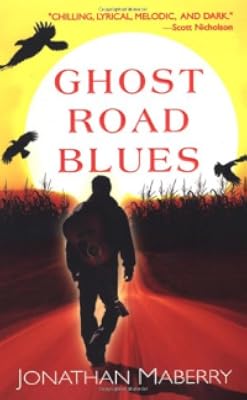
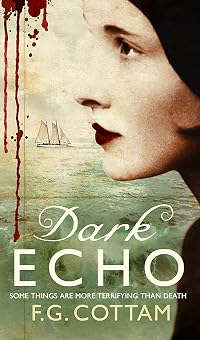
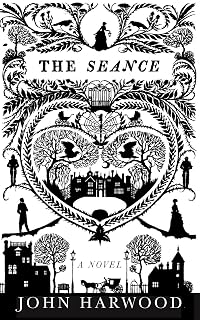
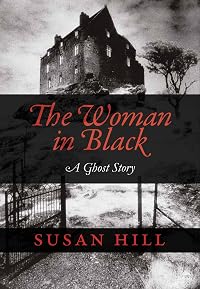
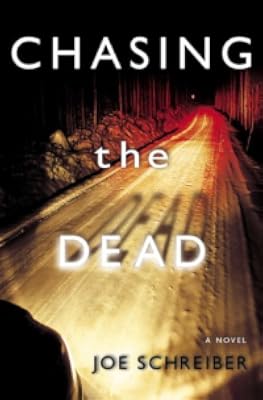
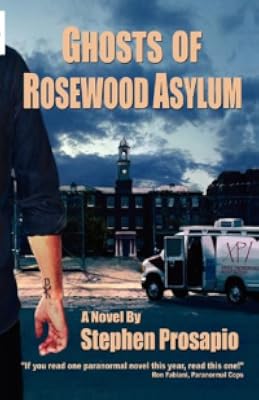
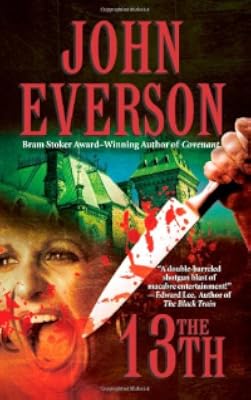
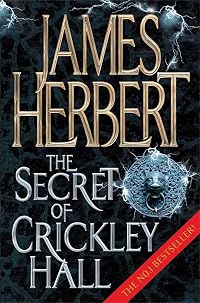
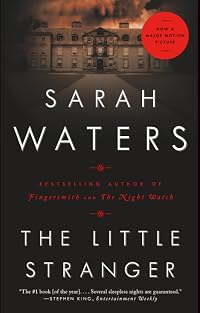
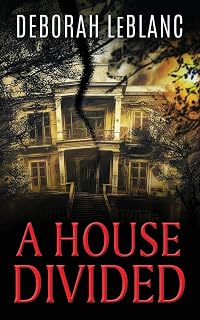
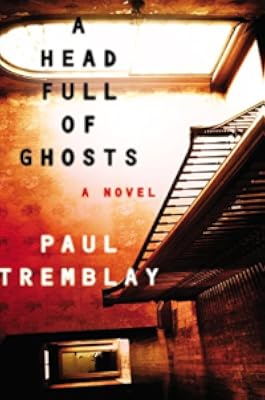
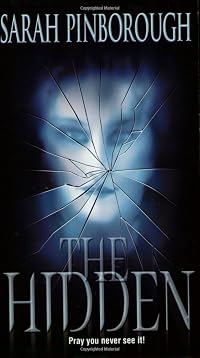
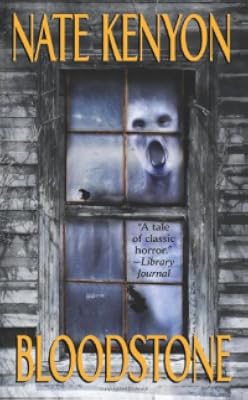
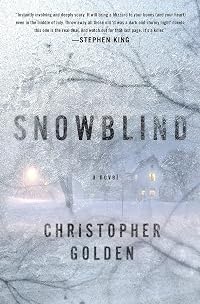
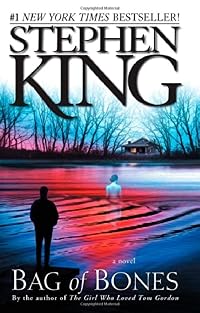
Joles Both are set with students alone in a school, with man vs. nature odds and horrific consequences.
Member Reviews
I grew up on a steady diet of horror films. I read horror. I am not easily frightened. This book scared the living crap out of me. But when you introduce a Ouija board and a restless spirit and then throw in a little Jewish mysticism... how could it induce anything besides the heebee jeebees? Hey, I have a history with a Ouija board and say what you will (that the experience was not mystical but psychological and that I did not witness a possession but only the breakdown of someone already on the edge of psychosis) but those things terrify me.
Basic plot: five college students find themselves to be the only ones in the dormitory for Thanksgiving break. They don't know each other well. Of course, the lights go out. They all congregate in show more the dorm lounge and light candles. The quiet studious fellow sits alone with his psychology books spread around him. The jock has a bottle of booze. The law student-slash-musician is bored by them all. The invisible girl simply hovers. So when the flirty girl in the alternate universe horror variety of the College Breakfast Club pulls a box out of a cabinet and utters the famous words "hey, look what I found! Who wants to play?", I should have tossed the book in a dumpster on the other side of town and started a Lemony Snicket. But I didn't.
This book is dark and there is a sense of foreboding from the first page. As things progress and the reader is left to decipher what is actually happening, the pace quickens and this baby moves like lightning. The psychology student asks "Do our demons come from within or without?" It's a frightening question. I couldn't put the book down and raced to finish it before the sun went down. It scared me that much.
Seriously. If my horror group has not read The Harrowing, I am going to make a recommendation. This book is the stuff of nightmares. show less
Basic plot: five college students find themselves to be the only ones in the dormitory for Thanksgiving break. They don't know each other well. Of course, the lights go out. They all congregate in show more the dorm lounge and light candles. The quiet studious fellow sits alone with his psychology books spread around him. The jock has a bottle of booze. The law student-slash-musician is bored by them all. The invisible girl simply hovers. So when the flirty girl in the alternate universe horror variety of the College Breakfast Club pulls a box out of a cabinet and utters the famous words "hey, look what I found! Who wants to play?", I should have tossed the book in a dumpster on the other side of town and started a Lemony Snicket. But I didn't.
This book is dark and there is a sense of foreboding from the first page. As things progress and the reader is left to decipher what is actually happening, the pace quickens and this baby moves like lightning. The psychology student asks "Do our demons come from within or without?" It's a frightening question. I couldn't put the book down and raced to finish it before the sun went down. It scared me that much.
Seriously. If my horror group has not read The Harrowing, I am going to make a recommendation. This book is the stuff of nightmares. show less
Atmospheric and creepy horror novel set in an old, east coast gothic college that brings together five troubled students over a Thanksgiving weekend.
As others mentioned here it definitely has a cinematic feel. I could visualize everything that she was writing because she used archetypal images from countless horror movies (ie Black Christmas) but still managed to use them to her advantage and maintain tension through her unique plot manipulations. Sokoloff is a screenwriter and she knows how to give minimal background information on the characters through dialogue rather than introspection which makes the pacing of this novel fly.
I was totally enthralled by this book and will definitely be checking out more of her work.
As others mentioned here it definitely has a cinematic feel. I could visualize everything that she was writing because she used archetypal images from countless horror movies (ie Black Christmas) but still managed to use them to her advantage and maintain tension through her unique plot manipulations. Sokoloff is a screenwriter and she knows how to give minimal background information on the characters through dialogue rather than introspection which makes the pacing of this novel fly.
I was totally enthralled by this book and will definitely be checking out more of her work.
Rare (I suppose) is the horror novel that uses Kabbalah as its jumping-off point. Rarer still, these days, at least, is a novel in which cell phones are only minimally present, and in which the characters visit an Internet cafe. First published in 2006, though, Alexandra Sokoloff's The Harrowing (A Ghost Story) exists in that interstitial period between the advent of the Internet and its omnipresence via smart phones and wireless networks. And guess what? Those anachronisms work in The Harrowing's favor. It's like The Breakfast Club with mysticism and bloodshed.
Welcome to Baird College, a liberal arts institution ambiguously located in the Northeast. Whatever state Baird is located in, the locals must own slickers and rain boots, show more because it rains all the time. Sokoloff must have glommed onto the notion that rain is creepy, because it only ceases to rain for a few pages throughout the book, and, even then, the weather remains dank and dreary. What's the suicide rate at Baird? Riddle me that, admissions office. If we go by the feelings of our main character, Robin Stone, we might assume that Baird isn't doing well maintaining its students' mental health. As Thanksgiving break nears, Robin, dejected, socially isolated, and suicidal, readies herself to spend the holiday alone. In her big ol' creepy dorm. Great idea, Robin.
Fortunately, for both Robin and the story, her attempt at suicide is interrupted when she realizes that several other students remain behind: Patrick, the footballer on whom she has a crush; Lisa, the "vamp"; Cain (seriously?), the nihilistic rocker-cum-prelaw student; and Martin, the atheist only-son of an Orthodox rabbi. At this point, the most unbelievable aspect of the story is that a rabbi might name his son "Martin." All five students are in their own ways damaged, and, in their brokenness, they can relate to one another. It is perhaps unsurprising that they decide to spend the dark and stormy night before Thanksgiving playing with a Ouija board, making (possible) contact with a spirit calling itself Zachary who seems to know an awful lot about the five of them, and who exhibits a mean anti-Semitic streak. (Fun fact: The Hebrew root from which "Zachary" is derived--zakor--means "remember.") At this point, readers with a passing familiarity to what Martin derisively refers to as "Madonna's Kabbalah" will have a sense where this is headed: The rabbi's son; the red bracelet on Lisa's wrist (a ward against evil); Zachary's references to "shells" and "discarded ones" all point to Kabbalah. (I'm not really giving anything away here.) It goes without saying that things take a nasty turn as the weekend progresses, and that things aren't what they appear.
Sokoloff is at her strongest when it comes to establishing setting and atmosphere. She describes Baird's campus as being "unmarred by the slightest sight of civilization"; indeed, "the isolation seemed ominous." Likewise, the lecture Robin attends immediately prior to the holiday break is "soporific, strangely hypnotic." Solitude and altered states of consciousness within just the first few pages. Approaching her dorm, Robin "never noticed how the high windows near the top of the balcony looked like watching eyes." Okay, we get it; you're laying it on a bit thick, now. "And the double doors, flicking, serpentine tongues, tasting the scent of its prey as it neared its gaping maw." Nope, I made that last one up.
Robin and her fellow characters are recognizable and relatable, if shallowly drawn. Sokoloff tells the story from Robin's perspective. Despite her initial emotional problems, Robin seems remarkably resilient; indeed, contact with the others, and with Zachary, seems to provide her energy and strength. Intuitive readers will immediately guess the relational outcomes of the characters, though. Populated by college students, it's inevitable that the characters become involved with one another. Even the powers of the beyond (spooky voice) can't interfere with raging hormones! (Indeed, it seems to feed upon them, raising, for this reader, at least, the question of why horror is the most conservative of all genre fiction.)
Sokoloff began her career as a screenwriter, a background that informs the structure of The Harrowing. The novel is clearly divided into three sections: The beginning consists of Thanksgiving weekend; the bridge, the return to "normality" and Robin's subsequent investigation into Zachary's identity; and, finally, the action-packed conclusion, in which all pretense at thoughtfulness is cast aside. It goes without saying that the third act is the weakest.
Ultimately, The Harrowing is a bit of a missed opportunity. Sokoloff maintains ambiguity throughout the first third of the novel, hinting that the "seance" held over the Ouija board may be supernatural in origin without quite saying it. While Cain suspects trickery, Martin is fascinated by the possibility that the events are precipitated by some kind of hitherto unknown psychological phenomena. All of the students are experiencing extreme emotional stress, and Sokoloff suggests that there are rational explanations for what's going on, all of which appeals to the possibility that horror is found in ambiguity rather than certainty. Unfortunately, Sokoloff errs on the side of the latter: She takes the safe path, and, thus, abandons any attempt at depth or thoughtfulness.
The Harrowing is an engaging and emotionally satisfying "horror" story, and, refreshingly, a tale more concerned with mood and atmosphere than with bloodshed and gore. Although The Harrowing lacks depth, it is well told, and uses Kabbalah to introduce a novel element into the story's background. show less
Welcome to Baird College, a liberal arts institution ambiguously located in the Northeast. Whatever state Baird is located in, the locals must own slickers and rain boots, show more because it rains all the time. Sokoloff must have glommed onto the notion that rain is creepy, because it only ceases to rain for a few pages throughout the book, and, even then, the weather remains dank and dreary. What's the suicide rate at Baird? Riddle me that, admissions office. If we go by the feelings of our main character, Robin Stone, we might assume that Baird isn't doing well maintaining its students' mental health. As Thanksgiving break nears, Robin, dejected, socially isolated, and suicidal, readies herself to spend the holiday alone. In her big ol' creepy dorm. Great idea, Robin.
Fortunately, for both Robin and the story, her attempt at suicide is interrupted when she realizes that several other students remain behind: Patrick, the footballer on whom she has a crush; Lisa, the "vamp"; Cain (seriously?), the nihilistic rocker-cum-prelaw student; and Martin, the atheist only-son of an Orthodox rabbi. At this point, the most unbelievable aspect of the story is that a rabbi might name his son "Martin." All five students are in their own ways damaged, and, in their brokenness, they can relate to one another. It is perhaps unsurprising that they decide to spend the dark and stormy night before Thanksgiving playing with a Ouija board, making (possible) contact with a spirit calling itself Zachary who seems to know an awful lot about the five of them, and who exhibits a mean anti-Semitic streak. (Fun fact: The Hebrew root from which "Zachary" is derived--zakor--means "remember.") At this point, readers with a passing familiarity to what Martin derisively refers to as "Madonna's Kabbalah" will have a sense where this is headed: The rabbi's son; the red bracelet on Lisa's wrist (a ward against evil); Zachary's references to "shells" and "discarded ones" all point to Kabbalah. (I'm not really giving anything away here.) It goes without saying that things take a nasty turn as the weekend progresses, and that things aren't what they appear.
Sokoloff is at her strongest when it comes to establishing setting and atmosphere. She describes Baird's campus as being "unmarred by the slightest sight of civilization"; indeed, "the isolation seemed ominous." Likewise, the lecture Robin attends immediately prior to the holiday break is "soporific, strangely hypnotic." Solitude and altered states of consciousness within just the first few pages. Approaching her dorm, Robin "never noticed how the high windows near the top of the balcony looked like watching eyes." Okay, we get it; you're laying it on a bit thick, now. "And the double doors, flicking, serpentine tongues, tasting the scent of its prey as it neared its gaping maw." Nope, I made that last one up.
Robin and her fellow characters are recognizable and relatable, if shallowly drawn. Sokoloff tells the story from Robin's perspective. Despite her initial emotional problems, Robin seems remarkably resilient; indeed, contact with the others, and with Zachary, seems to provide her energy and strength. Intuitive readers will immediately guess the relational outcomes of the characters, though. Populated by college students, it's inevitable that the characters become involved with one another. Even the powers of the beyond (spooky voice) can't interfere with raging hormones! (Indeed, it seems to feed upon them, raising, for this reader, at least, the question of why horror is the most conservative of all genre fiction.)
Sokoloff began her career as a screenwriter, a background that informs the structure of The Harrowing. The novel is clearly divided into three sections: The beginning consists of Thanksgiving weekend; the bridge, the return to "normality" and Robin's subsequent investigation into Zachary's identity; and, finally, the action-packed conclusion, in which all pretense at thoughtfulness is cast aside. It goes without saying that the third act is the weakest.
Ultimately, The Harrowing is a bit of a missed opportunity. Sokoloff maintains ambiguity throughout the first third of the novel, hinting that the "seance" held over the Ouija board may be supernatural in origin without quite saying it. While Cain suspects trickery, Martin is fascinated by the possibility that the events are precipitated by some kind of hitherto unknown psychological phenomena. All of the students are experiencing extreme emotional stress, and Sokoloff suggests that there are rational explanations for what's going on, all of which appeals to the possibility that horror is found in ambiguity rather than certainty. Unfortunately, Sokoloff errs on the side of the latter: She takes the safe path, and, thus, abandons any attempt at depth or thoughtfulness.
The Harrowing is an engaging and emotionally satisfying "horror" story, and, refreshingly, a tale more concerned with mood and atmosphere than with bloodshed and gore. Although The Harrowing lacks depth, it is well told, and uses Kabbalah to introduce a novel element into the story's background. show less
It's Thanksgiving and the residents of Baird College are departing for home for the weekend to spend the holiday with their families. All except for a small group of 5 students who, for various reasons, decide to spend their holiday alone in the century-old university building. Then they find a Ouija board. Yep, you can probably guess what happens next.
Although I enjoyed the novel overall, it never felt like it ever quite hit its stride. I didn't like it much at all in the beginning, primarily because the characters were flat and obnoxiously horny, but even when those issues were remedied (stop giggling!) the horror aspect never fully developed. There were some very suspenseful moments, and the story is certainly dark, but it all feels show more a bit superficial and by the time you realize just how horrible the situation is it starts feeling more like a thriller. It's not bad necessarily, but also not as scary as I was expecting.
I read in the author description that Alexandra Sokoloff is also a screenwriter and has worked on adapting books to screen. I can actually see this reflected in her writing, as the pacing is exactly what you would expect from your average horror movie in modern cinema. Loads of sexual tension in the beginning, a brief period of dark and brooding suspense, some near-death experiences, a sex scene, and then an explosive ending...to the story, not the sex scene. Anyway, it feels very movie-ready, and it's a pretty decent horror novel too. show less
Although I enjoyed the novel overall, it never felt like it ever quite hit its stride. I didn't like it much at all in the beginning, primarily because the characters were flat and obnoxiously horny, but even when those issues were remedied (stop giggling!) the horror aspect never fully developed. There were some very suspenseful moments, and the story is certainly dark, but it all feels show more a bit superficial and by the time you realize just how horrible the situation is it starts feeling more like a thriller. It's not bad necessarily, but also not as scary as I was expecting.
I read in the author description that Alexandra Sokoloff is also a screenwriter and has worked on adapting books to screen. I can actually see this reflected in her writing, as the pacing is exactly what you would expect from your average horror movie in modern cinema. Loads of sexual tension in the beginning, a brief period of dark and brooding suspense, some near-death experiences, a sex scene, and then an explosive ending...to the story, not the sex scene. Anyway, it feels very movie-ready, and it's a pretty decent horror novel too. show less
Eh, reminds me why I gave up horror when I was in my 20s. It never scared me anyway and this was such a rehash of old plots and congealed thrills that I skimmed more than I read. It was like The Breakfast Club meets Hell House drizzled with a splash of The Exorcist at the end. Overall it gelled, but some things clanged like a college kid wearing aftershave. Really? And everyone was freaked all the time; aren't there other words? And the feeling...everyone felt everything; people's presences, their bodies shifting, their eyes on them - ugh. Oh and I guess Google is nobody's friend in this since someone called directory assistance and went to a temple to talk to a rabbi...oh and steal from their library. And that epilogue. Thud.
Not show more everything was terrible; comparing Martin to The White Rabbit was pretty nice. The atmosphere was well drawn. I liked the use of Jewish mysticism as well although I have no idea how or why the kids got so adept at reading translated Yiddish or performing basically unknown rituals. Again, I'm back to meh. Teenage angst and hokey spirits from the abyss just don't do it for me anymore. show less
Not show more everything was terrible; comparing Martin to The White Rabbit was pretty nice. The atmosphere was well drawn. I liked the use of Jewish mysticism as well although I have no idea how or why the kids got so adept at reading translated Yiddish or performing basically unknown rituals. Again, I'm back to meh. Teenage angst and hokey spirits from the abyss just don't do it for me anymore. show less
I've read books by Sokoloff before, so I had high hopes for this one. But this was her debut novel, and I don't think it quite measures up to some of her later efforts. Or maybe it's just my mood, or a matter of comparison -- the fact that I just read an especially masterful piece of horror by Stephen King
The initial elements of The Harrowing are somewhat time-worn but promising. Five students alone together in a huge, creepy dorm over Thanksgiving break. Big storm. Power failure. Candles. Ouija board. The atmosphere is well drawn: Sokoloff, a screenwriter, sets the scene vividly. There are definitely some chills in this creepy book. And I found it interesting how Sokoloff draws upon ancient Jewish mysticism, coupled with Freudian and show more Jungian psychology, for inspiration -- some fresh angles are explored. But I can't say it all quite works for me. The potential for subtle, sophisticated horror (inherent in the mysticism and the psychological angles) is eventually swamped by more sensational elements as the story moves toward its climax. That just wasn't what I was looking for, and there was an "eeeewwww" factor involved (for me) in part of the plot. In the final two chapters and epilogue Sokoloff attempts to draw it back to subtlety, but it wasn't very effective (IMO), with the epilogue coming across like a carbon copy of so many other horror story epilogues, names changed to protect the innocent. show less
The initial elements of The Harrowing are somewhat time-worn but promising. Five students alone together in a huge, creepy dorm over Thanksgiving break. Big storm. Power failure. Candles. Ouija board. The atmosphere is well drawn: Sokoloff, a screenwriter, sets the scene vividly. There are definitely some chills in this creepy book. And I found it interesting how Sokoloff draws upon ancient Jewish mysticism, coupled with Freudian and show more Jungian psychology, for inspiration -- some fresh angles are explored. But I can't say it all quite works for me. The potential for subtle, sophisticated horror (inherent in the mysticism and the psychological angles) is eventually swamped by more sensational elements as the story moves toward its climax. That just wasn't what I was looking for, and there was an "eeeewwww" factor involved (for me) in part of the plot. In the final two chapters and epilogue Sokoloff attempts to draw it back to subtlety, but it wasn't very effective (IMO), with the epilogue coming across like a carbon copy of so many other horror story epilogues, names changed to protect the innocent. show less
The Harrowing gets five stars, good as chocolate, because I adored the buildup. Five college students stay behind in a spooky college dorm during Thanksgiving break. The torrential rains and vast, old building make for that "dark and stormy night" so beloved in mysteries. The denouement is pretty standard for the teen-slasher genre; nevertheless, I enjoyed The Harrowing very much. It was a bit like The Breakfast Club gets retention in Hill House. (A reviewer on Amazon gave me that idea.)
" 'This is what evil is,' Robin realized. 'So close to human, but a perversion of all that is human. I understand now.' "-Robin Stone
" 'This is what evil is,' Robin realized. 'So close to human, but a perversion of all that is human. I understand now.' "-Robin Stone
Members
- Recently Added By
Lists

Recommended Horror and Dark Fiction by Women
81 works; 13 members

Books Read in 2014
2,343 works; 89 members

Ghosts
278 works; 18 members

Reading Glasses Podcast
410 works; 3 members
Author Information

24+ Works 1,789 Members
Awards and Honors
Common Knowledge
- Original publication date
- 2006-09
- People/Characters
- Robin Stone; Waverly Todd; Patrick O'Connor; Lisa Marlowe; Martin Seltzer; Cain Jackson (show all 7); Zachary Prince
- Important places
- Baird College
- Dedication
- For Dad, who told me ghost stories
- First words
- The memorial was buried deep in an oak grove in the heart of campus. (Prologue)
It had been raining since possibly the beginning of time. (Chapter One) - Last words
- (Click to show. Warning: May contain spoilers.)He stepped to her side and the four of them looked down at the new bronze plaque under the old names:
IN MEMORIAM—PATRICK O'CONNOR
OUR FRIEND
(Click to show. Warning: May contain spoilers.)"Hey, look what I found. Anyone want to play?" (Epilogue) - Blurbers
- Levin, Ira; Wilson, F. Paul; Campbell, Ramsey; Lebbon, Tim
Classifications
Statistics
- Members
- 357
- Popularity
- 88,013
- Reviews
- 27
- Rating
- (3.64)
- Languages
- English, French, German
- Media
- Paper, Audiobook, Ebook
- ISBNs
- 10
- ASINs
- 4