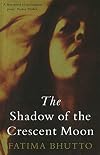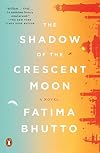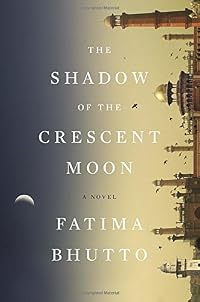
The Shadow of the Crescent Moon
by Fatima Bhutto
On This Page
Description
In this beautifully observed novel, individuals are pushed to make terrible choices. And as the events of this single morning unfold, one woman is at the center of it all.Tags
Recommendations













Member Reviews
Fatima Bhutto’s The Shadow of the Crescent Moon is a novel that deserves wide reading for its topic—but more than that, it deserves wide reading for its writing. The novel recounts the experiences of three brothers on Eid (the Muslim new year) in Mir Ali, a small town in Pakistan, near the border with Afghanistan, whose populace have been engaged in a long-term civil war against the Pakistani government.
Life in Mir Ali is perpetually violent. In addition to government and local combatants, there are US drones, and an influx of guerrillas from Afghanistan, who see themselves as freedom fighters, but who don’t differentiate between government targets and local targets that don’t share their particular branch of Islam. In fact, the show more violence has become so commonplace that for the first time ever the three brothers will not be attending the same mosque for Eid. Instead, each of them is going to a different mosque, a way of ensuring that at least someone will survive the violence that is apt to occur.
Although the primary action of the novel takes place during a period of a few hours, Bhutto offers enough back story that readers can unravel the complicated politics of the region. Perhaps not completely—but certainly more effectively and thoroughly than I’ve seen them explained in any other popular source.
The use of the three brothers allows Bhutto to offer multiple perspectives. Aman Erum, the eldest, has been studying in the U.S. and is desperate to leave Mir Ali for better opportunities elsewhere. Sikandar, the middle brother, is a physician whose son, an only child, has recently been killed in a bombing. Hayat, the youngest, has devoted his life to independence for Mir Ali, having spent his childhood listening to his father’s tales of earlier uprisings. Two women figure significantly as well: Mina, Sikandar’s wife, who has begun obsessively attending funerals of victims of terrorist violence, even when they are complete strangers to her, and Samarra, loved by both the oldest and the youngest, who has risen from a position as a courier for to leader of one of Mir Ali’s most active rebel cells.
As the few hours’ action plays out, readers are thrown from one crisis to the next. Even as each character strives to do what’s right, he (or she) finds himself trapped by circumstances, forced to betray his deepest convictions.
Don’t wait for this novel to come out in paperback. Read it now—both for its political context and for its crisp prose and rapidly paced plot. show less
Life in Mir Ali is perpetually violent. In addition to government and local combatants, there are US drones, and an influx of guerrillas from Afghanistan, who see themselves as freedom fighters, but who don’t differentiate between government targets and local targets that don’t share their particular branch of Islam. In fact, the show more violence has become so commonplace that for the first time ever the three brothers will not be attending the same mosque for Eid. Instead, each of them is going to a different mosque, a way of ensuring that at least someone will survive the violence that is apt to occur.
Although the primary action of the novel takes place during a period of a few hours, Bhutto offers enough back story that readers can unravel the complicated politics of the region. Perhaps not completely—but certainly more effectively and thoroughly than I’ve seen them explained in any other popular source.
The use of the three brothers allows Bhutto to offer multiple perspectives. Aman Erum, the eldest, has been studying in the U.S. and is desperate to leave Mir Ali for better opportunities elsewhere. Sikandar, the middle brother, is a physician whose son, an only child, has recently been killed in a bombing. Hayat, the youngest, has devoted his life to independence for Mir Ali, having spent his childhood listening to his father’s tales of earlier uprisings. Two women figure significantly as well: Mina, Sikandar’s wife, who has begun obsessively attending funerals of victims of terrorist violence, even when they are complete strangers to her, and Samarra, loved by both the oldest and the youngest, who has risen from a position as a courier for to leader of one of Mir Ali’s most active rebel cells.
As the few hours’ action plays out, readers are thrown from one crisis to the next. Even as each character strives to do what’s right, he (or she) finds himself trapped by circumstances, forced to betray his deepest convictions.
Don’t wait for this novel to come out in paperback. Read it now—both for its political context and for its crisp prose and rapidly paced plot. show less
THE SHADOW OF THE CRESCENT MOON is a riveting story that place over a couple hours on a rainy Friday morning in Mir Ali, a small town in a tribal region bordering Afghanistan, as three brothers and two of the women they love find their past, present, and future merge together. It is the thriller-like anticipation and the elegant language that had me reading this book in one session. I was interested in reading this book on a region in Pakistan that I knew very little about except from the pov of news updates regarding the American militia experience so I did “google” the town – Mir Ali before beginning the book and that gave me the necessary understanding to fully appreciate this enthralling storyline.
The prologue sets up the show more storyline as the three brothers are breakfasting together before going about their day but first they have to decide which mosque each will attend as, “It is too dangerous, too risky, to place all the family together in one mosque that could easily be hit. They no longer know by whom.”
Then as the minutes/hours tick by, we learn actually what each brother is doing and why. The flashbacks provide the necessary background information and the lyrical language shows how the people go about their lives doing ordinary things overshadowed by the hovering violence that is never spoken about out loud. While the stories concentrated mostly on the male characters, it is the two women characters whose resolve and spirit surprise those around them – their love ones and their opposers.
As the pace quickens toward the climax I am holding my breath as I turn the page to see what happens, the story ends. As I re-read the last couple of pages to see if I missed a clue it dawns on me that this ending is intentional by the author. How can she provide an ending when there is no known ending to this conflict and turmoil in this region. I might have finished reading the book but the story is not over.
Overall, this is a thought-provoking book on loyalty, identity, love, and sacrifice. A very solid debut novel and I look forward to reading future books by the author. show less
The prologue sets up the show more storyline as the three brothers are breakfasting together before going about their day but first they have to decide which mosque each will attend as, “It is too dangerous, too risky, to place all the family together in one mosque that could easily be hit. They no longer know by whom.”
Then as the minutes/hours tick by, we learn actually what each brother is doing and why. The flashbacks provide the necessary background information and the lyrical language shows how the people go about their lives doing ordinary things overshadowed by the hovering violence that is never spoken about out loud. While the stories concentrated mostly on the male characters, it is the two women characters whose resolve and spirit surprise those around them – their love ones and their opposers.
As the pace quickens toward the climax I am holding my breath as I turn the page to see what happens, the story ends. As I re-read the last couple of pages to see if I missed a clue it dawns on me that this ending is intentional by the author. How can she provide an ending when there is no known ending to this conflict and turmoil in this region. I might have finished reading the book but the story is not over.
Overall, this is a thought-provoking book on loyalty, identity, love, and sacrifice. A very solid debut novel and I look forward to reading future books by the author. show less
This is a sad and seemingly hopeless story of a village, Mir Ali, in a tribal area of Pakistan that has been at war with government forces for generations. Three brothers take different paths after the death of their father. The eldest, Aman Erum, goes to college in the US, leaving behind his childhood companion, the brave tomboy Samarra. Sikander stays in Pakistan and becomes a doctor, but he and his wife Mina have had a devastating loss and cannot comfort each other. Youngest son Hayat becomes part of his father's rebellion. Forces within and outside the family divide them, but the horrifying consequences that result from their activities may end up healing the wounds. Well written, with devastating plot twists. And probably universal show more in lands with eternal war. show less
My last few reviews, I feel like I've had something pithy with which to start off. I don't have anything pithy here. This isn't a novel of levity that I can summarize with a few bon mots (or a Tom Lehrer song). This is an earthy tome of a family deep in Pakistan's tribal region. We are given three brothers, each of whom is sketched only enough so that we understand that one is The Collaborator, one the The Avoider, and the final one The Revolutionary. They are such chosen to ultimately to make the point that it is meaningless to pick a role within a corrupt system; such a system, no matter the choice, grinds everyone in it to dust.
And so, the brothers in The Shadow of the Crescent Moon make lofty speeches to each other, interrupted by show more an omniscient narrator eager to explain away some points. Motivations are simplistic because, in a struggle to survive, the characters lack the privilege of debating philosophy and nit-picking details. So that works. But then the simplicity and shallowness worms its way through the plot. An example: The characters are Shia and against the military Pakistani government. The Revolutionary has blown things up, targeted politicians, etc. Their cause is presented as, not just exactly, but understandable. But in an encounter with Sunni Talibs, the novel almost ridicules them and their anger. You could draw something out of that, these parallel yet separate revolutions, but nothing is. We have a novel where things are told and shown to you but it's all shadows; nothing underneath. We have been given lyricism without depth.
The novel ends, somewhat abruptly, with one of those vague, cloudy, endings seemingly preferred by first-time novelists (does Hayat know was is going to happen?). That's it? I thought. Times I was reminded of Dead Souls by Nikolai Gogol, with the ending that is that maybe shouldn't be and the lack of markers of time. Not for the core of the novel, which takes place over the first morning of Eid, but for the past. I could never get a grasp on when exactly anything before this first day of Eid happened -- a few days, a few weeks, a few months? Like in Dead Souls, with how long was Chichikov in the village, how long ago did the father die in The Shadow of the Crescent Moon? Is it important? Does it matter? It adds to the feeling of ethereality, of incredulity of the novel.
A timely novel, but a little uneven.
The Shadow of the Crescent Moon by Fatima Bhutto went on sale March 24, 2015.
I received a copy free from Netgalley in exchange for an honest review. show less
And so, the brothers in The Shadow of the Crescent Moon make lofty speeches to each other, interrupted by show more an omniscient narrator eager to explain away some points. Motivations are simplistic because, in a struggle to survive, the characters lack the privilege of debating philosophy and nit-picking details. So that works. But then the simplicity and shallowness worms its way through the plot. An example: The characters are Shia and against the military Pakistani government. The Revolutionary has blown things up, targeted politicians, etc. Their cause is presented as, not just exactly, but understandable. But in an encounter with Sunni Talibs, the novel almost ridicules them and their anger. You could draw something out of that, these parallel yet separate revolutions, but nothing is. We have a novel where things are told and shown to you but it's all shadows; nothing underneath. We have been given lyricism without depth.
The novel ends, somewhat abruptly, with one of those vague, cloudy, endings seemingly preferred by first-time novelists (does Hayat know was is going to happen?). That's it? I thought. Times I was reminded of Dead Souls by Nikolai Gogol, with the ending that is that maybe shouldn't be and the lack of markers of time. Not for the core of the novel, which takes place over the first morning of Eid, but for the past. I could never get a grasp on when exactly anything before this first day of Eid happened -- a few days, a few weeks, a few months? Like in Dead Souls, with how long was Chichikov in the village, how long ago did the father die in The Shadow of the Crescent Moon? Is it important? Does it matter? It adds to the feeling of ethereality, of incredulity of the novel.
A timely novel, but a little uneven.
The Shadow of the Crescent Moon by Fatima Bhutto went on sale March 24, 2015.
I received a copy free from Netgalley in exchange for an honest review. show less
This novel was good, but I still struggled to get into it and to fully appreciate the story. It certainly had its moments - I loved the scene in which Mina attacks the Taliban in her rage and beats them back. Still, it left me with a definite sadness about the book's themes and the little town in Pakistan depicted and the brothers whose lives we briefly saw. Perhaps this book is just a little too realistic, but it is good for anyone interested in the Middle East and how life is lived in war-torn places like Pakistan and Afghanistan.
3 brothers in Mir Ali, a small Pakistani town on the border of Afghanistan, decide not to go to the mosque together on Eid. The subsequent decisions they make that Friday morning results in major repercussions. The eldest brother takes a taxi to the local mosque but is suspicious of the taxi driver. The 2nd brother goes to work at a hospital. The youngest brother is an insurgent who wants Mir Ali to be free from Pakistan's control and to be part of Afghanistan.
Although the main events of the story take place within 3 hours of that Friday morning, the author takes into the past in the lives of these 3 brothers and slowly brings them and events up to the devastating events they find themselves in that Friday.
It's a slim novel, but one show more packed with great detail in the everyday lives and culture of the tribes who do what they must to survive amidst the political wranglings between Pakistan and Afghanistan.
I'm not too keen on the way the book ended though ... too many unanswered questions. But then perhaps that was the intent? show less
Although the main events of the story take place within 3 hours of that Friday morning, the author takes into the past in the lives of these 3 brothers and slowly brings them and events up to the devastating events they find themselves in that Friday.
It's a slim novel, but one show more packed with great detail in the everyday lives and culture of the tribes who do what they must to survive amidst the political wranglings between Pakistan and Afghanistan.
I'm not too keen on the way the book ended though ... too many unanswered questions. But then perhaps that was the intent? show less
The Shadow of the Crescent Moon was a great fictional read for those interested in stories that connect.
The setting of this novel, Afghanistan, is a setting I do not know much about. The author did an incredible job of describing the setting and life in Afghanistan during the American invasion. I felt fully engrossed with the characters Fatima Bhutto introduced and I felt the need to continue reading this book. I was invested in this novel.
However, I did find this novel rather boring. There wasn't much action or adventure in this fictional novel. It moved incredibly slowly, and when the "action" did hit I was expecting it. There wasn't any twists or turns that left me grasping on for more. It seemed to just be a quality, "normal" show more fiction novel. There was nothing that made it stand out to me, other than the incredible setting.
I did enjoy this novel, I just felt like it didn't leave me feeling like "wow, I need to read more books by Fatima Bhutto immediately". The novel left me feeling like I gained a little more knowledge on Afghanistan and could now put this book on my shelf.
Fatima Bhutto did an incredible job writing, and I do like this book. I would recommend it to anyone looking for a calm fiction read or anyone who is interested in Afghanistan in fiction.
Three out of five stars.
I received this book for free through Goodreads First Reads. show less
The setting of this novel, Afghanistan, is a setting I do not know much about. The author did an incredible job of describing the setting and life in Afghanistan during the American invasion. I felt fully engrossed with the characters Fatima Bhutto introduced and I felt the need to continue reading this book. I was invested in this novel.
However, I did find this novel rather boring. There wasn't much action or adventure in this fictional novel. It moved incredibly slowly, and when the "action" did hit I was expecting it. There wasn't any twists or turns that left me grasping on for more. It seemed to just be a quality, "normal" show more fiction novel. There was nothing that made it stand out to me, other than the incredible setting.
I did enjoy this novel, I just felt like it didn't leave me feeling like "wow, I need to read more books by Fatima Bhutto immediately". The novel left me feeling like I gained a little more knowledge on Afghanistan and could now put this book on my shelf.
Fatima Bhutto did an incredible job writing, and I do like this book. I would recommend it to anyone looking for a calm fiction read or anyone who is interested in Afghanistan in fiction.
Three out of five stars.
I received this book for free through Goodreads First Reads. show less
Members
- Recently Added By
Lists

Your favorite books from the 2014 Baileys Women's Prize for Fiction
20 works; 23 members

BBC World Book Club
261 works; 5 members
Author Information

10+ Works 554 Members
Awards and Honors
Awards
Notable Lists
Common Knowledge
- Canonical title
- The Shadow of the Crescent Moon
Classifications
Statistics
- Members
- 166
- Popularity
- 196,309
- Reviews
- 11
- Rating
- (3.42)
- Languages
- English, French
- Media
- Paper, Audiobook, Ebook
- ISBNs
- 11
- ASINs
- 3