On This Page
Description
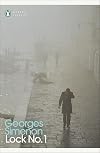
Cars drove past along with the trucks and trams, but by now Maigret had realised that they were not important. Whatever roared by like this along the road was not part of the landscape...What really counted was the lock, the hooting of the tugs, the stone crusher, the barges and the cranes, the two pilots' bars and especially the tall house where he could make out Ducrau's red chair framed by a window.Tags
Recommendations





































Member Reviews
Another classic early Maigret, well worth chasing up because of the wonderful evocation of 1930s canal atmosphere, although perhaps not one of Simenon's strongest when seen purely as a detective story. The author's extended and somewhat patronising investigation of the psychology of a self-made businessman rather takes over the book and allows us to lose track of the underlying crime story, to the extent that I was a little unsure at the end of the book who — if anyone — had actually been murdered.
Sometimes in a novel featuring Chief Inspector Maigret, the reader sees where the novel is headed, and the pleasure is seeing how Maigret gets there. But that’s not Lock No. 1. Instead, the novel’s resolution comes as such as surprise that I don’t see how anyone could have foreseen it.
Boorish Émile Ducrau began at the bottom. After marrying the boss’ daughter (more about that later), Ducrau saved up to buy a barge, which he parlayed into an empire of barges, sandpits, chalk quarries, brick works, boat-repair yards, real estate and a dance hall, valued at 40 million francs. When he’s attacked at the lock at Charenton, a southeast suburb of Paris, pulled into the lock’s water and stabbed in the back, Ducrau’s incensed: He show more offers a reward of 20,000 francs for anyone solving the crime.
Ducrau, boastful and unpolished, openly keeps a mistress upstairs at his own home, his poor beleaguered, self-effacing wife notwithstanding. The mistress doesn’t keep the womanizing Ducrau from dallying with the maid Mathilde. Maigret realizes the score immediately; however, it takes him a while to decipher why someone attacked Ducrau and then killed two others. To tell more would be ruin Georges Simenon’s classic, which was previously published as The Lock at Charenton and Maigret Sits It Out. Savor this very different Maigret novel. show less
Boorish Émile Ducrau began at the bottom. After marrying the boss’ daughter (more about that later), Ducrau saved up to buy a barge, which he parlayed into an empire of barges, sandpits, chalk quarries, brick works, boat-repair yards, real estate and a dance hall, valued at 40 million francs. When he’s attacked at the lock at Charenton, a southeast suburb of Paris, pulled into the lock’s water and stabbed in the back, Ducrau’s incensed: He show more offers a reward of 20,000 francs for anyone solving the crime.
Ducrau, boastful and unpolished, openly keeps a mistress upstairs at his own home, his poor beleaguered, self-effacing wife notwithstanding. The mistress doesn’t keep the womanizing Ducrau from dallying with the maid Mathilde. Maigret realizes the score immediately; however, it takes him a while to decipher why someone attacked Ducrau and then killed two others. To tell more would be ruin Georges Simenon’s classic, which was previously published as The Lock at Charenton and Maigret Sits It Out. Savor this very different Maigret novel. show less
Diverso dai Maigret letti finora, pieno di pathos, amicizia famiglia e morte di intrecciano su uno sfondo di nostalgia per il prossimo pensionamento di Maigret. Bello, mi è piaciuto anche se non l'ho divorato voracemente come i precedenti.
Maigret is called to investigate what has happened in this small provincial town on the outskirts of Paris. Somebody has apparently attempted to murder Ducrau, a local businessman whose business concerns are the basis of the town's economy. He has been stabbed in the back and then tossed into the canal. By chance he is rescued and seems little the worse for wear but Maigret senses that events have not run their course, so he hangs around.
Indeed Ducrau's son then commits suicide and a lock keeper is murdered, so there is a case to sort out.
Maigret has applied for and been granted early retirement (that came as a surprise to me as this is relatively early on in the series), so this will very likely be his last case. He doesn't show more particularly want to return home as Mrs Maigret has been packing up the house, even the bed, and they are moving to a cottage on the River Loire. Ducrau thinks he sees a kindred spirit in Maigret and offers him a job on his retirement, more or less as a security officer. But Ducrau is not a nice man and Maigret can't see himself working for him. In fact he is looking forward to his retirement, he thinks.
This is quite a heavy, dark feeling, novel. While Ducrau runs his businesses in a very hands-on way, and is well known, he is far from popular. His family and servants live in fear of him, and many people have reason to wish him harm. This is a faily "typical" Maigret novel, with lots of psychological overtones. show less
Indeed Ducrau's son then commits suicide and a lock keeper is murdered, so there is a case to sort out.
Maigret has applied for and been granted early retirement (that came as a surprise to me as this is relatively early on in the series), so this will very likely be his last case. He doesn't show more particularly want to return home as Mrs Maigret has been packing up the house, even the bed, and they are moving to a cottage on the River Loire. Ducrau thinks he sees a kindred spirit in Maigret and offers him a job on his retirement, more or less as a security officer. But Ducrau is not a nice man and Maigret can't see himself working for him. In fact he is looking forward to his retirement, he thinks.
This is quite a heavy, dark feeling, novel. While Ducrau runs his businesses in a very hands-on way, and is well known, he is far from popular. His family and servants live in fear of him, and many people have reason to wish him harm. This is a faily "typical" Maigret novel, with lots of psychological overtones. show less
One of my favorites so far in the series. Émile Ducrau is a fantastic character along with Simenon's usually strong settings and simple dialogue.
Great atmosphere and good characters. The French TV Maigret series with Bruno Cremer made an episode of this, but they changed a good deal of the story.
All’altezza della diciottesima uscita, Simenon comincia a pensare di sbarazzarsi di Maigret: in attesa della puntata successiva e conclusiva, lo presenta dimissionario e manda la sua signora a preparare la nuova casetta nella valle della Loira. Lo scrittore belga vorrebbe dedicarsi alla letteratura ‘seria’, ma non ha evidentemente idea di cosa lo aspetta, ovvero un’esistenza in compagnia del commissario: così, forse perché più leggero alla prospettiva di liberarsi della serialità, scrive quello che fino a quel momento è il migliore fra i romanzi dedicati al suo personaggio. Ambientata tra Parigi e l’immediato circondario, la storia si snoda fra i battelli e i relativi equipaggi che percorrono i canali navigabili della show more regione trasportando ogni tipo di merce, ma soprattutto mette in mostra un antagonista di notevole spessore che, con un atteggiamento più grande della vita, consente all’autore di sviluppare una serie di duetti con Maigret che pare nutrire per l’uomo un insieme di simpatia e rispetto (dai quali non si fa comunque distrarre). Ripescato in piena notte dal canale con una ferita al fianco, Émile Ducrau è una figura di forti chiaroscuri: vitale e intraprendente, ha salito la scala sociale da semplice pilota di chiatta a padrone dell’azienda, ma per farlo ha sfruttato con noncuranza le persone attorno a lui a partire dalla scialba consorte, sposata perché unica discendente del propèrietario precedente. Anaffettivo con i figli e capace di sedurre la moglie dell’amico – il marinaio Gassin che cerca di annegare la tristezza nella bottiglia – inizia a incepparsi con il suicidio dell’introverso erede maschio. Se il centro della scena è l’impresario, il motore degli eventi è la giovane figlia di Gassin – bella, ma leggermente ritardata – con il suo bambino nato da poco: se è davvero l’ubriacone suo padre, quali sono stati i suoi rapporti con il figlio di Ducreau e con l’altro battelliere Bèbert, misteriosamente ucciso, sono le domande a cui rispondere. I nodi vengono sciolti nella sontuosa villa di Émile a Samois dove si svolge l’ennesima rappresentazione di un mediocre interno borghese del quale Ducrau, conscio di venire percepito come un parvenu, si sente prigioniero: tutto conduce a un finale perfetto nella sua tragicità per un romanzo che, a dispetto delle giornate soleggiate e delle notti cristalline, dimostra di essere a ogni pagina che si gira sempre più un noir senza speranze. show less
Dec 14, 2017Italian
Members
- Recently Added By
Lists

Reading LIst
648 works; 1 member
Author Information

1,331+ Works 63,059 Members
The prolific Belgian-born writer Georges Simenon produced hundreds of fictional works under his own name and 17 pseudonyms, in addition to more than 70 books about Inspector Maigret, long "the favorite sleuth of highbrow detective-story readers" (SR). More than 50 "Simenons" have been made into films. In addition to his mystery stories, he wrote show more what he called "hard" books, the serious psychological novels numbering well over 100. The autobiographical Pedigree, set in his native town of Liege, is perhaps his finest work. The publication of Simenon's intimate memoirs also attracted considerable attention. Simenon himself once said that he would never write a "great novel." Yet Gide called him "a great novelist, perhaps the greatest and truest novelist we have in French literature today," and Thornton Wilder (see Vol. 1) found that Simenon's narrative gift extends "to the tips of his fingers." The following are some of Simenon's novels, exclusive of the Maigret detective stories, that are in print. (Bowker Author Biography) Georges Simenon was born on February 13, 1903 in Liege, Belgium. He wrote more than 200 fiction works under 16 different pseudonyms. His first book, The Case of Peter the Lent led to 80 more of the like including the main character, Inspector Maigret. He published over 400 books that were translated into 50 different languages and sold by the millions. He also wrote psychological novels, including The Man Who Watched the Train Go By. He died on September 4, 1989 in Lausanne. (Bowker Author Biography) show less
Some Editions
Series

Belongs to Publisher Series
Work Relationships
Common Knowledge
- Canonical title
- The Lock at Charenton
- Original title
- L'Écluse Nº 1
- Alternate titles
- Lock No. 1
- Original publication date
- 1933-06 (original French) (original French); 1941 (English: Ludwig) (English: Ludwig)
- People/Characters
- Jules Maigret
- Important places
- Saint-Maurice, Île-de-France, France (as Charenton-Saint-Maurice)
- Related movies*
- The Golden Fleece (1961 | IMDb); La chiusa (1968 | IMDb); L'écluse N°1 (1970 | IMDb); Maigret et l'écluse no.1 (1994 | IMDb)
- First words
- When you watch fish through a layer of water which prevents all contact between them and you, you see that they remain absolutely still for a long time, for absolutely no reason, and then, with a twitch of their fins, they da... (show all)rt away so that they can do nothing again somewhere else, except more waiting.
- Last words
- (Click to show. Warning: May contain spoilers.)A tug traveling downstream sounded its hooter twice, the signal that it was taking the second arch, while a Belgian barge going upstream moved across the current and headed for the third.
- Original language*
- Francese
- Disambiguation notice
- In the French original, L'écluse no. 1.
Variously published in English as: (i) "The Lock at Charenton," in Maigret Sits It Out (1941) (tr. Margaret Ludwig); and (ii) Lock No. 1 (2015) (tr. David C... (show all)oward).
*Some information comes from Common Knowledge in other languages. Click "Edit" for more information.
Classifications
Statistics
- Members
- 339
- Popularity
- 93,672
- Reviews
- 15
- Rating
- (3.61)
- Languages
- 10 — Chinese, Danish, Dutch, English, Finnish, French, German, Italian, Portuguese, Spanish
- Media
- Paper, Audiobook, Ebook
- ISBNs
- 28
- ASINs
- 17