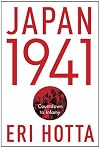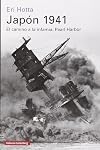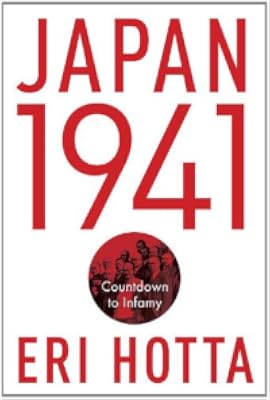
Japan 1941: Countdown to Infamy
by Eri Hotta
On This Page
Description
Examines the attack on Pearl Harbor from the Japanese perspective. "When Japan launched hostilities against the United States in 1941, argues Eri Hotta, its leaders, in large part, understood they were entering a war they were almost certain to lose. Drawing on material little known to Western readers, and barely explored in depth in Japan itself, Hotta poses an essential question: Why did these men -- military men, civilian politicians, diplomats, the emperor -- put their country and its show more citizens so unnecessarily in harm's way? Introducing us to the doubters, schemers, and would-be patriots who led their nation into this conflagration, Hotta brilliantly shows us a Japan rarely glimpsed -- eager to avoid war but fraught with tensions with the West, blinded by reckless militarism couched in traditional notions of pride and honor, tempted by the gambler's dream of scoring the biggest win against impossible odds and nearly escaping disaster before it finally proved inevitable. In an intimate account of the increasingly heated debates and doomed diplomatic overtures preceding Pearl Harbor, Hotta reveals just how divided Japan's leaders were, right up to (and, in fact, beyond) their eleventh-hour decision to attack. We see a ruling cadre rich in regional ambition and hubris: many of the same leaders seeking to avoid war with the United States continued to adamantly advocate Asian expansionism, hoping to advance, or at least maintain, the occupation of China that began in 1931, unable to end the second Sino-Japanese War and unwilling to acknowledge Washington's hardening disapproval of their continental incursions. Even as Japanese diplomats continued to negotiate with the Roosevelt administration, Matsuoka Yosuke, the egomaniacal foreign minister who relished paying court to both Stalin and Hitler, and his facile supporters cemented Japan's place in the fascist alliance with Germany and Italy -- unaware (or unconcerned) that in so doing they destroyed the nation's bona fides with the West. We see a dysfunctional political system in which military leaders reported to both the civilian government and the emperor, creating a structure that facilitated intrigues and stoked a jingoistic rivalry between Japan's army and navy. Roles are recast and blame reexamined as Hotta analyzes the actions and motivations of the hawks and skeptics among Japan's elite. Emperor Hirohito and General Hideki Tojo are newly appraised as we discover how the two men fumbled for a way to avoid war before finally acceding to it. Hotta peels back seventy years of historical mythologizing -- both Japanese and Western -- to expose all-too-human Japanese leaders torn by doubt in the months preceding the attack, more concerned with saving face than saving lives, finally drawn into war as much by incompetence and lack of political will as by bellicosity." -- Publisher's description. show lessTags
Recommendations







Member Reviews
I decided to read this book because, although I think I know a lot about World War II in Europe, my knowledge of the war in the Far East was not very extensive. I wanted to understand how and why Pearl Harbour was bombed on that sunny, Sunday in Oahu. I was a bit surprised to find out why the bombing was such a surprise to the American Navy. Finding out that Japan was pursuing peace talks with Roosevelt and his cabinet right up to the surprise attack was a surprise to me. What I came away with was an understanding that the war was a simply a catastrophic display of hubris by the Japanese. Their own country was at odds as to whether or not to go to war, and the confusion crept right into the armed forces. It's very disconcerting that it show more was a gambler's game to declare war against the US. The militarists were prepared to stake their entire country and their people on a war that would be impossible to win. And incomplete information from the battlefields and scouts before war was deckared, perpetuated the debacle. I know that both sides fought long and hard for the southern islands and many lives were lost on both sides. A war with that many casualties and it was all decided by a flip of the coin! This must be a hard nut to swallow for the Japanese and Americans. I think that I'm a little wiser about the lead-up to this nonsensical war, but it definitely shook my faith in humanity to the core. I think Mr. Hotta did extensive research for this book, but I did find it a bit heavy going with some of the rhetoric in the beginning, and the cast of actual people involved was extensive, but confusing partly because of the Japanese names. Still I am glad that i read it. It explained a lot. show less
World War II propaganda from the Allied side portrayed the Axis side as a triumvirate of Fascist dictators – Hitler, Mussolini, and Tojo. Eri Hotta’s Japan 1941 book about Japan’s decisions in the years before the war – signing the Tripartite Pact with Germany and Italy and declaring war on the Allies – shows that the Japanese government wasn’t really Fascist and wasn’t really a dictatorship; decisions were reached based on a consensus among military and civilian leaders; however the military had disproportionate influence and the consensus reached wasn’t one that was good for Japan but one that “saved face” for all the parties involved, even if the result was driving Japan into the abyss.
One of Hotta’s themes is show more policy in Japan was often the result of work by middle-level military officers and middle-level civilian bureaucrats. There were so many competing special interests that complicated negotiations had to take place at middle levels before a policy initiative could be presented to higher authorities. In the military, the officers involved were called bakuryo, literally “shadow officers”; the most dramatic incident involving bakuryo was a faked Chinese attack on the Japanese-controlled Manchurian Railway in 1931, instigated by a lieutenant colonel. This, in turn, led to Japanese occupation of all of Manchuria, the creation of the puppet state of Manchukuo, further action against China, international sanctions against Japan, and Japanese alliance with the other “pariah” nations of Germany and Italy through the Tripartite Pact (The Berlin-Rome-Tokyo Axis).
The theme of tragic inevitability is pervasive. Anguished Japanese officers and politicians felt they couldn’t withdraw from China – one of the American demands for restoring economic relations – because it would be a betrayal of the Japanese soldiers that had already died there (Hotta gently chides the US here, noting that exactly the same argument was used years later to justify continued US troop deployment in Iraq). Similarly Japan couldn’t withdraw from the Tripartite Pact, another American demand, since it was feared that this would permanently blight Japan’s reputation as a trustworthy international partner. This Tripartite Pact had already led to problems when Germany attacked the USSR (without warning Japan); Japanese diplomats had just concluded a nonaggression treaty with Stalin as yet another bulwark against America. The Tripartite Pact only required the signatory parties to go to war if one was attacked by a third party not yet involved in the European war; since Germany had initiated the war with the USSR there was no treaty obligation for Japan to join. Still there was a “Go North” faction in the Japanese military and troops were deployed to the Manchurian border (eventually to be withdrawn and redeployed for the attacks on the Philippines, Netherlands East Indies, and Malaya).
There was no “war” faction clamoring for an attack on the United States – just about everyone, military or civilian, realized that it was unwinnable. Economic analysts produced reports showing that American industrial production surpassed Japan by a huge margin. The optimists among military acknowledged this, but argued that the “Yamato Spirit” would prevail; the pessimists noted there was a “Yankee Spirit” too. There were attempts to find some sort of middle ground; maybe Japan could agree to withdraw from China but very gradually, over 99 years? Maybe there could be vague assurances that the Tripartite Pact would never actually be invoked? The military and the diplomats kept putting off a decision while more studies were done, but eventually the American economic sanctions forced the disaster – the cutoff of oil meant the Imperial forces either had to attack and seize resources or they would just wither away with empty fuel tanks. So Yamamoto climbed Mount Niitaka. (Hotta notes that even here there is a suggestion that the bakuryo had an effect. Both Yamamoto and Emperor Hirohito had insisted that there be a formal declaration of war before the first bombs fell on Pearl Harbor. But the formal declaration of war message to the Japanese ambassador in Washington (who had no foreknowledge of the attack, for military security reasons) was delayed for about an hour and twenty minutes, until after the attack started. Hotta observes that none of the embassy staff who failed to prepare the document in time were ever disciplined; in fact their careers flourished after the war).
I found Hotta’s writing clear and straightforward, especially considering the language difference. She’s not a Japanese apologist; at the same time she isn’t afraid to observe that the United States of 1941 was racist with regard to the Japanese. She offers no suggestions as to how things could have been handled differently other than generalizations – the most poignant being if only the Japanese desire to honor soldiers who had already died in the China Incident had been weighed against Japanese soldiers and civilians who were going to die in a war with the USA things might have gone differently. At the same time it’s clear from her explanation of Japanese politics that there was no single Japanese – not the Prime Minister, not the head of the Imperial General Staff, not even the Emperor himself – who could have born the unbearable and acquiesced to the American demands.
She doesn’t make any suggestions at all for how the United States could have handled things differently. She explicitly disavows the conspiracy theory that Churchill and Roosevelt deliberately backed Japan into a corner so the US could get involved in the European war. I suppose American politics at the time were actually just as complicated as Japanese ones, with the Administration reluctant to offer any concessions to Japan for political reasons. The whole thing has an aura of Greek tragedy – or perhaps bunraku tragedy.
The front papers have a diagram of the Imperial military staff organization, a map of the Pacific theater, and a list of the principal Japanese military and politicians involved. There are endnotes, but with page references rather than numbers in the text. A photograph section shows the important parties. No bibliography, which was disappointing; however there are references in the endnotes. The index seems sparse and I had trouble finding things I wanted to reference. I wish Hotta would write a similar covering the earlier part of the 20th century and explaining how Japan went from a reasonably democratic government to the regime described here. show less
One of Hotta’s themes is show more policy in Japan was often the result of work by middle-level military officers and middle-level civilian bureaucrats. There were so many competing special interests that complicated negotiations had to take place at middle levels before a policy initiative could be presented to higher authorities. In the military, the officers involved were called bakuryo, literally “shadow officers”; the most dramatic incident involving bakuryo was a faked Chinese attack on the Japanese-controlled Manchurian Railway in 1931, instigated by a lieutenant colonel. This, in turn, led to Japanese occupation of all of Manchuria, the creation of the puppet state of Manchukuo, further action against China, international sanctions against Japan, and Japanese alliance with the other “pariah” nations of Germany and Italy through the Tripartite Pact (The Berlin-Rome-Tokyo Axis).
The theme of tragic inevitability is pervasive. Anguished Japanese officers and politicians felt they couldn’t withdraw from China – one of the American demands for restoring economic relations – because it would be a betrayal of the Japanese soldiers that had already died there (Hotta gently chides the US here, noting that exactly the same argument was used years later to justify continued US troop deployment in Iraq). Similarly Japan couldn’t withdraw from the Tripartite Pact, another American demand, since it was feared that this would permanently blight Japan’s reputation as a trustworthy international partner. This Tripartite Pact had already led to problems when Germany attacked the USSR (without warning Japan); Japanese diplomats had just concluded a nonaggression treaty with Stalin as yet another bulwark against America. The Tripartite Pact only required the signatory parties to go to war if one was attacked by a third party not yet involved in the European war; since Germany had initiated the war with the USSR there was no treaty obligation for Japan to join. Still there was a “Go North” faction in the Japanese military and troops were deployed to the Manchurian border (eventually to be withdrawn and redeployed for the attacks on the Philippines, Netherlands East Indies, and Malaya).
There was no “war” faction clamoring for an attack on the United States – just about everyone, military or civilian, realized that it was unwinnable. Economic analysts produced reports showing that American industrial production surpassed Japan by a huge margin. The optimists among military acknowledged this, but argued that the “Yamato Spirit” would prevail; the pessimists noted there was a “Yankee Spirit” too. There were attempts to find some sort of middle ground; maybe Japan could agree to withdraw from China but very gradually, over 99 years? Maybe there could be vague assurances that the Tripartite Pact would never actually be invoked? The military and the diplomats kept putting off a decision while more studies were done, but eventually the American economic sanctions forced the disaster – the cutoff of oil meant the Imperial forces either had to attack and seize resources or they would just wither away with empty fuel tanks. So Yamamoto climbed Mount Niitaka. (Hotta notes that even here there is a suggestion that the bakuryo had an effect. Both Yamamoto and Emperor Hirohito had insisted that there be a formal declaration of war before the first bombs fell on Pearl Harbor. But the formal declaration of war message to the Japanese ambassador in Washington (who had no foreknowledge of the attack, for military security reasons) was delayed for about an hour and twenty minutes, until after the attack started. Hotta observes that none of the embassy staff who failed to prepare the document in time were ever disciplined; in fact their careers flourished after the war).
I found Hotta’s writing clear and straightforward, especially considering the language difference. She’s not a Japanese apologist; at the same time she isn’t afraid to observe that the United States of 1941 was racist with regard to the Japanese. She offers no suggestions as to how things could have been handled differently other than generalizations – the most poignant being if only the Japanese desire to honor soldiers who had already died in the China Incident had been weighed against Japanese soldiers and civilians who were going to die in a war with the USA things might have gone differently. At the same time it’s clear from her explanation of Japanese politics that there was no single Japanese – not the Prime Minister, not the head of the Imperial General Staff, not even the Emperor himself – who could have born the unbearable and acquiesced to the American demands.
She doesn’t make any suggestions at all for how the United States could have handled things differently. She explicitly disavows the conspiracy theory that Churchill and Roosevelt deliberately backed Japan into a corner so the US could get involved in the European war. I suppose American politics at the time were actually just as complicated as Japanese ones, with the Administration reluctant to offer any concessions to Japan for political reasons. The whole thing has an aura of Greek tragedy – or perhaps bunraku tragedy.
The front papers have a diagram of the Imperial military staff organization, a map of the Pacific theater, and a list of the principal Japanese military and politicians involved. There are endnotes, but with page references rather than numbers in the text. A photograph section shows the important parties. No bibliography, which was disappointing; however there are references in the endnotes. The index seems sparse and I had trouble finding things I wanted to reference. I wish Hotta would write a similar covering the earlier part of the 20th century and explaining how Japan went from a reasonably democratic government to the regime described here. show less
This is a history of what took place among the Japanese decision makers in the months leading up to the attack on Pearl Harbor. It is, in a way, a counterpart to Craig's excellent The Fall of Japan, but at the other end of the war. The focus is on the top Japanese leaders, and on the civilian leadership more than the military. This has the effect of slightly playing down the extreme militarism pervading the Japanese Army that did so much to ensure there would be a war, but that's about the only flaw in this otherwise very good book.
The background is set with a brief recounting of the history of modern Japan, and of the actions of the increasingly unruly and aggressive Japanese Army in the 1930s. By 1941 the Americans and Japanese were show more on a collision course, and the Japanese were faced with backing down or waging a war that most of the top leadership knew could not be won except by a miracle. The unrealistic attitudes of a lot of these leaders is a major theme of the book. The Army could not bear to pull out of China after sacrificing so many soldiers, a feeling that is rather understandable on an emotional level and is no stranger to any American who has read the Gettysburg Address. The Navy could not lose face, and possibly funding, by admitting that all the money that had been spent on the Navy had still been insufficient to make it capable of defeating America. The eccentric Foreign Minister, Matsuoka, who had grown up in the U.S. and graduated with a law degree from the University of Oregon, pinned his hopes on a four-power bloc of Germany, Russia, Italy, and Japan. There was a bit of a problem with that, which became clear when Germany invaded Russia just after Matsuoka signed a neutrality pact with the Russians. Hotta sees a lost opportunity here: Japan would have been entirely justified in denouncing the Tripartite Pact on the basis of Germany's actions, and this would have removed a major obstacle to a rapprochement with the U.S.
The general picture is of Japan blundering its way into war, much as it would eventually blunder its way to peace. There are U.S. blunders, too, of course: Roosevelt could have been more open to a summit with Japanese prime minister Konoe, for example. Still, Hotta emphasizes Japanese mistakes, of which there were apparently plenty.
Thumbs up. show less
The background is set with a brief recounting of the history of modern Japan, and of the actions of the increasingly unruly and aggressive Japanese Army in the 1930s. By 1941 the Americans and Japanese were show more on a collision course, and the Japanese were faced with backing down or waging a war that most of the top leadership knew could not be won except by a miracle. The unrealistic attitudes of a lot of these leaders is a major theme of the book. The Army could not bear to pull out of China after sacrificing so many soldiers, a feeling that is rather understandable on an emotional level and is no stranger to any American who has read the Gettysburg Address. The Navy could not lose face, and possibly funding, by admitting that all the money that had been spent on the Navy had still been insufficient to make it capable of defeating America. The eccentric Foreign Minister, Matsuoka, who had grown up in the U.S. and graduated with a law degree from the University of Oregon, pinned his hopes on a four-power bloc of Germany, Russia, Italy, and Japan. There was a bit of a problem with that, which became clear when Germany invaded Russia just after Matsuoka signed a neutrality pact with the Russians. Hotta sees a lost opportunity here: Japan would have been entirely justified in denouncing the Tripartite Pact on the basis of Germany's actions, and this would have removed a major obstacle to a rapprochement with the U.S.
The general picture is of Japan blundering its way into war, much as it would eventually blunder its way to peace. There are U.S. blunders, too, of course: Roosevelt could have been more open to a summit with Japanese prime minister Konoe, for example. Still, Hotta emphasizes Japanese mistakes, of which there were apparently plenty.
Thumbs up. show less
How did Japan decide to enter a war that everyone involved in the decision at the highest levels knew was unwinnable? Hotta’s answer comes from the complex political/military arrangements of imperial Japan, where every decision required multiple rounds of consultation and everyone in a position to say “no” just left that awkward endeavor to someone else. Hotta attributes a small role to Japan’s culture of indirect speech, where certain expressions of opposition could be misinterpreted (perhaps willfully) as support, but the people involved could be open in private and just weren’t willing to take the risk involved of publicly opposing Japanese aggression. I wanted more discussion of the true pro-war militarists, including the show more radicals who were assassinating public officials they perceived as insufficiently war-prone, because I felt like that was a big part of the story, but Hotta didn’t go into detail about any of the militarists, concentrating instead on the people with the power to prevent the conflict who instead let it happen. show less
Many authors have tackled the imponderable: What led Imperial Japan to attack the United States at Pearl Harbor and engage in a war that they had no chance of winning? As author Eri Hotta points out, the Japanese leaders for the most part wanted to maintain the peace, but were afraid of speaking their private thoughts. Even Emperor Hirohito "reigned rather than ruled" and shied away from demands for the peaceful resolution he desired. Wishful thinking and reliance on the power of the Japanese spirit (what about the Yankee spirit? one of the critics asked without an answer) became the rule, and led the acceptance of the impossible as unavoidable. The war in China drove every action by the Japanese and withdrawal from French Indo China show more and even China was actually discussed. One prime minister who misread the Americans allied the nation with Nazi Germany, with which Japan actually shared little, and Konoe (Konoye), his successor, vacillated in his efforts to avoid war. Even General Tojo, who then succeeded Konoe as prime minister, wanted to avoid war, but in his public persona talked exceedingly tough and aggressive. The result was the hardening of attitudes towards such issues of how long withdrawal from China should take (25-50 years was suggested) and whether a sea war in the Pacific could be won (the cowardly naval leaders refused to firmly say they could not do it). With perfect 20/20 hindsight, we can see how this was suicidal wish fulfillment...Japan turned out 100 Zeroes a month, at our peak, the US turned out 100s in days. The Japanese never had more than something like 36 aircraft carriers, too many of which were never even finished. The US, at peak, turned out one carrier (full-size fleet carrier as well as escort carrier) a week. Other books have faulted the Americans for its diplomatic failures, but Hotta points out the ultimate responsibility was that of the militaristic Japanese government which repeatedly failed to come up with a way to maintain a peace they wanted. An illuminating book. show less
While not a bad book, and one that has the virtue of transforming the Japanese leadership into understandable characters, the interpretation given is not that different from what I received as an undergrad history student in the late-1970s. Apart from higher-level leadership in denial, group think, poor constitutional design and a general sense of always being victimized by the "West," I would have liked to have seen some more engagement with theories of imperial conspiracy; particularly those of Herbert Bix. After all, if the fulcrum of Japan's institutional crisis leading to war was the single-minded commitment of mid-level officers and government officials to empire in China, was the notion that they could always make a play to the show more imperial palace the basis of their power? Not to mention that I would have liked to have seen a little more appreciation from the author that Japan's imperial adventure in China was essentially time-expired; her sympathy is very much with average Japanese folks suffering from the misplaced grasping of their leaders. show less
The author's writing style and his narrative description of events makes this book such a pleasure to read. Of course I would have preferred that the author provide more primary sources and more background into some of the important events in Japan before 1941 as a means of giving the reader more context, but nevertheless this book still deserves 5 stars from me.
Members
- Recently Added By
Lists

Dan Carlin's Supernova in the East Book List
61 works; 1 member
Author Information

2 Works 400 Members
Some Editions
Awards and Honors
Distinctions
Notable Lists
Common Knowledge
- Canonical title
- Japan 1941: Countdown to Infamy
- Original publication date
- 2013-10-29
- People/Characters
- Hirohito, Emperor of Japan; Yosuke Matsuoka; Tojo Hideki
- Important events
- World War II (1939 | 1945); Attack on Pearl Harbor (1941-12-07)
Classifications
Statistics
- Members
- 377
- Popularity
- 83,311
- Reviews
- 29
- Rating
- (3.86)
- Languages
- Chinese, English, Spanish
- Media
- Paper, Audiobook, Ebook
- ISBNs
- 13
- ASINs
- 4