BUtterfield 8
by John O'Hara
On This Page
Description
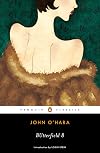
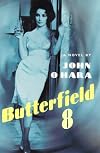
One Sunday morning, Gloria wakes up in a stranger's apartment with nothing but a torn evening dress, stockings, and panties. When she steals a fur coat from the wardrobe to wear home, she unleashes a series of events that can only end in tragedy. Inspired by true events, this novel caused a sensation on its publication for its frank depiction of the relationship between a wild and beautiful young woman and a respectable, married man.Tags
Recommendations



























Member Reviews
O'Hara's roman à clef follows a handful of New Yorkers and their lives, all of whom have some connection to 20-something slightly-scandalous gal-about-town, Gloria Wandrous, and it culminates in the affair she has with the older, married Weston Liggett and the aftermath of that affair.
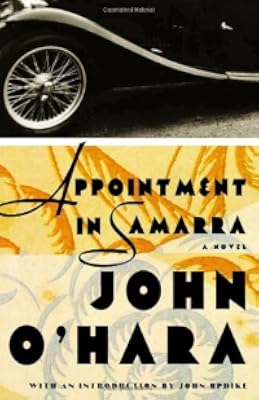
I usually don't like this kind of novel very well; the characters are a too ordinary-everyday kind of flawed (I generally need my characters to be flawed in a more supernatural or flashy or epic kind of way, I guess) and the plot spends too much time inside their heads, and I usually get impatient with that sort of thing. But O'Hara writing is good enough that I don't mind it, I suppose, because I kind of loved this book (and I kind of loved Appointment show more in Samarra, too). I'm not sure that I'm supposed to like these characters - they're not exactly made up of loveable actions and motives - but I do, and maybe that's the point? Maybe that's O'Hara's special talent? Anyway, I loved it and I am beginning to think that I love him, too. show less
I usually don't like this kind of novel very well; the characters are a too ordinary-everyday kind of flawed (I generally need my characters to be flawed in a more supernatural or flashy or epic kind of way, I guess) and the plot spends too much time inside their heads, and I usually get impatient with that sort of thing. But O'Hara writing is good enough that I don't mind it, I suppose, because I kind of loved this book (and I kind of loved Appointment show more in Samarra, too). I'm not sure that I'm supposed to like these characters - they're not exactly made up of loveable actions and motives - but I do, and maybe that's the point? Maybe that's O'Hara's special talent? Anyway, I loved it and I am beginning to think that I love him, too. show less
Complex exploration of the life of a young woman who chooses a life of sexual freedom in the 1930s. Through a kaleidoscopic mixture of the kinds of techniques that novelists were exploring in the first third of the century (flash backs, quick cross cuts from scene to scene, stream of consciousness) O'Hara turns what could have been a sensationalistic shocker into a complicated psychological story. While largely sympathetic to the Gloria in her complicated relationship to sexuality and the men in her life, the conventions of the period require retribution, which comes horribly and gruesomely in the end.
Butterfield 8 is a story sharply told with many insights into the people that are surviving well financially after the beginning of the Great Depression in America and, especially, New York City. These are the white collar folks with their college education and, of course, they are all white skinned. Their sexual peccadilloes are relentlessly displayed. O'Hara gives us in entertaining and exacting detail a remarkable, lively picture of this era. The characterization for both men and women is very strong. Also strong is the shown bigotry and racism in terms that makes one wince. The story ends where many a playwright and author who does not know how resolve his story but I would not reveal the details for the next reader.
Quotes: (pages show more 16 and 17) “Sex had been healthy and normally strong and only a trifle unpleasant for Nancy up to the time of the death of her daughter. Paul was considerate and tender and fun. Childbearing, the incomparable peace of nursing boys, the readjustment after the nursing periods—-all were accomplished with a minimum of fright and pain, and sometimes with the pleasure that---especially at nursing time---was heavenly joy, because at such times Nancy felt so practically religious. She wanted to have a lot of children, and she was glad that things were that way: that the Church approved and that there was such pleasure in motherhood. Then the little girl died and for the first time Nancy discovered that you cannot blame your body alone for the hell it sometimes gives you. Nancy broke with Rome the day after her baby died. It was a secret break, but no Catholic breaks with Rome casually.”
(page 41) “The nose of the Packard convertible went now up, now down. The car behaved like an army tank on a road that ordinarily was used only by trucks. Paul Farley, driving, was chewing his lower lip, and the man beside him, looking quite pleased with himself and the world at large, was holding his chin up and dropping ashes of his cigar on the floor of Farleys car.”
(pages 50-51) “Well Cagney is a Mick, without pretense of being anything else, and he's America's ideal gangster. America, being a non-Irish, anti-Catholic country, has its own idea of what a gangster really looks like.... Anyway I could be a Son of the Revolution. Which is nice to know sometimes, but for the present purpose I only mention it to show that I'm pretty God damn American, and therefore my brothers and sisters are, and yet we're not American. We're Micks, we're non-assimilable, we Micks.” show less
Quotes: (pages show more 16 and 17) “Sex had been healthy and normally strong and only a trifle unpleasant for Nancy up to the time of the death of her daughter. Paul was considerate and tender and fun. Childbearing, the incomparable peace of nursing boys, the readjustment after the nursing periods—-all were accomplished with a minimum of fright and pain, and sometimes with the pleasure that---especially at nursing time---was heavenly joy, because at such times Nancy felt so practically religious. She wanted to have a lot of children, and she was glad that things were that way: that the Church approved and that there was such pleasure in motherhood. Then the little girl died and for the first time Nancy discovered that you cannot blame your body alone for the hell it sometimes gives you. Nancy broke with Rome the day after her baby died. It was a secret break, but no Catholic breaks with Rome casually.”
(page 41) “The nose of the Packard convertible went now up, now down. The car behaved like an army tank on a road that ordinarily was used only by trucks. Paul Farley, driving, was chewing his lower lip, and the man beside him, looking quite pleased with himself and the world at large, was holding his chin up and dropping ashes of his cigar on the floor of Farleys car.”
(pages 50-51) “Well Cagney is a Mick, without pretense of being anything else, and he's America's ideal gangster. America, being a non-Irish, anti-Catholic country, has its own idea of what a gangster really looks like.... Anyway I could be a Son of the Revolution. Which is nice to know sometimes, but for the present purpose I only mention it to show that I'm pretty God damn American, and therefore my brothers and sisters are, and yet we're not American. We're Micks, we're non-assimilable, we Micks.” show less
There are a number of "classics" sitting on my shelves to be read. This summer I picked up BUtterfield 8 and dove right in. I had almost no idea what to expect. I'd never seen the movie and hadn't really ever heard anything about the story. Reading the back cover gave a slight insight, but still left me wondering what to expect.
The book started out a little slow, but still very vivid. O'Hara writes with great description and passion and was able to make the scenes very alive and full. However, for the first few chapters, the book felt rather disjointed to me and I felt a little disoriented and confused. There were a ton of characters dropped in and I wasn't yet sure who was important and who was peripheral.
Looking back, I think the show more disorientation could be a deliberate stylistic choice. Our central characters are all caught up in a whirlwind of life's adventures filled with big hopes and dreams, but still just whipped around dizzyingly by real life interactions.
Pushing through the first few chapters, I found myself getting really attached to the characters. This is really a character driven novel and the characters are deep and engaging. It was a while before I even knew the name of the girl I was following around for the first few pages and I wasn't sure yet if I was supposed to be sympathetic to or disgusted by her situation, but I still felt compelled by her and wanted to know more. As Gloria Wandrous grew more and more alive and as I learned more of her back story and current situation, she began to feel truly real and I found myself sympathizing for her.
Many of the themes of the book dealt with Gloria's sexuality both in the present world and with the encounters of her youth. O'Hara isn't explicit/graphic with his sexual content, but I can see where even the allusions he presents could be controversial both then and now. Sexuality is often a taboo subject anyway. Add to that the molestation/rape of a young girl and the subject becomes all the more disputable.
O'Hara doesn't wholly portray Gloria as a victim, which would be a natural response. He does explore her psychology and reactions, but he also gives her an inner strength and drive. I really enjoyed the description of her conflicted moral judgments. She has a real desire to love and be loved, but she has a low sense of self worth because of her past that she feels she has to live up to.
In addition to the depth in Gloria's character, the book also expounds on the sexuality and behaviors of all the other characters.
Weston Ligget, the male love interest for Gloria, is a character with a lot of depth though it's harder to feel sympathetic towards him. I feel almost sorry for him in that he does seem like he genuinely wants to care for Gloria, but at the same time, I read his love as more of an infatuation based on the thrill of the chase and the excitement of the affair. He just sends off the creepy vibe through his pedophiliac/incestual behavior not to mention his infidelity and reckless abandon.
I really liked Eddie as Gloria's best friend. Part of me hoped that they would somehow get a romance going, but I knew early on that any chance of love between them was totally ill-fated.
I've spoken mostly about the characters and this really is a character driven novel. The characters are the life of the book. The plot itself felt a little thin. It was compelling only in the fact that I was attached to Gloria. The environment of New York and the speakeasies was meticulously created and felt very real and compelling. The dialog was fresh and real.
The themes and content, while somewhat controversial and dated to the ~20s/30s, were still strikingly relevant in our modern society. The 21st century club scene is obviously a little different than that of the speakeasies. The stresses and concerns of modern day 20-somethings and white-collar-30+s have become more technologically advanced, but the general worries are still very similar.
People want to be loved. They want to be accepted. They want to figure out who they are and how they fit into the world. They want to overcome the problems of their past and be able to take control of their future.
This novel has a lot of great themes to think on and wonderful characters to help open up the realities hiding under the pasted on smiles of society. I would have liked to have seen some better resolution or morale at the end of the story, but it still left something to think about. Probably my biggest complaint was the "200 pound gorilla in the room" that's alluded to on the back cover by telling us that O'Hara was inspired to write this book when he read a news article about an unknown girl found dead in the East River. With that in mind, I knew what was coming and new the book couldn't end well.
Still, I hoped for a little more enlightenment or for something more to come from the impending death. In that regard, the book left me somewhat disappointed...a bit of metafiction, placing me inside Gloria's own disappointment with the world.
Overall, it was a book worth reading. I enjoyed the reality of it, the depth of the characters and the interesting themes. The pacing was a bit slow and disjointed, especially early on, and the plot itself felt a bit contrived at moments. Still, I am glad I read it and will likely seek out more O'Hara to put on my shelf.
****
3.5 stars (out of 5) show less
The book started out a little slow, but still very vivid. O'Hara writes with great description and passion and was able to make the scenes very alive and full. However, for the first few chapters, the book felt rather disjointed to me and I felt a little disoriented and confused. There were a ton of characters dropped in and I wasn't yet sure who was important and who was peripheral.
Looking back, I think the show more disorientation could be a deliberate stylistic choice. Our central characters are all caught up in a whirlwind of life's adventures filled with big hopes and dreams, but still just whipped around dizzyingly by real life interactions.
Pushing through the first few chapters, I found myself getting really attached to the characters. This is really a character driven novel and the characters are deep and engaging. It was a while before I even knew the name of the girl I was following around for the first few pages and I wasn't sure yet if I was supposed to be sympathetic to or disgusted by her situation, but I still felt compelled by her and wanted to know more. As Gloria Wandrous grew more and more alive and as I learned more of her back story and current situation, she began to feel truly real and I found myself sympathizing for her.
Many of the themes of the book dealt with Gloria's sexuality both in the present world and with the encounters of her youth. O'Hara isn't explicit/graphic with his sexual content, but I can see where even the allusions he presents could be controversial both then and now. Sexuality is often a taboo subject anyway. Add to that the molestation/rape of a young girl and the subject becomes all the more disputable.
O'Hara doesn't wholly portray Gloria as a victim, which would be a natural response. He does explore her psychology and reactions, but he also gives her an inner strength and drive. I really enjoyed the description of her conflicted moral judgments. She has a real desire to love and be loved, but she has a low sense of self worth because of her past that she feels she has to live up to.
In addition to the depth in Gloria's character, the book also expounds on the sexuality and behaviors of all the other characters.
Weston Ligget, the male love interest for Gloria, is a character with a lot of depth though it's harder to feel sympathetic towards him. I feel almost sorry for him in that he does seem like he genuinely wants to care for Gloria, but at the same time, I read his love as more of an infatuation based on the thrill of the chase and the excitement of the affair. He just sends off the creepy vibe through his pedophiliac/incestual behavior not to mention his infidelity and reckless abandon.
I really liked Eddie as Gloria's best friend. Part of me hoped that they would somehow get a romance going, but I knew early on that any chance of love between them was totally ill-fated.
I've spoken mostly about the characters and this really is a character driven novel. The characters are the life of the book. The plot itself felt a little thin. It was compelling only in the fact that I was attached to Gloria. The environment of New York and the speakeasies was meticulously created and felt very real and compelling. The dialog was fresh and real.
The themes and content, while somewhat controversial and dated to the ~20s/30s, were still strikingly relevant in our modern society. The 21st century club scene is obviously a little different than that of the speakeasies. The stresses and concerns of modern day 20-somethings and white-collar-30+s have become more technologically advanced, but the general worries are still very similar.
People want to be loved. They want to be accepted. They want to figure out who they are and how they fit into the world. They want to overcome the problems of their past and be able to take control of their future.
This novel has a lot of great themes to think on and wonderful characters to help open up the realities hiding under the pasted on smiles of society. I would have liked to have seen some better resolution or morale at the end of the story, but it still left something to think about. Probably my biggest complaint was the "200 pound gorilla in the room" that's alluded to on the back cover by telling us that O'Hara was inspired to write this book when he read a news article about an unknown girl found dead in the East River. With that in mind, I knew what was coming and new the book couldn't end well.
Still, I hoped for a little more enlightenment or for something more to come from the impending death. In that regard, the book left me somewhat disappointed...a bit of metafiction, placing me inside Gloria's own disappointment with the world.
Overall, it was a book worth reading. I enjoyed the reality of it, the depth of the characters and the interesting themes. The pacing was a bit slow and disjointed, especially early on, and the plot itself felt a bit contrived at moments. Still, I am glad I read it and will likely seek out more O'Hara to put on my shelf.
****
3.5 stars (out of 5) show less
In many ways "BUtterfield 8" reminds me of the 1920s pulp fiction. The plot is fast-paced, the characters are fast-talking, and the primary character Gloria Wandrous is what used to be referred to as a “fast chippie”. The story jumps from character to character, in tawdry locations like the back seat of a taxi cab, cheap hotel bedrooms, and more often than not, mid-Manhattan speakeasies where Gloria hangs out to pick up a man for the night.
Pity the man that falls in love with Gloria. She is young, beautiful, and every man’s dream of the perfect woman. And she’s not in it for the money. She just loves men… a large variety of men. And in turn, they all love her. Get in line fellas!
As "BUtterfield 8" begins, Miss Wandrous is show more waking up in a strange man’s apartment and realizes it’s not a bachelor pad. This guy is married- with children. Nothing new in the general scheme of her life, but she finds herself there alone and realizes the guy has gone off to work and his family must be away for the week-end. And with her evening dress of the night before ruined in the throes of passion, Gloria helps herself to the wife’s beautiful full-length mink coat.
This sets off a chain of events that keep the reader in suspense until the very last page. BUtterfield 8 is certainly not intellectual literature, but it was a best seller in it’s time and is an American classic. O’Hara wrote BUtterfield 8 in 1935 and it was made into a movie in 1960 starring Elizabeth Taylor and her scandalously new husband- Eddie Fisher- who she literally stole from her best girl-friend Debbie Reynolds. Ironically, Eddie’s role in the movie was as Gloria’s only male platonic friend... not “Mr. married man who’s wife has been robbed of a valuable mink coat.”
O’Hara excels at writing realistic dialogue and uses it to build his characters into colorful, dynamic individuals. His biggest weakness is the abrupt conclusion of his novels. It seems once the main event of the plot is over, he’s in a real hurry to wind it up and has a habit of leaving a lot of unanswered questions.
By the way, the capital BU in Butterfield stands for those old fashioned 1930s rotary dial phone numbers that could be as small as 3 digits- in this case B (as in 2) and U (as in 8)- always described with some clever name like Butterfield. Gloria’s phone number was BU-8.
"Butterfield 8" is a relic from the past written purely for entertainment- candy for the brain, indeed. show less
Pity the man that falls in love with Gloria. She is young, beautiful, and every man’s dream of the perfect woman. And she’s not in it for the money. She just loves men… a large variety of men. And in turn, they all love her. Get in line fellas!
As "BUtterfield 8" begins, Miss Wandrous is show more waking up in a strange man’s apartment and realizes it’s not a bachelor pad. This guy is married- with children. Nothing new in the general scheme of her life, but she finds herself there alone and realizes the guy has gone off to work and his family must be away for the week-end. And with her evening dress of the night before ruined in the throes of passion, Gloria helps herself to the wife’s beautiful full-length mink coat.
This sets off a chain of events that keep the reader in suspense until the very last page. BUtterfield 8 is certainly not intellectual literature, but it was a best seller in it’s time and is an American classic. O’Hara wrote BUtterfield 8 in 1935 and it was made into a movie in 1960 starring Elizabeth Taylor and her scandalously new husband- Eddie Fisher- who she literally stole from her best girl-friend Debbie Reynolds. Ironically, Eddie’s role in the movie was as Gloria’s only male platonic friend... not “Mr. married man who’s wife has been robbed of a valuable mink coat.”
O’Hara excels at writing realistic dialogue and uses it to build his characters into colorful, dynamic individuals. His biggest weakness is the abrupt conclusion of his novels. It seems once the main event of the plot is over, he’s in a real hurry to wind it up and has a habit of leaving a lot of unanswered questions.
By the way, the capital BU in Butterfield stands for those old fashioned 1930s rotary dial phone numbers that could be as small as 3 digits- in this case B (as in 2) and U (as in 8)- always described with some clever name like Butterfield. Gloria’s phone number was BU-8.
"Butterfield 8" is a relic from the past written purely for entertainment- candy for the brain, indeed. show less
2.5, rounded up.
I found this rather dated. It is no longer shocking when a young girl has affairs with older men, or when they have sex promiscuously (sad fact, but true). Without the shock factor, the central character, Gloria, seemed more of a self-destructive, careless and unfeeling person than she might have seemed in 1935. She was not a character that I could make a real connection with, and none of the other characters was the least bit likeable either. I couldn’t help thinking that I was glad not to live in 1930s New York City if it was as cynical as this.
The book itself made me think of the story of The Black Dahlia, in that the girl in question, Gloria, seemed that same sort of misguided person, seeking love in all the wrong show more places, and wondering why she was outside the norm and not like the other girls around her. O’Hara does succeed in conveying the desperation of the times, mostly through glib conversations that seemed to me poor imitations of Fitzgerald.
O’Hara based this story on his imaginings of the life of a young girl whose body was washed up on a beach in Long Island, with no account for how she had died. It is a pretty grim story, in the way that depression era stories can be, with an overall cloud of despair seeming to wrap around the characters’ souls. I suppose I was looking for some glimmer of hope or moral fiber and found none at all. Perhaps that was intentional, after all it would take a severe lack of both to create a girl like Gloria.
I have Appointment in Samarra in line to read, and will still read in despite this not being a great book for me. Some authors write in a way that transcends their time. Based on this novel alone, I don’t think O’Hara was one of those. I think he was a man of his time, with little to say that would propel his popularity forward. show less
I found this rather dated. It is no longer shocking when a young girl has affairs with older men, or when they have sex promiscuously (sad fact, but true). Without the shock factor, the central character, Gloria, seemed more of a self-destructive, careless and unfeeling person than she might have seemed in 1935. She was not a character that I could make a real connection with, and none of the other characters was the least bit likeable either. I couldn’t help thinking that I was glad not to live in 1930s New York City if it was as cynical as this.
The book itself made me think of the story of The Black Dahlia, in that the girl in question, Gloria, seemed that same sort of misguided person, seeking love in all the wrong show more places, and wondering why she was outside the norm and not like the other girls around her. O’Hara does succeed in conveying the desperation of the times, mostly through glib conversations that seemed to me poor imitations of Fitzgerald.
O’Hara based this story on his imaginings of the life of a young girl whose body was washed up on a beach in Long Island, with no account for how she had died. It is a pretty grim story, in the way that depression era stories can be, with an overall cloud of despair seeming to wrap around the characters’ souls. I suppose I was looking for some glimmer of hope or moral fiber and found none at all. Perhaps that was intentional, after all it would take a severe lack of both to create a girl like Gloria.
I have Appointment in Samarra in line to read, and will still read in despite this not being a great book for me. Some authors write in a way that transcends their time. Based on this novel alone, I don’t think O’Hara was one of those. I think he was a man of his time, with little to say that would propel his popularity forward. show less
"On this Sunday morning in May, this girl who later was to be the cause of a sensation in New York, awoke much too early for her night before...."
Set in the early 1930's in New York City, this is the story of the downfall of "party girl" Gloria Wondrous. After a night in his apartment with her married lover Weston Liggett, Gloria awakens alone and finds her evening dress torn. She takes off in her slip with Liggett's wife's mink coat covering her.
We learn Gloria's history, from a childhood in which she was sexually abused. She's promiscuous and conniving, using her sexuality to gain power, but she is not unsympathetic. The novel is permeated with the atmosphere of New York City during the Depression, and during prohibition--there are show more speakeasies, and unspoken class distinctions, and prejudice against Jews. You know it can't end well.
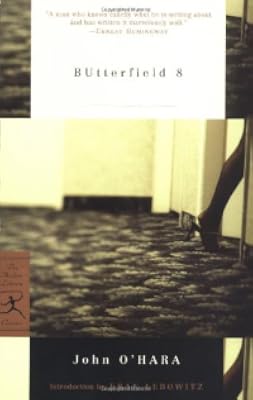
I enjoyed this book, and would like to read more by O'Hara, who Fran Liebowitz describes as "the real F. Scott Fitzgerald."
Recommended.
3 stars show less
Set in the early 1930's in New York City, this is the story of the downfall of "party girl" Gloria Wondrous. After a night in his apartment with her married lover Weston Liggett, Gloria awakens alone and finds her evening dress torn. She takes off in her slip with Liggett's wife's mink coat covering her.
We learn Gloria's history, from a childhood in which she was sexually abused. She's promiscuous and conniving, using her sexuality to gain power, but she is not unsympathetic. The novel is permeated with the atmosphere of New York City during the Depression, and during prohibition--there are show more speakeasies, and unspoken class distinctions, and prejudice against Jews. You know it can't end well.
I enjoyed this book, and would like to read more by O'Hara, who Fran Liebowitz describes as "the real F. Scott Fitzgerald."
Recommended.
3 stars show less
Members
- Recently Added By
Author Information

132+ Works 6,769 Members
John Henry O'Hara was born in Pottsville, Pennsylvania on January 31, 1905. Many of his novels and short stories were set in fictionally named Pennsylvania towns with the main themes centering on class conflict and status. He began writing for the New Yorker in 1928; and during his life, sold 225 stories to the magazine. His first collection, The show more Doctor's Son and Other Stories (1935) was followed by twelve more. Pal Joey (1940) was made into a Broadway musical by Richard Rodgers and Lorenz Hart and later was adapted into a film starring Frank Sinatra and Rita Hayworth. Some of his published novels include Appointment in Samarra (1934), A Rage to Live (1949), The Lockwood Concern (1965), and The Good Samaritan and Other Stories (published posthumously in 1974). Ten North Frederick (1955) won the National Book Award and Butterfield 8 (1935) and From the Terrace (1958) were adapted into movies in 1960. He died from cardiovascular disease on April 11, 1970. (Bowker Author Biography) show less
Some Editions
Awards and Honors
Notable Lists
Series
Belongs to Publisher Series
Work Relationships
Is contained in
Has the adaptation
Common Knowledge
- Canonical title
- BUtterfield 8
- Original publication date
- 1935
- People/Characters
- Starr Faithfull; Mayor Andrew James Peters
- Important places
- New York, New York, USA
- Related movies
- BUtterfield 8 (1960 | IMDb)
- Disambiguation notice
- Note that the title refers to a telephone exchange, so the "u" is properly capitalized in the Canonical Title as BUtterfield.
Classifications
Statistics
- Members
- 884
- Popularity
- 30,509
- Reviews
- 18
- Rating
- (3.39)
- Languages
- 7 — Dutch, English, French, German, Italian, Portuguese, Spanish
- Media
- Paper, Audiobook, Ebook
- ISBNs
- 32
- ASINs
- 35