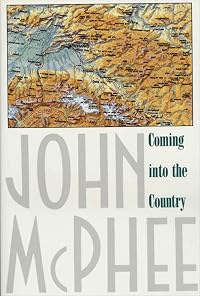
Coming into the Country
by John McPhee
On This Page
Description
Those who have traveled into America's only remaining frontier rarely come back out the same. Only in Alaska can we come close to understanding what our forefathers must have felt upon their arrival in the New World. McPhee brings to this narrative the qualities that have distinguished him in the field of travel literature-tolerance, brisk, and entertaining prose, and a fascination with things most of us never bother to notice.Tags
Recommendations













Member Reviews
This is a fabulous book. Written in the mid-1970s, it recounts his experiences and adventures in Alaska, both at a personal level and as an observer of the struggles of a place that wasn't even 20 years old as the 50th state. It's full of history, colorful characters, discourses on wildlife and geography, and details of everyday life that he makes seem anything but mundane, especially to anyone from the lower 48.
It might be assumed that a book that, among other things, discusses current events from the 1970s would be terribly dated to a reader of today but that simply isn't the case. Yes, we know how the drive to move the capital away from Juneau turned out and we know at least some of the impact of the oil pipeline, but what makes this show more book so interesting are the mindsets of the people that he illustrates so well. McPhee has a real gift for presenting both sides of a conflict such that the reader can appreciate both, even when McPhee flat out tells you how he feels about it.
This is highly recommended: whether you simply want to learn more about Alaska or want to vicariously experience life hundreds of miles from the next human being where 20 below zero is considered shirt-sleeve weather. show less
It might be assumed that a book that, among other things, discusses current events from the 1970s would be terribly dated to a reader of today but that simply isn't the case. Yes, we know how the drive to move the capital away from Juneau turned out and we know at least some of the impact of the oil pipeline, but what makes this show more book so interesting are the mindsets of the people that he illustrates so well. McPhee has a real gift for presenting both sides of a conflict such that the reader can appreciate both, even when McPhee flat out tells you how he feels about it.
This is highly recommended: whether you simply want to learn more about Alaska or want to vicariously experience life hundreds of miles from the next human being where 20 below zero is considered shirt-sleeve weather. show less
“If anyone could figure out how to steal Italy, Alaska would be the place to hid it." What a vivid way to describe Alaska's immensity. 'There has been a host of excellent books on Alaska. My favorite until recently was Joe McGinnis's [b:Going to Extremes|71804|Rachael Ray's 30-Minute Get Real Meals Eat Healthy Without Going to Extremes|Rachael Ray|http://photo.goodreads.com/books/1170791372s/71804.jpg|69524] but John McPhee's Coming Into the Country is wonderful, too.
McPhee's book is divided into three parts: first an exploration of wilderness described during the course of a canoe/kayak trip down the Salmon River. Much in the manner of the river, his descriptions meander into all sorts of eddies and whirlpools. His description of show more bush pilots is priceless. On one occasion he is flying (a regularly scheduled airline, mind you) in a single engine plane in horrible weather. The pilot is skimming the trees to find landmarks because he can't see anything. He has a map on his lap, but suddenly hands it to a passenger to help figure out where they are. "I had been chewing gum so vigorously that the hinges of my jaws would ache for two days."
Stumbling on a grizzly bear in a blueberry patch (fortunately upwind), he muses on the best way to survive a grizzly's charge - no consensus of opinion, but most survivors believe the best thing to do is stand absolutely still and shout as loudly as possible, for that is the least likely reaction the bear, which does not have good sight, would expect of game. Running away is useless for grizzlies are very fast. They are also quite coordinated. They enjoy schussing down snow-covered mountains at 96 feet/second through trees and around boulders only to screech to a stop, stand up and walk away, just before going -over the edge of a cliff.
The second part of the book discusses the Alaskan government's search for a new capital and the conflict that generated. Juneau really makes a lousy site because of its remoteness, not to mention its horrible landing approach to the airport. Alaska attracts very independent and anti-authoritarian types of people so it witnesses a battle between those suffering from the "Sierra Club Syndrome" or others fondly embracing the "Dallas Scenario."
Many of these folks are affectionately profiled in the third section. John Cook, for example, has consciously tried to eliminate the need for money and authority. He tries to live on $1,500 a year (this was written in the mid seventies); he has a series of [b:trap line|69367|Trap Line|Carl Hiaasen|http://photo.goodreads.com/books/1170705366s/69367.jpg|2689]s and rarely uses a parka, even at -30'. The closest town is Eagle, about 30 miles away via dog sled, with a population of about 100. Almost all live by the ut restrictions on code, "Never put restrictions on any individual.... Up here they ain't gettin' you for spittin' on the sidewalk."
Ironically, most moved there for the space, yet land is less available (as of 1977) than in the lower '48 because when Alaska became a state deals were made with the native Americans and the federal government to set aside almost the entire state as either a reservation or park land. Whereas before statehood someone could build a cabin 80 miles from nowhere, now a government helicopter might fly over and throw them out. Homesteading no longer exists, but in Alaska that loss seems especially poignant in territory where you might have to fly somewhere to take a shower. show less
McPhee's book is divided into three parts: first an exploration of wilderness described during the course of a canoe/kayak trip down the Salmon River. Much in the manner of the river, his descriptions meander into all sorts of eddies and whirlpools. His description of show more bush pilots is priceless. On one occasion he is flying (a regularly scheduled airline, mind you) in a single engine plane in horrible weather. The pilot is skimming the trees to find landmarks because he can't see anything. He has a map on his lap, but suddenly hands it to a passenger to help figure out where they are. "I had been chewing gum so vigorously that the hinges of my jaws would ache for two days."
Stumbling on a grizzly bear in a blueberry patch (fortunately upwind), he muses on the best way to survive a grizzly's charge - no consensus of opinion, but most survivors believe the best thing to do is stand absolutely still and shout as loudly as possible, for that is the least likely reaction the bear, which does not have good sight, would expect of game. Running away is useless for grizzlies are very fast. They are also quite coordinated. They enjoy schussing down snow-covered mountains at 96 feet/second through trees and around boulders only to screech to a stop, stand up and walk away, just before going -over the edge of a cliff.
The second part of the book discusses the Alaskan government's search for a new capital and the conflict that generated. Juneau really makes a lousy site because of its remoteness, not to mention its horrible landing approach to the airport. Alaska attracts very independent and anti-authoritarian types of people so it witnesses a battle between those suffering from the "Sierra Club Syndrome" or others fondly embracing the "Dallas Scenario."
Many of these folks are affectionately profiled in the third section. John Cook, for example, has consciously tried to eliminate the need for money and authority. He tries to live on $1,500 a year (this was written in the mid seventies); he has a series of [b:trap line|69367|Trap Line|Carl Hiaasen|http://photo.goodreads.com/books/1170705366s/69367.jpg|2689]s and rarely uses a parka, even at -30'. The closest town is Eagle, about 30 miles away via dog sled, with a population of about 100. Almost all live by the ut restrictions on code, "Never put restrictions on any individual.... Up here they ain't gettin' you for spittin' on the sidewalk."
Ironically, most moved there for the space, yet land is less available (as of 1977) than in the lower '48 because when Alaska became a state deals were made with the native Americans and the federal government to set aside almost the entire state as either a reservation or park land. Whereas before statehood someone could build a cabin 80 miles from nowhere, now a government helicopter might fly over and throw them out. Homesteading no longer exists, but in Alaska that loss seems especially poignant in territory where you might have to fly somewhere to take a shower. show less
This book is about Alaska, at least circa 1976. Back then Alaska could boast a population of 400 thousand, of which 60 thousand were Native Americans. (As of 2011, Alaska's population had risen to 722,718.) Both then and now Anchorage boasted half the population. At the time Alaska became a state in 1959, the inhabitants hoped that would give them more control over their destiny--as McPhee explained, at the time only half of one percent of Alaska was in private hands--the rest was under federal control. After statehood, about ten percent of the land was bestowed on Indians by the Native Claims Settlement Act, and most of the rest designated to become national parks. As for what was left over, Alaska became a land caught between "the show more Sierra Club syndrome and the Dallas scenario." McPhee had a way of showing the tension between two ideals--development versus preserving wilderness.
McPhee does this primarily by treating you to a guided tour of the quirky inhabitants both human and wild (not that there seems much distinction between the two much of the time.) People in the bush, particularly in Upper Yukon, refer to their part of Alaska as "the country." Strangers appearing are "said to have come into the country." And few Alaskans he tells us about are natives, but once were those strangers. The title essay takes up well over half of the book and focuses on the people of the Upper Yukon and especially those around Eagle Town (largely white) and Eagle Village (largely Native American.) Most of the people he features are trappers or miners. And surrounding them are salmon, grayling, grizzly, moose--and what a friend of mine once told me is the Alaskan state bird--the mosquito. (McPhee tells how one time he slapped his leg and counted 17 dead mosquitoes on his palm).
In an interview of Sebastian Junger, author of The Perfect Storm, he said that John McPhee is "a god... he's a master of that detail... of explaining how things worked... of making the world an interesting place." Coming from one of my favorite authors, that was high-praise--as it turns out deserved. What I noted right away is that McPhee has style. It may not be to everyone's liking, but it's there. There's a rhythm to his prose, a way of writing shapely phrases, and a lyricism probably helped along by two-thirds of this book being written first person, present tense. He often bounces between stories and personalities in a very meandering way. There are at times these free-floating quotations, like a chorus, giving you different sides. So this above all is literary journalism. It's also good journalism. Not only in the sense that it's lively and informative, but even though McPhee makes no bones about having his own opinion: he's also fair. Other views get to be aired too. Sometimes eccentric, very idiosyncratic views, but not ones simply straw-men chosen to show up the ridiculousness of the disfavored side.
The book writes of a way of life more exotic to me, a Native New Yorker, than Beijing or Johannesburg. I find the lifestyle described more horrific than idyllic to be honest, not being one to rhapsodize nature--but it certainly was fascinating to read about in McPhee's hands. Even though this book is already decades old, I left feeling it I much better understood the state that's America's last frontier. show less
McPhee does this primarily by treating you to a guided tour of the quirky inhabitants both human and wild (not that there seems much distinction between the two much of the time.) People in the bush, particularly in Upper Yukon, refer to their part of Alaska as "the country." Strangers appearing are "said to have come into the country." And few Alaskans he tells us about are natives, but once were those strangers. The title essay takes up well over half of the book and focuses on the people of the Upper Yukon and especially those around Eagle Town (largely white) and Eagle Village (largely Native American.) Most of the people he features are trappers or miners. And surrounding them are salmon, grayling, grizzly, moose--and what a friend of mine once told me is the Alaskan state bird--the mosquito. (McPhee tells how one time he slapped his leg and counted 17 dead mosquitoes on his palm).
In an interview of Sebastian Junger, author of The Perfect Storm, he said that John McPhee is "a god... he's a master of that detail... of explaining how things worked... of making the world an interesting place." Coming from one of my favorite authors, that was high-praise--as it turns out deserved. What I noted right away is that McPhee has style. It may not be to everyone's liking, but it's there. There's a rhythm to his prose, a way of writing shapely phrases, and a lyricism probably helped along by two-thirds of this book being written first person, present tense. He often bounces between stories and personalities in a very meandering way. There are at times these free-floating quotations, like a chorus, giving you different sides. So this above all is literary journalism. It's also good journalism. Not only in the sense that it's lively and informative, but even though McPhee makes no bones about having his own opinion: he's also fair. Other views get to be aired too. Sometimes eccentric, very idiosyncratic views, but not ones simply straw-men chosen to show up the ridiculousness of the disfavored side.
The book writes of a way of life more exotic to me, a Native New Yorker, than Beijing or Johannesburg. I find the lifestyle described more horrific than idyllic to be honest, not being one to rhapsodize nature--but it certainly was fascinating to read about in McPhee's hands. Even though this book is already decades old, I left feeling it I much better understood the state that's America's last frontier. show less
http://shawjonathan.wordpress.com/2010/06/29/coming-into-the-country/
This book is about Alaska, written more than 30 years ago, originally as three articles spread over eight issues of The New Yorker and dealing with such historical dead ducks as the vote to move the state capital from Juneau to somewhere more accessible: more than 400 pages of dated journalism about a distant, cold place, you might think. But to think of it like that would be a mistake.
History, politics, geology, geography, climatology, anthropology, zoology – these pages offer a huge diversity of knowledge for pleasurable absorption. The explorer Roald Amundsen rides into the book as naturally as he rode into the town of Eagle in 1905. The ‘winter bear’ show more phenomenon, in which a bear gains an armour of ice that makes it invulnerable to spears or even guns (shades of Iorek Byrnison) is mentioned almost in passing. There are helpful hints about how to leave a log cabin in the woods so as to minimise any damage by curious bears – not that you or I will ever need such hints, but reason not the need. The third essay in particular, which gives the book its title and accounts for more than half the pages, explores the intricacies of life in and around the tiny ‘city’ of Eagle, on the Yukon River, near the Canadian border, entirely through McPhee’s relationships with people there, interspersed with forays into history and an occasional string of quotes from the judgemental gossip that thrives there as in any small community. Eagle is divisible into the Christians, the bootleggers, the ‘river people’ (who live, illegally, out in the bush) and the Indians (who mostly live in Eagle Village, a couple of miles down the river). There’s plenty of animosity between these groups, but McPhee seems to have developed strong, trusting relationships in all groups – and the reader is invited to sympathise with them all as well.
The book has been described as 'one of the two or three essential books about the nature of Alaska'.
McPhee evidently lived in Alaska for months if not years on the way to this book, long enough to get to know some of its people well, to learn the peculiarities of language as spoken there, to develop a deep feel for the country, to amass a vast store of fact and anecdote, to ferret out first-person accounts of incidents that had become legendary. This is journalism that’s not so much embedded as immersed.
There’s some wonderful nature writing, combining lyrical description with other perspectives. By the time I reached the end I could almost understand what some people find attractive about living in a place that gets to 40 below zero (Farenheit) and stays there for a good part of the year. show less
This book is about Alaska, written more than 30 years ago, originally as three articles spread over eight issues of The New Yorker and dealing with such historical dead ducks as the vote to move the state capital from Juneau to somewhere more accessible: more than 400 pages of dated journalism about a distant, cold place, you might think. But to think of it like that would be a mistake.
History, politics, geology, geography, climatology, anthropology, zoology – these pages offer a huge diversity of knowledge for pleasurable absorption. The explorer Roald Amundsen rides into the book as naturally as he rode into the town of Eagle in 1905. The ‘winter bear’ show more phenomenon, in which a bear gains an armour of ice that makes it invulnerable to spears or even guns (shades of Iorek Byrnison) is mentioned almost in passing. There are helpful hints about how to leave a log cabin in the woods so as to minimise any damage by curious bears – not that you or I will ever need such hints, but reason not the need. The third essay in particular, which gives the book its title and accounts for more than half the pages, explores the intricacies of life in and around the tiny ‘city’ of Eagle, on the Yukon River, near the Canadian border, entirely through McPhee’s relationships with people there, interspersed with forays into history and an occasional string of quotes from the judgemental gossip that thrives there as in any small community. Eagle is divisible into the Christians, the bootleggers, the ‘river people’ (who live, illegally, out in the bush) and the Indians (who mostly live in Eagle Village, a couple of miles down the river). There’s plenty of animosity between these groups, but McPhee seems to have developed strong, trusting relationships in all groups – and the reader is invited to sympathise with them all as well.
The book has been described as 'one of the two or three essential books about the nature of Alaska'.
McPhee evidently lived in Alaska for months if not years on the way to this book, long enough to get to know some of its people well, to learn the peculiarities of language as spoken there, to develop a deep feel for the country, to amass a vast store of fact and anecdote, to ferret out first-person accounts of incidents that had become legendary. This is journalism that’s not so much embedded as immersed.
There’s some wonderful nature writing, combining lyrical description with other perspectives. By the time I reached the end I could almost understand what some people find attractive about living in a place that gets to 40 below zero (Farenheit) and stays there for a good part of the year. show less
McPhee’s notes from small villages and the bush of Alaska contain echoes of the observational prowess and bald, fierce prose of Annie Dillard. Whether describing a landscape, an encounter with a bear, or the outliers living off the grid in the backcountry, McPhee’s insights are clothed in vigor and compassion and humor. I recommend this book not only for anyone traveling to Alaska, but also for fans of Dillard and nature writing.
Fifty years old now, parts of this book, while still good reporting, are not worthwhile except in a historical context. The views of Alaska residents then is interesting, but in the end not very relevant and boring. The descriptions of the terrain and wildlife is still riveting. In the audiobook, the narrator's mispronunciation of "placer" (play-ser rather than pla-sir) was an annoyance and should have been caught by someone.
McPhee travels through Alaska, profiling the many, diverse people he meets along the way. Parts of it are dated, especially the extended section discussing possibly relocating the state capital from Juneau. McPhee is a little too sympathetic with some people, especially the gold miners who completely destroy the countryside for very little money, and who behave almost like terrorists. I had to grit my teeth through these long sections. Overall, like everything McPhee has written, it is smooth and engaging. I don't know that it is insightful, but he certainly introduces us to interesting people.
Members
- Recently Added By
Lists

Set in the Pacific Northwest
136 works; 7 members

Blue Pyramid 1,276 Best Books of All Time
1,248 works; 32 members

Favourite Books
1,820 works; 316 members

Sense of place
156 works; 13 members
Author Information

59+ Works 21,095 Members
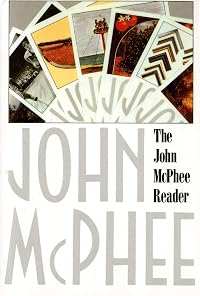
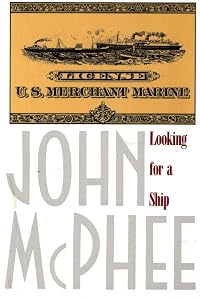
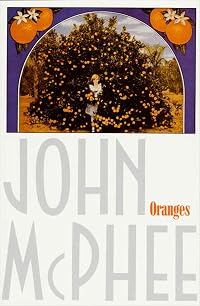
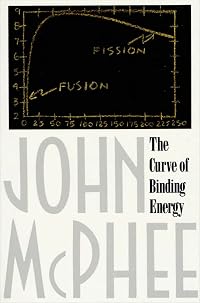
McPhee was born in Princeton, New Jersey, and educated at Princeton University and Cambridge University. His writing career began at Time magazine and led to his long association with the New Yorker, where he has been a staff writer since 1965. That same year he published his first book, A Sense of Where You Are, with FSG, and soon followed with show more The Headmaster (1966), Oranges (1967), The Pine Barrens (1968), A Roomful of Hovings and Other Profiles (collection, 1969), The Crofter and the Laird (1969), Levels of the Game (1970), Encounters with the Archdruid (1972), The Deltoid Pumpkin Seed (1973), The Curve of Binding Energy (1974), Pieces of the Frame (collection, 1975), and The Survival of the Bark Canoe (1975). Both Encounters with the Archdruid and The Curve of Binding Energy were nominated for National Book Awards in the category of science Since 1977, the year in which McPhee received the Award in Literature from the American Academy of Arts and Letters and The John McPhee Reader and the bestselling Coming into the Country appeared in print, Farrar, Straus and Giroux has published Giving Good Weight (collection, 1979), Basin and Range (1981), In Suspect Terrain (1983), La Place de la Concorde Suisse (1984), Table of Contents (collection, 1985), Rising from the Plains (1986), Heirs of General Practice (in a paperback edition, 1986), The Control of Nature (1989), Looking for a Ship (1990), Assembling California (1993), The Ransom of Russian Art (1994), The Second John McPhee Reader (1996), and Irons in the Fire (1997). Annals of the Former World was published in 1998 and was awarded the Pulitzer Prize in 1999. McPhee has taught at Princeton as Ferris Professor since 1975. (Bowker Author Biography) show less
All Editions
Some Editions
Awards and Honors
Awards
Distinctions
Series
Belongs to Publisher Series
Work Relationships
Common Knowledge
- Original publication date
- 1977
- Important places
- Alaska, USA
- Dedication
- For Martha
- First words
- My bandana is rolled on the diagonal and retains water fairly well.
- Original language
- English
- Canonical DDC/MDS
- 917.980450924; 917.980451
- Canonical LCC
- F910
Classifications
Statistics
- Members
- 1,725
- Popularity
- 12,904
- Reviews
- 20
- Rating
- (4.12)
- Languages
- English, Japanese
- Media
- Paper, Audiobook, Ebook
- ISBNs
- 18
- UPCs
- 1
- ASINs
- 23