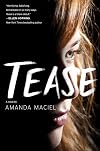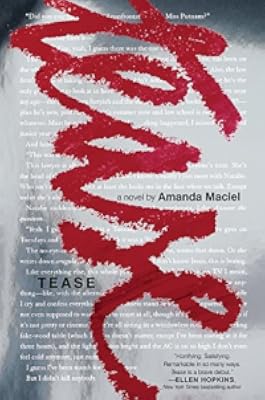
Tease
by Amanda Maciel
On This Page
Description
"A teenage girl faces criminal charges for bullying after a classmate commits suicide"--Tags
Recommendations







Member Reviews
I. Loved. This. Book.
Sara, her BFF Brielle, and three boys that they are friendly with are all in big trouble. Emma Putnam committed suicide and the blame is being placed solely on them. They are all being charged with bullying, harassment, stalking, and/or assault. Sure Sara didn't like Emma. Yes she maybe said and did some mean things to her. Yes it was her goal in life to get Emma to transfer out of their school. But did she force the girl to kill herself?? Did she put the rope around the girl's neck? And why doesn't everyone see that Emma isn't exactly the angelic martyr that the media is making her out to be? She had flaws too. She did some things that were not so nice herself.
As the trial nears, Sara is finding out that being show more branded a bully and a villian is a lonely existance. Her whole life exists in a lawyer's office, visits to her therapist, summer school, and the agonizing wait to see exactly what sort of consequences her actions will have.
My Thoughts:
Amazing book!!! I really connected with this book in a big way. It's about mean girls, and the other side of the story. Not the victim's side... the other side. Because every story has 2 sides right? And the thing is, if I read this from the victim's side, I probably would have HATED Brielle and Sara with a passion. But reading it from their side... I didn't hate them at all. I freaking related. I remember being in high school... people were not nice to me at times and I was not nice to them. And yeah it usually was over some guy. I remember feeling exactly like Sara when it came to boys. Like having a boyfriend and being with someone who is considered "cool" meant everything. How my whole freaking day would hinge on whether I got a call or an IM (yeah texting didn't exist back then) from whatever guy I was into. To think about how much energy and emotion I wasted on such dumb relationships honestly exhausts me.
I've seen a lot of bad reviews for this book and mostly it's because people are appalled at Sara not having remorse for what she did to Emma. And I see where they are coming from... but I also think it is unrealistic to believe that everybody in this type of situation would instantly feel responsibility. Sara did not kill Emma. Emma killed herself... and a lot of the reason why Emma killed herself had to do with things she did to make herself a target. If you go after the popular girl's boyfriend and CHEAT with him... you have to expect some backlash. I didn't agree with what Sara and Brielle did to Emma all the time, but I can see why they were pissed at Emma.
A main focus in this book is the friendship between Brielle and Sara. How Brielle is the dominant friend and Sara is always tip-toeing around her. Wanting to still be Brielle's favorite friend, wanting to be in the in-group, wanting Brielle's approval for whatever reason. Holy shit can I relate. I had a friend A LOT like Brielle. She wasn't the queen bee of our school (she didn't even go to my school), but I always felt like I had to be careful around her. And we weren't nice girls. If someone went against us, we held a grudge. I wouldn't say that we were bullies, but we definitely had a few battles with other girls for various reasons (like I said earlier, mostly over some guy).
I loved everything about this book. I loved how it wasn't stereotypical victim-loving. I loved the writing and the dialogue. And I loved how this felt like real high school. Sometimes I felt uncomfortable relating to these "mean girls". And I can't lie, sometimes I really hated Emma as well. She definitely didn't do herself any favors. But I think that's the whole point of the book, to show you that this kind of stuff is complicated. There is no black and white sometimes.
OVERALL: A book about bullying that shows you the flip-side. It's not about the bullying victim, it's about the bullies. It shows how life isn't always black and white, good and bad. I want everyone to read this because I think it shows a really important perspective. It gets a conversation going at the very least.
My Blog:
show less
Sara, her BFF Brielle, and three boys that they are friendly with are all in big trouble. Emma Putnam committed suicide and the blame is being placed solely on them. They are all being charged with bullying, harassment, stalking, and/or assault. Sure Sara didn't like Emma. Yes she maybe said and did some mean things to her. Yes it was her goal in life to get Emma to transfer out of their school. But did she force the girl to kill herself?? Did she put the rope around the girl's neck? And why doesn't everyone see that Emma isn't exactly the angelic martyr that the media is making her out to be? She had flaws too. She did some things that were not so nice herself.
As the trial nears, Sara is finding out that being show more branded a bully and a villian is a lonely existance. Her whole life exists in a lawyer's office, visits to her therapist, summer school, and the agonizing wait to see exactly what sort of consequences her actions will have.
My Thoughts:
Amazing book!!! I really connected with this book in a big way. It's about mean girls, and the other side of the story. Not the victim's side... the other side. Because every story has 2 sides right? And the thing is, if I read this from the victim's side, I probably would have HATED Brielle and Sara with a passion. But reading it from their side... I didn't hate them at all. I freaking related. I remember being in high school... people were not nice to me at times and I was not nice to them. And yeah it usually was over some guy. I remember feeling exactly like Sara when it came to boys. Like having a boyfriend and being with someone who is considered "cool" meant everything. How my whole freaking day would hinge on whether I got a call or an IM (yeah texting didn't exist back then) from whatever guy I was into. To think about how much energy and emotion I wasted on such dumb relationships honestly exhausts me.
I've seen a lot of bad reviews for this book and mostly it's because people are appalled at Sara not having remorse for what she did to Emma. And I see where they are coming from... but I also think it is unrealistic to believe that everybody in this type of situation would instantly feel responsibility. Sara did not kill Emma. Emma killed herself... and a lot of the reason why Emma killed herself had to do with things she did to make herself a target. If you go after the popular girl's boyfriend and CHEAT with him... you have to expect some backlash. I didn't agree with what Sara and Brielle did to Emma all the time, but I can see why they were pissed at Emma.
A main focus in this book is the friendship between Brielle and Sara. How Brielle is the dominant friend and Sara is always tip-toeing around her. Wanting to still be Brielle's favorite friend, wanting to be in the in-group, wanting Brielle's approval for whatever reason. Holy shit can I relate. I had a friend A LOT like Brielle. She wasn't the queen bee of our school (she didn't even go to my school), but I always felt like I had to be careful around her. And we weren't nice girls. If someone went against us, we held a grudge. I wouldn't say that we were bullies, but we definitely had a few battles with other girls for various reasons (like I said earlier, mostly over some guy).
I loved everything about this book. I loved how it wasn't stereotypical victim-loving. I loved the writing and the dialogue. And I loved how this felt like real high school. Sometimes I felt uncomfortable relating to these "mean girls". And I can't lie, sometimes I really hated Emma as well. She definitely didn't do herself any favors. But I think that's the whole point of the book, to show you that this kind of stuff is complicated. There is no black and white sometimes.
OVERALL: A book about bullying that shows you the flip-side. It's not about the bullying victim, it's about the bullies. It shows how life isn't always black and white, good and bad. I want everyone to read this because I think it shows a really important perspective. It gets a conversation going at the very least.
My Blog:
show less
Sara Wharton is a bully. She and her friends are at the top social tier of the school with football players and they tormented Emma Putnam every single day. They called her names, set up fake social media accounts, and stalked her, among other numerous things. The abuse escalated until Emma committed suicide. Now Sara and four of her classmates are being charged criminally for the bullying and harassment that led to Emma's death. The public has already judged them and treat them similar to how they treated Emma. They are ostracized, called names, and seen as the lowest of the low. Sara maintains that she has done nothing wrong because she didn't commit murder and remains unconvinced that Emma didn't deserve to be treated that way. Sara show more has plenty of time to reflect on the time between meeting with her lawyers, her therapist, and going to summer school. Not only does she have to come to terms with her actions, but she also has to figure out how to move forward with her life.
Cases like Emma's are unfortunately not uncommon. I can remember numerous cases where young people were tormented by bullies and decided to take their lives. It's easy to empathize and sympathize with the victims of these bullies, but it's hard for me to feel anything but anger and disgust for unrepentant bullies. A recent case comes to mind where two girls aged 12 and 14 stalked and bullied a girl who then committed suicide. Their response was IDGAF (I don't give a fuck). I had no idea how someone could be so callous and cruel or what kind of thought process goes into that. Now I have some idea. Sara is not an easy narrator to relate to or even like. Much of her narrative made me enraged because of how clueless she was to what her actions caused. She maintains that she did nothing wrong and justifies her incredibly hurtful actions by saying everyone else does it and Emma deserved it. Throughout most of the book, she shows no remorse and only laments how her life is ruined. However, no bully is completely evil and they don't deserve to in turn be bullied. We should be trying to work to educate people so things like this don't happen instead of justifying and perpetuating bullying behavior. In an article about the girls I mentioned earlier, the comments section is full of people calling them names and saying they deserve to die or be incarcerated for life. How is this any different than what those girls did?
The themes in the novel are relevant to teens today. Peer pressure is a major reason why so many people bullied Emma and the situation got so out of hand. Teens want to appear cool and do what they popular kids are doing. Sara had a toxic relationship with her best friend Brielle queen bee of the school, who put down everyone including her friends. She manipulated those around her and masterminded a lot of the abuse. Sara went along with it for a while and then went to extremes with it because of Brielle's support. Their relationship skewed what is right and wrong because they acted like an echo chamber where dissent is grounds for social suicide. Another strong theme is sexuality and how its perceived by others. If girls are sexual in any way, including simply initiating conversations with boys, they are labeled sluts. If they withhold sex, they are labeled prudes and teases. Boys are rarely looked down upon for their sexuality, even if they cheat on their girlfriends or have multiple partners. The girl they cheated with (in this case Emma) bears all the consequences of an action that takes two people. Society's skewed view of female sexuality hurts these girls: Emma is a slut for "sleeping around" (which may not even be true) and this label is the main reason why she is so tormented by her classmates; Sara has sex with her boyfriend not because she wants to, but because it's what's expected of her or her boyfriend will go elsewhere if she doesn't; and Brielle blames herself for being raped and dismisses her own negative feelings about it. These issues still affect women in adulthood and it's a major societal problem that needs to be addressed.
Tease is an important novel because it touches on a lot of issues teens have to face and makes us see another side of bullying. No one in the story is perfect. Even Emma makes mistakes and says hurtful things, but she doesn't deserve to be stalked and humiliated at every turn. Neither does Sara, even though much of what she did was horrible. This is the best book I've seen about bullying. I only have one complaint. I would like to have seen Emma's perspective. I don't think Sara ever really understood her or thought to see the situation from her perspective. show less
Cases like Emma's are unfortunately not uncommon. I can remember numerous cases where young people were tormented by bullies and decided to take their lives. It's easy to empathize and sympathize with the victims of these bullies, but it's hard for me to feel anything but anger and disgust for unrepentant bullies. A recent case comes to mind where two girls aged 12 and 14 stalked and bullied a girl who then committed suicide. Their response was IDGAF (I don't give a fuck). I had no idea how someone could be so callous and cruel or what kind of thought process goes into that. Now I have some idea. Sara is not an easy narrator to relate to or even like. Much of her narrative made me enraged because of how clueless she was to what her actions caused. She maintains that she did nothing wrong and justifies her incredibly hurtful actions by saying everyone else does it and Emma deserved it. Throughout most of the book, she shows no remorse and only laments how her life is ruined. However, no bully is completely evil and they don't deserve to in turn be bullied. We should be trying to work to educate people so things like this don't happen instead of justifying and perpetuating bullying behavior. In an article about the girls I mentioned earlier, the comments section is full of people calling them names and saying they deserve to die or be incarcerated for life. How is this any different than what those girls did?
The themes in the novel are relevant to teens today. Peer pressure is a major reason why so many people bullied Emma and the situation got so out of hand. Teens want to appear cool and do what they popular kids are doing. Sara had a toxic relationship with her best friend Brielle queen bee of the school, who put down everyone including her friends. She manipulated those around her and masterminded a lot of the abuse. Sara went along with it for a while and then went to extremes with it because of Brielle's support. Their relationship skewed what is right and wrong because they acted like an echo chamber where dissent is grounds for social suicide. Another strong theme is sexuality and how its perceived by others. If girls are sexual in any way, including simply initiating conversations with boys, they are labeled sluts. If they withhold sex, they are labeled prudes and teases. Boys are rarely looked down upon for their sexuality, even if they cheat on their girlfriends or have multiple partners. The girl they cheated with (in this case Emma) bears all the consequences of an action that takes two people. Society's skewed view of female sexuality hurts these girls: Emma is a slut for "sleeping around" (which may not even be true) and this label is the main reason why she is so tormented by her classmates; Sara has sex with her boyfriend not because she wants to, but because it's what's expected of her or her boyfriend will go elsewhere if she doesn't; and Brielle blames herself for being raped and dismisses her own negative feelings about it. These issues still affect women in adulthood and it's a major societal problem that needs to be addressed.
Tease is an important novel because it touches on a lot of issues teens have to face and makes us see another side of bullying. No one in the story is perfect. Even Emma makes mistakes and says hurtful things, but she doesn't deserve to be stalked and humiliated at every turn. Neither does Sara, even though much of what she did was horrible. This is the best book I've seen about bullying. I only have one complaint. I would like to have seen Emma's perspective. I don't think Sara ever really understood her or thought to see the situation from her perspective. show less
I wanted to read this one because the subject of bullying always catches my attention, especially since this is from the perspective of the one that the media and maybe even the law is implicating is responsible. I wanted to see inside the head of someone who helped bully someone, their reasoning and was hoping to see a lot of growth in the main character.
Warning-- this is a gritty story. It is hard to read but worth it. It has some pretty intense name calling, some physical but mostly emotional and verbal. Slut shaming is involved, suicide is involved although we don't see that through the victim's eyes.
Being inside Sara's head, I wanted to dislike her going in. She obviously was involved with Emma's pain from being made fun of, show more called names, and wondering what else went into Emma's thoughts. Was it family? Was she depressed? Did the bullying push her over the edge? We see through Sara's eyes that Emma came into the school and was buddy buddy with the guys, and getting in between guys and girls already in a relationship. It is the question of--how much was tainted by Sara's point of view? Did Emma just need to be talked gently to and tell her that she was hurting people? And then we see the friendship between Sara and Brielle. Sara will do almost anything to be in good graces with Brielle, and it is not a healthy relationship at all. Sara does and says what Brielle says and doesn't let her conscious have a voice. Anytime she has an inkling of doubt of what she is doing and saying she shoved it down and tries again to please Brielle. She is shocked when she hears what others think of Brielle-- a bitch, not nice. She can't reconcile that in her head because she just sees her as a best friend, as looking out for her because Emma is talking to Sara's boyfriend. Who Sara went ahead and had sex with because Brielle encouraged it.
It was hard to be inside Sara's head for most of the book because she didn't think that any of it was her fault. That they didn't cross a line. That it was her life that is shattered because she isn't supposed to talk to her best friend anymore, and that people view her differently. She doesn't even like to go out in public anymore because she feels in the negative spotlight.
The book is told in alternating time periods, the aftermath after Emma's suicide, and then the before, the escalation of the teasing and Sara and Brielle's mission to "teach Emma a lesson." It was a little confusing at times, but it really set up the book so that I could see the miniscule changes in Sara, what led her to do it, and the tiny things that make me relate to her, like her nurturing nature with her brothers. I know that she has love, compassion and empathy in her because she lets it all pour out into her two brothers. Her dad is in Chicago and her mom has to work a lot, so Sara steps up in helping take care of the house and keep an eye on the boys. But I see the changing in her perspective little by little until the explosion of change at the end.
And the thing is that makes me feel the worst, I can see why they didn't like Emma. She has that easier relationship with boys, and they like her. She doesn't seem to have many girlfriends so anything she does seems like flirting or moving in on a relationship. But we don't get her perspective, we just see the result of her pain. If she had a malicious intent, we don't know.
This book really pushed me to think. Have my words hurt anyone? Have I ever taken it too far? Can I help someone by being kind? Do I pity the bullies, because what hurts have they felt in order to hurt someone else that way. My struggles with Sara in this one--how responsible is she? If her parents were around more, feeding more into her life, could she have resisted the negative and toxic relationship with Brielle? Could she have stood up for herself easier? We don't know that either. We just know that she followed Brielle down a hard road and that she hurt others. What is hard too is that Tease doesn't take sides, we don't know everything... Did Emma really do the things that Sara thought she did. We see Sara's excuses for her behavior but it shows her denial and her forging ahead to keep doing things.
This book is so realistic, and Sara has a true teen voice. Honestly her saying "like" all of the time annoyed me. But it made her even more real. A person with a story to tell.
The ending wrapped it up pretty well and showed that there are no winners in a situation like this. In the extreme cases everyone's lives are radically changed. But I do appreciate the changes that Sara went through from total denial to her involvement to realizing that she made it worse for a girl who was already hurting and began to understand what her part was.
Bottom Line: Emotional book that made me think, with a character I simultaneously liked, hated and pitied while wanting to knock sense into her. Bullying story told from the POV of one of the bullies. show less
Warning-- this is a gritty story. It is hard to read but worth it. It has some pretty intense name calling, some physical but mostly emotional and verbal. Slut shaming is involved, suicide is involved although we don't see that through the victim's eyes.
Being inside Sara's head, I wanted to dislike her going in. She obviously was involved with Emma's pain from being made fun of, show more called names, and wondering what else went into Emma's thoughts. Was it family? Was she depressed? Did the bullying push her over the edge? We see through Sara's eyes that Emma came into the school and was buddy buddy with the guys, and getting in between guys and girls already in a relationship. It is the question of--how much was tainted by Sara's point of view? Did Emma just need to be talked gently to and tell her that she was hurting people? And then we see the friendship between Sara and Brielle. Sara will do almost anything to be in good graces with Brielle, and it is not a healthy relationship at all. Sara does and says what Brielle says and doesn't let her conscious have a voice. Anytime she has an inkling of doubt of what she is doing and saying she shoved it down and tries again to please Brielle. She is shocked when she hears what others think of Brielle-- a bitch, not nice. She can't reconcile that in her head because she just sees her as a best friend, as looking out for her because Emma is talking to Sara's boyfriend. Who Sara went ahead and had sex with because Brielle encouraged it.
It was hard to be inside Sara's head for most of the book because she didn't think that any of it was her fault. That they didn't cross a line. That it was her life that is shattered because she isn't supposed to talk to her best friend anymore, and that people view her differently. She doesn't even like to go out in public anymore because she feels in the negative spotlight.
The book is told in alternating time periods, the aftermath after Emma's suicide, and then the before, the escalation of the teasing and Sara and Brielle's mission to "teach Emma a lesson." It was a little confusing at times, but it really set up the book so that I could see the miniscule changes in Sara, what led her to do it, and the tiny things that make me relate to her, like her nurturing nature with her brothers. I know that she has love, compassion and empathy in her because she lets it all pour out into her two brothers. Her dad is in Chicago and her mom has to work a lot, so Sara steps up in helping take care of the house and keep an eye on the boys. But I see the changing in her perspective little by little until the explosion of change at the end.
And the thing is that makes me feel the worst, I can see why they didn't like Emma. She has that easier relationship with boys, and they like her. She doesn't seem to have many girlfriends so anything she does seems like flirting or moving in on a relationship. But we don't get her perspective, we just see the result of her pain. If she had a malicious intent, we don't know.
This book really pushed me to think. Have my words hurt anyone? Have I ever taken it too far? Can I help someone by being kind? Do I pity the bullies, because what hurts have they felt in order to hurt someone else that way. My struggles with Sara in this one--how responsible is she? If her parents were around more, feeding more into her life, could she have resisted the negative and toxic relationship with Brielle? Could she have stood up for herself easier? We don't know that either. We just know that she followed Brielle down a hard road and that she hurt others. What is hard too is that Tease doesn't take sides, we don't know everything... Did Emma really do the things that Sara thought she did. We see Sara's excuses for her behavior but it shows her denial and her forging ahead to keep doing things.
This book is so realistic, and Sara has a true teen voice. Honestly her saying "like" all of the time annoyed me. But it made her even more real. A person with a story to tell.
The ending wrapped it up pretty well and showed that there are no winners in a situation like this. In the extreme cases everyone's lives are radically changed. But I do appreciate the changes that Sara went through from total denial to her involvement to realizing that she made it worse for a girl who was already hurting and began to understand what her part was.
Bottom Line: Emotional book that made me think, with a character I simultaneously liked, hated and pitied while wanting to knock sense into her. Bullying story told from the POV of one of the bullies. show less
This is one of those books that will enter your heart and never leave. It takes you to a point of view that you never see, the bully. Sara and her friends bully the new girl Emma for being a slut up until Emma kills herself, and then they all face criminal charges after her death.
Amanda Maciel has some serious guts to write from the point of view of the bully. It takes some incredible writing for you to actually see the other side of things, when typically all we feel for bullies is hatred. That's not to say you will love the main character Sara all the time, actually most of the time I hated her. I don't think I can say I've ever hated a main character in the story, but Sara and her friends are downright cruel to Emma. What makes this show more book so amazing is that you might hate the main character, yet love the book.
This story broke my heart in so many ways, first and foremost is that it was inspired by a true story. High school is a difficult time for everyone and I don't think most people think about the detrimental effects that bullying can have on a person. But I do know that we don't think about why someone is being bullied, or what the bully is going through themselves. Tease puts you in the shoes that most of us never thought we'd walk in. show less
Amanda Maciel has some serious guts to write from the point of view of the bully. It takes some incredible writing for you to actually see the other side of things, when typically all we feel for bullies is hatred. That's not to say you will love the main character Sara all the time, actually most of the time I hated her. I don't think I can say I've ever hated a main character in the story, but Sara and her friends are downright cruel to Emma. What makes this show more book so amazing is that you might hate the main character, yet love the book.
This story broke my heart in so many ways, first and foremost is that it was inspired by a true story. High school is a difficult time for everyone and I don't think most people think about the detrimental effects that bullying can have on a person. But I do know that we don't think about why someone is being bullied, or what the bully is going through themselves. Tease puts you in the shoes that most of us never thought we'd walk in. show less
The author did a marvelous job of showing us two sides of the issue and leading us to identify with Sara - not the ringleader of the bullying circle but someone just as guilty. Amanda Maciel showed us how easy it is to get caught up with friends and not realize the effect of actions.
There are very few likeable characters in this book. Which isn’t all that surprising. TEASE by Amanda Maciel is from the point of view of a bully — a girl who doesn’t realize and can’t come to admit that she not only is a bully, but that she contributed to the harassment that lead to the suicide of a classmate. Somehow, despite the lack of sympathetic characters, though, TEASE is a compelling read. Like, a can’t-put-this-book-down read. The writing is that good.
Skipping back and forth in time between the events leading to the suicide of Emma Putnam and the protagonist, Sara’s, trial following Emma’s death, TEASE is the story of two mean girls who push “teasing” to a whole new level after Sara suspects that Emma is out show more to steal her hot senior boyfriend Dylan. Encouraged by her bestie, Brielle, Sara gets a serious hate-on for Emma, accusing her of everything from stealing boyfriends to spreading STDs, sending mean gifts, and turning friends and would-be boyfriends against her.
The thing is, Sara might be a mean girl, but underneath her shell of social superiority, she’s insecure, leaning on her friendship with popular Brielle and cool Dylan. She is terrified of losing either of them, and taking down Emma becomes a mission for her and a game for her bully of a BFF. Sara constantly claims at her therapy sessions that Emma was no angel– and this is true. But she also doesn’t note that Brielle isn’t exactly a nice girl and Dylan is the typical crappy boyfriend from every teen movie ever.
Sara is going to have to find her voice, and her own truth. Which is hard to do when every news outlet in America is focusing on the suicide of sweet Emma Putnam and the group of mean teens who may as well have murdered her. Perhaps, with the help of the supposed “bomb threat guy” in her summer school classes — sexy and mysterious Carmichael — she can figure a few things out. And perhaps even find some forgiveness. But it’s hard to shed her old self, especially when everyone around her has already decided who she is.
An important book, TEASE is timely, terrifying, and all too true. I hope readers will find their own truths and their own voices in this book. And I hope they find it as scarily compelling as I did, even if it’s hard to like the characters. Because, really, there’s more than meets the eye with everyone. That’s kind of the whole point. Bravo to Amanda Maciel for tackling this tough topic without sugar coating a single thing. show less
Skipping back and forth in time between the events leading to the suicide of Emma Putnam and the protagonist, Sara’s, trial following Emma’s death, TEASE is the story of two mean girls who push “teasing” to a whole new level after Sara suspects that Emma is out show more to steal her hot senior boyfriend Dylan. Encouraged by her bestie, Brielle, Sara gets a serious hate-on for Emma, accusing her of everything from stealing boyfriends to spreading STDs, sending mean gifts, and turning friends and would-be boyfriends against her.
The thing is, Sara might be a mean girl, but underneath her shell of social superiority, she’s insecure, leaning on her friendship with popular Brielle and cool Dylan. She is terrified of losing either of them, and taking down Emma becomes a mission for her and a game for her bully of a BFF. Sara constantly claims at her therapy sessions that Emma was no angel– and this is true. But she also doesn’t note that Brielle isn’t exactly a nice girl and Dylan is the typical crappy boyfriend from every teen movie ever.
Sara is going to have to find her voice, and her own truth. Which is hard to do when every news outlet in America is focusing on the suicide of sweet Emma Putnam and the group of mean teens who may as well have murdered her. Perhaps, with the help of the supposed “bomb threat guy” in her summer school classes — sexy and mysterious Carmichael — she can figure a few things out. And perhaps even find some forgiveness. But it’s hard to shed her old self, especially when everyone around her has already decided who she is.
An important book, TEASE is timely, terrifying, and all too true. I hope readers will find their own truths and their own voices in this book. And I hope they find it as scarily compelling as I did, even if it’s hard to like the characters. Because, really, there’s more than meets the eye with everyone. That’s kind of the whole point. Bravo to Amanda Maciel for tackling this tough topic without sugar coating a single thing. show less
This review has some pretty mild spoilers (I don't think they reveal much about the story, but read at your own risk)
This is a book that gave me pretty mixed feelings, although overall I liked it a lot, as you can guess from the rating I gave it. The fact that it made me so conflicted is not necessarily a bad thing, though, because in the best of cases it can mean that the story was really compelling. I think that was the case here, because even though I didn’t love the writing style and it had some weak points, I felt like it took a difficult topic and did a good job on conveying to the reader just how complex it is. Bullying is a theme that encompasses a multitude of factors, situations and people, and as the author says on her show more epilogue, it’s necessary to understand that there are a lot of versions of the same story. I felt like in that regard, the author did a good job of portraying how all these things can mix and relate when it comes to bullying, and I really enjoyed how the feelings at the base of this phenomenon are incorporated into the story, like when Sara says she feels a surge of power and control, and all the times she recognizes her own jealousy and insecurities in relation to Emma. This makes you see Sara as really unapologetic at first, which you slowly realize has to do with the fact that she doesn’t seem to think anything she did was really what pushed Emma over the edge. But what I think the author does really well is that it makes you really think about this, and it makes you start considering how different Sara would probably feel if you, for example, removed her best friend Brielle from the equation. She seems to fuel all the anger Sara feels towards Emma, and empowers her to do things she considers to be kind of ruthless, but that she can come to justify when Brielle goes on talking about how much of a “skank” Emma is.
Even though things like this can be difficult to read when they come from characters as cruel and unapologetic as these ones could be, they offer a perspective on these situations that we have to consider when we want to think critically about them and be able to discuss them having taken different aspects into consideration. That’s why the fact that I was always on the limit between seriously disliking Sara and starting to have more positive feelings towards her was something that I actually enjoyed very much.
This brings up another thing I really liked about this book, and it’s how realistically different types of relationships are portrayed. One of them are dysfunctional or toxic friendships, which is something that you don’t get to see so clearly that often. The author does a really good job in showing how you can get sucked into these relationships where you suddenly feel like part of something important and great, and how difficult it is to see that maybe it’s not so amazing as you thought it was, and more importantly, that it has turned you into someone far worse than you thought you were or very different from how you perceive yourself to be. Through various people’s comments on her friendship with Brielle, Sara starts to question the way she treats her, and how comfortable she really is when she’s around her. What I found was particularly well done was how many mixed feelings you get when you finally get out of these relationships, and how hard it is to finally choose what’s best for you, even if that means leaving behind a person that was so essential to some of the most defining years of your life.
Another relationship was the one between Sara and Dylan, which was actually very much related to Sara’s relationship with Brielle. When Sara loses her virginity, which later she realizes was done in a way to get closer to her friend, she says something along the lines of “I’m just glad I won’t have to worry about it anymore”, which is, I think, what happens in a lot of cases. I hadn’t read a young adult book where this was shown so plainly, and I really appreciated how realistic it was.
With some exceptions, this book had very layered characters, which I think is something that really makes it stand out between others dealing with a similar topic, and helps appreciate the way these relationships are constructed. It was great to see a crack on this bully-victim relationship that seemed to be going on between Sara-Brielle-Emma. Sometimes Emma stood up to them or defied them and did some things that you can say were sort of questionable, and that, in contrast with this whole romanticization of her character that seems to be going on since her passing, makes for a really interesting way of approaching the subject of bullying and for multi-dimensional people. This last thing was what initially kept me reading the book, actually. I really liked how you got to see different aspects of Sara’s personality, and I think the way the story is written, with one chapter set in the present and the other in the past, truly helped that.
Now, onto the things I didn’t really like. I’m gonna start with something related to what I just talked about, and that is the characters that weren’t really that well developed, in my opinion. I’m mainly gonna talk about Brielle, because I think she’s the other character, apart from Sara, that’s most important to the story. I have to say that I really hated how Brielle seemed to fit with this really cliché “mean girl” image. For a minute there I thought we were gonna get to see another side of her and it just ever happened, which is a shame, because I think she had the potential to be a really interesting character. This takes me to something I absolutely hate on any book/show/movie/story, and that I sadly felt was used here, which is rape-or-some-sort-of-sexual-assault-for-character-development trope. This is something that I had anticipated since pretty much the beginning of the book, and when it is finally known that Brielle had suffered through some form of sexual assault, I really hoped that it was gonna be mentioned again or serve some other purpose than to show she was actually vulnerable and not as sure or confident about sex as she seemed. But this was never mentioned again, didn’t relate in any way to the rest of the story or its characters. I had truly hoped this wasn’t going to happen and I was sad to see it did, because for me it takes from the story a lot and makes me not like it as much as I could had it been handled in a better way.
Another character that I felt was portrayed very very badly was the therapist, but I’m not gonna explain this right now, because it’s one of my biggest pet peeves ever and the reasons for this are pretty personal, so it would make this review endless if I attempted to write them down.
Another thing I didn’t appreciate was all the slut-shaming that went on, but then again I had to remind myself that this was from the point of view of a teenager. Not that this excuses it in any way, but it helps put the whole thing in perspective a little bit when I think of the way I myself thought of some things as a teenager and the way I think about the same stuff now as an adult. But I have to say, the whole thing about Emma being beautiful and boys liking her, and that playing such a big part on her being bullied, is something that made me very conflicted, because even though in a lot of cases that really is what fuels these type of situations, at times I felt like here it came across as kind of cartoonish. This, I guess, is related to the writing, which overall wasn’t as good as it could’ve been, and at the beginning pulled me away from the story a little bit. As I got farther into the book this seemed to bother me less and less, though, and I think the story was good enough to make you not really care about this that much.
The last thing I’m gonna talk about and that I didn’t really like was how Sara was constantly having these… epiphanies, I guess you could call them. Even though I got that the author was trying to convey that she was actually a nice enough girl, or a product of her environment and circumstances or social constructs, I felt it was pretty unrealistic, the way she seemed to have these really mature revelations all of a sudden. This was especially weird for me during the chapter where the trial happens, because her statement, even though I felt it showed pretty much what a person that can see how badly they acted would end up feeling about the whole situation, was a little too ideal and said all the right things. I felt like it ended up being kind of sloppy and I would’ve liked to see a little more subtlety on her character growth throughout the book.
All in all this was a book that I really enjoyed, and it made me think and feel enough to prompt me to write about it, so I’d say it does its job. I’d definitely recommend it and be interested in discussing it with someone else, because I feel like the topic it features is dealt with in a good way and really adds to other works with a similar subject. Props to the author for including some really good resources related to bullying at the end of the book, and for taking on a topic that is always difficult to approach in a sensible way. show less
This is a book that gave me pretty mixed feelings, although overall I liked it a lot, as you can guess from the rating I gave it. The fact that it made me so conflicted is not necessarily a bad thing, though, because in the best of cases it can mean that the story was really compelling. I think that was the case here, because even though I didn’t love the writing style and it had some weak points, I felt like it took a difficult topic and did a good job on conveying to the reader just how complex it is. Bullying is a theme that encompasses a multitude of factors, situations and people, and as the author says on her show more epilogue, it’s necessary to understand that there are a lot of versions of the same story. I felt like in that regard, the author did a good job of portraying how all these things can mix and relate when it comes to bullying, and I really enjoyed how the feelings at the base of this phenomenon are incorporated into the story, like when Sara says she feels a surge of power and control, and all the times she recognizes her own jealousy and insecurities in relation to Emma. This makes you see Sara as really unapologetic at first, which you slowly realize has to do with the fact that she doesn’t seem to think anything she did was really what pushed Emma over the edge. But what I think the author does really well is that it makes you really think about this, and it makes you start considering how different Sara would probably feel if you, for example, removed her best friend Brielle from the equation. She seems to fuel all the anger Sara feels towards Emma, and empowers her to do things she considers to be kind of ruthless, but that she can come to justify when Brielle goes on talking about how much of a “skank” Emma is.
Even though things like this can be difficult to read when they come from characters as cruel and unapologetic as these ones could be, they offer a perspective on these situations that we have to consider when we want to think critically about them and be able to discuss them having taken different aspects into consideration. That’s why the fact that I was always on the limit between seriously disliking Sara and starting to have more positive feelings towards her was something that I actually enjoyed very much.
This brings up another thing I really liked about this book, and it’s how realistically different types of relationships are portrayed. One of them are dysfunctional or toxic friendships, which is something that you don’t get to see so clearly that often. The author does a really good job in showing how you can get sucked into these relationships where you suddenly feel like part of something important and great, and how difficult it is to see that maybe it’s not so amazing as you thought it was, and more importantly, that it has turned you into someone far worse than you thought you were or very different from how you perceive yourself to be. Through various people’s comments on her friendship with Brielle, Sara starts to question the way she treats her, and how comfortable she really is when she’s around her. What I found was particularly well done was how many mixed feelings you get when you finally get out of these relationships, and how hard it is to finally choose what’s best for you, even if that means leaving behind a person that was so essential to some of the most defining years of your life.
Another relationship was the one between Sara and Dylan, which was actually very much related to Sara’s relationship with Brielle. When Sara loses her virginity, which later she realizes was done in a way to get closer to her friend, she says something along the lines of “I’m just glad I won’t have to worry about it anymore”, which is, I think, what happens in a lot of cases. I hadn’t read a young adult book where this was shown so plainly, and I really appreciated how realistic it was.
With some exceptions, this book had very layered characters, which I think is something that really makes it stand out between others dealing with a similar topic, and helps appreciate the way these relationships are constructed. It was great to see a crack on this bully-victim relationship that seemed to be going on between Sara-Brielle-Emma. Sometimes Emma stood up to them or defied them and did some things that you can say were sort of questionable, and that, in contrast with this whole romanticization of her character that seems to be going on since her passing, makes for a really interesting way of approaching the subject of bullying and for multi-dimensional people. This last thing was what initially kept me reading the book, actually. I really liked how you got to see different aspects of Sara’s personality, and I think the way the story is written, with one chapter set in the present and the other in the past, truly helped that.
Now, onto the things I didn’t really like. I’m gonna start with something related to what I just talked about, and that is the characters that weren’t really that well developed, in my opinion. I’m mainly gonna talk about Brielle, because I think she’s the other character, apart from Sara, that’s most important to the story. I have to say that I really hated how Brielle seemed to fit with this really cliché “mean girl” image. For a minute there I thought we were gonna get to see another side of her and it just ever happened, which is a shame, because I think she had the potential to be a really interesting character. This takes me to something I absolutely hate on any book/show/movie/story, and that I sadly felt was used here, which is rape-or-some-sort-of-sexual-assault-for-character-development trope. This is something that I had anticipated since pretty much the beginning of the book, and when it is finally known that Brielle had suffered through some form of sexual assault, I really hoped that it was gonna be mentioned again or serve some other purpose than to show she was actually vulnerable and not as sure or confident about sex as she seemed. But this was never mentioned again, didn’t relate in any way to the rest of the story or its characters. I had truly hoped this wasn’t going to happen and I was sad to see it did, because for me it takes from the story a lot and makes me not like it as much as I could had it been handled in a better way.
Another character that I felt was portrayed very very badly was the therapist, but I’m not gonna explain this right now, because it’s one of my biggest pet peeves ever and the reasons for this are pretty personal, so it would make this review endless if I attempted to write them down.
Another thing I didn’t appreciate was all the slut-shaming that went on, but then again I had to remind myself that this was from the point of view of a teenager. Not that this excuses it in any way, but it helps put the whole thing in perspective a little bit when I think of the way I myself thought of some things as a teenager and the way I think about the same stuff now as an adult. But I have to say, the whole thing about Emma being beautiful and boys liking her, and that playing such a big part on her being bullied, is something that made me very conflicted, because even though in a lot of cases that really is what fuels these type of situations, at times I felt like here it came across as kind of cartoonish. This, I guess, is related to the writing, which overall wasn’t as good as it could’ve been, and at the beginning pulled me away from the story a little bit. As I got farther into the book this seemed to bother me less and less, though, and I think the story was good enough to make you not really care about this that much.
The last thing I’m gonna talk about and that I didn’t really like was how Sara was constantly having these… epiphanies, I guess you could call them. Even though I got that the author was trying to convey that she was actually a nice enough girl, or a product of her environment and circumstances or social constructs, I felt it was pretty unrealistic, the way she seemed to have these really mature revelations all of a sudden. This was especially weird for me during the chapter where the trial happens, because her statement, even though I felt it showed pretty much what a person that can see how badly they acted would end up feeling about the whole situation, was a little too ideal and said all the right things. I felt like it ended up being kind of sloppy and I would’ve liked to see a little more subtlety on her character growth throughout the book.
All in all this was a book that I really enjoyed, and it made me think and feel enough to prompt me to write about it, so I’d say it does its job. I’d definitely recommend it and be interested in discussing it with someone else, because I feel like the topic it features is dealt with in a good way and really adds to other works with a similar subject. Props to the author for including some really good resources related to bullying at the end of the book, and for taking on a topic that is always difficult to approach in a sensible way. show less
Members
- Recently Added By
Lists

Books recommended by Calgary Public Library staff
1,588 works; 4 members
Author Information
2 Works 292 Members
Some Editions
Awards and Honors
Awards
Distinctions
Notable Lists
Common Knowledge
- People/Characters
- Sara Wharton; Emma Putnam; Natalie; Brielle Greggs; Dylan HOwe; Tyler Chang (show all 14); Tommy Wharton; Alex Wharton; Noelle Reese; Jacob Walker; Teresa; Braden Carmichael; Julia Wharton; Doug Wharton
- Dedication
- For Becky, with love
- First words
- "Did you ever have a physical confrontation with Miss Putnam?"
- Last words
- (Click to show. Warning: May contain spoilers.)And feeling stronger. Love, Sara
- Publisher's editor
- Bray, Donna
Classifications
Statistics
- Members
- 264
- Popularity
- 123,155
- Reviews
- 19
- Rating
- (3.65)
- Languages
- English, German, Polish
- Media
- Paper, Audiobook, Ebook
- ISBNs
- 14
- ASINs
- 4