The Last Savanna
by Mike Bond 
On This Page
Description
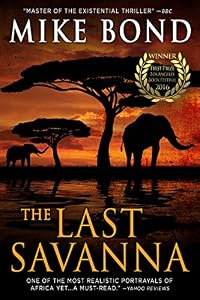
Fiction. Literature. Thriller. With Africa's last elephants dying under the poachers' guns, Kenya rancher and former SAS officer Ian MacAdam leads a commando squad against them. Pursuing the poachers through jungled mountains and searing deserts he battles thirst, solitude, terror and lethal animals, only to find that the poachers have kidnapped a young archaeologist, Rebecca Hecht, whom he once loved and bitterly lost. McAdam embarks upon a desperate trek to save not only Rebecca but his show more own soul in an Africa torn apart by wars, overpopulation, and the slaughter of its last wildlife. Based on the author's experiences pursuing elephant poachers in the wilds of East Africa. show lessTags
Recommendations








Member Reviews
Mike Bond's The Last Savanna is a survival story at several levels, from the survival of predatory and prey in the African bush, to the survival of men and women in the unforgiving landscape, the survival of human-hunted and the human-prey, and the survival of the continent itself as the land is stripped of its wildlife. I didn't really know what to expect of this novel, but I was pleasantly surprised. It is much more literary than your typical adventure novel. The characters are all too human, and the struggles they face are as much within themselves as outside themselves. In particular, I was impressed with Bond's ability to depict how, under the stress of thirst, exhaustion, and emotion, the mind can begin to deteriorate. I was also show more impressed with Bond's ability to clearly show the differences in values and culture and thinking between the indigenous people of Africa and the whites. I would recommend this novel to anyone. show less
There are many interesting things about this book, the story is compelling while being bleak and dark, the prose is wonderful, descriptive sentences that make you think you are seeing the action. Unfortunately, the situation in Africa is not bright and cheery, it is, as the author proves reverting to the pre-colonial tribal way of existence complete with the prejudices, conflicts and desperation associated with anarchy. The author's ability to create word pictures brings all this home along with the emotional hopelessness common with such regression. A wonderful book about a terrible situation, read it for the prose and for the education of what our fellow humans face on another continent.
Because this book is so well written, the descriptions of African wild animals and their human predators so detailed, I couldn't finish reading it. Does that make sense? The descriptions are written from the animals' point of view, and I felt like I was there; they upset me. Therefore, I do not rate it because I do not rate books that I do not entirely read.
Please try to read this book, though. It is one that should be read.
Please try to read this book, though. It is one that should be read.
The Last Savannah is an African action adventure playing itself out in the deserts, savannas and wildness of Kenya, Ethiopia and Somalia.
Ian MacAdam, a Kenyan farmer and former SAS officer, cannot deny his assistance when an old friend who saved is life numerous times, ask him to join a commando hunting down the poachers of the last elephants of Kenya. This request forces him to a make a final choice about his love and dedication to Africa when his wife, a lonely alcoholic, announces her departure to England for good. She never wants to see Africa again. He never wants to leave it. "He will die with his boots on" she says. Ian wants to go on this mission and use it as an opportunity to make a decision about his future. Through the show more aspirations of a young poacher in love, another dimension will be added to the battle, when he kidnaps Rebecca Hecht, an internationally well-known archaeologist who was also once the big love of Ian's life.
The story is constructed from two different points of view. One is the do-good group of soldiers and a few ex-soldiers who are instructed to find and kill the poachers of the last elephants in Kenya. The opposing group, the poachers, are poor, desperate Somalian men who have no other means of survival. In between the two groups are international role players, such as embassy personnel of ivory-seeking countries, local corrupt politicians and big global corporations.
"Now the land, the trees, the animals are gone; the whites were right—God’s not so hard to kill. And most of the whites had gone, too, leaving behind them a plague to finish off what they began. This plague, MacAdam had reflected so many bitter times, was medicine without birth control. It allowed the weak to live, populations to explode, the limitless savannas and jungles cut into tiny shambas where swollen families burnt and hacked the vegetation, then clung to the malnourished soil till it eroded to bedrock. Without the grass and trees the soil dried, the rains died and you could see a man coming miles away by the dust he raised."
Apart from the selfish greed of everyone involved, the men are also inspired into action by the loss, or hope of their love for women which drives them, against their free will ! They rebel against a love that conquers and tame them. “Her influence, little cousin. Woman’s influence is impure, and spreads around her like the disease that kills the camels, except that it kills men’s honor and will.”
The story also highlights the fundamental and very real challenges in Africa. Although it is also applicable to the rest of the world, it is more so in Africa which is exploited from all over the planet for its natural resources:
"Now the land, the trees, the animals are gone; the whites were right—God’s not so hard to kill. And most of the whites had gone, too, leaving behind them a plague to finish off what they began. This plague, MacAdam had reflected so many bitter times, was medicine without birth control. It allowed the weak to live, populations to explode, the limitless savannas and jungles cut into tiny shambas where swollen families burnt and hacked the vegetation, then clung to the malnourished soil till it eroded to bedrock. Without the grass and trees the soil dried, the rains died and you could see a man coming miles away by the dust he raised."
The book is based on much of the reality of modern day Africa, with not too much fantasy added. Every element in this narrative is either possible or true.
It is not the last book I want to read from the author, Mike Bond. I appreciate his observations of all the countries he has covered as journalist. He has many good as well as valid stories to tell.
My complete review can be viewed here: http://something-wordy-reviews.blogspot.com/2013/12/the-last-savannah-by-mike-bo... show less
Ian MacAdam, a Kenyan farmer and former SAS officer, cannot deny his assistance when an old friend who saved is life numerous times, ask him to join a commando hunting down the poachers of the last elephants of Kenya. This request forces him to a make a final choice about his love and dedication to Africa when his wife, a lonely alcoholic, announces her departure to England for good. She never wants to see Africa again. He never wants to leave it. "He will die with his boots on" she says. Ian wants to go on this mission and use it as an opportunity to make a decision about his future. Through the show more aspirations of a young poacher in love, another dimension will be added to the battle, when he kidnaps Rebecca Hecht, an internationally well-known archaeologist who was also once the big love of Ian's life.
The story is constructed from two different points of view. One is the do-good group of soldiers and a few ex-soldiers who are instructed to find and kill the poachers of the last elephants in Kenya. The opposing group, the poachers, are poor, desperate Somalian men who have no other means of survival. In between the two groups are international role players, such as embassy personnel of ivory-seeking countries, local corrupt politicians and big global corporations.
"Now the land, the trees, the animals are gone; the whites were right—God’s not so hard to kill. And most of the whites had gone, too, leaving behind them a plague to finish off what they began. This plague, MacAdam had reflected so many bitter times, was medicine without birth control. It allowed the weak to live, populations to explode, the limitless savannas and jungles cut into tiny shambas where swollen families burnt and hacked the vegetation, then clung to the malnourished soil till it eroded to bedrock. Without the grass and trees the soil dried, the rains died and you could see a man coming miles away by the dust he raised."
Apart from the selfish greed of everyone involved, the men are also inspired into action by the loss, or hope of their love for women which drives them, against their free will ! They rebel against a love that conquers and tame them. “Her influence, little cousin. Woman’s influence is impure, and spreads around her like the disease that kills the camels, except that it kills men’s honor and will.”
The story also highlights the fundamental and very real challenges in Africa. Although it is also applicable to the rest of the world, it is more so in Africa which is exploited from all over the planet for its natural resources:
"Now the land, the trees, the animals are gone; the whites were right—God’s not so hard to kill. And most of the whites had gone, too, leaving behind them a plague to finish off what they began. This plague, MacAdam had reflected so many bitter times, was medicine without birth control. It allowed the weak to live, populations to explode, the limitless savannas and jungles cut into tiny shambas where swollen families burnt and hacked the vegetation, then clung to the malnourished soil till it eroded to bedrock. Without the grass and trees the soil dried, the rains died and you could see a man coming miles away by the dust he raised."
The book is based on much of the reality of modern day Africa, with not too much fantasy added. Every element in this narrative is either possible or true.
It is not the last book I want to read from the author, Mike Bond. I appreciate his observations of all the countries he has covered as journalist. He has many good as well as valid stories to tell.
My complete review can be viewed here: http://something-wordy-reviews.blogspot.com/2013/12/the-last-savannah-by-mike-bo... show less
This is not quite what I expected when I picked it up. I imagined there would be more about poaching and the animals than what there was. What this book is is a harbinger of what will happen to our planet when we stop caring; forests decimated, animal herds wiped out, man fighting against man until we witness our earth's last savanna. It's quite a depressing book but I am glad I read it and probably will reread it again.
I received a free advance e-copy of this book and have chosen to write an honest and unbiased review. I have no personal affiliation with the author. This is a dark and beautifully written novel. Mike Bond is a very descriptive and colorful writer. Africa is amazing and beautiful. He paints the extreme beauty of Africa as well as the dark, savage, and dangerous side of Africa with words that create amazing pictures in the mind of the reader. ‘The Last Savanna’ is about the ongoing battle between man and nature. We see all of the weaknesses of man including good and evil. There are ongoing issues as Africa struggles with corruption and poachers. The ending was a surprise to me as it was not what I expected. This is an extremely well show more written picture of Africa and well worth the read. I look forward to reading more from Mike Bond in the future. show less
The Last Savanna is a gritty, no holds barred look at poaching and the poachers, as well as the lengths they will go to aquire a product to sell, even when it is a human.
It started off as a pursuit by MacAdam and his friend to track poachers, but the book evolves when those poachers happens across Rebecca and her team, killing two people and abducting Rebecca.
A twisted, terrifying tale that has the reader sitting on the edge of their seat to see what happens to all those involved.
I would recommend this book to every lover of thrillers.
Thank you Netgalley and the publisher for providing me with the opportunity to read and review this book.
It started off as a pursuit by MacAdam and his friend to track poachers, but the book evolves when those poachers happens across Rebecca and her team, killing two people and abducting Rebecca.
A twisted, terrifying tale that has the reader sitting on the edge of their seat to see what happens to all those involved.
I would recommend this book to every lover of thrillers.
Thank you Netgalley and the publisher for providing me with the opportunity to read and review this book.
Members
- Recently Added By
Author Information
29 Works 390 Members
Mike Bond is a LibraryThing Author, an author who lists their personal library on LibraryThing.
Common Knowledge
- Canonical title
- The Last Savanna
- Original publication date
- 2014-01-14
Classifications
Statistics
- Members
- 35
- Popularity
- 815,366
- Reviews
- 9
- Rating
- (4.11)
- Languages
- English
- Media
- Paper, Ebook
- ISBNs
- 6
- ASINs
- 3