On This Page
Description
When twelve-year-old George accidentally decapitates a stone statue in London, England, he falls into a parallel dimension where he must battle ancient "live" statues and solve a dangerous riddle.Tags
Recommendations



Member Reviews
I listened to the final book of this trilogy, Silvertongue, first, which may have affected how much I enjoyed the first book. It was still suspenseful even though I was spoiled for some things, but I wasn't frustrated by not knowing how the entire adventure would end.
George Chapman starts out as a 12 year old wimp. I hated his teacher,Mr. Killingbeck, though. I wonder what the despicable bully would have thought had he been able to read George's thoughts about the fangs of the stuffed beast near them. I hope those thoughts would have terrified him.
A furious George takes his anger out on a small dragon statue outside London's Natural History Museum, breaking its head off. He doesn't learn until later why he was able to do that without show more harming his hand, but he learns the heart-stopping consequences of his act much sooner.
George is now in an alternate London where the statues can come to life. A pterodactyl outside the museum comes after him. George starts running. Good thing he meets the Gunner, a statue from the Royal Artillery Memorial.
While the Gunner helps George flee retribution, they are spotted by a 12 year old girl named Edie. She's never met a human who can see the statues when they're alive before, so she starts following them. The Gunner calls her a 'glint' and bad news, so he tries to keep her away from himself and George.
This backfires when the Gunner takes George to see the two sphinxes to find out what the boy needs to do to get back to regular London. George gets an answer for answering a riddle, but has no idea how to find the stoneheart. Edie could have gotten that question answered, but she wanted to know what a glint was. We get a demonstration of what a glint can do and it's frightening.
George meets two of the weirded -- men who are cursed. One is called the Walker and is not nice at all. He's served by a very clever and immortal raven. The Walker is revealed to have once been a man who lived in Real Life. That man has appeared in more than one work of fiction. Sometimes he's a hero. More often he's not. The other cursed man is the Clocker, who is so nice that George confesses to him the reason for the ball of black rage inside himself. The Clocker is forced to watch time.
There are suspenseful encounters with a cat-faced gargoyle, a minotaur, a strange statue called the Grid Man, and the Temple Bar Dragon. There are also helpful statues such as one of Samuel 'Dictionary' Johnson, who is depicted with the Tourette's Syndrome that the real man probably had, and the Fusilier.
Those London statues come in two types. The human-shaped ones are known as 'spits' because they are the 'spit and image' (original form of 'spitting image') of humans. The ones shaped like animals or monsters or mythological creatures are called 'taints'. The sphinxes, being lions with women's heads, are a combination. Abstract statues of humans, such as the Grid Man, are taints.
The spits and taints hate each other. They have warred before, and George may have just started a new battle. Some statues can no longer move because they were too damaged to reach their plinths by midnight, which would have restored them.
I am happy to say that George improves from being a selfish wimp over the course of the book. Prickly Edie, who has never known someone whom she could count on before, finds true friends. I am so glad the trilogy was already completed and published before I listened to this book. I would have hated to have been one of its first readers, who had to wait to find out how it all ended. show less
George Chapman starts out as a 12 year old wimp. I hated his teacher,Mr. Killingbeck, though. I wonder what the despicable bully would have thought had he been able to read George's thoughts about the fangs of the stuffed beast near them. I hope those thoughts would have terrified him.
A furious George takes his anger out on a small dragon statue outside London's Natural History Museum, breaking its head off. He doesn't learn until later why he was able to do that without show more harming his hand, but he learns the heart-stopping consequences of his act much sooner.
George is now in an alternate London where the statues can come to life. A pterodactyl outside the museum comes after him. George starts running. Good thing he meets the Gunner, a statue from the Royal Artillery Memorial.
While the Gunner helps George flee retribution, they are spotted by a 12 year old girl named Edie. She's never met a human who can see the statues when they're alive before, so she starts following them. The Gunner calls her a 'glint' and bad news, so he tries to keep her away from himself and George.
This backfires when the Gunner takes George to see the two sphinxes to find out what the boy needs to do to get back to regular London. George gets an answer for answering a riddle, but has no idea how to find the stoneheart. Edie could have gotten that question answered, but she wanted to know what a glint was. We get a demonstration of what a glint can do and it's frightening.
George meets two of the weirded -- men who are cursed. One is called the Walker and is not nice at all. He's served by a very clever and immortal raven. The Walker is revealed to have once been a man who lived in Real Life. That man has appeared in more than one work of fiction. Sometimes he's a hero. More often he's not. The other cursed man is the Clocker, who is so nice that George confesses to him the reason for the ball of black rage inside himself. The Clocker is forced to watch time.
There are suspenseful encounters with a cat-faced gargoyle, a minotaur, a strange statue called the Grid Man, and the Temple Bar Dragon. There are also helpful statues such as one of Samuel 'Dictionary' Johnson, who is depicted with the Tourette's Syndrome that the real man probably had, and the Fusilier.
Those London statues come in two types. The human-shaped ones are known as 'spits' because they are the 'spit and image' (original form of 'spitting image') of humans. The ones shaped like animals or monsters or mythological creatures are called 'taints'. The sphinxes, being lions with women's heads, are a combination. Abstract statues of humans, such as the Grid Man, are taints.
The spits and taints hate each other. They have warred before, and George may have just started a new battle. Some statues can no longer move because they were too damaged to reach their plinths by midnight, which would have restored them.
I am happy to say that George improves from being a selfish wimp over the course of the book. Prickly Edie, who has never known someone whom she could count on before, finds true friends. I am so glad the trilogy was already completed and published before I listened to this book. I would have hated to have been one of its first readers, who had to wait to find out how it all ended. show less
I really enjoyed this breakneck story of a boy who finds a place for himself in a world of magic. A book that uses the statuary of London to interesting depths and reminds me of Neverwhere in that it's a world people don't really see, a world of moving statues and a fight between the human-shaped statues and the mythical creature shaped statues. Where it could kill you if you can see it, but it might just leave you a better person. A mysterious walker with a raven is involved but why?
I couldn't put this down, I loved how George and Edie developed through the story and I want more.
I couldn't put this down, I loved how George and Edie developed through the story and I want more.
Having only listened to the first disc so far, I may have to come back and revise my first impressions; but, though usually hard to please, I'm very enthusiastic so far. Besides the reader's (Jim Dale) high quality, I noticed right away that I was well able to visualize all of the nuances of action. That reflects Fletchers' success as a screenwriter, but doesn't fully account for it. After all, a novel is a different baby. Further, his language usage is more sophisticated than typical nowadays. I've already paused several times to admire a turn of phrase.
George, the main character, hasn't been rounded out yet (he's been busy fleeing for his life), but The Gunner and Adie have already shown some of their charms, not least is their show more mutual animosity. Adie has a lovely Scots accent, too.
I'm already ordering sequels. show less
George, the main character, hasn't been rounded out yet (he's been busy fleeing for his life), but The Gunner and Adie have already shown some of their charms, not least is their show more mutual animosity. Adie has a lovely Scots accent, too.
I'm already ordering sequels. show less
This audiobook, read by Jim Dale, was fabulous!
It was definitely Harry Potteresque to me. Harry Potter lite.
It’s a children’s fantasy (trilogy) centered around a young boy George and the wonderful friends he makes after a class trip, in London, went horribly wrong. There are gargoyles. There are also statues that come to “life”.
George’s new friend Edie is not like the other kids. She has some unique abilities that help her and George in their adventures.
There were no lulls at all in this book. It was extremely fast paced. Tons of adventure as well as magnificent character building. I literally wanted to reach through the audiobook to proffer hugs on more than one occasion.
And did I mention the audiobook was narrated by Jim show more Dale? Jim Dale, if you don’t know, is the best narrator ever. Prove me wrong. I dare you! show less
It was definitely Harry Potteresque to me. Harry Potter lite.
It’s a children’s fantasy (trilogy) centered around a young boy George and the wonderful friends he makes after a class trip, in London, went horribly wrong. There are gargoyles. There are also statues that come to “life”.
George’s new friend Edie is not like the other kids. She has some unique abilities that help her and George in their adventures.
There were no lulls at all in this book. It was extremely fast paced. Tons of adventure as well as magnificent character building. I literally wanted to reach through the audiobook to proffer hugs on more than one occasion.
And did I mention the audiobook was narrated by Jim show more Dale? Jim Dale, if you don’t know, is the best narrator ever. Prove me wrong. I dare you! show less
This is the second time I have listened to this book. The first time was about 5 years ago with my children. We enjoyed the trilogy so much that we plotted the locations of all the statues and now plan to visit them on a trip to London.
The novels bring London and its public artwork to life in away that is inspiring. It encourages the reader to look around their own urban environment at buildings, statues and artwork to learn its history.
It is not just a children's book with a moral. It is a wild adventure that happens in the characters own backyard. You do not need to travel through the looking glass or a magic wardrobe to another world. You can stay in your own city to experience the fantastic.
The novels bring London and its public artwork to life in away that is inspiring. It encourages the reader to look around their own urban environment at buildings, statues and artwork to learn its history.
It is not just a children's book with a moral. It is a wild adventure that happens in the characters own backyard. You do not need to travel through the looking glass or a magic wardrobe to another world. You can stay in your own city to experience the fantastic.
Mel nagged me and nagged me to read this and I wanted to but never quite got to it. So glad I finally did - its a thoroughly enjoyable fantasy romp, and highly recommended to anyone visiting London or who loves this city. I was somewhat put off by the author's very obvious lack of appreciation for 20th/21st century architecture and sculpture (I definitely don't agree with her sentiments about the British Library at St Pancras!) but it was great fun charting the adventure in my mind and gleefully identifying that "I've been there!!" Echoes of Neil Gaiman's Neverwhere only made it more familiar and fun, and a dictionary maker as heroic support can only be a good thing - loads of lovely interesting words. Looking forward to the next in the show more trilogy. show less
The premise and concept is original and different, but the story written out can be flat and dry at times. There's some likeable characters in it, and there is plenty of action- unfortunately a majority of that action is running away from things or hiding. I get it, you aren't exactly well-equipped for fighting enchanted statues, but it does get a bit tiresome and monotonous. Still a decent book though!
For fantasy fans who need something new although those who prefer character development over concept, Stoneheart may be a bit of a letdown.
For fantasy fans who need something new although those who prefer character development over concept, Stoneheart may be a bit of a letdown.
Members
- Recently Added By
Lists

Best Fantasy Novels
821 works; 358 members

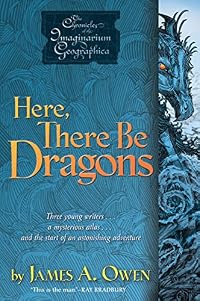
Here There Be Dragons
143 works; 22 members

A Child's Book Tour of London
51 works; 7 members

al.vick-series
381 works; 2 members
Author Information

11 Works 3,345 Members
Some Editions
Awards and Honors
Series

Common Knowledge
- Canonical title
- Stoneheart
- Original publication date
- 2006
- People/Characters
- George Chapman (12 yr-old maker); Edie Laemmel (a glint); the Gunner (spit | statue | part of the Royal Artillery Memorial); Dictionary Johnson (spit | statue of Samuel Johnson); the Black Friar (spit | statue); the Clocker (cursed man forced to watch time) (show all 23); the Walker (a cursed servant of the stone | John Dee); the Raven (works for the Walker | Muninn); the Officer (spit | statue | part of the Royal Artillery Memorial); the Fusallier (spit | statue); the nice Sphinx (spit-taint | statue); the mean Sphinx (spit-taint | statue); the Little Tragedy (spit | little boy | statue); stone pterodactyl (taint); Spout, the cat-faced gargoyle (taint | statue); the Temple Bar Dragon (taint | statue); salamanders (taints | statues); Minotaur (taint | statue); the Grid Man (taint | statue); George's actress mother; Kay (the neighbor who babysits George); Mr. Killingbeck (George's teacher | a bully); the Herculeses (spits | statues)
- Important places
- London, England, UK; Blackfriar Pub, London; Thames River, London, UK; Natural History Museum, London, England, UK; Temple, London, UK; the London Stone, Cannon Street, London, England, United Kingdom (show all 7); St. Dunstan in the West church, Fleet Street, London, England, UK
- Important events
- World War I Bombing of London (1917-09-04)
- Dedication
- With love and thanks to my parents, Margaret and Paul Fletcher, makers of a happy childhood and much else besides...
- First words
- George never spent any time wondering why he wanted to belong
- Last words
- (Click to show. Warning: May contain spoilers.)Then, as the sun dipped,they stood up without any more words and walked towards the light.
Classifications
Statistics
- Members
- 1,034
- Popularity
- 24,881
- Reviews
- 33
- Rating
- (3.57)
- Languages
- 9 — English, Estonian, French, German, Hungarian, Italian, Croatian, Spanish, Portuguese (Portugal)
- Media
- Paper, Audiobook, Ebook
- ISBNs
- 29
- ASINs
- 9