Eight Months on Ghazzah Street
by Hilary Mantel
On This Page
Description
A taut and terrifying trip into a distorting mirror--a novel as tense, immediate, and chilling as the world it depicts.Tags
Recommendations





























Member Recommendations

Member Reviews
Frances Shore flies to Jeddah to join her husband who is working there as an architect in the 1980s. Isolated by the strictures Saudi Arabia places on women and the lack of anything in common with other expat wives and her neighbours, she descends into paranoia - but perhaps they really are out to get her.
Beautifully descriptive writing but I didn't really feel engaged by it apart from a few chuckles at the beginning as I recognised a few situations and characters from living abroad in the 1980s.
Beautifully descriptive writing but I didn't really feel engaged by it apart from a few chuckles at the beginning as I recognised a few situations and characters from living abroad in the 1980s.
When Hilary Mantel passed away earlier this year, I wanted to make an effort to read her novels that were still on my shelf. [Eight Months on Ghazzah Street] looked interesting so I picked it up. Frances and her husband, Andrew, move to Saudi Arabia in the 1980s. They know it's going to be a culture shock, especially for Frances considering how women are restricted there, but they'll be making a considerable amount of money, so it's deemed worth it. Also, they've lived several places in Africa and are used to adapting to different cultures.
They move into an apartment building and Frances immediately realizes this is going to be harder than she thought. Andrew leaves for work every day and she is trapped inside, both because women can't show more move about freely and because of the heat. She can't work or even go out to shop or sight see. For independent, intelligent Frances, this is tough. After a month or so she begins to develop relationships with the other women in her building. As she gets to know them, she also gets to know some of the other expats that Andrew works with. And a mystery about the empty apartment above her begins to develop. Though it's supposedly empty, there is noise up there and obviously people spending time in the apartment. And then things start getting dangerous. It's no longer just the foreign culture that is upsetting Frances, it's clear that there are nefarious activities going on as well.
Hilary Mantel is masterful at layering a book with interesting plot and characters with deeper themes and cultural observations. I really enjoyed this and definitely recommend it. show less
They move into an apartment building and Frances immediately realizes this is going to be harder than she thought. Andrew leaves for work every day and she is trapped inside, both because women can't show more move about freely and because of the heat. She can't work or even go out to shop or sight see. For independent, intelligent Frances, this is tough. After a month or so she begins to develop relationships with the other women in her building. As she gets to know them, she also gets to know some of the other expats that Andrew works with. And a mystery about the empty apartment above her begins to develop. Though it's supposedly empty, there is noise up there and obviously people spending time in the apartment. And then things start getting dangerous. It's no longer just the foreign culture that is upsetting Frances, it's clear that there are nefarious activities going on as well.
Hilary Mantel is masterful at layering a book with interesting plot and characters with deeper themes and cultural observations. I really enjoyed this and definitely recommend it. show less
Long before Hilary Mantel became famous for her acclaimed Booker Prize historical novels, I knew her as an author of novels like Beyond Black (2006) with its dark humour and macabre undertones. Eight Months on Ghazzah Street (1988) — a serendipitous find at the library — is in the same vein, with the added frisson of having been written in the aftermath of Mantel's own unhappy sojourn in Saudi Arabia.
I suspect that most of the women I know would chafe at life in Saudi Arabia, even now when the western media is trumpeting reforms that allow women to travel, divorce, and apply for official documents without the permission of a male guardian. I was underwhelmed last year when Saudi women were allowed to drive, and I am underwhelmed show more now. I don't subscribe to the idea that men have a right (god-given or otherwise) to give or withhold permission to women, and I'm sure it's no coincidence that Margaret Atwood wrote The Handmaid's Tale (1985) and Mantel wrote Eight Months on Ghazzah Street (1988) in the wake of the Islamic Revolution that swept the Middle East after the Iranian Revolution in 1979. These novels remind us that women need to be eternally vigilant about their own human rights...
Eight Months on Ghazzah Street is the story of Frances Shore, a woman with a professional career as a cartographer who joins the expat community in Jeddah when her husband's work in the construction industry takes them to Saudi Arabia. A veteran of expat life in Africa, she was prepared for restrictions on her lifestyle but is appalled by the reality of life in a punitive patriarchal theocracy. Mantel's comments in the postscript 'Behind the Scenes' accurately convey the tone of the book:
Frances does hate it. She hates the greed which brings the expats to endure the intolerable in return for generous salaries. (She and her husband Andrew are mustering a deposit for a house in the UK). She hates the vacuous lifestyle of endless shopping and nostalgic British 'cultural' activities. She has nothing to do, and apart from (illegal) boozy parties with the other expats and the shopping, she is confined to her flat because it's not just the official decrees that restrict her, it's also the constant sense of feeling unsafe because of unofficial ad hoc harassments:
To read the rest of my review please visit https://anzlitlovers.com/2019/08/05/eight-months-on-ghazzah-street-by-hilary-man... show less
I suspect that most of the women I know would chafe at life in Saudi Arabia, even now when the western media is trumpeting reforms that allow women to travel, divorce, and apply for official documents without the permission of a male guardian. I was underwhelmed last year when Saudi women were allowed to drive, and I am underwhelmed show more now. I don't subscribe to the idea that men have a right (god-given or otherwise) to give or withhold permission to women, and I'm sure it's no coincidence that Margaret Atwood wrote The Handmaid's Tale (1985) and Mantel wrote Eight Months on Ghazzah Street (1988) in the wake of the Islamic Revolution that swept the Middle East after the Iranian Revolution in 1979. These novels remind us that women need to be eternally vigilant about their own human rights...
Eight Months on Ghazzah Street is the story of Frances Shore, a woman with a professional career as a cartographer who joins the expat community in Jeddah when her husband's work in the construction industry takes them to Saudi Arabia. A veteran of expat life in Africa, she was prepared for restrictions on her lifestyle but is appalled by the reality of life in a punitive patriarchal theocracy. Mantel's comments in the postscript 'Behind the Scenes' accurately convey the tone of the book:
When I travelled at first I used to ask what I could get out of it, and what I could give back. What could I teach, and what could I learn? I saw the world as some sort of exchange scheme for my ideals, but the world deserves better than this. When you come across an alien culture, you must not automatically respect it. You must sometimes pay it the compliment of hating it. (PS, p.12)
Frances does hate it. She hates the greed which brings the expats to endure the intolerable in return for generous salaries. (She and her husband Andrew are mustering a deposit for a house in the UK). She hates the vacuous lifestyle of endless shopping and nostalgic British 'cultural' activities. She has nothing to do, and apart from (illegal) boozy parties with the other expats and the shopping, she is confined to her flat because it's not just the official decrees that restrict her, it's also the constant sense of feeling unsafe because of unofficial ad hoc harassments:
So she set off home. There was a main road to negotiate, but it was mid-morning, fairly quiet, and she never had any trouble crossing at the lights. A boy in a Mercedes pulled up, waved her in front of him. As she stepped out from the kerb, he revved his engine, the car sprang forward, and she had to leap from under its wheels. She heard the brakes applied; caught herself up, heart racing, and looked back at the driver of the car, understood that it had not been an accident. 'You are my darling, madam, you are my baby...' Saw on his face laughter and contempt.
When she got home she phoned Carla. 'Look,' Carla said, 'it's happened to me. Don't take everything so personally.'
'But why?' she insisted. She felt on the verge of tears. 'I just wanted to cross. I would have waited. I would have let him go by.'
Carla said tiredly, 'They don't want us on the streets. It's just a thing they do.' (p.238)
To read the rest of my review please visit https://anzlitlovers.com/2019/08/05/eight-months-on-ghazzah-street-by-hilary-man... show less
Slow, stifling, claustrophobic, depressing... but that's the idea. Mantel has made use of the years she spent in Saudia Arabia (and how she managed years, when eight months feels like a life sentence) to inform this novel of thirty-ish professional Frances, who joins her construction engineer husband for a temporary, extremely well-paid (or so they are told) gig in Jeddah. Trapped in company-issued housing with every window facing a blank wall, Frances cannot get a job, go out without her husband, or even speak to her Muslim neighbors in their apartment building unless they initiate it. There is an allegedly empty flat in the building, and rumors are it is a trysting place for some Saudi official to meet his mistress (in a nation where show more adultery is a bloodily capital offense). But is that in fact what's going on there?
The unfortunate jacket copy on this edition bills this novel as horror / suspense / tense / forboding / chilling, a Saudi "Turn of the Screw." It isn't. Frances is miserable, lonely, and depressed. She broods on incidents and rumors. There are dreadful dinner parties with her husband's colleagues, swilling down home brewed wine. The company starts to have trouble being paid. You can't leave without permission. Buildings and streets are thrown up and torn down so fast that maps are useless and going anywhere is a nightmare of traffic and disorientation. Then a mysterious crate appears on the balcony of the unoccupied flat. Government flunkies sidle in and out, obscene amounts of money change hands, are laundered. Is the woman across the hall the secret mistress? What's up with that crate? A man with a rifle is stationed on the corner. And all the time I'm reading this novel, published in 1988, I'm thinking about Jamal Khashoggi.
I will refrain from further spoilers - partly because the ending is murky. But it never quite crescendoes into a revelation or epiphany or resolution. Mantel is still finding her feet, I think, in this novel. She certainly evokes Frances's trapped and miserable daily life - but it makes for a lot of pages of pretty dreary and somewhat repetitive reading. Jeddah sounds like a truly horrible place to exist. But dialog is often stilted, contrived, and Frances's limited conversations with her Muslim neighbor serve more as info-dumps than exposition of the culture and people of it. She does manage to convey some digs at the failings of the British and American expats who collude in this shady world of lies, greed, threats, deceit, and violence all while feeling rather smug and superior. But what she does do - and has gone on to do with brilliance - is portray the evils engineered and inflicted by governments, by belief systems, by corporations, by systems, on individuals.
And I still keep thinking about Jamal Khashoggi. show less
The unfortunate jacket copy on this edition bills this novel as horror / suspense / tense / forboding / chilling, a Saudi "Turn of the Screw." It isn't. Frances is miserable, lonely, and depressed. She broods on incidents and rumors. There are dreadful dinner parties with her husband's colleagues, swilling down home brewed wine. The company starts to have trouble being paid. You can't leave without permission. Buildings and streets are thrown up and torn down so fast that maps are useless and going anywhere is a nightmare of traffic and disorientation. Then a mysterious crate appears on the balcony of the unoccupied flat. Government flunkies sidle in and out, obscene amounts of money change hands, are laundered. Is the woman across the hall the secret mistress? What's up with that crate? A man with a rifle is stationed on the corner. And all the time I'm reading this novel, published in 1988, I'm thinking about Jamal Khashoggi.
I will refrain from further spoilers - partly because the ending is murky. But it never quite crescendoes into a revelation or epiphany or resolution. Mantel is still finding her feet, I think, in this novel. She certainly evokes Frances's trapped and miserable daily life - but it makes for a lot of pages of pretty dreary and somewhat repetitive reading. Jeddah sounds like a truly horrible place to exist. But dialog is often stilted, contrived, and Frances's limited conversations with her Muslim neighbor serve more as info-dumps than exposition of the culture and people of it. She does manage to convey some digs at the failings of the British and American expats who collude in this shady world of lies, greed, threats, deceit, and violence all while feeling rather smug and superior. But what she does do - and has gone on to do with brilliance - is portray the evils engineered and inflicted by governments, by belief systems, by corporations, by systems, on individuals.
And I still keep thinking about Jamal Khashoggi. show less
A terrific sense of menace pervades this story from the beginning, as cartographer Frances struggles to navigate her new home in Jeddah, where her husband has landed a lucrative construction job. It's the mid-1980s, and Saudi Arabia is riding high on the back of oil wealth, marble and glass towers rising out of empty lots, a modern-looking yet feudal economy carried on the backs of exploited immigrant workers. Cloistered in a luxurious apartment, Frances is frustrated by her Muslim women neighbour's refusal to accept Frances' assertions that life is better for women in the West. It's cautionary tale in how a superior attitude will only drive others further into their own convictions. Frances recognises her essential prejudice against show more Saudis and Muslims in general, but the crushing imprisonment and police state-like surveillance of the society she's living in break what little will she has separate her legitimate protests from bigotry. The novel presents expat life satirically, showing the other English people living in Saudi as essentially venal and bigoted, staying the country just long enough to save up for a 'city flat' in London. Expat life hasn't changed much in 30 years, it seems. Corrupt, arrogrant Saudi politicians and minor royals are equally skewered. The novel's main flaw is the lack of resolution in the central mystery, a story that is built up, clue by clue, through the whole story. Perhaps the details are unimportant and that aspect of the plot merely functions to illustrate Frances' growing paranoia, but what little details that emerged were interesting enough to warrant further explanation. The powerful sense of dread ended up feeling anticlimactic. Also, Frances herself was somewhat thinly drawn, considering she was the central character - her neighbours and the other expats came much more vividly to life. Some experiments in structure didn't really work for me either.
Overall, worth reading, if only as a warning against falling into the trap of becoming the eternal expat, staying in the hated host country for 'just another year'.... show less
Overall, worth reading, if only as a warning against falling into the trap of becoming the eternal expat, staying in the hated host country for 'just another year'.... show less
Masterfully blending gothic horror tropes with a careful study of the intellectual dislocation and resulting eccentric behavior of Westerners working in Saudi Arabia, Hilary Mantel's Eight Months on Ghazzah Street is a riveting and remarkable novel. Mantel has the great novelist's eye for telling detail, and she describes the many strange landscapes and uncertain moments confronting her protagonist in such well-honed, immediate language that the character's confusion and sense of disorder are carried over to the reader. A stylistic triumph.
Bizarro-World Islamofascism and conspicuous consumption all up in your teeth in the Saudi Arabia of the 1980s, filtered through expat alienation and with a creepy gothic mystery thrown in for no reason except to be awesome.
Members
- Recently Added By
Author Information

62+ Works 38,892 Members
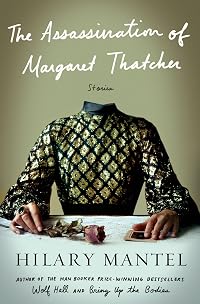
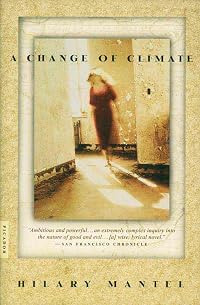
Hilary Mantel was born in Glossop, Derbyshire, England on July 6, 1952. She studied law at the London School of Economics and Sheffield University. She worked as a social worker in Botswana for five years, followed by four years in Saudi Arabia. She returned to Britain in the mid-1980s. In 1987 she was awarded the Shiva Naipaul Memorial Prize for show more an article about Jeddah. She worked as a film critic for The Spectator from 1987 to 1991. She has written numerous books including Eight Months on Ghazzah Street, A Place of Greater Safety, A Change of Climate, The Giant, O'Brien, Giving up the Ghost: A Memoir, and Beyond Black. She has won several awards for her work including the Winifred Holtby Memorial Prize, the Cheltenham Prize and the Southern Arts Literature Prize for Fludd; the 1996 Hawthornden Prize for An Experiment in Love, the 2009 Man Booker Prize for Wolf Hall, and the 2012 Man Booker Prize for Bring up the Bodies. She made The New York Times Best Seller List with her title The Assassination of Margaret Thatcher. (Bowker Author Biography) show less
Common Knowledge
- Canonical title*
- Otto mesi a Ghazzah Street
- Original title
- Eight Months on Ghazzah Street
- Original publication date
- 1988
- People/Characters
- Frances Shore; Andrew Shore; Adam Fairfax; Eric Parsons
- Important places
- Jeddah, Saudi Arabia
- Dedication
- For Vic and Jeanie Camp
- First words
- I need not remind anyone of this week's tragic events involving Turadup employees.
- Last words
- (Click to show. Warning: May contain spoilers.)Window three, the freeway; window four, the freeway.
*Some information comes from Common Knowledge in other languages. Click "Edit" for more information.
Classifications
Statistics
- Members
- 572
- Popularity
- 51,713
- Reviews
- 14
- Rating
- (3.69)
- Languages
- Dutch, English, Italian, Spanish
- Media
- Paper, Audiobook, Ebook
- ISBNs
- 21
- ASINs
- 7