Evidence
by Lucy Sante
On This Page
Description
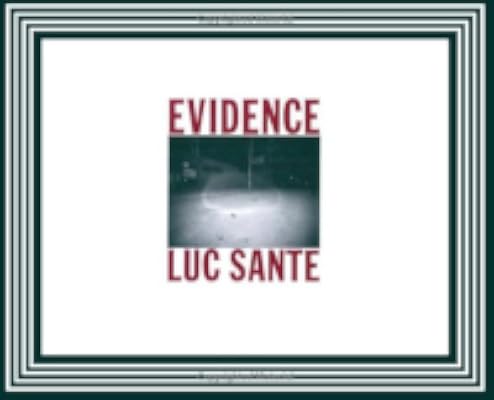
Following Low Life, Luc Sante's acclaimed evocation of the underside of New York City's history, Evidence is an investigation into the mysteries of crime, death, and photography that only this brilliant and original writer could conduct.In one sense Evidence is a picture book - a collection of 55 evidence photographs taken by the New York City Police Department between 1914 and 1918. These are startling images, some brutal, some poetic, and all possessed of a strange and spectral beauty.Luc show more Sante minutely examines these pictures of crime scenes and draws them out by every possible means: speculating about the lives and deaths depicted; discussing the progress of the forensic use of photographs and the mission of photography itself; and, where possible, reconstructing the events that led up to these frozen terminal images. Evidence is many things at once: aesthetic object, historical and sociological document, mystery novel, memento mori, and time machine. show lessTags
Recommendations




















Member Reviews
It was as if Sante had opened a series of dark hallway doors and been confronted, suddenly, by so many terrible rooms. The book pushes us to look at life in a distinctly different and uncompromisingly individual way. That may make an audience uncomfortable, but it is a function of real art.
—The Washington Post
Even as they present “a true record of the texture and grain” of New York, the photographs and Sante’s essays celebrate its intangibility…. Sante is up to something closer to poetry than history. Thanks to his empathic, luminous prose, these images offer us the shock of self-recognition.
—The Boston Phoenix
Sante has a talent for the striking, impressionistic insight and the ability to write transcendental prose. This is show more a book about the mysteries of life and death.
—New York Times Book Review
This slim volume contains a haunting collection of 55 black-and-white crime scene photographs made primarily between 1914 and 1918 by New York City police detectives investigating murders and suicides. Sante discovered this archive while researching Low Life, his history of the seamy side of old New York; he notes that these pictures survived when they were overlooked by workers who cleared out the former Police Headquarters in the mid-1980s by dumping most of the records into the East River. While Sante diligently attempts to resurrect the stories behind these images, readers learn less about what happened than about where it happened: about the bedrooms, hallways, railroad tracks, subway stations, cellars and barrooms of New York City 75 years ago.
—Publisher’s Weekly
While doing research for his highly acclaimed first book, Low Life, Sante was given access to the New York City Police Department Archives. There he discovered some 1400 photos and glass plate negatives dating from 1914 to 1918. This was all that remained of the department’s once-vast evidence photo files; the rest had been trashed. Taken from the files, these 55 raw, stark photos of the dead–victims of murder or suicides–are both fascinating and horrifying, showing the bodies as they were found by the police in tenement rooms or in vacant lots. The images are accompanied by the author’s comments and some excerpts from original newspaper reports of the events. In all, this is a striking and highly original piece of social history. Recommended for large and specialized collections.
—Library Journal show less
—The Washington Post
Even as they present “a true record of the texture and grain” of New York, the photographs and Sante’s essays celebrate its intangibility…. Sante is up to something closer to poetry than history. Thanks to his empathic, luminous prose, these images offer us the shock of self-recognition.
—The Boston Phoenix
Sante has a talent for the striking, impressionistic insight and the ability to write transcendental prose. This is show more a book about the mysteries of life and death.
—New York Times Book Review
This slim volume contains a haunting collection of 55 black-and-white crime scene photographs made primarily between 1914 and 1918 by New York City police detectives investigating murders and suicides. Sante discovered this archive while researching Low Life, his history of the seamy side of old New York; he notes that these pictures survived when they were overlooked by workers who cleared out the former Police Headquarters in the mid-1980s by dumping most of the records into the East River. While Sante diligently attempts to resurrect the stories behind these images, readers learn less about what happened than about where it happened: about the bedrooms, hallways, railroad tracks, subway stations, cellars and barrooms of New York City 75 years ago.
—Publisher’s Weekly
While doing research for his highly acclaimed first book, Low Life, Sante was given access to the New York City Police Department Archives. There he discovered some 1400 photos and glass plate negatives dating from 1914 to 1918. This was all that remained of the department’s once-vast evidence photo files; the rest had been trashed. Taken from the files, these 55 raw, stark photos of the dead–victims of murder or suicides–are both fascinating and horrifying, showing the bodies as they were found by the police in tenement rooms or in vacant lots. The images are accompanied by the author’s comments and some excerpts from original newspaper reports of the events. In all, this is a striking and highly original piece of social history. Recommended for large and specialized collections.
—Library Journal show less
I bought this book, because...well this kind of thing facinates me. It is a book that showcases NYPD crime scene photos from 1914 to 1918.
The pictures are amazing and show that, yes, people have always been violent towards each other.
The only thing I don't like about the book is that all the photos are showcased first, with explanations in the 2nd half of the book. I guess I am just anal retentive, but I would have prefered to have each photo with its explanation.
I knew I should have picked forensics instead of archaeology!
The pictures are amazing and show that, yes, people have always been violent towards each other.
The only thing I don't like about the book is that all the photos are showcased first, with explanations in the 2nd half of the book. I guess I am just anal retentive, but I would have prefered to have each photo with its explanation.
I knew I should have picked forensics instead of archaeology!
Ratings
Members
- Recently Added By
Lists

The Hermenautic Bookshelf
111 works; 7 members
Author Information

32+ Works 2,399 Members
Common Knowledge
- Original publication date
- 2006
Classifications
- Genres
- Nonfiction, Art & Design, History, General Nonfiction
- DDC/MDS
- 364.109747109041 — Society, government, & culture Social problems and social services Crime Criminal offenses
- LCC
- HV6795 .N5 .S26 — Social sciences Social pathology. Social and public welfare. Criminology Social pathology. Social and public welfare. Criminology Crimes and criminal classes
Statistics
- Members
- 161
- Popularity
- 203,523
- Reviews
- 2
- Rating
- (4.25)
- Languages
- English
- Media
- Paper, Ebook
- ISBNs
- 4
- ASINs
- 1