
On This Page
Description
British writer John Buchan's Greenmantle is the second of five adventure novels to star Richard Hannay, a man with a remarkable knack for getting out of sticky situations, and indeed getting into them in the first place. During the First World War, amid news of an uprising in the the Islamic world, Hannay must make the dangerous journey through enemy territory into Constantinople, in order to foil a German plot to use religion to dominate the war. Greenmantle follows on from Buchan's The show more Thirty-Nine Steps.. show less
Tags
Recommendations













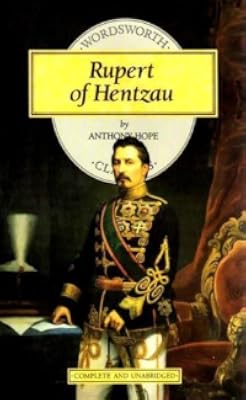
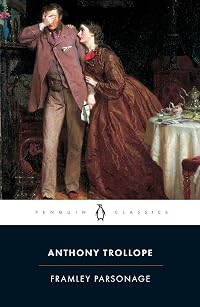
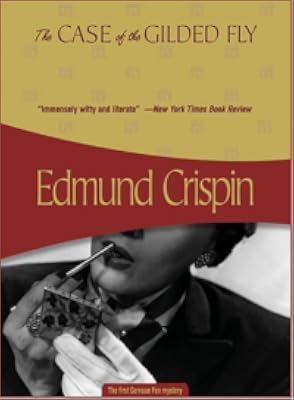




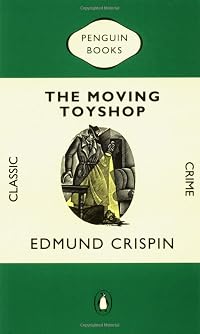


Member Recommendations


edwinbcn Any book by John Buchan, really, Watkins fiction and that of Buchan are very similar, i.e. exciting, very readable and a truly good read.
20
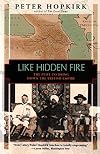
DuncanHill In "On Secret Service East of Constantinople", Hopkirk tells the true story of "Greenmantle" - that is, of Germany's attempt in the First World War to ignite a Holy War in the East against Britain. If Buchan's heroics seem far-fetched at times to modern readers, they are as nothing to those of the real people involved.
Member Reviews
I get the feeling that John Buchan was surprised that The 39 Steps, the slim spy thriller he tossed off on the eve of World War I, became a success. He reprised its protagonist, Richard Hannay, for an extended, convoluted tale set during that war.
After the amateur Hannay’s success in foiling the Black Stone in that first book, it’s no surprise that the military quickly recognized his abilities. When this book opens, he is a major, convalescing from his wounds, and on the verge of appointment to lead his own battalion.
Sir Walter Bullivant intervenes. He runs British counter-intelligence under cover of a desk job in the foreign office. A man with Hannay’s natural gift for spydom can’t be wasted merely commanding a battalion if show more instead, he could be foiling the holy war that the nefarious Germans are plotting to stir up in the Middle East.
A big task, so he’s not expected to do it alone. His number two at the front, Sandy, wounded alongside Hannay and now recovering, turns out to have spent the pre-war years networking in the Ottoman and Russian Empires, picking up languages, allies, and secret identities. Nice coincidence, that. One of many. Hannay, changing boats in Portugal on his way to be inserted into Germany, just happens to run into Peter, an old companion from his days in the veldts of southern Africa. Hannay drafts Peter into the scheme. Rounding out the quartet of spies is an overweight, dyspeptic, wealthy American, John S. Blenkiron, who inserts himself into Germany by posing as himself (the U. S hadn’t yet entered the war). The four make their way, separately or in tandem, to their rendezvous in Constantinople, where they hope to be able to flesh out the spare clues Bullivant had provided them and then find a way to thwart whatever is planned.
Spoiler alert: they accomplish their mission, but it’s dicey along the way. Your enjoyment of the tale will depend on your tolerance for lucky breaks and unlikely encounters (we’ll leave aside the improbability of a Dutchman — the secret identity of Hannay — understanding neither German nor English). Whenever things seem hopeless, the right person unexpectedly turns up, or there is a fortunate turn in the weather (either for the better or the worse, whichever is needed for our heroes).
While reading the book, I took this for the mark of an inept novelist. On reconsideration, I think there might be an alternate explanation. This combination of fortitude and fortune reminds me of the moral universe of Homer and Herodotus. This male band of brothers exults in danger. The prospect of their death doesn’t daunt them, only the possibility they might fail to carry out what they were sent to do. Their boldness is rooted in trust in divine providence. These are the ethics of Achilles, ready to laud an opposing Hector even while viewing most of their adversaries as evil. And for the main antagonist, Buchan has created a woman as fearsome as Hera. She might be the most memorable character of the book. show less
After the amateur Hannay’s success in foiling the Black Stone in that first book, it’s no surprise that the military quickly recognized his abilities. When this book opens, he is a major, convalescing from his wounds, and on the verge of appointment to lead his own battalion.
Sir Walter Bullivant intervenes. He runs British counter-intelligence under cover of a desk job in the foreign office. A man with Hannay’s natural gift for spydom can’t be wasted merely commanding a battalion if show more instead, he could be foiling the holy war that the nefarious Germans are plotting to stir up in the Middle East.
A big task, so he’s not expected to do it alone. His number two at the front, Sandy, wounded alongside Hannay and now recovering, turns out to have spent the pre-war years networking in the Ottoman and Russian Empires, picking up languages, allies, and secret identities. Nice coincidence, that. One of many. Hannay, changing boats in Portugal on his way to be inserted into Germany, just happens to run into Peter, an old companion from his days in the veldts of southern Africa. Hannay drafts Peter into the scheme. Rounding out the quartet of spies is an overweight, dyspeptic, wealthy American, John S. Blenkiron, who inserts himself into Germany by posing as himself (the U. S hadn’t yet entered the war). The four make their way, separately or in tandem, to their rendezvous in Constantinople, where they hope to be able to flesh out the spare clues Bullivant had provided them and then find a way to thwart whatever is planned.
Spoiler alert: they accomplish their mission, but it’s dicey along the way. Your enjoyment of the tale will depend on your tolerance for lucky breaks and unlikely encounters (we’ll leave aside the improbability of a Dutchman — the secret identity of Hannay — understanding neither German nor English). Whenever things seem hopeless, the right person unexpectedly turns up, or there is a fortunate turn in the weather (either for the better or the worse, whichever is needed for our heroes).
While reading the book, I took this for the mark of an inept novelist. On reconsideration, I think there might be an alternate explanation. This combination of fortitude and fortune reminds me of the moral universe of Homer and Herodotus. This male band of brothers exults in danger. The prospect of their death doesn’t daunt them, only the possibility they might fail to carry out what they were sent to do. Their boldness is rooted in trust in divine providence. These are the ethics of Achilles, ready to laud an opposing Hector even while viewing most of their adversaries as evil. And for the main antagonist, Buchan has created a woman as fearsome as Hera. She might be the most memorable character of the book. show less
Greenmantle was published in 1916 midway through the first world war. It is a fast paced adventure story that is filled with heroic exploits during the war. It is the second of the five novels featuring Richard Hannay: the first and most famous [The 39 Steps] had taken place just before the start of the war. In this novel war is a glorious business: a great show in which any real man should be proud to be involved. The climax of the novel features the capture of the town of Erzurum by the Russians from the Turks, which had taken place in February 1915.
Richard Hannay volunteers to go on a dangerous mission behind enemy lines. His task is to find details of a rumoured rising of Islamic forces that are being nurtured by the Germans. A show more religious leader will rise and lead the faithful to a victory over the West. Hannay has a scrap of paper on which three short phrases from a British spy uttered on his death bed have been recorded. He sets off with two close allies, each one making separate fact finding journeys through Germany to rendezvous in Istanbul.
This world of adventures is for manly heroes battling against overwhelming odds. Unfortunately one of their adversaries proves to be a woman, who creates havoc in the minds of the men. Hannay admits:
Women had never come much my way, and I knew about as much of their ways as I knew about the Chinese language. All my life I had lived with men only, and rather a rough crowd at that.
The novel is both sexist and racist and celebrates the glory of fighting men, published at a time when Britain and its allies were locked in a war against the Germans. If this does not disturb you too much and you are prepared to take it for what it was at the time of its publication, then the novel does have some attraction. Buchan has the ability to hold the readers attention with his descriptions of scenarios; whether it is a fight to the death in a locked room, a fugitive struggling to avoid capture in a foreign city or an artillery bombardment on the field of battle. His description of Istanbul during the war years and the final battle outside Erzurum are memorable and he keeps the story moving along, although there is always the necessity for the principal characters to win through with some fortunate coincidences or chance meetings. As unrealistic as this novel is, there is time for the characters to reflect on their situation, even if this reflection is tempered by the desire to uphold the fairness and sportsmanship of the upper classes.
If this novel climbs above its comic book status, then it does so only briefly. I was able to enjoy the more atmospheric situations and so 3 stars. show less
Richard Hannay volunteers to go on a dangerous mission behind enemy lines. His task is to find details of a rumoured rising of Islamic forces that are being nurtured by the Germans. A show more religious leader will rise and lead the faithful to a victory over the West. Hannay has a scrap of paper on which three short phrases from a British spy uttered on his death bed have been recorded. He sets off with two close allies, each one making separate fact finding journeys through Germany to rendezvous in Istanbul.
This world of adventures is for manly heroes battling against overwhelming odds. Unfortunately one of their adversaries proves to be a woman, who creates havoc in the minds of the men. Hannay admits:
Women had never come much my way, and I knew about as much of their ways as I knew about the Chinese language. All my life I had lived with men only, and rather a rough crowd at that.
The novel is both sexist and racist and celebrates the glory of fighting men, published at a time when Britain and its allies were locked in a war against the Germans. If this does not disturb you too much and you are prepared to take it for what it was at the time of its publication, then the novel does have some attraction. Buchan has the ability to hold the readers attention with his descriptions of scenarios; whether it is a fight to the death in a locked room, a fugitive struggling to avoid capture in a foreign city or an artillery bombardment on the field of battle. His description of Istanbul during the war years and the final battle outside Erzurum are memorable and he keeps the story moving along, although there is always the necessity for the principal characters to win through with some fortunate coincidences or chance meetings. As unrealistic as this novel is, there is time for the characters to reflect on their situation, even if this reflection is tempered by the desire to uphold the fairness and sportsmanship of the upper classes.
If this novel climbs above its comic book status, then it does so only briefly. I was able to enjoy the more atmospheric situations and so 3 stars. show less
Six-word review: Another improbable pulp adventure with charm.
Extended review:
Escapism has its own appeal, and an author who knows exactly what he's doing makes for a safe escape. Buchan does not pretend to be writing literature, although his own literary background shows. He's writing entertainment. So plots that feature wild schemes and dark missions, plots that rely on amazing coincidences bolstered by daring heroics, aren't measured on a scale of realism. Rather, the question is how much fun they are.
Published in 1916, Greenmantle is an adventure of international espionage and intrigue whose first-person narrator, Richard Hannay (of The Thirty-Nine Steps), is a man of action. "Under the black canopy of night," he says, "perils are show more either forgotten or terribly alive. Mine were forgotten."
An assignment in Islamic country pits Hannay against savage Turks and menacing Germans as the tides of World War I sweep forward and back. At that time the outcome of the war, not to mention the fact that it was only Roman numeral one, was unknown. The novel, with its overt patriotism and its celebration of macho courage, spotlights the power of a small team of trained and committed operatives to turn events toward victory, regardless of personal risk.
Greenmantle in its time was popular on both sides of the Atlantic. Now, a hundred years later, of course it's dated, and I doubt that it ever did invite deep thought. I read it for a glimpse of another era and other cultures and for an absorbing diversion. It delivered both, and it was fun. show less
Extended review:
Escapism has its own appeal, and an author who knows exactly what he's doing makes for a safe escape. Buchan does not pretend to be writing literature, although his own literary background shows. He's writing entertainment. So plots that feature wild schemes and dark missions, plots that rely on amazing coincidences bolstered by daring heroics, aren't measured on a scale of realism. Rather, the question is how much fun they are.
Published in 1916, Greenmantle is an adventure of international espionage and intrigue whose first-person narrator, Richard Hannay (of The Thirty-Nine Steps), is a man of action. "Under the black canopy of night," he says, "perils are show more either forgotten or terribly alive. Mine were forgotten."
An assignment in Islamic country pits Hannay against savage Turks and menacing Germans as the tides of World War I sweep forward and back. At that time the outcome of the war, not to mention the fact that it was only Roman numeral one, was unknown. The novel, with its overt patriotism and its celebration of macho courage, spotlights the power of a small team of trained and committed operatives to turn events toward victory, regardless of personal risk.
Greenmantle in its time was popular on both sides of the Atlantic. Now, a hundred years later, of course it's dated, and I doubt that it ever did invite deep thought. I read it for a glimpse of another era and other cultures and for an absorbing diversion. It delivered both, and it was fun. show less
The East is waiting for a revelation. It has been promised one. Some star—man, prophecy, or trinket—is coming out of the West. The Germans know, and that is the card with which they are going to astonish the world.'
'And the mission you spoke of for me is to go and find out?'
He nodded gravely. 'That is the crazy and impossible mission.'
While recuperating from injuries sustained in the Battle of Loos, Richard Hannay is given a secret mission that will take him all the way to Constantinople. Hannay, his friend and fellow soldier Sandy Arbuthnot, and American John S. Blenkiron must make their journey across Europe undercover, without any support from the British government should they be captured. The secret they must uncover is show more connected to Islam, and it is something that could ignite a jihad. The three men take different routes for their journey in the hope that at least one of them will make it all the way to Constantinople in time to meet the unknown threat.
Buchan wrote Greenmantle during the war, before its outcome was known. The climactic war scene must have shored up Allied spirits in the midst of the war. Sandy Arbuthnot reminded me of Lawrence of Arabia. When I Googled to see if Buchan might have based his character on T. E. Lawrence, I discovered that it's more likely that Sandy was modeled on British diplomat Aubrey Herbert. Many of the book's themes and locations still have a timely feel, making the occasional racial epithet or stereotype even more jarring to 21st century readers. It's a good choice for readers who enjoy adventure, espionage, and a mild adrenaline rush. show less
'And the mission you spoke of for me is to go and find out?'
He nodded gravely. 'That is the crazy and impossible mission.'
While recuperating from injuries sustained in the Battle of Loos, Richard Hannay is given a secret mission that will take him all the way to Constantinople. Hannay, his friend and fellow soldier Sandy Arbuthnot, and American John S. Blenkiron must make their journey across Europe undercover, without any support from the British government should they be captured. The secret they must uncover is show more connected to Islam, and it is something that could ignite a jihad. The three men take different routes for their journey in the hope that at least one of them will make it all the way to Constantinople in time to meet the unknown threat.
Buchan wrote Greenmantle during the war, before its outcome was known. The climactic war scene must have shored up Allied spirits in the midst of the war. Sandy Arbuthnot reminded me of Lawrence of Arabia. When I Googled to see if Buchan might have based his character on T. E. Lawrence, I discovered that it's more likely that Sandy was modeled on British diplomat Aubrey Herbert. Many of the book's themes and locations still have a timely feel, making the occasional racial epithet or stereotype even more jarring to 21st century readers. It's a good choice for readers who enjoy adventure, espionage, and a mild adrenaline rush. show less
I don't believe this was the case with this novel, but I can definitely visualize it as a serialization back in its day, with lots of cliffhangers and people fidgeting in their seats waiting for the next installment. Once it gets started, the action just doesn't let up, and I can remember thinking, okay, Richard Hannay has a couple of more adventures in store by this author so he has to come out okay. It's one of those books where you find yourself inwardly rooting for the good guys, and where you are also inwardly waiting for the bad guys to get theirs.
Greenmantle follows Buchan's "Thirty-nine Steps" not as a sequel so much (imho), but rather as something along the line of the further adventures of Richard Hannay, the main protagonist show more and overall hero of the Thirty-nine Steps. Hannay has since been a soldier in WWI, in which he was injured at Loos. Now he is called into action once again, this time by the Foreign Office. Sir Walter Bullivant, the senior man at the FO, explains to Hannay that there is a German plot to drag Turkey into the war. The problem is not so much Turkey, per se, but all of the provinces where Islam is very strong; and the rumor is that Germany has something to bring all of the provincial Muslims together to fan the flames against the allies under German auspices. Just what Germany has is the unknown factor, and it's up to Hannay to figure it out. He is given only one clue: a half-piece of paper with the words "Kasredin", "cancer," and "v.I." It is from here that an incredible adventure begins which will keep the reader pretty much glued to the book.
Phenomenal read, and I recommend it highly. Yes, there are some improbable spots in the novel, but hey...it's an adventure and it's fun. The characters are great, and as noted at the beginning, you'll be wondering after a while how the good guys are ever going to get out of each predicament in which they find themselves. Also...consider the subject matter. This book was written in 1916, but in some ways is quite relevant to the world's situation today.
I can't recommend this one highly enough; those who like older stories of espionage and spycraft will really enjoy it. Others who may enjoy it are those who like good old-fashioned stories of adventure; and those who read The Thirty-Nine Steps by the same author may wish to read it to find out what happens next to Richard Hannay. Very well done. show less
Greenmantle follows Buchan's "Thirty-nine Steps" not as a sequel so much (imho), but rather as something along the line of the further adventures of Richard Hannay, the main protagonist show more and overall hero of the Thirty-nine Steps. Hannay has since been a soldier in WWI, in which he was injured at Loos. Now he is called into action once again, this time by the Foreign Office. Sir Walter Bullivant, the senior man at the FO, explains to Hannay that there is a German plot to drag Turkey into the war. The problem is not so much Turkey, per se, but all of the provinces where Islam is very strong; and the rumor is that Germany has something to bring all of the provincial Muslims together to fan the flames against the allies under German auspices. Just what Germany has is the unknown factor, and it's up to Hannay to figure it out. He is given only one clue: a half-piece of paper with the words "Kasredin", "cancer," and "v.I." It is from here that an incredible adventure begins which will keep the reader pretty much glued to the book.
Phenomenal read, and I recommend it highly. Yes, there are some improbable spots in the novel, but hey...it's an adventure and it's fun. The characters are great, and as noted at the beginning, you'll be wondering after a while how the good guys are ever going to get out of each predicament in which they find themselves. Also...consider the subject matter. This book was written in 1916, but in some ways is quite relevant to the world's situation today.
I can't recommend this one highly enough; those who like older stories of espionage and spycraft will really enjoy it. Others who may enjoy it are those who like good old-fashioned stories of adventure; and those who read The Thirty-Nine Steps by the same author may wish to read it to find out what happens next to Richard Hannay. Very well done. show less
Very much a book of its time, and sharing the language and prejudices of the time, but much more than a simple ripping yarn, and an excellent description of the little discussed caucasian front in ww1
Richard Hannay's adventures continue in a WWI thriller that takes him spying across Germany and ends with the thrilling Battle of Erzurum (a real battle but with a fictional twist https://en.wikipedia.org/wiki/Erzurum_Offensive). Again a great deal of fun can be had reading this book, and there is a certain topicality today in the importance of fundamentalist Islam to the plot. Also introduces the recurring characters of Sandy Arbuthnot (who though based on one of Buchan's friends reminds me strongly of T E Lawrence), the American Blenkiron and the great Boer scout Peter Pienaar. Some of Hannay's attitudes grate somewhat to the modern ear but it is clear that Hannay is not Buchan but is very much a man of his time.
Members
- Recently Added By
Lists

The Guardian's 1000 Novels Everyone Must Read
1,005 works; 551 members

Folio Society
831 works; 53 members

Best Spy Fiction
153 works; 102 members

the old and the restless
62 works; 14 members

The Top 100 Crime Novels of All Time
100 works; 15 members

Vote - Bookmarque's Teetering TBR Tower
33 works; 8 members

Books about World War I
80 works; 14 members

Literature of Honor for Boys
91 works; 3 members

First published in 1916
68 works; 4 members

Books mentioned in Julian Symons’ Bloody Murder
438 works; 6 members

Lost Gay Novels
51 works; 1 member
Author Information

280+ Works 17,557 Members
John Buchan was born in Perth on 26th August, 1875. Educated at Glasgow University and Brasenose College, Oxford, in 1898 Buchan won the Newdigate Prize for poetry. Although trained as a lawyer, Buchan became private secretary to Lord Alfred Milner, high commissioner for South Africa. In 1903 he returned to England where he became a director of show more the publishing company, Thomas Nelson & Sons. In 1910 Buchan had his first novel, Prester John, published. In July 1914, Blackwood's Magazine began serializing Buchan's The Thirty-Nine Steps. With Britain on the verge of war, the nation was obsessed with German spy fever and its subject matter made it an immediate success. When it was published in book form, it sold over 25,000 copies in three months. Charles Masterman, the journalist, was appointed head of the government's War Propaganda Bureau. Masterman recruited Buchan and asked him to organise the publication of a history of the war in the form of a monthly magazine. Published by his own company, the first installment of the Nelson's History of the War appeared in February, 1915. A further twenty-three appeared at regular intervals throughout the war. In the spring of 1915, Buchan agreed to become one of the five journalists attached to the British Army. He was given responsibility for providing articles for The Times and the Daily News. In June 1916, Buchan was recruited by the British Army to draft communiqués for Sir Douglas Haig and other members of the General Headquarters Staff. Given the rank of Second Lieutenant in the Intelligence Corps, Buchan was also provided with the documents needed to write the Nelson's History of the War. Buchan's History of the War provided the public with a completely false impression of what was going on the Western Front. Buchan also wrote a series of propoganda pamphlets published by Oxford University Press. In February, 1917, the government established a Department of Information. Given the rank Lieutenant Colonel, Buchan was put in charge on the department on an annual salary of £1,000 a year. After the war Buchan continued to write adventures stories such as Huntingtower, The Three Hostages, and Witch Wood (1927). He also became involved in politics and in 1927 was elected Conservative MP for the Scottish Universities. Buchan held the seat until granted the title Baron Tweedsmuir in 1935. Buchan was president of the Scottish History Society from 1929 to 1932, and wrote biographies of Montrose and Sir Walter Scott. Buchan also served as governor-general of Canada from 1935 to 1937 and chancellor of Edinburgh University from 1937 to 1940. John Buchan died on 12th February, 1940. (Bowker Author Biography) show less
Some Editions
Awards and Honors
Series

Belongs to Publisher Series
Work Relationships
Is contained in
The 39 Steps - Greenmantle - Prester John. A Trilogy from John Buchan (A Collection of John Buchan's Novels) by John Buchan
Is abridged in
Common Knowledge
- Original publication date
- 1916
- People/Characters
- Richard Hannay; Sandy Arbuthnot; Peter Pienaar; John S. Blenkiron; Sir Walter Bullivant; Hilda Von Einem (show all 7); Colonel Stumm
- Important places
- Constantinople; Erzerum, Turkey; Lisbon, Portugal; The Netherlands; Vienna, Austria; Budapest, Hungary (show all 10); Belgrade, Serbia; Russe, Bulgaria; Germany; London, England, UK
- Important events
- World War I
- Dedication
- To
Caroline Grosvenor - First words
- I had just finished breakfast and was filling my pipe when I got Bullivant's telegram.
- Quotations
- There is a dry wind blowing through the East, and the parched grasses wait the spark.
Germany's simplicity is that of the neurotic, not the primitive. It is megalomania and egotism and the pride of the man in the Bible that waxed fat and kicked. But the results are the same. She wants to destroy and simplify; ... (show all)but it isn't the simplicity of the ascetic, which is of the spirit, but the simplicity of the madman that grinds down all the contrivances of civilization to a featureless monotony. The prophet wants to save the souls of his people; Germany wants to rule the inanimate corpse of the world. - Last words
- (Click to show. Warning: May contain spoilers.)Greenmantle had appeared at last to an awaiting people.
- Original language
- English
Classifications
Statistics
- Members
- 1,540
- Popularity
- 14,915
- Reviews
- 34
- Rating
- (3.49)
- Languages
- Czech, English, French, German
- Media
- Paper, Audiobook, Ebook
- ISBNs
- 173
- ASINs
- 91