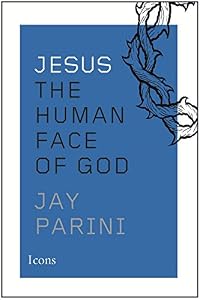
Jesus: The Human Face of God (Icons)
by Jay Parini
On This Page
Description
Jay Parini turns the powerful narrative skill he's wielded over the course of a four-decade career to a figure who's dominated our collective imagination and cultural iconography for over twenty centuries. The main trend of modern theology has hinged on the notion of "demythologizing" Jesus. Parini's book seeks to re-mythologize him, considering the story in all its mythical radiance, taking Jesus as the human face of God. It asks: What's so moving about Jesus's story that millions of people show more over two millennia have considered it a paradigm for living? Far from dogmatic, Parini looks at the many ways in which Jesus has been viewed and dramatizes the transformation from Jesus to Christ, man to myth, and obscure Jewish carpenter to someone who pointed a finger toward God and said with conviction: "This is the way. Follow me."--From publisher description. show lessTags
Recommendations






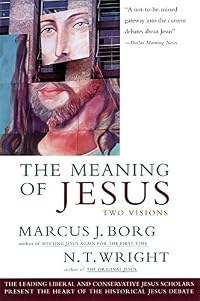









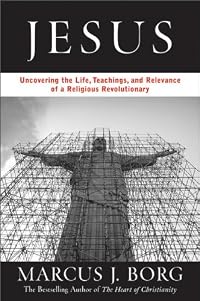

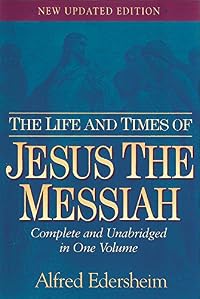


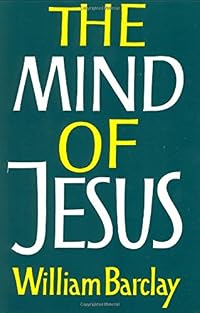


















Member Recommendations
Member Reviews
Anyone who attempts to biography Jesus is bound to fail. An author is bound to project herself or himself onto the narrative. That’s why all theology eventually turns into autobiography. In Parini’s work, clearly, both the object (Jesus of Nazareth) and the subject (Parini the author) are worth learning from, and the reader can find much to aspire to.
Much of late twentieth and early twenty-first century studies on the Jesus of history devolve into “demythologizing” Jesus. As such, they tend to make Jesus into one of us – merely a human who was mistakenly imputed divine characteristics. Unfortunately, the only Jesus we can ever know were by people who claimed some sort of divine touch. Even the earliest accounts were filtered show more through years of oral tradition.
As a skilled and experienced biographer who is not a professional theologian, Parini does not take this route. Instead, he attempts to “re-mythologize” Jesus by focusing on the main narratives we have about his life (including the Gospel of Thomas). He treats the texts with a great deal of respect and decency – meaning that he approaches them with a reasonable amount of human trust instead of unending skepticism. He is not a literalist or a fundamentalist, however, who focuses only upon the simple meaning of the text (as with the historical-grammatical hermeneutic). He is willing to dwell deeply upon any allusion or remembrance that the texts offer.
What results is a beautiful portrayal of the Jesus who has influenced Western civilization through the centuries. Where critical thought is called for, critical thought is given. Where skepticism arises, it is given. Where trust and faith are called for, they, too, are not withheld. Honesty, authenticity, and an I-and-Thou belief tell us about Jesus and about Parini. This book is a worthy pursuit for intellectuals like myself who like to study faith. Though respectful, it is an academic work and not a devotional. Nonetheless, it attempts to explain why this one person has echoed and continues to echo through the centuries of human history. show less
Much of late twentieth and early twenty-first century studies on the Jesus of history devolve into “demythologizing” Jesus. As such, they tend to make Jesus into one of us – merely a human who was mistakenly imputed divine characteristics. Unfortunately, the only Jesus we can ever know were by people who claimed some sort of divine touch. Even the earliest accounts were filtered show more through years of oral tradition.
As a skilled and experienced biographer who is not a professional theologian, Parini does not take this route. Instead, he attempts to “re-mythologize” Jesus by focusing on the main narratives we have about his life (including the Gospel of Thomas). He treats the texts with a great deal of respect and decency – meaning that he approaches them with a reasonable amount of human trust instead of unending skepticism. He is not a literalist or a fundamentalist, however, who focuses only upon the simple meaning of the text (as with the historical-grammatical hermeneutic). He is willing to dwell deeply upon any allusion or remembrance that the texts offer.
What results is a beautiful portrayal of the Jesus who has influenced Western civilization through the centuries. Where critical thought is called for, critical thought is given. Where skepticism arises, it is given. Where trust and faith are called for, they, too, are not withheld. Honesty, authenticity, and an I-and-Thou belief tell us about Jesus and about Parini. This book is a worthy pursuit for intellectuals like myself who like to study faith. Though respectful, it is an academic work and not a devotional. Nonetheless, it attempts to explain why this one person has echoed and continues to echo through the centuries of human history. show less
Noted poet, biographer and novelist Jay Parini is a Christian believer of the Anglican persuasion, but not a theologian. He admits that he spends more time reading poetry than scholarly articles. Nonetheless, he, like many other writers over the years, has chosen to write a biographical study of Jesus. In this work he synthesizes the four Gospels, supplemented by non-canonical works such as The Gospel of Thomas , into a single story. Parini's stated aim is to 're-mythologize" the life of Jesus, in order to restore the sense of divine mystery that rationalist seekers after the "historical Jesus" deny. Parini also rejects the oversimplified fundamentalist idea that "salvation" can obtained by just assenting to a checklist of doctrines show more (pp. 128-129). To Parini, the goal of Christian life is "metanoia", a word which is often translated as "repentance" but to Parini "metanoia" means much more than mere turning away from sin.
Parini introduces some intriguing ideas, not that I necessarily agreed with them. For example, he asserts that because Jesus "lived on the Silk Road" (p. x of the Introduction), the Beatitudes reflect the "Hindu and Buddhist idea of Karma" (p. 55). I would need more evidence than Nazareth's proximity to trade routes to convince me that there's a direct connection, especially since in most schools of Hindu and Buddhist thought, the idea of Karma is closely connected to reincarnation (saṃsāra), which Jesus did not teach.
Parini also refers to the Beloved Disciple in the Gospel of John as a mysterious, shadowy figure. I wasn't aware that there was a mystery; I'd always heard that the "Disciple whom Jesus loved" was John the Apostle's way of referring to himself. Apparently there are those who think that the Beloved Disciple was someone other than John himself, like Lazarus.
Whether you agree with the author or not, this brief work contains many interesting insights and is well worth reading. show less
Parini introduces some intriguing ideas, not that I necessarily agreed with them. For example, he asserts that because Jesus "lived on the Silk Road" (p. x of the Introduction), the Beatitudes reflect the "Hindu and Buddhist idea of Karma" (p. 55). I would need more evidence than Nazareth's proximity to trade routes to convince me that there's a direct connection, especially since in most schools of Hindu and Buddhist thought, the idea of Karma is closely connected to reincarnation (saṃsāra), which Jesus did not teach.
Parini also refers to the Beloved Disciple in the Gospel of John as a mysterious, shadowy figure. I wasn't aware that there was a mystery; I'd always heard that the "Disciple whom Jesus loved" was John the Apostle's way of referring to himself. Apparently there are those who think that the Beloved Disciple was someone other than John himself, like Lazarus.
Whether you agree with the author or not, this brief work contains many interesting insights and is well worth reading. show less
Ratings
Members
- Recently Added By
Author Information

73+ Works 3,144 Members
Jay Parini was born in Pittston, Pennsylvania in 1948. In 1970 he graduated from Lafayette College and he received a doctorate from the University of St. Andrews in 1975. Before becoming a professor of Engliah and Creative Writing at Vermont's Middlebury College in 1982, Parini taught at Dartmouth College. Parini writes poetry, novels, show more biographies, and criticism, and he has published numerous reviews and essays in major journals and newspapers. He co-founded the New England Review in 1976. In 1995, he was appointed literary executor for author Gore Vidal. A film version of The Last Station, his 1990 novel, was released in 2009. Parini's novel, One Matchless Time: A Life of William Faulkner, made the New York Times bestseller list in 2015. (Bowker Author Biography) show less
Classifications
Statistics
- Members
- 73
- Popularity
- 429,916
- Reviews
- 2
- Rating
- (3.50)
- Languages
- English
- Media
- Paper, Audiobook
- ISBNs
- 5