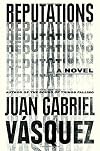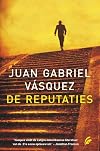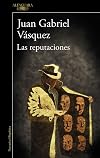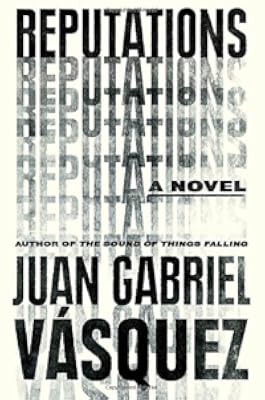
Reputations
by Juan Gabriel Vásquez
On This Page
Description
An influential political cartoonist is paid an unexpected visit by a young woman who upends his sense of personal history and forces him to reevaluate his life, work, and position in the world.Tags
Recommendations























Member Reviews
A remarkable work, the best of the several novels of his that I’ve read; among other things, it made me wonder why his name doesn’t appear more in our Nobel speculations. (Yes. It does. But I wonder whether it should be given even more consideration than we generally accord it.) Javier Mallarino is an enormously influential political cartoonist in Colombia. His caricatures change lives and destroy careers and governments. He is quite proud of the body of work he has produced over four decades, to the point of being just a bit too self-satisfied. And so Vasquez uses that self-satisfaction to analyze the nature of truth. Reputations is a deeply insightful novel asking hard questions beautifully posed: do caricatures depict or do they show more invent reality? Does intent matter? Does doubt help? Or hinder? Perhaps most important: how does one draw the lines of moral responsibility for one’s actions? Is it even possible? In a perfectly imagined confluence of coincidences, Mallarino is forced to confront these questions in the context of a caricature he drew years ago that may have literally destroyed lives. Was the caricature justified? Does it matter? What kind of power does he have? How should he use it? I will admit to being ever so slightly disappointed at the ending but this is a very impressive work; unhesitatingly recommended. show less
“The memory has a marvellous capacity to remember the forgotten, its existence and its stalking, and thus allow us to stay alert when we don’t want to forget and forget when we choose to.”
Javier Mallarino is a political cartoonist, revered and respected by the public of Colombia, and feared by the ones who bow down to corruption. His influence is immense, his art is a weapon against all that is rotten. Now, the time has come to be honoured as he deserves. But all is not well. One of his daughter’s friends from childhood comes to visit him. Her presence brings back memories that are too painful to be remembered. But Samanta WANTS to remember. She deserves to know whether she had fallen victim of a horrific act and Javier realises show more that sometimes, a comic strip in a newspaper may have dubious repercussions.
Juan Gabriel Vasquez masterfully depicts the feverish desire and demand for justice, the nectar of acceptance by the public and the inevitable ‘’god’’ status within the community of a land where balance is sensitive and condemnation is so difficult and yet, so easy. The writer lets us into Javier’s mind and there we witness all his doubts, his fears and his satisfaction of helping an innocent soul find peace.
But is there peace? And where do the limits of criticising end? What happens when threats and fear enter your peaceful home because you are doing the work that the authorities are unable or unwilling to perform?
A magnificent novel by one of the most important writers of our times.
‘’It’s a poor sort of memory that only works backwards.’’
My reviews can also be found on https://theopinionatedreaderblog.wordpress.com/ show less
Javier Mallarino is a political cartoonist, revered and respected by the public of Colombia, and feared by the ones who bow down to corruption. His influence is immense, his art is a weapon against all that is rotten. Now, the time has come to be honoured as he deserves. But all is not well. One of his daughter’s friends from childhood comes to visit him. Her presence brings back memories that are too painful to be remembered. But Samanta WANTS to remember. She deserves to know whether she had fallen victim of a horrific act and Javier realises show more that sometimes, a comic strip in a newspaper may have dubious repercussions.
Juan Gabriel Vasquez masterfully depicts the feverish desire and demand for justice, the nectar of acceptance by the public and the inevitable ‘’god’’ status within the community of a land where balance is sensitive and condemnation is so difficult and yet, so easy. The writer lets us into Javier’s mind and there we witness all his doubts, his fears and his satisfaction of helping an innocent soul find peace.
But is there peace? And where do the limits of criticising end? What happens when threats and fear enter your peaceful home because you are doing the work that the authorities are unable or unwilling to perform?
A magnificent novel by one of the most important writers of our times.
‘’It’s a poor sort of memory that only works backwards.’’
My reviews can also be found on https://theopinionatedreaderblog.wordpress.com/ show less
Smoothly, fluidly written. Exquisitely modulated humour and emotion. The kind of Good Writing that is seductive and soothing. The kind of writing that might lead one to think, "This is so profound". But it's basically rehashing some trite bourgeois concepts of art and politics, the personal vs political, without looking deeper at how memories and truth are collectively understood by the people, and how it is manipulated by the media. Will have to write a review of this, so I hope to flesh out some of these thoughts further.
(Review is available here.)
(Review is available here.)
This is an incredibly intriguing short book.
Political cartoonist Javier Mallarino is at the zenith of his career in Bogata, Columbia. He has endured 40 years of political death threats, given up his dream of becoming a serious artist, and lost his wife and daughter who have fled from the man he has become.
But now he is being feted and even featured on a new postage stamp.
After the ceremony, a woman comes up to him. Was she molested in Mallarino's house 30 years ago when she was a child? Mallarino thought so, and with a political cartoon brought down the accused man, who committed suicide soon afterwards.
But what happened that night? What are the responsibilities of power? How true are memories? After all, as the White Queen said to show more Alice “It’s a poor sort of memory that only works backwards”. show less
Political cartoonist Javier Mallarino is at the zenith of his career in Bogata, Columbia. He has endured 40 years of political death threats, given up his dream of becoming a serious artist, and lost his wife and daughter who have fled from the man he has become.
But now he is being feted and even featured on a new postage stamp.
After the ceremony, a woman comes up to him. Was she molested in Mallarino's house 30 years ago when she was a child? Mallarino thought so, and with a political cartoon brought down the accused man, who committed suicide soon afterwards.
But what happened that night? What are the responsibilities of power? How true are memories? After all, as the White Queen said to show more Alice “It’s a poor sort of memory that only works backwards”. show less
“It’s a poor sort of memory that only works backwards,” says the White Queen to Alice. In REPUTATIONS, Juan Gabriel Vasquez explores unreliable memories and the lengths we will go to validate them.
Javier Mallarino is a living legend in Columbia. As a political cartoonist, he is being honored as the conscience of the nation with his own postal stamp. His successful career rests on a reputation of speaking truth to power. Using his gift for characterization, he has been able to expose Columbian political corruption. People looked forward to his daily cartoons and his targets quickly came to realize that being mawked by Mallarino was a sign of celebrity.
His private life is somewhat less successful. He is divorced from Magdalena and show more estranged from his daughter, Beatrice. Due to constant threats, he has been forced to move from Bogatá to the surrounding mountains. Yet, in the final analysis, Javier enjoys a good life. That is until he receives a visit from a mysterious young woman, Samanta Leal, who intrudes into his lair under the guise of being a journalist seeking an interview. In fact, Samanta was a guest in his house 28 years earlier as a playmate of his daughter. The girls manage to get a little tipsy by finishing off drinks left around at a house party. This leads to the accusation of molestation by another intruder at the party when Samanta’s father arrives to her pick up. Senator Adolfo Cuéllar crashed the party to implore Mallarino to cease his particularly vicious attacks on his character. Instead, the incident has the opposite effect. Mallarino’s chief concern is not the truth so much as using the incident for his next juicy cartoon. Of course, the cartoonist’s approach is not to draw reality, but instead to insinuate character emphasizing physical flaws. “Bones are the only things that matter…Give me a bone and I shall move the world.” In this case, Mallarino suggests that Cuéllar may be a pedophile. This has disastrous consequences for Cuéllar and his family.
Samanta is confused by what may or may not have happened at that party 28 years ago and only seeks the truth. Of course, Mallarino really doesn’t know what happened, but the outcome from his attack on Cuéllar has him doubting his own honor and provides the impetus to seek answers, even at the risk of his own reputation.
The novel is a subtle exploration of multiple important themes: the precariousness of reputation, the gap between private persona and celebrity, the shadow land between artistic distortion and reality, the unreliability of memory, and the ultimate inability to define the past. Vasquez skillfully handles these themes with controlled plotting, avoidance of didacticism and presentation of realistic and nuanced characters. show less
Javier Mallarino is a living legend in Columbia. As a political cartoonist, he is being honored as the conscience of the nation with his own postal stamp. His successful career rests on a reputation of speaking truth to power. Using his gift for characterization, he has been able to expose Columbian political corruption. People looked forward to his daily cartoons and his targets quickly came to realize that being mawked by Mallarino was a sign of celebrity.
His private life is somewhat less successful. He is divorced from Magdalena and show more estranged from his daughter, Beatrice. Due to constant threats, he has been forced to move from Bogatá to the surrounding mountains. Yet, in the final analysis, Javier enjoys a good life. That is until he receives a visit from a mysterious young woman, Samanta Leal, who intrudes into his lair under the guise of being a journalist seeking an interview. In fact, Samanta was a guest in his house 28 years earlier as a playmate of his daughter. The girls manage to get a little tipsy by finishing off drinks left around at a house party. This leads to the accusation of molestation by another intruder at the party when Samanta’s father arrives to her pick up. Senator Adolfo Cuéllar crashed the party to implore Mallarino to cease his particularly vicious attacks on his character. Instead, the incident has the opposite effect. Mallarino’s chief concern is not the truth so much as using the incident for his next juicy cartoon. Of course, the cartoonist’s approach is not to draw reality, but instead to insinuate character emphasizing physical flaws. “Bones are the only things that matter…Give me a bone and I shall move the world.” In this case, Mallarino suggests that Cuéllar may be a pedophile. This has disastrous consequences for Cuéllar and his family.
Samanta is confused by what may or may not have happened at that party 28 years ago and only seeks the truth. Of course, Mallarino really doesn’t know what happened, but the outcome from his attack on Cuéllar has him doubting his own honor and provides the impetus to seek answers, even at the risk of his own reputation.
The novel is a subtle exploration of multiple important themes: the precariousness of reputation, the gap between private persona and celebrity, the shadow land between artistic distortion and reality, the unreliability of memory, and the ultimate inability to define the past. Vasquez skillfully handles these themes with controlled plotting, avoidance of didacticism and presentation of realistic and nuanced characters. show less
Vásquez writes beautifully and this novel examines the moral quandaries of a well-established and influential political cartoonist. He has the power to make or break others, solely through pen and paper. He has used and enjoyed his power, but after decades in the business, an old incident comes to the forefront of the story, making him question his power, his assumptions, and the ultimate ramifications of his art. Slightly melancholic and meditative examination of media, manipulation, memory, and messages.
Like THE SOUND OF THINGS FALLING, this is a well-crafted and intriguing story and character study. This one, too, will stay with me for a while as I ponder the questions it raises. I admire the restraint JGV demonstrates in his writing - there are no unnecessary words or images.
Members
- Recently Added By
Lists

Books Read in 2017
4,249 works; 130 members
Kirkus Starred Fiction Reviews of Books Published in 2016
63 works; 3 members

Brooklyn Public Library Literary Prize 2017
16 works; 1 member

Books Read in 2019
4,052 works; 110 members
Author Information

29+ Works 3,064 Members
Juan Gabriel Vásquez was born in Bogotá, Colombia in 1973. He studied law at the University of Rosario and received a doctorate in Latin American literature at the Sorbonne. He is the author of The Informants (Los Informantes), The Secret History of Costaguana (Historia Secreta de Costaguana), and The Sound of Things Falling (El Ruido de las show more Cosas al Caer), which won International Dublin Literary Award in 2014. (Bowker Author Biography) show less
Some Editions
Awards and Honors
Awards
Distinctions
Notable Lists
Work Relationships
Has as a student's study guide
Common Knowledge
- Canonical title*
- De reputaties
- Original title
- Las reputaciones
- Original publication date
- 2013
- People/Characters
- Javier Mallarino; Magdalena Mallarino; Samanta Leal; Rodrigo Valencia; Adolfo Cuellar
- Important places
- Bogotá, Colombia
- Epigraph
- "Identical noses do not make identical men" --Rodolphe Topffer, Essai de physiognomonie
- Dedication
- For Justin Webster and Assumpta Ayuso
- First words
- Sitting on a bench in the Parque Santander, having his shoes shined before it was time for the tribute to begin, Mallarino was suddenly sure he'd just seen a long-dead political cartoonist.
- Last words
- (Click to show. Warning: May contain spoilers.)And then he'll do the same with all the rest.
- Blurbers*
- Franzen, Jonathan; Dis, Adriaan van; Saviano, Roberto; Llosa, Mario Vargas
- Original language
- Spanish
*Some information comes from Common Knowledge in other languages. Click "Edit" for more information.
Classifications
- Genres
- Fiction and Literature, General Fiction
- DDC/MDS
- 863.64 — Literature & rhetoric Spanish Literature Spanish fiction 20th Century 1945-2000
- LCC
- PQ8180.32 .A797 .R4713 — Language and Literature French, Italian, Spanish and Portuguese literatures Spanish literature Provincial, local, colonial, etc. Spanish America
- BISAC
Statistics
- Members
- 316
- Popularity
- 101,021
- Reviews
- 16
- Rating
- (3.73)
- Languages
- 9 — Dutch, English, French, German, Greek, Italian, Portuguese, Spanish, Turkish
- Media
- Paper, Audiobook, Ebook
- ISBNs
- 28
- ASINs
- 7