On This Page
Description
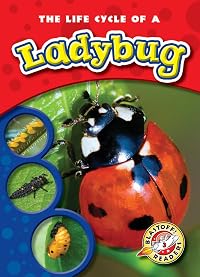
Introduces the life cycle of a ladybug, showing how it changes from an egg to an adult ladybug.Tags
Recommendations
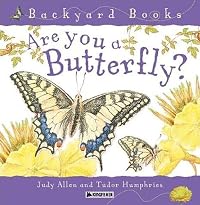







Member Reviews
Fun writing style addressed to the child reader. Explores the characteristics and life cycle of a ladybug in a humorous, casual way.
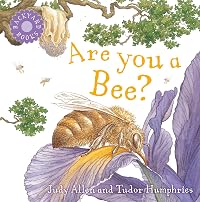
This is a cute, easy to understand and very short guide to information about ladybugs for young children. Each two page spread is wonderfully illustrated (watercolor and pencil, a mellow, natural look) with a few short sentences about the lifecycle of the ladybug from the "mom" laying eggs, through the several metamorphosis that the young larvae go through...acknowledging that young ladybugs look nothing like adults, which is excellent because this entire process can be difficult to explain to young children without them seeing it...and in Are You a Ladybug, it's all drawn out nicely and it's very easy to understand!
Are you a Ladybug presents the physical characteristics and behavior of ladybugs as ell as their diet, habitat and also show more discusses how animals and birds don't eat them because they taste bad...no reason is given and it's never discussed if they have any natural predators, we were left to find out this information on our own, so that was slightly disappointing.
What's so appealing about Are You a Ladybug is that because of the way it's written, young readers (or listeners, if you use these as read-alouds) are put front and center, they are put in the position of imagining what is going on from hatching and eating their egg, to molting, eating lots and lots of aphids, and then growing their hard shell. This book really engages young minds in a way that is both accurate (scientifically presented) and fun (pretend play/imaginative), with just the right amount of humor to keep it from getting bogged down in facts. I give it four stars, it would have gotten five, but there is no glossary and the author does not define what an aphid is...though this did provide us with an opportunity to go to their picture dictionary and allow them to look it up and discuss it as an additional activity! Great for ages 4-8, with 4-6 probably being the ideal age range, what a fun way to "gear up" for spring, when animals and insects of all kinds will be coming out in force. With this book, we've given our kids a head start on what to look for this spring and they are looking forward to it. show less
Are you a Ladybug presents the physical characteristics and behavior of ladybugs as ell as their diet, habitat and also show more discusses how animals and birds don't eat them because they taste bad...no reason is given and it's never discussed if they have any natural predators, we were left to find out this information on our own, so that was slightly disappointing.
What's so appealing about Are You a Ladybug is that because of the way it's written, young readers (or listeners, if you use these as read-alouds) are put front and center, they are put in the position of imagining what is going on from hatching and eating their egg, to molting, eating lots and lots of aphids, and then growing their hard shell. This book really engages young minds in a way that is both accurate (scientifically presented) and fun (pretend play/imaginative), with just the right amount of humor to keep it from getting bogged down in facts. I give it four stars, it would have gotten five, but there is no glossary and the author does not define what an aphid is...though this did provide us with an opportunity to go to their picture dictionary and allow them to look it up and discuss it as an additional activity! Great for ages 4-8, with 4-6 probably being the ideal age range, what a fun way to "gear up" for spring, when animals and insects of all kinds will be coming out in force. With this book, we've given our kids a head start on what to look for this spring and they are looking forward to it. show less
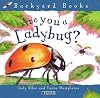
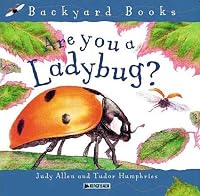
Are You a Ladybug?
Judy Allen, illustrated by Tudor Humphries
Kingfisher, 31 p.
Paperback nonfiction picture book
2003
4-8 years
This funny and informative book shows young readers around the life of a ladybug by putting them in the ladybug's shoes: "If you were a ladybug, you would..." hatch from a tiny egg, eat aphids, shed skin as a larva, metamorphose, and develop a hard red shell. Then the book takes a silly turn, explaining that if your parents are humans, you are not a ladybug but a human child - you don't eat aphids and can't fly! Detailed, engaging watercolor illustrations realistically depict the life cycle of the ladybug, and then show children and parents who are not ladybugs (although they might wear a red and black shirt and show more costume wings!). This would be a fun read-aloud for kindergarten. show less
Judy Allen, illustrated by Tudor Humphries
Kingfisher, 31 p.
Paperback nonfiction picture book
2003
4-8 years
This funny and informative book shows young readers around the life of a ladybug by putting them in the ladybug's shoes: "If you were a ladybug, you would..." hatch from a tiny egg, eat aphids, shed skin as a larva, metamorphose, and develop a hard red shell. Then the book takes a silly turn, explaining that if your parents are humans, you are not a ladybug but a human child - you don't eat aphids and can't fly! Detailed, engaging watercolor illustrations realistically depict the life cycle of the ladybug, and then show children and parents who are not ladybugs (although they might wear a red and black shirt and show more costume wings!). This would be a fun read-aloud for kindergarten. show less
This series is a great introduction to nonfiction for 2 year olds. It contextualizes the information by describing the world from the ladybugs point of view. The pictures are clear, and the text is engaging.
This book starts with a question that goes through the whole narrative. The book follows a ladybug through its life cycle from an egg to getting its wings. There are colorful pictures and text on the opposite page. The illustrations are from the perspective of the ladybug which brings the story to life even more. Children love ladybugs and will enjoy to learn about them. This book would be great for children in pre-K through third grade. You can use this nook in the classroom to:
-show children the life cycle of a lady bug
-engage them before beginning a unit on ladybugs
-talk about the perspective of the book
-examine the illustrations
-talk about fiction and non-fiction
-show children the life cycle of a lady bug
-engage them before beginning a unit on ladybugs
-talk about the perspective of the book
-examine the illustrations
-talk about fiction and non-fiction
This is a really cute book to read to kindergateners, it is about what it would be like if you were a ladybug. Its very informational and its fun and cute too.
A backyard book for young readers. Beginning with ladybug parents who eat aphids and progressing through the life cycle of a ladybug, young readers will discover the changes a ladybug experiences before becoming an adult.
And are YOU a ladybug?
With captivating illustrations, this informative narrative will appeal to all young readers interested in the world around them, especially the bugs in their own back yards.
Recommended.
And are YOU a ladybug?
With captivating illustrations, this informative narrative will appeal to all young readers interested in the world around them, especially the bugs in their own back yards.
Recommended.
Members
- Recently Added By
Author Information

Judy Allen is founder and president of Judy Allen Productions, a full-service event planning production company that specializes in consulting on strategic event design.
Series

Common Knowledge
- Canonical title
- Are You a Ladybug?
- Original publication date
- 2000
- First words
- Are you a ladybug?
- Last words
- (Click to show. Warning: May contain spoilers.)And you will never, ever, EVER have to eat aphids.
- Original language
- English
Classifications
Statistics
- Members
- 745
- Popularity
- 37,891
- Reviews
- 19
- Rating
- (4.00)
- Languages
- Chinese, English
- Media
- Paper
- ISBNs
- 12
- UPCs
- 2