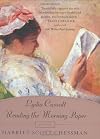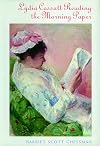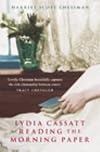
Lydia Cassatt Reading the Morning Paper
by Harriet Scott Chessman
On This Page
Description
Ill with Bright's disease and conscious of her approaching death, Lydia Cassatt contemplates her world with courage, openness, and passion. As she addresses and comes to accept her own position as her sister's model, she asks stirring questions about love and art's capacity to remember.Tags
Recommendations




















Member Reviews
A lovely little book which brings to life the artist Mary Cassatt and her older sister Lydia, who posed for her over 1878-81 while slowly deteriorating from a kidney disease. It’s told in five parts, each centered around one of the resulting paintings, and the insights that Chessman provides make it impossible to see these works in the same way again. The chapters are like little impressionist paintings of their own, and the book doesn’t get bogged down in details or attempt to be more comprehensive, which for the most part I found a strength, but confess it left me wanting a little more. Edgar Degas was in Cassatt’s life at this time and so he figures prominently, and it was interesting to read Chessman’s take on their show more enigmatic relationship. Most of all, I appreciated the reminder of the humanity of these individuals, and that the fleeting images left behind in the artwork are just small reflections of their dreams, loves, and frustrations in life. There is something profound in shifting the focus to Lydia Cassatt, who led a quiet little life and had it cut short at 45, someone who like the rest of us would soon be forgotten by the world, and yet lives on in a way because of her sister’s art and Chessman’s book. show less
This poignant little novel centered around Mary Cassatt’s life in 1880’s Paris covers much of the same ground as another book I read recently--I always Loved You by Robin Oliveira, a work of fiction which speculates about Cassatt’s relationship with Edgar Degas. Degas, the Cassatt family, and the Paris art scene are brought back to life in this book too, but here the story is told from the point of view of Mary’s beloved but terminally ill sister Lydia, who served as a model in some of Cassatt’s most beautiful paintings. Each of the five chapters uses one of the paintings Mary did of Lydia as its jumping off point, and (thank you publisher!) lovely color plates of the paintings are interspersed in the text.
As a narrator Lydia show more has wit, longings, and a probing intellect, but because of her illness she leads a circumscribed life very unlike her ambitious younger sister. She muses about the artistic process and her role in it, she’s fascinated by and drawn to Mary’s interpretations of her modeling poses, and when strong enough she takes readers with her around the sunny streets of Paris to rub elbows with the likes of Degas, Renoir, and Caillebotte. While Lydia Cassatt Reading the Morning Paper is a short novel it’s not slight. Ambitious themes are explored, including life, death, family love, driving passion, the place of art, and the possibility of immortality. show less
As a narrator Lydia show more has wit, longings, and a probing intellect, but because of her illness she leads a circumscribed life very unlike her ambitious younger sister. She muses about the artistic process and her role in it, she’s fascinated by and drawn to Mary’s interpretations of her modeling poses, and when strong enough she takes readers with her around the sunny streets of Paris to rub elbows with the likes of Degas, Renoir, and Caillebotte. While Lydia Cassatt Reading the Morning Paper is a short novel it’s not slight. Ambitious themes are explored, including life, death, family love, driving passion, the place of art, and the possibility of immortality. show less
What can I say about this book? Chessman has created an amazing fictional glimpse into the life of American Impressionist painter Mary Cassatt, through the eyes of her older sister and sometimes model Lydia. The story, told in 5 chapters and a mere 163 pages, is a fascinating portrait of Mary, Lydia - who suffered from and died of Bright's Disease - and the time period, both artistic and non-artistic. Each chapter is focused on presenting the setting of each painting Lydia modeled for Mary - a written portrait of a painting in progress.
While this is a work of fiction, Chessman has build upon the facts that Mary Cassatt lived much of her adult life in France - where the book is set - and that she had befriended fellow painter Edgar show more Degas, who is also portrayed in Chessman's novel. Chessman relied on the paintings Lydia modeled for during her final years, and captures what may have been discussed, witnessed and thought of by Lydia, between September 1878 and Lydia's death on November 7, 1882. Chessman delves into Lydia's worries, her frustrations with her failing health and her thoughts of her family that surround her in their fifth floor apartment in Paris.
I found this to be a poignantly beautiful story that I feel captures the essence of the Impressionist era, life in Paris in the late 1880's and, hopefully, a good characterization of the thoughts and feelings of Lydia Cassett in her final years. A stunning story I highly recommend, for both art lovers and readers that take an interest in the human condition in general. The inclusion of glossy print copies of the paintings within the chapters is a nice touch and I enjoyed examining the paintings as much as I enjoyed reading Chessman's story. show less
While this is a work of fiction, Chessman has build upon the facts that Mary Cassatt lived much of her adult life in France - where the book is set - and that she had befriended fellow painter Edgar show more Degas, who is also portrayed in Chessman's novel. Chessman relied on the paintings Lydia modeled for during her final years, and captures what may have been discussed, witnessed and thought of by Lydia, between September 1878 and Lydia's death on November 7, 1882. Chessman delves into Lydia's worries, her frustrations with her failing health and her thoughts of her family that surround her in their fifth floor apartment in Paris.
I found this to be a poignantly beautiful story that I feel captures the essence of the Impressionist era, life in Paris in the late 1880's and, hopefully, a good characterization of the thoughts and feelings of Lydia Cassett in her final years. A stunning story I highly recommend, for both art lovers and readers that take an interest in the human condition in general. The inclusion of glossy print copies of the paintings within the chapters is a nice touch and I enjoyed examining the paintings as much as I enjoyed reading Chessman's story. show less
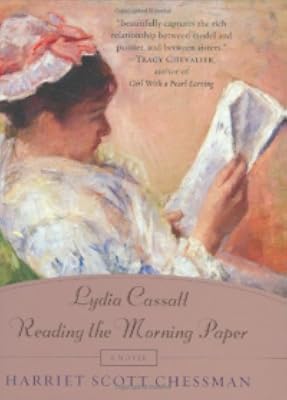
A perfectly exquisite little book: a novella of five chapters on five portraits of Lydia Cassatt, painted by her sister, the American impressionist, Mary Cassatt. Each consisted of Lydia's meditations on life, illness [Lydia suffered from Bright's Disease], death, and art; her thoughts and memories, interspersed with her descriptions of the modeling sessions for her sister. Also, Lydia attempts an interpretation of each of these five portraits: "Woman reading"; "Tea"; "The Garden"; "Driving"; "Lydia seated at her embroidery frame." Written in delicate, flowing prose in a stream-of-consciousness style, this opened for me the world of the Cassatt sisters, their family, and the Parisian art world of the 1880s. An added bonus was a color show more plate of each portrait. show less
This novel had much more depth of understanding than I thought it would when I picked it up at a used book sale. Told in the first person, Lydia Cassatt Reading the Morning Paper delves into the model's thoughts and feelings as she sits for her sister, the impressionist painter Mary Cassatt.
Older by eight years, Lydia has Bright's Disease, an historical name for a number of kidney diseases, which, in the 1870's, was untreatable and almost always fatal. Although fiction, the book considers the process of painting from the model's perspective, and therefore lends greater insight into the paintings themselves. There are five reproductions included. Recommended for anyone with interest in art, impressionism, or the dying process.
Older by eight years, Lydia has Bright's Disease, an historical name for a number of kidney diseases, which, in the 1870's, was untreatable and almost always fatal. Although fiction, the book considers the process of painting from the model's perspective, and therefore lends greater insight into the paintings themselves. There are five reproductions included. Recommended for anyone with interest in art, impressionism, or the dying process.
Beautiful little book about Mary Cassatt's painting of 5 pictures of her sister during the last 4 years of Lydia's life told from Lydia's perspective. Each chapter deals with the time around a particular painting, each of which is included in the book in full color. The fiction is very contemplative of Lydia's early years and the Cassatt family. It is set in Paris and Marly in the French countryside. The descriptions and atmosphere are almost dreamlike in spots. There are interactions with Impressionists Edgar Degas, Mary's mentor and Berthe Morisot, Mary's friend. Highly recommended.
I wasn’t familiar with Harriet Scott Chessman until I won an autographed copy of Lydia Cassatt Reading the Morning Paper and now I find myself wondering why. In a word, this book is delightful. The writing is artistic and the photos of Mary Cassatt’s paintings that are featured are stunning. This book is a fictional account of the relationship between the American Impressionist artist Mary Cassatt and her sister Lydia. It is set in France in the late 1800’s and focuses on five paintings Mary did of Lydia during that time. Mary and Lydia had an incredibly close bond that only sister’s can share. Lydia was Mary’s favorite model and sometimes struggled to pose because she was battling Bright’s disease, which eventually took her show more life.
This book is helps you imagine what it was like in Paris in the late 1800’s. I felt like I knew the Cassatts by the time I was through. It is a wonderful story of family, love, strength and endurance. I will definitely be looking for more of Harriet’s work. show less
This book is helps you imagine what it was like in Paris in the late 1800’s. I felt like I knew the Cassatts by the time I was through. It is a wonderful story of family, love, strength and endurance. I will definitely be looking for more of Harriet’s work. show less
Members
- Recently Added By
Lists

A High School Trip to France
57 works; 5 members

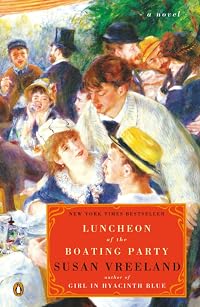
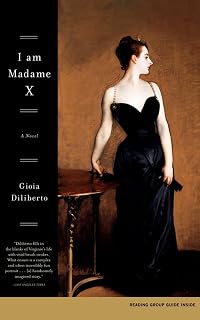
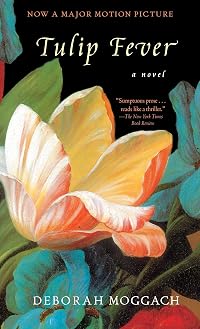
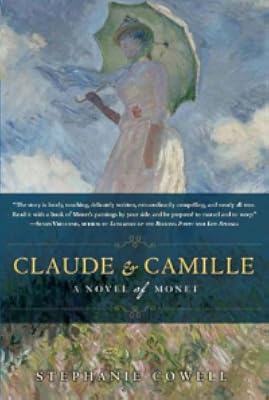
covers with paintings / paintings as covers .
37 works; 1 member

Ten Books Inspired By Paintings
11 works; 2 members
Author Information

8+ Works 582 Members
Harriet Scott Chessman teaches writing at Yale University & is on the faculty of the Bread Loaf School of English at Middlebury College. She has written a book on Gertrude Stein, "The Public Is Invited to Dance," as well as essays on modern literature. Her most recent book was "Ohio Angels". She lives with her family in Connecticut. (Bowker Author show more Biography) show less
Series
Belongs to Publisher Series
Gallimard, Folio (4881)
Common Knowledge
- Canonical title
- Lydia Cassatt Reading the Morning Paper
- Original publication date
- 2001
- People/Characters
- Mary Cassatt; Lydia Cassatt; Pierre-Auguste Renoir
- Important places
- Paris, France
- Epigraph
- The imperfect is our paradise.-Wallace Stevens, "The Poems of Our Climate"
- Dedication
- To M. Lucia Kuppens, O.S.B. and theAbbey of Regina Laudis
and to the memory of Shirley Martin Prown
Recordare - First words
- "Could you model for me tomorrow, Lyd?"
- Last words
- (Click to show. Warning: May contain spoilers.)I yearn to be simply present in this day, filled for the moment with color and shape, my own hand urging the needle through the silk.
Classifications
Statistics
- Members
- 441
- Popularity
- 69,489
- Reviews
- 19
- Rating
- (3.74)
- Languages
- 5 — English, French, Italian, Spanish, Swedish
- Media
- Paper, Audiobook, Ebook
- ISBNs
- 21
- UPCs
- 1
- ASINs
- 3