Martha Washington: An American Life
by Patricia Brady
On This Page
Description
With this revelatory and painstakingly researched book, Martha Washington, the invisible woman of American history, at last gets the biography she deserves. In place of the domestic frump of popular imagination, Patricia Brady resurrects the wealthy, attractive, and vivacious young widow who captivated the youthful George Washington. Here are the able landowner, the indomitable patriot (who faithfully joined her husband each winter at Valley Forge), and the shrewd diplomat and emotional show more mainstay. And even as it brings Martha Washington into sharper and more accurate focus, this sterling life sheds light on her marriage, her society, and the precedents she established for future First Ladies. show lessTags
Recommendations
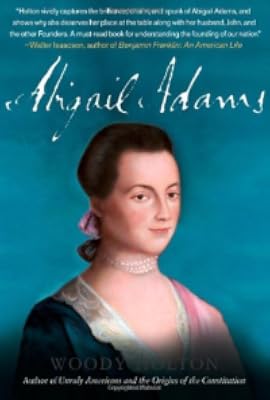

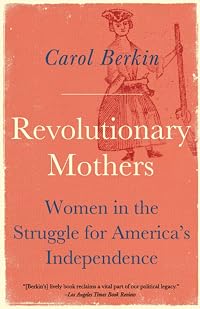
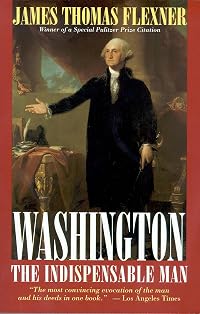
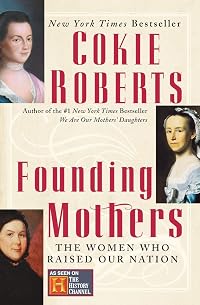



Member Reviews
I’m going to give this a two, because there were things I very much enjoyed but others that just weren’t for me.
On the one hand, I learned a great deal of new information about Martha Washington and the times in which she lived. I liked the quote that opened the book, “The past is a foreign country. They do things differently there,” and this book showed just how different things really were. I also gained a new perspective on Martha’s role in the Revolutionary War.
On the other hand, large portions were simply too text-bookish for my taste, and the paragraph-length lists of all the household tasks Martha would have been able to perform, all the household tasks the slaves would have done, and so on nearly drove me to show more distraction. But in some places there was frustratingly little detail, although this may not have been due to any defect in the book. Martha Washington burned over forty-one years' worth of correspondence between herself and her husband, and that void may be part of the reason I had such mixed feelings about this book. show less
On the one hand, I learned a great deal of new information about Martha Washington and the times in which she lived. I liked the quote that opened the book, “The past is a foreign country. They do things differently there,” and this book showed just how different things really were. I also gained a new perspective on Martha’s role in the Revolutionary War.
On the other hand, large portions were simply too text-bookish for my taste, and the paragraph-length lists of all the household tasks Martha would have been able to perform, all the household tasks the slaves would have done, and so on nearly drove me to show more distraction. But in some places there was frustratingly little detail, although this may not have been due to any defect in the book. Martha Washington burned over forty-one years' worth of correspondence between herself and her husband, and that void may be part of the reason I had such mixed feelings about this book. show less
I’m going to give this a two, because there were things I very much enjoyed but others that just weren’t for me.
On the one hand, I learned a great deal of new information about Martha Washington and the times in which she lived. I liked the quote that opened the book, “The past is a foreign country. They do things differently there,” and this book showed just how different things really were. I also gained a new perspective on Martha’s role in the Revolutionary War.
On the other hand, large portions were simply too text-bookish for my taste, and the paragraph-length lists of all the household tasks Martha would have been able to perform, all the household tasks the slaves would have done, and so on nearly drove me to show more distraction. But in some places there was frustratingly little detail, although this may not have been due to any defect in the book. Martha Washington burned over forty-one years' worth of correspondence between herself and her husband, and that void may be part of the reason I had such mixed feelings about this book. show less
On the one hand, I learned a great deal of new information about Martha Washington and the times in which she lived. I liked the quote that opened the book, “The past is a foreign country. They do things differently there,” and this book showed just how different things really were. I also gained a new perspective on Martha’s role in the Revolutionary War.
On the other hand, large portions were simply too text-bookish for my taste, and the paragraph-length lists of all the household tasks Martha would have been able to perform, all the household tasks the slaves would have done, and so on nearly drove me to show more distraction. But in some places there was frustratingly little detail, although this may not have been due to any defect in the book. Martha Washington burned over forty-one years' worth of correspondence between herself and her husband, and that void may be part of the reason I had such mixed feelings about this book. show less
Reviewed Feb. 2008
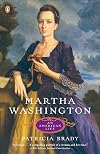
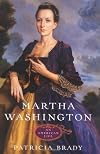
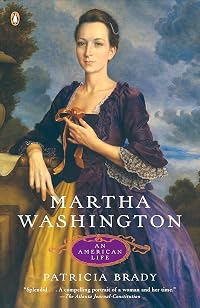
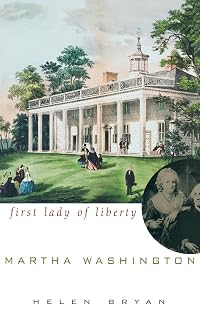
I really enjoyed this book, well researched and easy to read. A bit hard to follow only because everyone named their children after family then had a nickname that did not match their name...ie Mary is called Polly or Martha called Patsy or Eleanor called Nelly. Lots of Georges and Washingtons as well. What I enjoyed was that the author inferred based on letters and opinions at that time, sometimes Brady would write where she gained her evidence, for example in several cases she used order forms and other primary sources as her guides. I wish there were more writings about her slaves and their importance in her life. Unfortunately we know little about the slaves. Odd that March could not understand why a slave would show more prefer freedom to living with the Washingtons, but you must not judge from today’s standards. Before reading this book, I did not understand how important Martha was to George, he was devoted to her (and to him) he relied on her stability, love and domestically to be one of the great presidents. I know he was frustrated with her need to spoil her children, especially her boys. This book alludes to this when I would think it was obvious. The picture on the cover of this book intrigues me, she is dressed in the style of the era, but she does not look like Martha Washington, but a current celebrity dressed like her. I can find no reference to the cover art in the book.
6-2008 show less
I really enjoyed this book, well researched and easy to read. A bit hard to follow only because everyone named their children after family then had a nickname that did not match their name...ie Mary is called Polly or Martha called Patsy or Eleanor called Nelly. Lots of Georges and Washingtons as well. What I enjoyed was that the author inferred based on letters and opinions at that time, sometimes Brady would write where she gained her evidence, for example in several cases she used order forms and other primary sources as her guides. I wish there were more writings about her slaves and their importance in her life. Unfortunately we know little about the slaves. Odd that March could not understand why a slave would show more prefer freedom to living with the Washingtons, but you must not judge from today’s standards. Before reading this book, I did not understand how important Martha was to George, he was devoted to her (and to him) he relied on her stability, love and domestically to be one of the great presidents. I know he was frustrated with her need to spoil her children, especially her boys. This book alludes to this when I would think it was obvious. The picture on the cover of this book intrigues me, she is dressed in the style of the era, but she does not look like Martha Washington, but a current celebrity dressed like her. I can find no reference to the cover art in the book.
6-2008 show less
I enjoyed this little gem. Just the sort of book I like.
Ratings
Members
- Recently Added By
Lists

Best U.S. History Books (1754-1828)
363 works; 17 members
Author Information

4 Works 491 Members
Some Editions
Common Knowledge
- Original publication date
- 2005
- People/Characters
- Martha Custis Washington; George Washington
- Important places
- Virginia, USA; Mount Vernon, Virginia, USA; New York, New York, USA
- Important events
- Presidency of George Washington
- Epigraph
- The past is a foreign country. They do things differently there. ~L. P. Hartley
- Blurbers
- Roberts, Cokie
Classifications
- Genres
- Nonfiction, Biography & Memoir, History
- DDC/MDS
- 973.4 — History & geography History of North America United States Constitutional period (1789-1809)
- LCC
- E312.19 .W34 .B73 — History of the United States United States Revolution to the Civil War, 1775/1783-1861 By period 1789-1809. Constitutional period Washington's administrations, 1789-1797
- BISAC
Statistics
- Members
- 395
- Popularity
- 78,745
- Reviews
- 4
- Rating
- (3.95)
- Languages
- English
- Media
- Paper, Ebook
- ISBNs
- 7
- ASINs
- 2