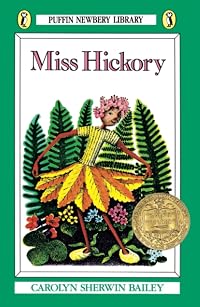
Miss Hickory
by Carolyn Sherwin Bailey
On This Page
Description
Relates the adventures of a country doll made of an apple-wood twig with a hickory nut for a head.Tags
Recommendations


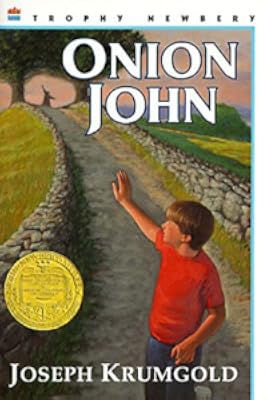
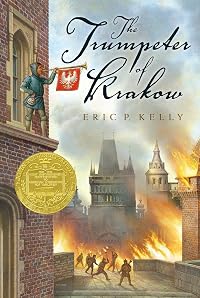
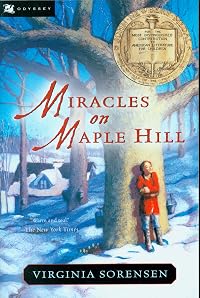
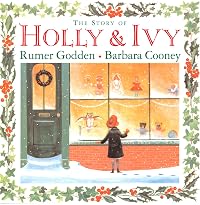


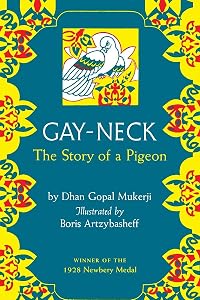
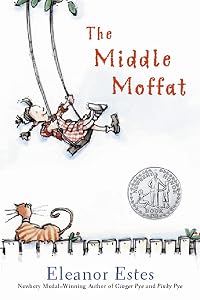
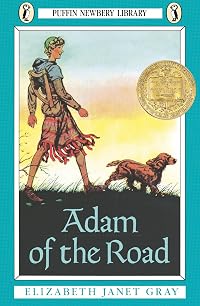
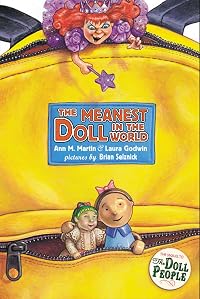



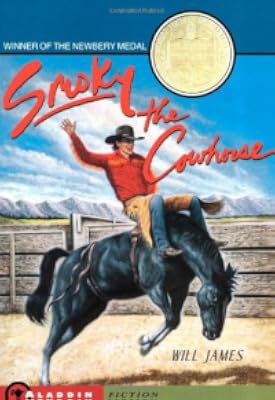
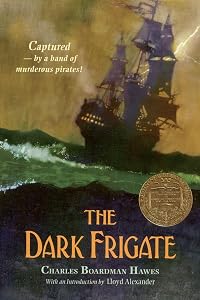
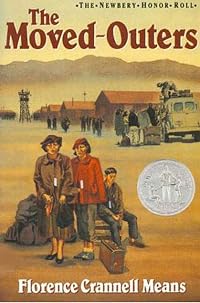
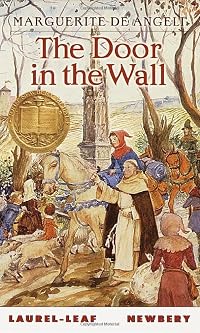


Member Recommendations

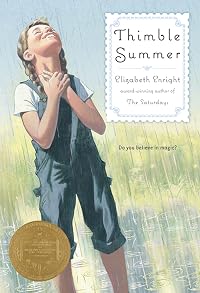
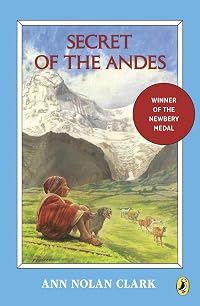
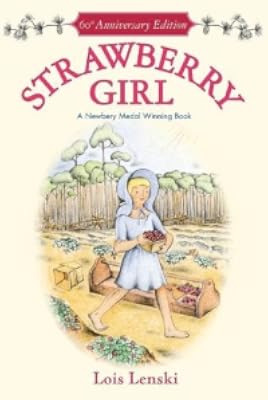
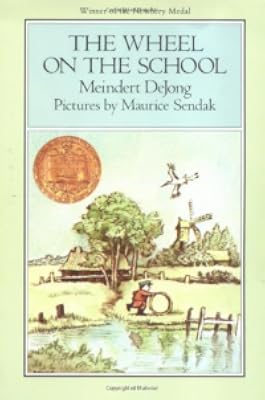
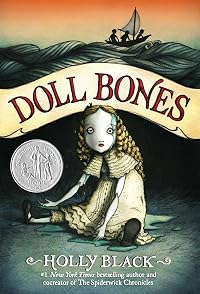
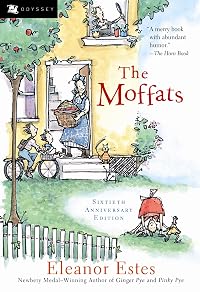
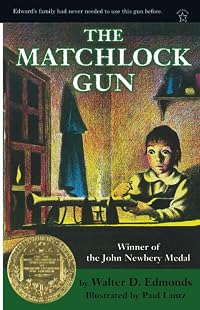
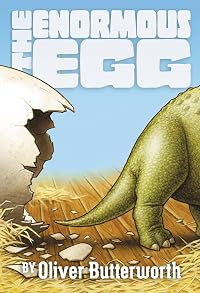
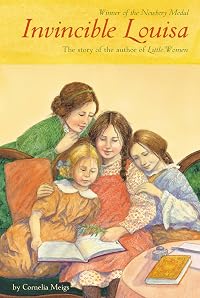
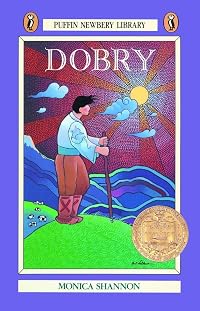
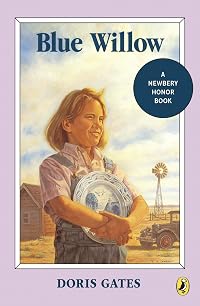
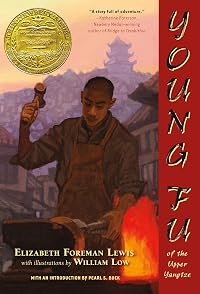
Marchpane Both books were awarded recognition in their publication years (Newbery Medal for Miss Hickory in 1946 and several notable book awards for The Blossom on the Bough in 1975). Works of imagination and natural science respectively, their illustrations provide beautifully magical and realistic lenses for seeing nature.
Member Reviews
In this 1947 Newbery Medal award winning book, Miss Hickory is indeed a hard nut to crack. She is a stick figure doll composed of a fork-like twiggy body and a hickory nut for a noggin. Her humble, but clean, abode is made of corncobs nestled beneath a lilac bush.
Miss Hickory is deemed alive by the family who made her and the forest animals who befriend her.
When the family temporarily moves from New Hampshire to Massachusetts, Miss Hickory is left behind to fend for herself in the bitter cold winter.
She is a selfish, self serving, vain and stubborn old coot who self righteously judges others, especially those who help her.
Carolyn Sherwin Bailey weaves subtle humor and social commentary throughout via the personality given to Miss show more Hickory.
For example, in observing the trouble-making crow as he leads a pack of fellow meanies, Miss Hickory remarks that he most likely is a gangster and really should be shot, but, will not be caught.
The squirrel who tries to help by keeping her warm, alas does not save, but eats all his nuts and is lectured for his bad qualities but not praised for his good attributes. The crow who finds a new robin's nest home for her after her corncob abode is taken over by a chipmunk, is deemed dirty and gossipy.
And, there appears to be a subtle dig at self righteous church goers as we learn that Miss Hickory, decked in her finest attire, looks forward to attending the sermons of Jack in the Pulpit.
In short, Miss Hickory is akin to the character of Gladys Kravitz in the 1970's television series Bewitched. She is a noisy, judging little hypocrite.
When hungry squirrel takes his revenge and eats her head off, Miss Hickory, in a biblical way looses her life to be reborn again in the spring. show less
Miss Hickory is deemed alive by the family who made her and the forest animals who befriend her.
When the family temporarily moves from New Hampshire to Massachusetts, Miss Hickory is left behind to fend for herself in the bitter cold winter.
She is a selfish, self serving, vain and stubborn old coot who self righteously judges others, especially those who help her.
Carolyn Sherwin Bailey weaves subtle humor and social commentary throughout via the personality given to Miss show more Hickory.
For example, in observing the trouble-making crow as he leads a pack of fellow meanies, Miss Hickory remarks that he most likely is a gangster and really should be shot, but, will not be caught.
The squirrel who tries to help by keeping her warm, alas does not save, but eats all his nuts and is lectured for his bad qualities but not praised for his good attributes. The crow who finds a new robin's nest home for her after her corncob abode is taken over by a chipmunk, is deemed dirty and gossipy.
And, there appears to be a subtle dig at self righteous church goers as we learn that Miss Hickory, decked in her finest attire, looks forward to attending the sermons of Jack in the Pulpit.
In short, Miss Hickory is akin to the character of Gladys Kravitz in the 1970's television series Bewitched. She is a noisy, judging little hypocrite.
When hungry squirrel takes his revenge and eats her head off, Miss Hickory, in a biblical way looses her life to be reborn again in the spring. show less
Oh my God, how can a book this awful have ever WON a Newbery award? 1946 must have been a miserable year for children's literature.
Miss Hickory is a twig doll, abandoned by the child who created her. She, like all the animals she encounters in the book, is anthropomorphic, though her personality is not developed in the least. She spends the book talking to animals in largely unrelated, tediously boring little chapters. Oddest is the fly-ball out into left field when one chapter is about a Christmas miracle where a baby Jesus in some form or fashion, makes an annual visit to the nearby barn, and then that astonishing tale is dropped just as quickly as it showed up. In the end, a squirrel eats Miss Hickory's head. Good job, Mr. Squirrel. show more You should have done that about 70 pages earlier! The only good thing I can say about this dreadful tome is that it is short.
Absolutely the only reason to read this book is if, like me, you have a ridiculous neurotic determination to read all of the Newbery winners. But so far, this is the worst one I've read. show less
Miss Hickory is a twig doll, abandoned by the child who created her. She, like all the animals she encounters in the book, is anthropomorphic, though her personality is not developed in the least. She spends the book talking to animals in largely unrelated, tediously boring little chapters. Oddest is the fly-ball out into left field when one chapter is about a Christmas miracle where a baby Jesus in some form or fashion, makes an annual visit to the nearby barn, and then that astonishing tale is dropped just as quickly as it showed up. In the end, a squirrel eats Miss Hickory's head. Good job, Mr. Squirrel. show more You should have done that about 70 pages earlier! The only good thing I can say about this dreadful tome is that it is short.
Absolutely the only reason to read this book is if, like me, you have a ridiculous neurotic determination to read all of the Newbery winners. But so far, this is the worst one I've read. show less
Miss Hickory by Carolyn Sherwin Bailey
The winner of the Newbery Award in1947 this book is set in woodland described so that the reader may feel, see and smell every rich detail. Wonderful vignettes of characters are painted ranging from Bull Frog to Ground Hog all of whom provide the backdrop for the story of a year in the life of Miss Hickory. The latter is a doll made from natural materials from the wood all rounded off with a hickory nut head. The book is illustrated with lithographs by Ruth Gannett. They perfectly complement the story and are delightful. You may know of the artist as she was the author of the My Father's Dragon series as well as other short children's novels.
It is a magical fantasy with deeper meanings and lessons show more for life or reflections as we journey on irrespective of age. For example when Miss Hickory, being given a flight on Crow observes how he looks so dirty and messy we hear how she thinks ‘But all this mattered very little weighed against Crow’s kindness and courage’. The central character is on what we may call a learning journey (I know – very education and hopelessly modern!) but what a role model she is as each chapter unfolds. After one especially unpleasant comment we hear how ‘Miss Hickory asked herself if she had been fair to Squirrel’. Too right she hadn’t been at all fair to the squirrel but the author draws the reader to join in and think.
Each chapter is relatively self contained but moves the story on as the seasons pass. The big questions of life are brought to the fore when we read of young Fawn. ‘And although Fawn looked for Doe until sunset, blind with the tears in his great dark eyes, he did not find her. At last when the forest was too dark to trail, Fawn understood that Doe must have been looking for him, following him, watching over him when he had heard the crashing gun fire.’ We are able to empathise with the characters as the same fawn desires his independence ‘But fawn could endure his mother’s lessons no longer’.
However all is not too serious and we find humour as the Squirrel who had been warned by Miss Hickory about hoarding his nuts and not eating them retorts ‘Now Miss Hickory, it is easy for you to keep your nut’. In the end we are asked to consider responding to our needs for companionship as Squirrel ventures up to Miss Hickory’s nest home to a rather frosty welcome yet is forgiving and compassionate to her and her bitter retort.
On another occasion Miss Hickory displays a mighty refusal to join in with what she views as childish things. The childish thing in question was the ‘specialness’ of Christmas Eve as related to her by Squirrel. Following this she makes her way to join in the wonder of which the characters had all been speaking and we read that ‘They all seemed to share a secret that she had been too stiff minded to believe’.
The suggestion to the reader that the world of empirical science may hold many wonders but that the spiritual realm is one in which marvellous things are witnessed was one I specially valued. Even the hard nut Miss Hickory on seeing the great blazing star in the East outshining the moon commented to herself ‘All contrary to the Almanac, no stars are bright in the full moon’. There was a great deal to ponder as I closed the last page of this delightful book originally written for children. The quality of writing, the descriptions of the natural world, the ideas make this little book a real marvel and one I would highly recommend. show less
The winner of the Newbery Award in1947 this book is set in woodland described so that the reader may feel, see and smell every rich detail. Wonderful vignettes of characters are painted ranging from Bull Frog to Ground Hog all of whom provide the backdrop for the story of a year in the life of Miss Hickory. The latter is a doll made from natural materials from the wood all rounded off with a hickory nut head. The book is illustrated with lithographs by Ruth Gannett. They perfectly complement the story and are delightful. You may know of the artist as she was the author of the My Father's Dragon series as well as other short children's novels.
It is a magical fantasy with deeper meanings and lessons show more for life or reflections as we journey on irrespective of age. For example when Miss Hickory, being given a flight on Crow observes how he looks so dirty and messy we hear how she thinks ‘But all this mattered very little weighed against Crow’s kindness and courage’. The central character is on what we may call a learning journey (I know – very education and hopelessly modern!) but what a role model she is as each chapter unfolds. After one especially unpleasant comment we hear how ‘Miss Hickory asked herself if she had been fair to Squirrel’. Too right she hadn’t been at all fair to the squirrel but the author draws the reader to join in and think.
Each chapter is relatively self contained but moves the story on as the seasons pass. The big questions of life are brought to the fore when we read of young Fawn. ‘And although Fawn looked for Doe until sunset, blind with the tears in his great dark eyes, he did not find her. At last when the forest was too dark to trail, Fawn understood that Doe must have been looking for him, following him, watching over him when he had heard the crashing gun fire.’ We are able to empathise with the characters as the same fawn desires his independence ‘But fawn could endure his mother’s lessons no longer’.
However all is not too serious and we find humour as the Squirrel who had been warned by Miss Hickory about hoarding his nuts and not eating them retorts ‘Now Miss Hickory, it is easy for you to keep your nut’. In the end we are asked to consider responding to our needs for companionship as Squirrel ventures up to Miss Hickory’s nest home to a rather frosty welcome yet is forgiving and compassionate to her and her bitter retort.
On another occasion Miss Hickory displays a mighty refusal to join in with what she views as childish things. The childish thing in question was the ‘specialness’ of Christmas Eve as related to her by Squirrel. Following this she makes her way to join in the wonder of which the characters had all been speaking and we read that ‘They all seemed to share a secret that she had been too stiff minded to believe’.
The suggestion to the reader that the world of empirical science may hold many wonders but that the spiritual realm is one in which marvellous things are witnessed was one I specially valued. Even the hard nut Miss Hickory on seeing the great blazing star in the East outshining the moon commented to herself ‘All contrary to the Almanac, no stars are bright in the full moon’. There was a great deal to ponder as I closed the last page of this delightful book originally written for children. The quality of writing, the descriptions of the natural world, the ideas make this little book a real marvel and one I would highly recommend. show less
I did not like this book as a child. I was looking forward to rereading it with my book group to see if I was too young for the content or if my dislike was based on "having to read a Newbery Winner". I have to say I didn't like it very much this time either. I loved the illustration by Ruth Gannett. But I had a hard time with the fact that this book straddles fantasy and reality without coming down on either side. There were also a few very weird events. (standing a cow up on her hind legs to give her medicine? and zebras and giraffes suddenly appearing like Noah's ark in the barn on Christmas eve!?) I found Miss Hickory a little choppy and it didn't flow easily for me. I never got very attached to the main character. Though I think show more everyone in the group, myself included, was horrified when the squirrel ate Miss Hickory's head. I was so shocked that it took awhile for the lovely ending to register with me. We were all curious about what Miss Hickory was up against for the Newbery Award in 1947. show less
What a bizarre, disturbing book. And yet, it has a wholesome feel to it. I'm conflicted as to how I really feel about it.
(I randomly found it today in the library of one of the middle schools I work at... Somehow I doubt any of my students appreciating it!)
(I randomly found it today in the library of one of the middle schools I work at... Somehow I doubt any of my students appreciating it!)
Miss Hickory is very worried. Her owner has moved to Boston, and how can Miss Hickory survive a harsh New Hampshire winter all alone? After all, she is just a doll whose body is an apple-wood twig and whose head is a hickory nut, and whose house is made out of corncobs.
But Miss Hickory has ingenuity, and the help of neighbors like Crow, Bull Frog, and Ground Hog to see her through. And near the end of those cold, dark months, something unexpected happens to Miss Hickory - something even more welcome than the coming of spring.
But Miss Hickory has ingenuity, and the help of neighbors like Crow, Bull Frog, and Ground Hog to see her through. And near the end of those cold, dark months, something unexpected happens to Miss Hickory - something even more welcome than the coming of spring.
Up until the last two chapters, I thought this was a very cute book. Each chapter is a little mini story of different forest creatures and how their paths cross from autumn to spring. I loved seeing how the author tied in different aspects of nature and spun a story around them. I also liked the look inside the domestic life of Miss Hickory (cleaning, canning, gathering food, etc.) However, the last two chapters were simply disturbing. For the sake of spoilers, I will not go in to details. As a child, the end to this book would have left me confused and somewhat scared.
Members
- Recently Added By
Lists

Best Newbery Medal Winners
97 works; 54 members

Elevenses
316 works; 88 members

Childhood Favorites
427 works; 24 members

Ambleside Books
459 works; 18 members

Newbery Medal Winners - By Year
105 works; 7 members

Toy Stories: Living Dolls, Bears and Other Toys
129 works; 7 members

4th Grade Books
312 works; 5 members
Children's Literature 1900 - 1950 in order
413 works; 8 members

Miniature, little, tiny characters -- children's/young adult fiction
278 works; 13 members
Author Information

98+ Works 3,519 Members
All Editions
Awards and Honors
Work Relationships
Is abridged in
Common Knowledge
- Original title
- Miss Hickory
- Original publication date
- 1946 (USA, The Viking Press Inc.) (USA, The Viking Press Inc.)
- People/Characters
- Miss Hickory; Crow; Mr. T. Willard-Brown; Squirrel
- Important places
- Hillsborough County, New Hampshire, USA
- First words
- Miss Hickory heard heavy footsteps, clump, clumping along the stones of the pasture, then approaching her lilac bush.
- Last words
- (Click to show. Warning: May contain spoilers.)She had a permanent home at last and some day she would give Ann, who had recognized her, a big red apple.
- Original language
- English
Classifications
Statistics
- Members
- 1,488
- Popularity
- 15,627
- Reviews
- 25
- Rating
- (3.38)
- Languages
- Chinese, English
- Media
- Paper, Audiobook
- ISBNs
- 21
- UPCs
- 2
- ASINs
- 22