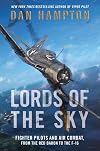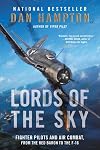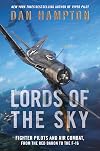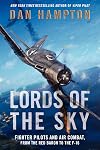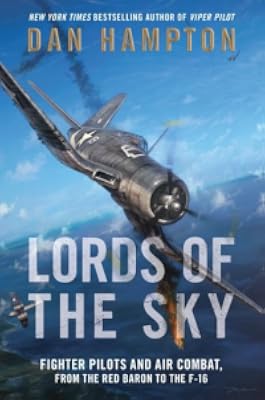
Lords of the Sky: Fighter Pilots and Air Combat, from the Red Baron to the F-16
by Dan Hampton
On This Page
Description
By the USAF F-16 legend behind the bestselling memoir Viper Pilot, this is the first comprehensive history of fighter pilots and air combat-a unique, riveting look at the aces of the sky, their machines, their most daring missions, and the epic conflicts they shaped, from the trailblazing aviators of World War I to today's supersonic jets Lords of the Sky is a thrilling history of the fighter pilot, masterfully written by one of the most decorated aviators in American history. A twenty-year show more USAF veteran who flew more than 150 combat missions and received four Distinguished Flying Crosses, Lt. Colonel Dan Hampton draws on his singular firsthand knowledge, as well as groundbreaking research in aviation archives and rare personal interviews with little-known heroes, including veterans of World War II, Korea, and Vietnam. In a seamless, sweeping narrative, Lords of the Sky tells the extraordinary stories behind the most famous fighter planes and the brave and daring heroes who made them legend. In the Great War, aces such as Manfred von Richthofen ("The Red Baron"), Eddie Rickenbacker, and Roland Garros faced horrific survival rates and became romantic heroes. The Second World War saw the RAF locked in a struggle for the fate of civilization during the Battle of Britain; on the Eastern Front, the German Luftwaffe and Soviet Air Force grappled in some of the fiercest and bloodiest air battles in history. In the Pacific, Japanese pilots terrorized Asia, culminating in their attack on Pearl Harbor. American flyboys quickly became instrumental to the Allies' ultimate victory, ravaging the enemy's navy, providing life-saving air support for ground troops, escorting bombers, and dogfighting with Japanese Zeros and Nazi Messerschmitts. During the Cold War, conflicts in Korea and Vietnam featured the dawn of the jet age, in which American pilots battled Soviet-made MiGs and increasingly sophisticated anti-aircraft weaponry. Hampton then draws on his own experience as an F-16 pilot who fought in the 1991 and 2003 wars against Iraq to bring to life the dangers and demands of today's modern fighter pilot. Here are the stories behind history's most iconic aircraft and the aviators who piloted them: from the Sopwith Camel and Fokker Triplane to the Mitsubishi Zero, Supermarine Spitfire, Nazi Bf 109, P-51 Mustang, Grumman Hellcat, F-4 Phantom, F-105 Thunderchief, F-16 Falcon, F/A-18 SuperHornet, and beyond. Here, too, are the Lafayette Escadrille, Flying Tigers, RAF Eagles, Wild Weasels, and other legendary units. Throughout this definitive history, Hampton clarifies the astonishing debt we owe to these daring Lords of the Sky who have ruled the air for more than a century. show lessTags
Recommendations



















Member Reviews
“Lords of the Sky” was my introduction to Dan Hampton. But now, as I write this review, I’m immersed in my sixth consecutive Dan Hampton book, “Disappearing Act.” I inhaled “The Flight,” “The Hunter Killers,” “Operation Vengeance,” and “Chasing the Demon” – one after the other – all in a row!
Hampton’s “Lords” span a wide range of aviators—from daring World War I fighter pilots without parachutes, sometimes dueling with pistols, hand grenades and even attempting to bring down their enemies with grappling-hooks, to Russian female aces, mercenary aviators, to F-4G and F-16 Wild Weasel pilots over Iraq, to today’s (err…yesterday’s) Hornet drivers.
When reading Dan Hampton, you’re not a passive show more observer—you’re in the fighter pilot’s cockpit. You “feel” the flimsiness of the 80-horsepower, canvas-covered World War I monoplane, its simple wired controls, the cold-soaked oily steel and wooden charging handles of the two 30-caliber machine guns mounted right in front of you, above the remarkably barren “instrument” panel. The open cockpit’s freezing drizzle and oil-tinged propeller blast becomes palpable.
Hampton’s meticulous attention to detail is captivating. His groundbreaking research – which includes pilots’ personal letters, logbooks, maps, personal interviews, and government documents and reports not just from the U.S. and our allies, but also from the archives of our former enemies – allows Hampton to incorporate the actual words and thoughts of individuals. But there’s more to his books than mere cover stories; Hampton skillfully connects his subjects to the broader global events of the period. These details, along with his vivid, tactile descriptions, resonate deeply. I feel smarter after each read. Hampton’s nonfiction history reads like a fast-paced novel.
Whenever possible, I review both the e-book and audiobook. Over 30% of the e-book is dedicated to “extras” not available to the audiobook listener including several aircraft drawings, 12 high quality maps, two excellent appendixes: Anatomy of a Dogfight and Anatomy of a Surface Attack in which Hampton breaks down the intricacies for the lay fighter pilot, photographs of the original 1931 Eyewitness Account of the Death of the Red Baron by Major A. E. Beavis of the Australian Staff Corps, highly detailed End Notes and Bibliography, and footnotes. Narrator John Prude does an excellent job having the perfect voice for this book.
In summary, all of Dan Hampton’s books are outstanding and highly recommended! show less
Hampton’s “Lords” span a wide range of aviators—from daring World War I fighter pilots without parachutes, sometimes dueling with pistols, hand grenades and even attempting to bring down their enemies with grappling-hooks, to Russian female aces, mercenary aviators, to F-4G and F-16 Wild Weasel pilots over Iraq, to today’s (err…yesterday’s) Hornet drivers.
When reading Dan Hampton, you’re not a passive show more observer—you’re in the fighter pilot’s cockpit. You “feel” the flimsiness of the 80-horsepower, canvas-covered World War I monoplane, its simple wired controls, the cold-soaked oily steel and wooden charging handles of the two 30-caliber machine guns mounted right in front of you, above the remarkably barren “instrument” panel. The open cockpit’s freezing drizzle and oil-tinged propeller blast becomes palpable.
Hampton’s meticulous attention to detail is captivating. His groundbreaking research – which includes pilots’ personal letters, logbooks, maps, personal interviews, and government documents and reports not just from the U.S. and our allies, but also from the archives of our former enemies – allows Hampton to incorporate the actual words and thoughts of individuals. But there’s more to his books than mere cover stories; Hampton skillfully connects his subjects to the broader global events of the period. These details, along with his vivid, tactile descriptions, resonate deeply. I feel smarter after each read. Hampton’s nonfiction history reads like a fast-paced novel.
Whenever possible, I review both the e-book and audiobook. Over 30% of the e-book is dedicated to “extras” not available to the audiobook listener including several aircraft drawings, 12 high quality maps, two excellent appendixes: Anatomy of a Dogfight and Anatomy of a Surface Attack in which Hampton breaks down the intricacies for the lay fighter pilot, photographs of the original 1931 Eyewitness Account of the Death of the Red Baron by Major A. E. Beavis of the Australian Staff Corps, highly detailed End Notes and Bibliography, and footnotes. Narrator John Prude does an excellent job having the perfect voice for this book.
In summary, all of Dan Hampton’s books are outstanding and highly recommended! show less
A hundred years ago wars were fought primarily on the battlefield, and "aeroplanes" were sort of a novelty and used mostly for intelligence purposes. Now, we see conflicts conducted almost entirely in the air with supersonic jets and heat-seeking or radar-guided missiles. This is an excellent and well-researched history of war in the air, focusing mainly on the fighter pilots and their role. Not every famous pilot or airplane is mentioned, but it is comprehensive enough. Hampton, who was a fighter pilot himself, is very familiar with the technical aspects of fighting in the air, and gives a surprising amount of detail on not only the 'why's' and the tactics but also on how it evolved over the years. In fact, I found his knowledge of show more history to be surprisingly good, and he speaks authoritatively and from personal experience about things such as the cockpit design of Russian MIGs. But there are plenty of stories of individuals who were prominent or important in one way or another as well, and the mix of stories with the technical detail provided a nice balance between the thrilling accounts and an understanding of the mechanics of fighting in the sky. He even provides short appendixes on "Anatomy of a Dogfight" and "Anatomy of a Surface Attack" (bombing) that briefly discuss some of the challenges.
As someone who can barely keep the different planes separate in my mind but nonetheless enjoys seeing them at air shows, my only quibble might be with his characterization of Richthofen (the Red Baron). I thought he was a little too dismissive of his accomplishments and leaned too much on the view of him as simply a cold-blooded hunter/killer, but that's just my view. Also, there's a lot of "fighter pilot dialogue" in the latter chapters, and it would have been nice to have an explanation about what some of the jargon meant - but it didn't detract from my enjoyment of the book. A fun and exciting read! (I received a free copy of the book from the GoodReads "FirstReads" program, and in return have provided an honest review.) show less
As someone who can barely keep the different planes separate in my mind but nonetheless enjoys seeing them at air shows, my only quibble might be with his characterization of Richthofen (the Red Baron). I thought he was a little too dismissive of his accomplishments and leaned too much on the view of him as simply a cold-blooded hunter/killer, but that's just my view. Also, there's a lot of "fighter pilot dialogue" in the latter chapters, and it would have been nice to have an explanation about what some of the jargon meant - but it didn't detract from my enjoyment of the book. A fun and exciting read! (I received a free copy of the book from the GoodReads "FirstReads" program, and in return have provided an honest review.) show less
Dan Hampton is a F-16 pilot and author, who offers an entertaining, if flawed look at the elite brotherhood of fighter pilots, starting from the First World War and moving through the 2003 Invasion of Iraq. The style intersperses novelist accounts of combat with historical sketches, and analysis of changes in aircraft and tactics.
The book starts well enough, with Roland Garros using an machine gun shooting through the armored propeller of his Morane-Saulnier scout to destroy a German scout plane. Soon, famous aces like Boelcke and Lanoe Hawker were dueling over the trenches, and planes began getting faster and more heavily armed. The first section, on the Great War and aerial mercenaries in the interwar era, is a delight, joyfully show more written and comprehensive. The basic qualities of the lords of the sky are laid out. Excellent flying skills, good gunnery, confidence and aggressiveness, and some qualities of leadership to train and command aerial armies.
But as Hampton gets closer to the present day, the quality declines. WW2 is the Battle of Britain, Midway, and the tales of Nazi super-ace Hans-Joachim Marseille and female Soviet ace Lilya Litvyak. Post-WW2, we have Korea, Vietnam, the Yom Kippur War, and then Desert Storm and Iraq II. Hampton gets lost in jargon, and doesn't clearly get across what air combat with guided missiles, electronic warfare, and a hostile integrated air defense environment is like.
And then there are the errors. The B-29 is not a "large jet", an elementary mistake. In the description of the forces on an airplane in flight, lift counteracts drag, and thrust counteract weight, which a basic force diagram shows is nonsense. While it's impossible to give a complete history of air combat in a single volume, at 623 pages, this book feels both too long, and also incomplete. show less
The book starts well enough, with Roland Garros using an machine gun shooting through the armored propeller of his Morane-Saulnier scout to destroy a German scout plane. Soon, famous aces like Boelcke and Lanoe Hawker were dueling over the trenches, and planes began getting faster and more heavily armed. The first section, on the Great War and aerial mercenaries in the interwar era, is a delight, joyfully show more written and comprehensive. The basic qualities of the lords of the sky are laid out. Excellent flying skills, good gunnery, confidence and aggressiveness, and some qualities of leadership to train and command aerial armies.
But as Hampton gets closer to the present day, the quality declines. WW2 is the Battle of Britain, Midway, and the tales of Nazi super-ace Hans-Joachim Marseille and female Soviet ace Lilya Litvyak. Post-WW2, we have Korea, Vietnam, the Yom Kippur War, and then Desert Storm and Iraq II. Hampton gets lost in jargon, and doesn't clearly get across what air combat with guided missiles, electronic warfare, and a hostile integrated air defense environment is like.
And then there are the errors. The B-29 is not a "large jet", an elementary mistake. In the description of the forces on an airplane in flight, lift counteracts drag, and thrust counteract weight, which a basic force diagram shows is nonsense. While it's impossible to give a complete history of air combat in a single volume, at 623 pages, this book feels both too long, and also incomplete. show less
A hundred years ago wars were fought primarily on the battlefield, and "aeroplanes" were sort of a novelty and used mostly for intelligence purposes. Now, we see conflicts conducted almost entirely in the air with supersonic jets and heat-seeking or radar-guided missiles. This is an excellent and well-researched history of war in the air, focusing mainly on the fighter pilots and their role. Not every famous pilot or airplane is mentioned, but it is comprehensive enough. Hampton, who was a fighter pilot himself, is very familiar with the technical aspects of fighting in the air, and gives a surprising amount of detail on not only the 'why's' and the tactics but also on how it evolved over the years. In fact, I found his knowledge of show more history to be surprisingly good, and he speaks authoritatively and from personal experience about things such as the cockpit design of Russian MIGs. But there are plenty of stories of individuals who were prominent or important in one way or another as well, and the mix of stories with the technical detail provided a nice balance between the thrilling accounts and an understanding of the mechanics of fighting in the sky. He even provides short appendixes on "Anatomy of a Dogfight" and "Anatomy of a Surface Attack" (bombing) that briefly discuss some of the challenges.
As someone who can barely keep the different planes separate in my mind but nonetheless enjoys seeing them at air shows, my only quibble might be with his characterization of Richthofen (the Red Baron). I thought he was a little too dismissive of his accomplishments and leaned too much on the view of him as simply a cold-blooded hunter/killer, but that's just my view. Also, there's a lot of "fighter pilot dialogue" in the latter chapters, and it would have been nice to have an explanation about what some of the jargon meant - but it didn't detract from my enjoyment of the book. A fun and exciting read! (I received a free copy of the book from the GoodReads "FirstReads" program, and in return have provided an honest review.) show less
As someone who can barely keep the different planes separate in my mind but nonetheless enjoys seeing them at air shows, my only quibble might be with his characterization of Richthofen (the Red Baron). I thought he was a little too dismissive of his accomplishments and leaned too much on the view of him as simply a cold-blooded hunter/killer, but that's just my view. Also, there's a lot of "fighter pilot dialogue" in the latter chapters, and it would have been nice to have an explanation about what some of the jargon meant - but it didn't detract from my enjoyment of the book. A fun and exciting read! (I received a free copy of the book from the GoodReads "FirstReads" program, and in return have provided an honest review.) show less
A hundred years ago wars were fought primarily on the battlefield, and "aeroplanes" were sort of a novelty and used mostly for intelligence purposes. Now, we see conflicts conducted almost entirely in the air with supersonic jets and heat-seeking or radar-guided missiles. This is an excellent and well-researched history of war in the air, focusing mainly on the fighter pilots and their role. Not every famous pilot or airplane is mentioned, but it is comprehensive enough. Hampton, who was a fighter pilot himself, is very familiar with the technical aspects of fighting in the air, and gives a surprising amount of detail on not only the 'why's' and the tactics but also on how it evolved over the years. In fact, I found his knowledge of show more history to be surprisingly good, and he speaks authoritatively and from personal experience about things such as the cockpit design of Russian MIGs. But there are plenty of stories of individuals who were prominent or important in one way or another as well, and the mix of stories with the technical detail provided a nice balance between the thrilling accounts and an understanding of the mechanics of fighting in the sky. He even provides short appendixes on "Anatomy of a Dogfight" and "Anatomy of a Surface Attack" (bombing) that briefly discuss some of the challenges.
As someone who can barely keep the different planes separate in my mind but nonetheless enjoys seeing them at air shows, my only quibble might be with his characterization of Richthofen (the Red Baron). I thought he was a little too dismissive of his accomplishments and leaned too much on the view of him as simply a cold-blooded hunter/killer, but that's just my view. Also, there's a lot of "fighter pilot dialogue" in the latter chapters, and it would have been nice to have an explanation about what some of the jargon meant - but it didn't detract from my enjoyment of the book. A fun and exciting read! (I received a free copy of the book from the GoodReads "FirstReads" program, and in return have provided an honest review.) show less
As someone who can barely keep the different planes separate in my mind but nonetheless enjoys seeing them at air shows, my only quibble might be with his characterization of Richthofen (the Red Baron). I thought he was a little too dismissive of his accomplishments and leaned too much on the view of him as simply a cold-blooded hunter/killer, but that's just my view. Also, there's a lot of "fighter pilot dialogue" in the latter chapters, and it would have been nice to have an explanation about what some of the jargon meant - but it didn't detract from my enjoyment of the book. A fun and exciting read! (I received a free copy of the book from the GoodReads "FirstReads" program, and in return have provided an honest review.) show less
I couldn't believe he started talking about how airplanes fly and wings work. Did he get paid by the word? This book is 19+ hours long and could meet the promise of it's title by eliminating fluffy background. It's a good reference for aviation enthusiasts and pilot/crew members, but then one gets bored by the interminable history lessons. A book about the history of fighter pilots mauled by a book about history. Sometimes, the fighter pilot is barely mentioned.
A good history book, not limited to fighter aircraft. It also records more than any average person would need to know about fighter, and other, aircraft. The author is very knowledgeable, writes clear and concise prose and has a great sense of history himself. You can sure hear the fighter pilot in him. My grandkids picked out this book for me, as a Christmas book. It was a good read!
Members
- Recently Added By
Author Information
11 Works 845 Members
Dan Hampton served for twenty years in the U.S. Air Force and flew 151 combat missions. For his service in the Iraq War, Kosovo conflict, and first Gulf War, he received four Distinguished Flying Crosses with Valor, a Purple Heart, eight Air Medals with Valor, and five Meritorious Service Medals. He retired as a Lieutenant Colonel in 2006. He has show more written several books including Viper Pilot and Lords of the Sky: Fighter Pilots and Air Combat, from the Red Baron to the F-16. (Bowker Author Biography) show less
Common Knowledge
- Important events
- World War I (1914 | 1918); World War II (1939 | 1945); Korean War (1950 | 1953)
Classifications
- Genres
- Nonfiction, History, General Nonfiction
- DDC/MDS
- 358.4 — Society, government, & culture Public administration & military science Air and other specialized forces and warfare; engineering and related services Air Forces
- LCC
- UG1242 .F5 .H3558 — Military Science Military engineering. Air forces Air forces. Air warfare Equipment and supplies
- BISAC
Statistics
- Members
- 180
- Popularity
- 182,659
- Reviews
- 10
- Rating
- (3.85)
- Languages
- English
- Media
- Paper, Audiobook, Ebook
- ISBNs
- 11
- UPCs
- 1
- ASINs
- 3