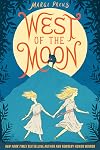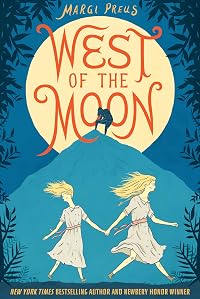
West of the Moon
by Margi Preus
On This Page
Description
In nineteenth-century Norway, fourteen-year-old Astri, whose aunt has sold her to a mean goatherder, dreams of joining her father in America.Tags
Recommendations






Member Reviews
Caught in the machinations of adults, in a folktale-like situation but without supernatural help from talking animals or magical gifts, Astri does what she must to survive. Not a squeaky-clean heroine but who can blame her. By far my favourite moment in the book involves such a situation. Hoping to save her dangerously ill sister from death on an immigrant ship, Astri strikes a bargain with a crone whom she believes to have witchy powers. She's willing to offer anything, and the old woman demands to be given her first-born child. Astri agrees immediately, thinking that's a long way off, and there may be a way to cheat on the bargain. But later in the voyage, the crone demands her help with a tricky bit of midwifery and after some show more manipulation, a breech baby is born into Astrid's hands. "Hand me the child," the old woman demands, and then, "The bargain is fulfilled." What?? That, she explains to Astrid, was your first born child, and during your life you will birth many more. It's such a perfect reversal of expectations.
The author provides a lot of back-of-the-book background about such things as health and medical matters in mid-19th-century Norway, sources for the various folk and fairy tales woven throughout the story, even a photograph of her own great-great-grandmother who came to America on just such a ship and pages from her diary. Plus an extensive bibliography. I appreciate that in historical fiction. show less
The author provides a lot of back-of-the-book background about such things as health and medical matters in mid-19th-century Norway, sources for the various folk and fairy tales woven throughout the story, even a photograph of her own great-great-grandmother who came to America on just such a ship and pages from her diary. Plus an extensive bibliography. I appreciate that in historical fiction. show less
A wonderful blend of fairy tale and history. Astri tells herself stories and tells us stories too, becoming a dauntless heroine who does terrible things to survive and yet gains our admiration for her spirit and her quick thinking, as any heroine might do. I love how the story ties into Margi Preus' family's history and I love the historical background that she gives us at the end. It's a book perfectly balanced between reality and fable, a triumph of writing, and weirdly amoral but extremely compassionate look at what it is to be human. I find children in general to be both amoral and compassionate, so it works for me.
I couldn't help but think about [a:Jo Walton|107170|Jo Walton|https://d.gr-assets.com/authors/1353809579p2/107170.jpg]'s [b:Among Others|8706185|Among Others|Jo Walton|https://d.gr-assets.com/books/1317792367s/8706185.jpg|6449955] while I was reading this. Another young girl coping with an unhappy childhood by dreaming too much about stories, another *L*iterary book more likely to appeal to writers, scholars, editors, librarians, instead of casual readers. In fact, as I think about it, I'm not sure either book would appeal to the subjects of the books (that is to say, I don't think Astri would enjoy reading *West of the Moon*).... (And note that the praises on the jacket are penned by authors, not professional critics with wide show more experience of children's lit.)
At least Walton recognized that her book was not for kids. Preus and her editor, it seems to me, were confused. Not only is there some YA subject matter here, not only is Astri 14 but depicted more like 17, but the whole tone of the book, the prereq. of being familiar with folktales, and the complex themes of good, evil, and pragmatic, are for a mature audience. If I were Preus's editor, I would have told her to make it an adult book, to spell out some bits less obviously, to have more detailed and believable other characters (especially the aunt & uncle), and to be gutsier. If it becomes a book like *The Book Thief* that bright children are reading, fine. But make it worthy of readers from 'tween to adult, not a half-assed watered-down attempt to market directly to kiddies. show less
At least Walton recognized that her book was not for kids. Preus and her editor, it seems to me, were confused. Not only is there some YA subject matter here, not only is Astri 14 but depicted more like 17, but the whole tone of the book, the prereq. of being familiar with folktales, and the complex themes of good, evil, and pragmatic, are for a mature audience. If I were Preus's editor, I would have told her to make it an adult book, to spell out some bits less obviously, to have more detailed and believable other characters (especially the aunt & uncle), and to be gutsier. If it becomes a book like *The Book Thief* that bright children are reading, fine. But make it worthy of readers from 'tween to adult, not a half-assed watered-down attempt to market directly to kiddies. show less
I really enjoyed this book. It's one I found on a book exchange shelf, and consider myself lucky to have done so. It's a wonderful blend of story, myth, and folk-lore, weaving the three elements together pretty seamlessly. But the best part? At the end of the book, is an author's note, explaining that the idea from the story, and various bits and bobs within, came from a diary kept by her great-great-grandmother. How cool is that? Preus includes more notes from the diary, a photo of her great-great-grands, as well as some sketches. There's also a section with some further information on elements in the story, a glossary, and bibliography. My bookish heart is happy.
From the publisher:
Astri is a young Norwegian girl desperate to join her show more father in America. After being separated from her sister and sold to a cruel goat farmer, Astri makes a daring escape. She quickly retrieves her little sister, and, armed with a troll treasure, a book of spells and curses, and a possibly magic hairbrush, they set off for America. With a mysterious companion in tow and the malevolent “goatman” in pursuit, the girls head over the Norwegian mountains, through field and forest, and in and out of folktales and dreams as they steadily make their way east of the sun and west of the moon. show less
From the publisher:
Astri is a young Norwegian girl desperate to join her show more father in America. After being separated from her sister and sold to a cruel goat farmer, Astri makes a daring escape. She quickly retrieves her little sister, and, armed with a troll treasure, a book of spells and curses, and a possibly magic hairbrush, they set off for America. With a mysterious companion in tow and the malevolent “goatman” in pursuit, the girls head over the Norwegian mountains, through field and forest, and in and out of folktales and dreams as they steadily make their way east of the sun and west of the moon. show less
In the old tales, a girl who is pure of heart can overcome obstacles and reach her goals with courage and hard work. In Astri's life, this has not proven to be the case. When she was a little child, she lived with her parents and little sister Greta, but now her mother is dead, her father is in America, and she and Greta are living with her aunt and uncle. When her aunt sells Astri to a smelly old goatherd who expects her to cook and clean for him now, and to marry him when she is a little older, Astri dreams of escaping the old man, finding her sister, and making her way to America, but she has no idea of the hardships in store for her when she sets her plan in motion. To get to safety, she is willing to lie, cheat, and steal . . . so, show more not very much like those pure-hearted fairy-tale maidens at all. Greta is still sweet and innocent, the kind of girl that everyone immediately loves, but pragmatic Astri can't afford to be so naive. Astri knows that there will be a price she has to pay to get herself and her sister safely to America -- but when the time comes, will she be able to pay it?
I'm really impressed at this book: the setting, the characterization, the plot, the use of fairy tales to highlight the theme -- all done right. Astri isn't always likable, but somehow you find yourself pulling for her all the same. Part of it is Astri's voice: the story is told from her perspective, with a hearty helping of snark and sarcasm. This book is also quite dark in places, but written so that readers at different ages will understand what's happening in ways that they can handle. This is one of the best children's books I've read this year. show less
I'm really impressed at this book: the setting, the characterization, the plot, the use of fairy tales to highlight the theme -- all done right. Astri isn't always likable, but somehow you find yourself pulling for her all the same. Part of it is Astri's voice: the story is told from her perspective, with a hearty helping of snark and sarcasm. This book is also quite dark in places, but written so that readers at different ages will understand what's happening in ways that they can handle. This is one of the best children's books I've read this year. show less
Poor Astri. She's a feisty Norwegian girl who can't catch a break. Her father has gone to America. Her mother has gone to heaven. She and her little sister have been sent to live with uncaring relatives who sell Astri to the horrible Goatman. Is it any wonder Astri tries to imagine that she's a heroine in a fairy tale?
Astri is nothing like typical fairy tale princess, though. She lies, she cheats, she steals. We're used to seeing essential goodness in characters like her, so it's interesting that she's no angel. You will not believe how she escapes from the Goatman! It's crazy.
This story has an old fashioned feel to it and (like a lot of old fairy tales) it has both a hopeful side and a dark side. Astri's reality is a combination of show more painful, gritty realism and fantastical legend.
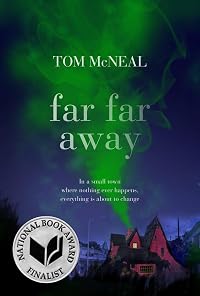
I thought the writing was splendid and the whole package seemed original and fresh to me (it's rare for me to read a children's book nowadays and not be immediately reminded of some other children's book, but this one has a flavor that stands out--if I had to compare it to something I'd probably say [b:Far Far Away|16030663|Far Far Away|Tom McNeal|https://d.gr-assets.com/books/1366106300s/16030663.jpg|21800322] or maybe [b:Pipi Longstocking|19302|Pippi Longstocking|Astrid Lindgren|https://d.gr-assets.com/books/1388180714s/19302.jpg|2056462] meets [b:Out of the Dust|25346|Out of the Dust|Karen Hesse|https://d.gr-assets.com/books/1328867076s/25346.jpg|808243]).
My only criticism is that I was confused by the dream sequence at the end of the book. Maybe if I just read it over again it would be clearer to me, but I felt thrown off by it, like the rules of the story suddenly shifted and I was thrown off balance as a reader.
This will certainly be a challenging read for ages 9-11 because of the style and tone of the story. There are definitely parts that feel a little PG-13, e.g.when the Goatman says he's going to marry Astri and take her to his bed and then she cuts his fingers off and later watches him die from the wound . Still, this feels like it has a good shot come awards season. It feels Distinguished. show less
Astri is nothing like typical fairy tale princess, though. She lies, she cheats, she steals. We're used to seeing essential goodness in characters like her, so it's interesting that she's no angel. You will not believe how she escapes from the Goatman! It's crazy.
This story has an old fashioned feel to it and (like a lot of old fairy tales) it has both a hopeful side and a dark side. Astri's reality is a combination of show more painful, gritty realism and fantastical legend.
I thought the writing was splendid and the whole package seemed original and fresh to me (it's rare for me to read a children's book nowadays and not be immediately reminded of some other children's book, but this one has a flavor that stands out--if I had to compare it to something I'd probably say [b:Far Far Away|16030663|Far Far Away|Tom McNeal|https://d.gr-assets.com/books/1366106300s/16030663.jpg|21800322] or maybe [b:Pipi Longstocking|19302|Pippi Longstocking|Astrid Lindgren|https://d.gr-assets.com/books/1388180714s/19302.jpg|2056462] meets [b:Out of the Dust|25346|Out of the Dust|Karen Hesse|https://d.gr-assets.com/books/1328867076s/25346.jpg|808243]).
My only criticism is that I was confused by the dream sequence at the end of the book. Maybe if I just read it over again it would be clearer to me, but I felt thrown off by it, like the rules of the story suddenly shifted and I was thrown off balance as a reader.
This will certainly be a challenging read for ages 9-11 because of the style and tone of the story. There are definitely parts that feel a little PG-13, e.g.
In Norway in the middle of the 1800s, Astri and her little sister Greta live with their aunt and uncle because their father has emigrated to America. Aunt is a greedy woman who ends up selling Astri as a milkmaid to the evil goatman. In his storage shed, she discovers a girl her age who doesn’t speak, but who spins beautiful yarn.
Astri, who is all spit and vinegar, is bent on escape. Her plan is to free Spinning Girl, then go back and fetch Greta from Aunt and Uncle, then get them both on a ship bound for America. But their lack of money and the goatman being right on their heels aren’t the only things working against them.
The folktales of Norway are woven throughout Astri’s story – she constantly compares her situation to that show more of a tale she’s heard, and there are cool moments in the book when you’re not quite sure what’s real and what’s imagined. If you get excited about the wonder and magic of stories – or if you like reading about a girl who sticks up for herself – try this latest book by Margi Preus.
Grownup portion of review:
Watch out for a fleeting scene in which the goatman misinterprets Astri's proximity as a sexual advance and makes an attempt to roll with that. show less
Astri, who is all spit and vinegar, is bent on escape. Her plan is to free Spinning Girl, then go back and fetch Greta from Aunt and Uncle, then get them both on a ship bound for America. But their lack of money and the goatman being right on their heels aren’t the only things working against them.
The folktales of Norway are woven throughout Astri’s story – she constantly compares her situation to that show more of a tale she’s heard, and there are cool moments in the book when you’re not quite sure what’s real and what’s imagined. If you get excited about the wonder and magic of stories – or if you like reading about a girl who sticks up for herself – try this latest book by Margi Preus.
Grownup portion of review:
Watch out for a fleeting scene in which the goatman misinterprets Astri's proximity as a sexual advance and makes an attempt to roll with that. show less
Members
- Recently Added By
Lists

Historical fiction -- children's/young adult fiction
39 works; 3 members
Author Information

18 Works 2,671 Members
Awards and Honors
Awards
Distinctions
Notable Lists
Common Knowledge
- Important places
- Norway
Classifications
Statistics
- Members
- 361
- Popularity
- 87,749
- Reviews
- 24
- Rating
- (3.76)
- Languages
- Chinese, English
- Media
- Paper, Audiobook, Ebook
- ISBNs
- 11
- ASINs
- 2