On This Page
Description
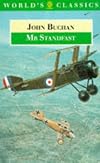
World War I espionage thriller meets modern-day morality tale in Mr. Standfast, the third of five Richard Hannay novels written by acclaimed storyteller John Buchan. Follow Hannay's exploits as a soldier and a spy in a fast-paced book that echoes may of the themes and motifs of John Bunyan's The Pilgrim's Progress..
Tags
Recommendations















Member Reviews
The third Richard Hannay adventure. Although in many ways a pacy WWI spy thriller there's some interesting subtleties at work here. Although the villain (returned from the 39 Steps) is pure evil there is plenty of scope for different types of good to stand in contrast to Hannay's bluff and somewhat unsophisticated patriotism. There's a fascinating portrait of an artistic suburb and then of the union world of Aberdeen where Hannay goes undercover to tease out the spy ring that is hiding amongst pacifists and unionists, and Hannay is surprised to find how much honesty and strength of character he finds in what he thought were unlikely places. The other surprise (and it surprises Hannay himself) is the introduction of Mary Lamington who's show more role goes way beyond the cliched "love interest", she's an active participant and is given her own space and agency and the admiration of the men who she works with - "she can't scare and she can't soil". We are also reintroduced to the scout Peter Pienaar, American John Blenkiron, and meet Sir Archie Roylance for the first time. For the non military types some of the battle descriptions in the final chapters are heavy going but I defy anyone not to be moved to tears by the ending. Lots of fun with some serious stuff underlying it - there's some casual racism from some characters which makes one catch one's breath (and which can only be partly attributed to the "period") but still worth a read. show less
Where adventure, literature and excellence converge, there resides John Buchan.
Where high adventure, excitement, drama and enough plot to fill a library not just a novel and more suspenseful twists than an Alpine goat track converge, there resides ‘Mr Standfast’.
‘Thrilling’ may sound like the sort of description used only by repressed housewives describing the cycling style of the village’s new vicar, or a description used by a liberated vicar about his own cycling style, but it’s apt here. This is genuinely gripping, page-turning stuff with an immensely likeable hero facing physical peril and moral danger in equal measure. And it is fascinating to read about those who are brave to the point of recklessness physically show more wrestling not just German spies and hefty Glaswegians, but their own concept of right and wrong. The middle of a World War is a dangerous place to start questioning loyalty, we learn.
Richard Hannay, soldier, sometimes-spy, adventurer and the alter-ego not just of the writer but also, in this case and more than somewhat wishfully, the reader, is recalled from front line, or rather the front trench, duty during the dark days of World war One. Hannay has been doing decent service being brave and trying to give the Germans a bloody nose, a task somewhat complicated by their being armed with machine-guns and the like. It’s time for Hannay to slip out of his uniform, and take up again the flat cap and tweeds of a spy.
Hannay faces an array of perils in ‘Mr Standfast’, in rough order of danger they are; the German Army, German Spies, Pacifists, Glaswegians, The Proletariat Mob, Highlanders, Disgraced German Aristocrat Spymasters Driven Mad By Being Disgraced And German And Aristocratic and, most dangerous and unpredictable of all, ladies.
Being a pacifist during World War One was, presumably, no picnic, especially when being so in a quaint English village. England’s spymaster and Hannay’s chum rightly suspects that there’s more to this than simply some rum yellow types. For an Englishman to be a pacifist in wartime suggests some pretty dirty work, and if we can rule out the normal causes such as being a girl, being an intellectual, being a poet or something in the water, then manipulation by a dastardly foreign power is a safe bet. Call for Hannay!
Tackling pacifists (literally, in Hannay’s case) is an interesting choice for Buchan. It would be easy to paint them as misguided fools who just don’t appreciate what fun war is, and are probably vegetarians too, but that’s not the case here. There is some mild idiocy, but no more than one would find in any movement. The key point is Buchan’s take on pacifism in one particular case, when Hannay suggests that it may stem from a lack of patriotism. This proves to be a mistake, as Hannay quickly and painfully learns that just because somebody describes themselves as a pacifist, they rather take exception to having their honour impugned and are not, apparently, opposed to physical violence on a personal level.
There is, actually, a reasonable amount of scrapping in the book. Hannay sets to not just with foreigners, as one would hope and frankly expect, but also with Brits, including a pretty impressive brawl with a soldier on leave.
Fisticuffs are by no means the only action. There are wild dashes through the night by automobile, there is a chase involving an aeroplane, there’s even a submarine. That’s before we get to the creepy abandoned chateau and the mountaineering.
Hannay may be a South African mining engineer by background, but he’s a soldier by vocation, a reluctant spy and, throughout, a gentleman in his nature. Make no mistake, the Bosche are the Bosche and the enemy who must be vanquished, but Hannay is a very human hero and concludes the novel a sympathetic and even sensitive soldier. Rest assured though, that the villain is no gentleman, that is to say, he’s an absolute bastard. Any less would be unacceptable.
Themes of patriotism, national pride, personal honour and what is morally right meet high adventure and a hero who is the epitome of grit, determination and courage in the morally compromised world of spying. Compelling. show less
Where high adventure, excitement, drama and enough plot to fill a library not just a novel and more suspenseful twists than an Alpine goat track converge, there resides ‘Mr Standfast’.
‘Thrilling’ may sound like the sort of description used only by repressed housewives describing the cycling style of the village’s new vicar, or a description used by a liberated vicar about his own cycling style, but it’s apt here. This is genuinely gripping, page-turning stuff with an immensely likeable hero facing physical peril and moral danger in equal measure. And it is fascinating to read about those who are brave to the point of recklessness physically show more wrestling not just German spies and hefty Glaswegians, but their own concept of right and wrong. The middle of a World War is a dangerous place to start questioning loyalty, we learn.
Richard Hannay, soldier, sometimes-spy, adventurer and the alter-ego not just of the writer but also, in this case and more than somewhat wishfully, the reader, is recalled from front line, or rather the front trench, duty during the dark days of World war One. Hannay has been doing decent service being brave and trying to give the Germans a bloody nose, a task somewhat complicated by their being armed with machine-guns and the like. It’s time for Hannay to slip out of his uniform, and take up again the flat cap and tweeds of a spy.
Hannay faces an array of perils in ‘Mr Standfast’, in rough order of danger they are; the German Army, German Spies, Pacifists, Glaswegians, The Proletariat Mob, Highlanders, Disgraced German Aristocrat Spymasters Driven Mad By Being Disgraced And German And Aristocratic and, most dangerous and unpredictable of all, ladies.
Being a pacifist during World War One was, presumably, no picnic, especially when being so in a quaint English village. England’s spymaster and Hannay’s chum rightly suspects that there’s more to this than simply some rum yellow types. For an Englishman to be a pacifist in wartime suggests some pretty dirty work, and if we can rule out the normal causes such as being a girl, being an intellectual, being a poet or something in the water, then manipulation by a dastardly foreign power is a safe bet. Call for Hannay!
Tackling pacifists (literally, in Hannay’s case) is an interesting choice for Buchan. It would be easy to paint them as misguided fools who just don’t appreciate what fun war is, and are probably vegetarians too, but that’s not the case here. There is some mild idiocy, but no more than one would find in any movement. The key point is Buchan’s take on pacifism in one particular case, when Hannay suggests that it may stem from a lack of patriotism. This proves to be a mistake, as Hannay quickly and painfully learns that just because somebody describes themselves as a pacifist, they rather take exception to having their honour impugned and are not, apparently, opposed to physical violence on a personal level.
There is, actually, a reasonable amount of scrapping in the book. Hannay sets to not just with foreigners, as one would hope and frankly expect, but also with Brits, including a pretty impressive brawl with a soldier on leave.
Fisticuffs are by no means the only action. There are wild dashes through the night by automobile, there is a chase involving an aeroplane, there’s even a submarine. That’s before we get to the creepy abandoned chateau and the mountaineering.
Hannay may be a South African mining engineer by background, but he’s a soldier by vocation, a reluctant spy and, throughout, a gentleman in his nature. Make no mistake, the Bosche are the Bosche and the enemy who must be vanquished, but Hannay is a very human hero and concludes the novel a sympathetic and even sensitive soldier. Rest assured though, that the villain is no gentleman, that is to say, he’s an absolute bastard. Any less would be unacceptable.
Themes of patriotism, national pride, personal honour and what is morally right meet high adventure and a hero who is the epitome of grit, determination and courage in the morally compromised world of spying. Compelling. show less
Richard Hannay, now a brigadier general, is once again called from the front lines of World War I for a more dangerous mission. Hannay must track down an enemy spy by going undercover as a pacifist among an anti-war crowd. With the opposing forces locked in a stalemate, success for the Allies may hinge on the success of Hannay's mission. Hannay is aided by some old friends as well as some new ones, and they all share an interest in Bunyan's Pilgrim's Progress.
This book was published shortly after the war's conclusion. The battle scenes reflect the communication breakdowns I read about in Keegan's history of the war. I read The Thirty-Nine Steps after seeing the movie and I was surprised that there wasn't a female love interest in the show more book. After reading the first two Hannay novels, I was equally surprised when a female love interest appeared in this one. Recommended for espionage or adventure readers who are willing to overlook occasional expressions of class and racial attitudes typical of the era. show less
This book was published shortly after the war's conclusion. The battle scenes reflect the communication breakdowns I read about in Keegan's history of the war. I read The Thirty-Nine Steps after seeing the movie and I was surprised that there wasn't a female love interest in the show more book. After reading the first two Hannay novels, I was equally surprised when a female love interest appeared in this one. Recommended for espionage or adventure readers who are willing to overlook occasional expressions of class and racial attitudes typical of the era. show less
Buchan was an intelligent man and capable writer. This is a fast moving spy catcher classic thriller from 1919. The book stands as an adventure story told from a high Tory point of view, where a gentleman knew how to act with grace under pressure; not a fashionable standpoint nowadays among the poseurs.
Nevertheless, our hero Dick Hannay (alias Cornelius Brand in this novel) is a sympathetic liberal adventurer for his time.
The novel is high on action in varied locations, all described credibly it appears from Buchan's personal experience. Coincidence and damned good luck have to be overlooked in order that the plot progresses, but then how else does a thriller proceed?
It is still a classic of its genre, thanks to the top drawer writing show more skills of its author. show less
Nevertheless, our hero Dick Hannay (alias Cornelius Brand in this novel) is a sympathetic liberal adventurer for his time.
The novel is high on action in varied locations, all described credibly it appears from Buchan's personal experience. Coincidence and damned good luck have to be overlooked in order that the plot progresses, but then how else does a thriller proceed?
It is still a classic of its genre, thanks to the top drawer writing show more skills of its author. show less
Mr Standfast has probably not stood the test of time. After a while the scrapes Richard Hannay encounters seem repetitive, and the reappearance of the main characters in various far-flung places made me remember Brenda from Bristol's celebrated comment, "You;'re joking - not another one!" I fear I prefer a flawed hero. It is interesting that the love interest seems to evaporate at the end Hannay and Mary at a graveside, not disappearing into blissful domesticity in a storm of confetti, and I couldn't help suspecting that their future would involve PTSD. Clearly it is written in homage to John Milton's Pilgrim's Progress, and knowledge of that probably helps make sense of the book. The accounts of the use of military aircraft in WWI show more appealed to me, because a great-uncle had spent the war building aircraft somewhere near Paris (carving wooden propellors). show less
These Richard Hannay novels were really ahead of their time. This one was written in 1919 and took place during the first World War. This one wasn't quite as talky as the first two in the series, but I still drifted off occasionally when the characters talked too much for my taste. But it did have a lot of action to counter that, both on the front as behind the scenes as Hannay continues to spy on the Boche. The characters aren't overly fleshed out, but they are still compelling and the story is a bit of a banger. I really enjoyed the mountaineering scene and found it very evocative.
Confused between being a war story and an adventure story, Mr Standfast lacks the compelling plot and page-turning suspense that characterised the first two Hannay books.
Members
- Recently Added By
Lists

BBC's 100 Novels That Shaped Our World
100 works; 22 members

Literature of Honor for Boys
91 works; 3 members

Books mentioned in Julian Symons’ Bloody Murder
438 works; 6 members
Talk Discussions
Past Discussions
The Will You Join Me Reading-experiment: Mr. Standfast by John Buchan in 75 Books Challenge for 2014 (June 2014)
Author Information

280+ Works 17,557 Members
John Buchan was born in Perth on 26th August, 1875. Educated at Glasgow University and Brasenose College, Oxford, in 1898 Buchan won the Newdigate Prize for poetry. Although trained as a lawyer, Buchan became private secretary to Lord Alfred Milner, high commissioner for South Africa. In 1903 he returned to England where he became a director of show more the publishing company, Thomas Nelson & Sons. In 1910 Buchan had his first novel, Prester John, published. In July 1914, Blackwood's Magazine began serializing Buchan's The Thirty-Nine Steps. With Britain on the verge of war, the nation was obsessed with German spy fever and its subject matter made it an immediate success. When it was published in book form, it sold over 25,000 copies in three months. Charles Masterman, the journalist, was appointed head of the government's War Propaganda Bureau. Masterman recruited Buchan and asked him to organise the publication of a history of the war in the form of a monthly magazine. Published by his own company, the first installment of the Nelson's History of the War appeared in February, 1915. A further twenty-three appeared at regular intervals throughout the war. In the spring of 1915, Buchan agreed to become one of the five journalists attached to the British Army. He was given responsibility for providing articles for The Times and the Daily News. In June 1916, Buchan was recruited by the British Army to draft communiqués for Sir Douglas Haig and other members of the General Headquarters Staff. Given the rank of Second Lieutenant in the Intelligence Corps, Buchan was also provided with the documents needed to write the Nelson's History of the War. Buchan's History of the War provided the public with a completely false impression of what was going on the Western Front. Buchan also wrote a series of propoganda pamphlets published by Oxford University Press. In February, 1917, the government established a Department of Information. Given the rank Lieutenant Colonel, Buchan was put in charge on the department on an annual salary of £1,000 a year. After the war Buchan continued to write adventures stories such as Huntingtower, The Three Hostages, and Witch Wood (1927). He also became involved in politics and in 1927 was elected Conservative MP for the Scottish Universities. Buchan held the seat until granted the title Baron Tweedsmuir in 1935. Buchan was president of the Scottish History Society from 1929 to 1932, and wrote biographies of Montrose and Sir Walter Scott. Buchan also served as governor-general of Canada from 1935 to 1937 and chancellor of Edinburgh University from 1937 to 1940. John Buchan died on 12th February, 1940. (Bowker Author Biography) show less
Some Editions
Series

Belongs to Publisher Series
Work Relationships
Common Knowledge
- Original publication date
- 1919
- People/Characters
- Richard Hannay; Peter Pienaar; John S. Blenkiron; Archie Roylance; Sir Walter Bullivant; Mary Lamington (show all 11); Geordie Hamilton; Macgillivray; Andrew Amos; Moxon Ivery; Lancelot Wake
- Important places
- Cotswolds, England, UK; Glasgow, Scotland, UK; Skye, Highland, Scotland, UK; Switzerland; London, England, UK
- Important events
- World War I
- First words
- I spent one third of my journey looking out of the window of a first-class carriage, the next in a local motor-car following the course of a trout stream in a shallow valley, and the last tramping over a ridge of down and thr... (show all)ough great beech woods to my quarters for the night.
- Last words
- (Click to show. Warning: May contain spoilers.)So he passed over, and all the trumpets sounded for him on the other side.
Classifications
Statistics
- Members
- 725
- Popularity
- 39,080
- Reviews
- 15
- Rating
- (3.69)
- Languages
- English, French, German
- Media
- Paper, Audiobook, Ebook
- ISBNs
- 121
- ASINs
- 47