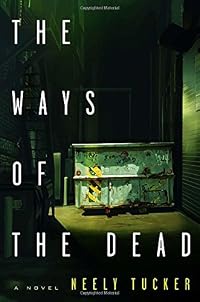
On This Page
Description
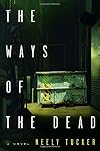
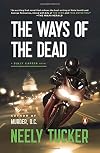
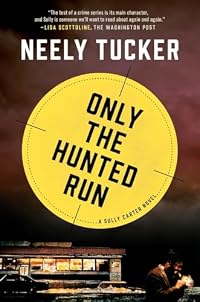
"When the teenage daughter of a powerful Washington, D.C., judge is found dead, three local black kids are arrested for her murder--but reporter Sully Carter suspects there's more to the case. From the city's grittiest backstreets to the elegant halls of power, wry yet wounded Sully pursues a string of cold cases, all the while fighting against pressure from government officials, police, suspicious locals, and his own bosses at the newspaper. Based on the real-life 1990s Princeton Place show more murders"-- show lessTags
Recommendations

















Member Reviews
This is a hard hitting, well written start to a new crime series. Investigative reporter Sully, is battle scared in body and soul, he is the stereotypical type of the old school journalists, who believed that getting the right story is all that matters. He does not smoke incessantly, but boy does he drink. The crime takes place in the underbelly of Washington D.C., not in the part that the tourists see, not the area around the capitol building. This is only a few blocks away but it is in an area where white is not the prevalent color, where crack is king and prostitutes are available for little money.
The investigation starts here after a young, white girl is killed. That it is a judges daughter, maybe the next supreme court appointee, show more makes this a very hot case. Sully, does not look for easy answers, he is in your face and questioning whomever he needs to, often in the past this has caused him problems. Of course when rocks are overturned often snakes slither out and so it goes......
I loved this character, one can tell that the author has made good use of his background in writing this novel. The atmosphere is pervasive, the writing amazing. From the beginning I knew I was in good hands with this author and that this is his first novel is unbelievable. So glad this will be a series and can't wait for the next one. show less
The investigation starts here after a young, white girl is killed. That it is a judges daughter, maybe the next supreme court appointee, show more makes this a very hot case. Sully, does not look for easy answers, he is in your face and questioning whomever he needs to, often in the past this has caused him problems. Of course when rocks are overturned often snakes slither out and so it goes......
I loved this character, one can tell that the author has made good use of his background in writing this novel. The atmosphere is pervasive, the writing amazing. From the beginning I knew I was in good hands with this author and that this is his first novel is unbelievable. So glad this will be a series and can't wait for the next one. show less
Author Neely Tucker is a staff writer for "The Washington Post," and was the paper’s D.C. Superior Court reporter when Darryl Donnell Turner was indicted for murders committed in the 1990’s in a two-block area along Princeton Place in Washington, D.C. The case stayed in his mind, and he decided to write a novel - this one - based on what happened.
The reporter in the novel, Sullivan “Sully” Carter, is, like the author, also a former war correspondent, but one who struggles with PTSD and alcoholism after traumatic experiences in Bosnia that left him scarred both physically and emotionally. Now he works a crime beat that he considers much safer, if discouraging at times:
"You never stopped moving. That was the thing. You just kept show more pushing, driving, asking, sticking your nose in people’s faces, taking the shit, the insults, fighting back the depression and the sense of hopelessness and then, out of the void, sometimes somebody told you something.”
When a wealthy and connected young white girl, Sarah Reese, gets killed in the blighted area in which she takes dance lessons, other reporters are convinced the murder of fifteen-year-old was related to her having been the daughter of the chief judge of the federal judge and putative next Supreme Court nominee. However, Sully isn’t so sure. It happened in the same small geographical area as recent crimes against some other women, who, however, were residents and thus much lower on the socioeconomic scale. But the police never found the fate of the other women are worth investigating. As one neighborhood denizen explains to Sully:
"‘That Hispanic girl, she got killed last year. [A black girl] went missing? I didn’t read nothing ‘bout that in the newspaper.’ He kept going, white girl gets it, lookit the TV cameras, white girl gets it, lookit the papers…”
To help him figure out what happened to the girls of Princeton Place, Sully joins forces with Sly Hastings, the informal “boss” or warlord of the street’s Park View neighborhood. Sly doesn’t like anything going on in his turf about which he doesn’t know or control, so he seems interested in helping Sully figure out who committed the crime(s). In any event he is the best source for intel on the street. Sully doesn’t fear guys like Sly - he “didn’t even have a machete.” In Sully’s experience, there is much worse in the world, or so he thinks.
Discussion: Tucker’s writing draws obvious comparisons to his fellow D.C. crime writer George Pelacanos. Tucker provides enough detail to make you appreciate his familiarity with the area, but the location details don’t dominate the story like they do in the Pelacanos books. The work of Pelacanos is also a bit more situated in the underside of D.C. life, whereas Tucker’s focus is on newspeople who cover that underside. Nevertheless, this book (dedicated to Elmore Leonard) has its share of noir elements and the dialogue is a good mix of insider jargon, cynical shorthand, and gritty realism.
Tucker has an interest in exposing the very interesting and stark contrast between the class and race divides in D.C., evident even in his telling description of the blatant differences between the federal courthouse and the local bench. Most tourists are unfamiliar with the large part of D.C. that is not in the immediate area of the gleaming white monuments, pink cherry blossoms, and chichi offices of law firms and lobbyists of the downtown area. The city makes a concerted effort to keep hidden the reality of the gangs, poverty and crack houses of certain areas like the 4th, 7th, and 8th Districts. (An anonymous American official in Kenya was quoted in the papers claiming that some towns in Kenya are safer than some neighborhoods in Anacostia in D.C.).
In any event, the power, money, and press attention in the city tends to concentrate on the federal - rather than local areas, and many crimes - especially when the victims are poor and black, just get ignored. (Tucker reported that at the time of the Princeton Place crimes - from 1984 to 1994, at least 1,800 people ages 15 to 44 died in the city under circumstances that “were not established” . . .) Thus the situation encourages corruption, cynicism, prejudice, and despair.
He also has plenty to say, through his characters, about the way the D.C. police force is run. Neely goes into detail, explaining just why and how bad decision-making and poor administration have resulted in “two out of three killers in the city . . . literally getting away with murder….”
Evaluation: Good dialogue, pacing, and an interesting plot with unexpected twists allow astute socioeconomic commentary to slip seamlessly into the narrative. Fans of hard-boiled crime fiction, especially those who like D.C. settings, will welcome the turn of this talented reporter to the genre. In spite of some of the depressing themes of the book, you come away feeling like you had a good read. show less
The reporter in the novel, Sullivan “Sully” Carter, is, like the author, also a former war correspondent, but one who struggles with PTSD and alcoholism after traumatic experiences in Bosnia that left him scarred both physically and emotionally. Now he works a crime beat that he considers much safer, if discouraging at times:
"You never stopped moving. That was the thing. You just kept show more pushing, driving, asking, sticking your nose in people’s faces, taking the shit, the insults, fighting back the depression and the sense of hopelessness and then, out of the void, sometimes somebody told you something.”
When a wealthy and connected young white girl, Sarah Reese, gets killed in the blighted area in which she takes dance lessons, other reporters are convinced the murder of fifteen-year-old was related to her having been the daughter of the chief judge of the federal judge and putative next Supreme Court nominee. However, Sully isn’t so sure. It happened in the same small geographical area as recent crimes against some other women, who, however, were residents and thus much lower on the socioeconomic scale. But the police never found the fate of the other women are worth investigating. As one neighborhood denizen explains to Sully:
"‘That Hispanic girl, she got killed last year. [A black girl] went missing? I didn’t read nothing ‘bout that in the newspaper.’ He kept going, white girl gets it, lookit the TV cameras, white girl gets it, lookit the papers…”
To help him figure out what happened to the girls of Princeton Place, Sully joins forces with Sly Hastings, the informal “boss” or warlord of the street’s Park View neighborhood. Sly doesn’t like anything going on in his turf about which he doesn’t know or control, so he seems interested in helping Sully figure out who committed the crime(s). In any event he is the best source for intel on the street. Sully doesn’t fear guys like Sly - he “didn’t even have a machete.” In Sully’s experience, there is much worse in the world, or so he thinks.
Discussion: Tucker’s writing draws obvious comparisons to his fellow D.C. crime writer George Pelacanos. Tucker provides enough detail to make you appreciate his familiarity with the area, but the location details don’t dominate the story like they do in the Pelacanos books. The work of Pelacanos is also a bit more situated in the underside of D.C. life, whereas Tucker’s focus is on newspeople who cover that underside. Nevertheless, this book (dedicated to Elmore Leonard) has its share of noir elements and the dialogue is a good mix of insider jargon, cynical shorthand, and gritty realism.
Tucker has an interest in exposing the very interesting and stark contrast between the class and race divides in D.C., evident even in his telling description of the blatant differences between the federal courthouse and the local bench. Most tourists are unfamiliar with the large part of D.C. that is not in the immediate area of the gleaming white monuments, pink cherry blossoms, and chichi offices of law firms and lobbyists of the downtown area. The city makes a concerted effort to keep hidden the reality of the gangs, poverty and crack houses of certain areas like the 4th, 7th, and 8th Districts. (An anonymous American official in Kenya was quoted in the papers claiming that some towns in Kenya are safer than some neighborhoods in Anacostia in D.C.).
In any event, the power, money, and press attention in the city tends to concentrate on the federal - rather than local areas, and many crimes - especially when the victims are poor and black, just get ignored. (Tucker reported that at the time of the Princeton Place crimes - from 1984 to 1994, at least 1,800 people ages 15 to 44 died in the city under circumstances that “were not established” . . .) Thus the situation encourages corruption, cynicism, prejudice, and despair.
He also has plenty to say, through his characters, about the way the D.C. police force is run. Neely goes into detail, explaining just why and how bad decision-making and poor administration have resulted in “two out of three killers in the city . . . literally getting away with murder….”
Evaluation: Good dialogue, pacing, and an interesting plot with unexpected twists allow astute socioeconomic commentary to slip seamlessly into the narrative. Fans of hard-boiled crime fiction, especially those who like D.C. settings, will welcome the turn of this talented reporter to the genre. In spite of some of the depressing themes of the book, you come away feeling like you had a good read. show less
It's no secret that crime novels and thrillers are my favourite type of book to read. I'm always on the lookout for new authors in these genres . And it's always a good bet to see a blurb from one of my favourite authors. Such is the case with Neely Tucker's debut fiction novel The Ways of the Dead.
"If this is Tucker's first novel, I can't wait for what's coming next." - Michael Connelly
I love opening scenes that grab my attention right away and have me wondering what's next...
1999. Teenager Sarah Reese takes lessons from a celebrated dance instructor in Washington, DC. But the studio is on the wrong side of the tracks. And Sarah is in the wrong place at the wrong time.....
Sarah's case garners lots of attention as her father is the show more Chief Judge of the Federal Court. And it catches the eye of reporter Sullivan Carter as well. But Sully sees a bigger picture - there's more to this story. And no one seems to want him to uncover it....
The best protagonists for crime books are the walking wounded, the ones who buck authority, the ones who just can't let things be or let justice go unserved. Sully Carter fills the bill on every count. He's battling PTSD, alcohol and anger issues, his bosses and manages to step on toes everywhere he goes. He's also a confidant of the one of DC's crimelords. Flawed but driven.
Neely's dialogue is effortless and believable. The plotting was really, really good. Actual events in the 1990's were the inspiration behind the book. But Neely takes his novel in directions I didn't predict. (another big plus)
Neely's background is rich and wide and varied. His own experience as a journalist is evident in his writing. Neely's descriptions of time and place were vivid and I had strong mental images of the streets and back alleys of the neighbourhood.
The Ways of the Dead is gritty, grim and oh so good. I wholeheartedly agree with Michael Connelly's blurb - I too will be watching for the next book in this series. show less
"If this is Tucker's first novel, I can't wait for what's coming next." - Michael Connelly
I love opening scenes that grab my attention right away and have me wondering what's next...
1999. Teenager Sarah Reese takes lessons from a celebrated dance instructor in Washington, DC. But the studio is on the wrong side of the tracks. And Sarah is in the wrong place at the wrong time.....
Sarah's case garners lots of attention as her father is the show more Chief Judge of the Federal Court. And it catches the eye of reporter Sullivan Carter as well. But Sully sees a bigger picture - there's more to this story. And no one seems to want him to uncover it....
The best protagonists for crime books are the walking wounded, the ones who buck authority, the ones who just can't let things be or let justice go unserved. Sully Carter fills the bill on every count. He's battling PTSD, alcohol and anger issues, his bosses and manages to step on toes everywhere he goes. He's also a confidant of the one of DC's crimelords. Flawed but driven.
Neely's dialogue is effortless and believable. The plotting was really, really good. Actual events in the 1990's were the inspiration behind the book. But Neely takes his novel in directions I didn't predict. (another big plus)
Neely's background is rich and wide and varied. His own experience as a journalist is evident in his writing. Neely's descriptions of time and place were vivid and I had strong mental images of the streets and back alleys of the neighbourhood.
The Ways of the Dead is gritty, grim and oh so good. I wholeheartedly agree with Michael Connelly's blurb - I too will be watching for the next book in this series. show less
Neely Tucker is a man to watch. With his debut novel, he flies out of the gate like a bronco and never once looks back. To say this book is fast paced, would be an insult to face pacing. Sadly, it's almost TOO fast. Having been a journalist for so many years, I can only surmise that his talents are eeking into his book. When you're in the newspaper business, space is at a premium. When you're in the authoring business, you're free to roam far and wide. I only wish that Mr. Tucker had roamed a little wider, because this book was really, really good.
The characters - namely Sully and (the favorite) Sly - are so believable, I could see them clearly in my head from the first moment. Sly, the loveable criminal, is a perfect yang to Sully's show more yin. The interplay works, and works well.
If you're a fan of hard-boiled crime novels, then this one is for you. If you loved 'The Wire', then this one is a MUST.
Overall? A great read, with great structure, that went a little too fast. Really, that's my only complaint. I felt like there was more story to flesh out. But you know what? I have been talking with Mr. Tucker, and he let slip that a sequel is well along. Which is great - because I'm nowhere near ready to quit reading his work.
Well done! show less
The characters - namely Sully and (the favorite) Sly - are so believable, I could see them clearly in my head from the first moment. Sly, the loveable criminal, is a perfect yang to Sully's show more yin. The interplay works, and works well.
If you're a fan of hard-boiled crime novels, then this one is for you. If you loved 'The Wire', then this one is a MUST.
Overall? A great read, with great structure, that went a little too fast. Really, that's my only complaint. I felt like there was more story to flesh out. But you know what? I have been talking with Mr. Tucker, and he let slip that a sequel is well along. Which is great - because I'm nowhere near ready to quit reading his work.
Well done! show less
MAN! I did NOT expect that solution to the mystery. And I REALLY did not expect THAT ending to the book! I haven't been that far off in the solution of a who-done-it since reading Agatha Christie and she always managed to throw you because she never gave you all the clues. In this book, all the clues are there, they are just masked by what your brain says is meant. You miss them because of your mind set and it's assumptions. Good job, Tucker. I think I'll try your next book.
When the daughter of a powerful Washington D.C. judge is found murdered in a rough neighborhood, newspaper reporter Sully Carter attempts to build a broader connection between her death and the disappearance of several local women.
From the first few pages, I was drawn in by the quick, gritty dialogue that reminded me of The Wire and wished I had read this in time to include it with my recommendations for fans of the show. As was the case with That Night, crime fiction is still a little outside my wheelhouse, but Tucker seems to break through common tropes by using a journalist as his protagonist and building smart social commentary into his story. I found myself demanding more than the single chapter that beautifully detailed Sully’s show more heartbreaking experience during the Bosnian War, which is just a sign of my love for more literary fiction, but was easily wrapped up in the pace of the novel through to the end.
More at rivercityreading.com show less
From the first few pages, I was drawn in by the quick, gritty dialogue that reminded me of The Wire and wished I had read this in time to include it with my recommendations for fans of the show. As was the case with That Night, crime fiction is still a little outside my wheelhouse, but Tucker seems to break through common tropes by using a journalist as his protagonist and building smart social commentary into his story. I found myself demanding more than the single chapter that beautifully detailed Sully’s show more heartbreaking experience during the Bosnian War, which is just a sign of my love for more literary fiction, but was easily wrapped up in the pace of the novel through to the end.
More at rivercityreading.com show less
Sully Carter is a survivor and a hard-hitting investigative reporter. When the daughter of a powerful judge is found dead, Sully goes deep into the dirt to dig out the details. Having an “in” in the hood is a help, but he still must connect the dots. When it appears that this murder might be connected to earlier murders, Sully keeps probing. He irritates his boss, his girl, the judge, the warlord of the hood, and others, but he soldiers on. He is his own worst enemy, drinking too much and pushing the envelope. Author Neely Tucker has done an admirable job in creating this character. You may not describe Sully as likable, but when the chips are down, you’d want him in your corner. This mystery is masterfully well-written, show more suspenseful to the very end. show less
Members
- Recently Added By
Author Information

Awards and Honors
Series

Common Knowledge
- Canonical title
- The Ways of the Dead
- Original publication date
- 2014
- People/Characters
- Sullivan 'Sully' Carter; Eva Harris; Sly Hastings; Sarah Reese; David Reese; Melissa Baird (show all 8); Lorena Bradford; Doyle Goodwin
- Important places
- Washington, D.C., USA
Classifications
Statistics
- Members
- 118
- Popularity
- 274,771
- Reviews
- 13
- Rating
- (3.93)
- Languages
- English
- Media
- Paper, Audiobook, Ebook
- ISBNs
- 9
- ASINs
- 4