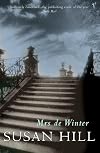
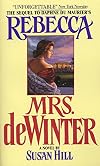
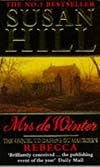
Mrs. de Winter
by Susan Hill
On This Page
Description
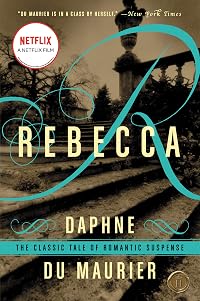
Rebeccawas Daphne du Maurier's most famous and best-loved novel. But what happened next? Married to the sophisticated, wordly-wise Maxim, the second Mrs de Winter's life should be happy and fulfilled. But the vengeful ghost of Rebecca, Maxim's first wife, continues to cast its long shadow over them. Back in England after an absence of over ten years, it seems as if happiness will at last be theirs. But the de Winters still have to reckon with two hate-consumed figures they once knew - both show more of whom have very long memories... show lessTags
Recommendations

















Member Reviews
The narrator frustrated me so much when I read du Maurier's Rebecca that I picked this book up in hopes that Susan Hill had taken the main character and transplanted a spine into her body. Unfortunately this is not the case. The second Mrs de Winter is still a pathetic, submissive little twit with no authority. She has no name, so let's just call her what she is: Wimpy Pushover de Winter.
I truly hope I never have to read another book with such a poor excuse for a woman as a main character. If Susan Hill had killed her off I would have been appeased; someone needs to put this creature out of her misery
I truly hope I never have to read another book with such a poor excuse for a woman as a main character. If Susan Hill had killed her off I would have been appeased; someone needs to put this creature out of her misery
Quite honestly, I'm not entirely sure whether this novel failed me as a reader or I simply failed to comprehend what the author trying to accomplish. Written as a sequel to Du Maurier's classic "Rebecca," Hill's novel does a creditable job of capturing the sense of darkness in it's precursor. Hill has also done a good job of capturing the tone and flavor of duMaurier's language. However, overall, the books is, for me, a fail. It was not compelling; not even interesting. I was, in fact, hard pressed to continue reading. The pacing of the book is glacially slow. I suspect that is purposeful--a part of Hill's effort to recreate the tone of du Maurier's book, but is ill-suited to the modern reader and that may be the explanation for why a show more writer as accomplished as Ms. Hill should have fallen so far short of the mark in this particular work. show less
Mrs de Winter
By Susan Hill
Sally Apollon
Overall Score: 6.5 out of 10
This book was a fairly easy read, I enjoyed the suspense, the foreboding sense that SOMETHING bad was going to happen…
One of the best features of the book, to me, was the author’s ability to create the sense of a place, the smells & sights, the little details that shape the memories & sharpen the senses, becoming forever associated with a particular time and place. Having traveled around Europe myself, including many of the places they visited, the French Riviera, Paris, Venice, Italy and having that same homesickness for England I could relate very acutely to the feeling described in the opening of the novel as she comes home to England. The way the night air is show more described with poetry, I found very satisfying.
Having said that I found myself to be frequently frustrated by the heroine’s timidity or hesitance. To be fair, in context of the fact that her husband was a murderer and they lived in fear of being “discovered”, also the fact that he had “rescued” her from a life of poverty (or servitude), it did have appropriate meaning. She was indebted to him on the one hand and afraid of him on the other. But it was frustrating to me, as I could not have kept my mouth shut to that extent that long. Also, while she outwardly kept quiet, to the reader she seemed like she was continually complaining. Most irritating to me was her inability to just enjoy her time abroad, as they traveled in luxury, I was so jealous (!) and all she seemed to do was whine & obsess about the past. Also, the terrible things that happened to them seemed to be blown out of all proportion to me. Possibly this was the case because they lived their life in a vacuum, with little interaction with others & almost total dependence on each other. The wreath, the visits from Mrs Danvers and Favell; I became increasingly exasperated with the way Mrs de Winter and ultimately even Maxim, dealt with these events—without setting boundaries or even trying to stand up to them and their hollow threats. But then, I suppose at the end of the day Maxim and the second Mrs de Winter, (whatever was her first name?) knew the threats to have basis in fact and did not feel able to fight them. I did find it hard to be sympathetic to Mrs de Winter, in the end. She did know all along of Maxim’s guilt and didn’t do much to defend him, when it mattered.
Interestingly, I really liked Beatrice (even though it was only in retrospect) and Bunty Butterly, I though there was a real authenticity and warmth to those characters and Giles’ grief was very astutely depicted. The author made good use of this to demonstrate how cut off from reality (& his own feelings), Maxim was.
I didn’t have a very good recollection of “Rebecca” having read it so long ago, but I do have a couple of unresolved questions that I suppose relate to the original plot more than this book. Why did Maxim kill his first wife anyway? Was is more to do with him or with her—was it a jealous rage relating to Favell? And why did he marry his second wife anyway? She clearly thought she was “second best” and he didn’t do much (except on her birthday) to prevent her from feeling this way.
I did find her fantasies of sons to be quite poignant, but again, I was frustrated by her relative inaction (could you please tell your husband?!) other than her visit to the doctor. I did very much enjoy her description of a hot summer’s day in London—now I KNOW what that’s like!
Finally, I found that the ending came all in a rush…I really wasn’t expecting an ending that bad, sad but I can’t say I was entirely sympathetic. show less
By Susan Hill
Sally Apollon
Overall Score: 6.5 out of 10
This book was a fairly easy read, I enjoyed the suspense, the foreboding sense that SOMETHING bad was going to happen…
One of the best features of the book, to me, was the author’s ability to create the sense of a place, the smells & sights, the little details that shape the memories & sharpen the senses, becoming forever associated with a particular time and place. Having traveled around Europe myself, including many of the places they visited, the French Riviera, Paris, Venice, Italy and having that same homesickness for England I could relate very acutely to the feeling described in the opening of the novel as she comes home to England. The way the night air is show more described with poetry, I found very satisfying.
Having said that I found myself to be frequently frustrated by the heroine’s timidity or hesitance. To be fair, in context of the fact that her husband was a murderer and they lived in fear of being “discovered”, also the fact that he had “rescued” her from a life of poverty (or servitude), it did have appropriate meaning. She was indebted to him on the one hand and afraid of him on the other. But it was frustrating to me, as I could not have kept my mouth shut to that extent that long. Also, while she outwardly kept quiet, to the reader she seemed like she was continually complaining. Most irritating to me was her inability to just enjoy her time abroad, as they traveled in luxury, I was so jealous (!) and all she seemed to do was whine & obsess about the past. Also, the terrible things that happened to them seemed to be blown out of all proportion to me. Possibly this was the case because they lived their life in a vacuum, with little interaction with others & almost total dependence on each other. The wreath, the visits from Mrs Danvers and Favell; I became increasingly exasperated with the way Mrs de Winter and ultimately even Maxim, dealt with these events—without setting boundaries or even trying to stand up to them and their hollow threats. But then, I suppose at the end of the day Maxim and the second Mrs de Winter, (whatever was her first name?) knew the threats to have basis in fact and did not feel able to fight them. I did find it hard to be sympathetic to Mrs de Winter, in the end. She did know all along of Maxim’s guilt and didn’t do much to defend him, when it mattered.
Interestingly, I really liked Beatrice (even though it was only in retrospect) and Bunty Butterly, I though there was a real authenticity and warmth to those characters and Giles’ grief was very astutely depicted. The author made good use of this to demonstrate how cut off from reality (& his own feelings), Maxim was.
I didn’t have a very good recollection of “Rebecca” having read it so long ago, but I do have a couple of unresolved questions that I suppose relate to the original plot more than this book. Why did Maxim kill his first wife anyway? Was is more to do with him or with her—was it a jealous rage relating to Favell? And why did he marry his second wife anyway? She clearly thought she was “second best” and he didn’t do much (except on her birthday) to prevent her from feeling this way.
I did find her fantasies of sons to be quite poignant, but again, I was frustrated by her relative inaction (could you please tell your husband?!) other than her visit to the doctor. I did very much enjoy her description of a hot summer’s day in London—now I KNOW what that’s like!
Finally, I found that the ending came all in a rush…I really wasn’t expecting an ending that bad, sad but I can’t say I was entirely sympathetic. show less
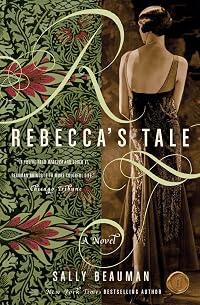
The 'sanctioned' follow-up to 'Rebecca'; not as fanciful as Sally Beauman's 'Rebecca's Tale', but lacking in spirit. Ten years after the fire at Manderley, Maxim and Mrs de Winter return from their self-imposed exile - and Maxim does have a reason to seek anonymity, after all - to start a new life in England. It's appropriate that the past should still haunt these two characters - and that the second Mrs de Winter should look at her husband and recall that he is a murderer - but this book is little more than a rehash of the original. Hill's style is a pale imitation of du Maurier's, bravely employing the same first person narrative without a sense of the character, and throwing in quaint words like 'quite' every now and again to try and show more capture Mrs de Winter's voice, but this time around, there is no story to tell. And surely after ten years, the narrator and her husband should have grown? Maxim is feeble, pottering around in a state of self-induced dementia, and although his wife professes to be older and wiser, there is little evidence; she is merely a buffer between Maxim and the past, absorbing all the old memories and unpleasant truths left over from Manderley. The reappearance of two old enemies is also contrived and pointless - why does Mrs de Winter put up with them? What do they achieve? Apart from some nostalgic and evocative descriptions of the English countryside, 'Mrs de Winter' is a forgettable sequel to the original. show less
I read this just after having re-read Rebecca. In this sequel, Susan Hill imagines the time after Rebecca. Maxim & wife have been traveling, there's been a world war, & the de Winters have returned to England. This is the story of what happens next for them.
Ms. Hill writes very well & definitely captures the general flavor of Du Maurier's writing, but she's not Daphne DuMaurier - not that I expected her to be. The language & the story here are sufficiently nuanced & the plot makes basic sense within the larger context of the original novel, but it felt somehow flat. Part of this is, I think, due to the narrator's voice. It is as if the narrator stopped after I closed Rebecca. All of the events afterwards, which I would expect to have an show more impact on her life, passed her by - world travel, aging, living over the long term in a marriage, world events - none of that effected her. She is frozen in amber & it just doesn't work for me.
I enjoyed this novel, but it was mostly just an okay read which was elevated by the well-handled use of the English language. show less
Ms. Hill writes very well & definitely captures the general flavor of Du Maurier's writing, but she's not Daphne DuMaurier - not that I expected her to be. The language & the story here are sufficiently nuanced & the plot makes basic sense within the larger context of the original novel, but it felt somehow flat. Part of this is, I think, due to the narrator's voice. It is as if the narrator stopped after I closed Rebecca. All of the events afterwards, which I would expect to have an show more impact on her life, passed her by - world travel, aging, living over the long term in a marriage, world events - none of that effected her. She is frozen in amber & it just doesn't work for me.
I enjoyed this novel, but it was mostly just an okay read which was elevated by the well-handled use of the English language. show less
Susan Hill does a good job of mimicking Daphne du Maurier's writing style...but that's about it. Ms. du Maurier was a master at not wasting words and developing a really tight plot. I've read about halfway through Hill's sequel, and I'm still waiting for something to happen! So far, she's used lots of words to describe how traumatized and unhappy Mrs. de Winter is.
I spent the entire book waiting for the inevitable to happen, which it did at a very languid pace. I guess that's what du Maurier did too, but somehow she made it live.
Members
- Recently Added By
Author Information

125+ Works 18,936 Members
Susan Hill was born in Scarborough, United Kingdom on February 5, 1942. She received a degree in English from King's College in London in 1963. Her first book, The Enclosure, was published during her first year at university. She worked as a freelance journalist between 1963 and 1968 and has been a monthly columnist for the Daily Telegraph since show more 1977. She founded her own publishing company, Long Barn Books, in 1996 and publishes a literary magazine called Books and Company. She has written works of fiction and non-fiction as well as children's books. She also edits short story compilations. Her works include Gentleman and Ladies, A Change for the Better, The Woman in Black, The Mist in the Mirror, and the Simon Serrailler Crime Novel series. She has won numerous awards including a Somerset Maugham Award for I'm the King of the Castle, the Whitbread Novel Award for The Bird of Night, the John Llewellyn Rhys Prize for The Albatross, and the Smarties Prize for Can It Be True? (Bowker Author Biography) show less
Some Editions
Awards and Honors
Distinctions
Work Relationships
Is a (non-series) sequel to
Common Knowledge
- Canonical title
- Mrs. de Winter
- Original title
- Mrs de Winter
- Original publication date
- 1993
- People/Characters
- The Second Mrs. de Winter; Maxim De Winter; Giles Lacy; Frank Crawley; Bunty Butterly; Jack Favell (show all 9); Mrs. Danvers; Beatrice Lacy; Rebecca De Winter
- Important places
- Manderley, Cornwall, England, UK; Cobbett's Brake
- First words
- The undertaker's men were like crows, stiff and black, and the cars were black, lined up beside the path that led to the church; and we, we too were black, as we stood in our pathetic, awkward group, waiting for them to lift ... (show all)out the coffin and shoulder it, and for the clergyman to arrange himself; and he was another black crow, in his long cloak.
- Last words
- (Click to show. Warning: May contain spoilers.)I went to the side and waited a moment, and then I opened the small box, and overturned it gently, tipping its fine pale powder out, and as I did so, the ashes lifted, and blew away from me, carried toward Manderly with the salt wind from the sea.
- Blurbers
- Drabble, Margaret; Isherwood, Christopher; Waugh, Auberon; Saunders, Kate; Tomlin, Claire
- Canonical DDC/MDS
- 823.914
- Canonical LCC
- PR6058.I45
Classifications
Statistics
- Members
- 932
- Popularity
- 28,570
- Reviews
- 19
- Rating
- (2.83)
- Languages
- 14 — Czech, Danish, Dutch, English, Estonian, Finnish, French, German, Italian, Portuguese (Portugal), Romanian, Croatian, Spanish, Swedish
- Media
- Paper, Audiobook, Ebook
- ISBNs
- 41
- ASINs
- 20