
My Brother Michael
by Mary Stewart
On This Page
Description
Camilla Haven is on holiday alone, and wishes for some excitement. No sooner has she written to her friend Elizabeth in England, than her life suddenly begins to take off and she finds herself in the midst of an exciting, intriguing, yet dangerous adventure as she sets out on a mysterious car journey to Delphi.Tags
Recommendations
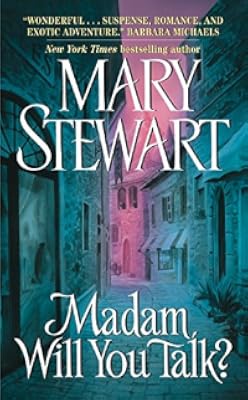
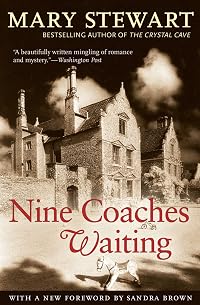













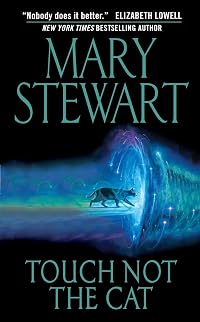








Member Recommendations

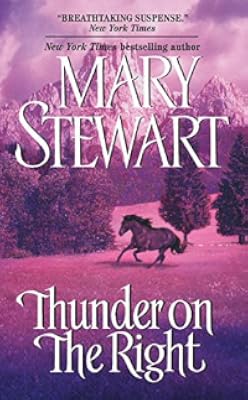
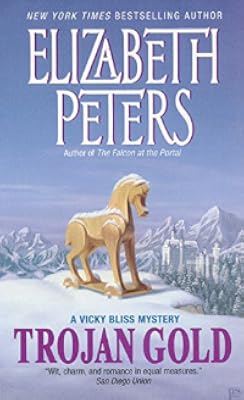
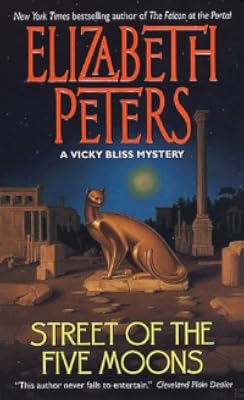
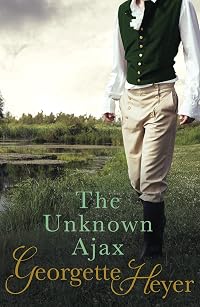
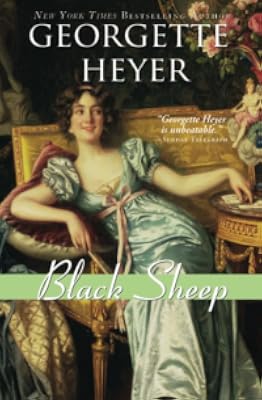
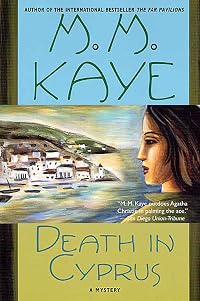
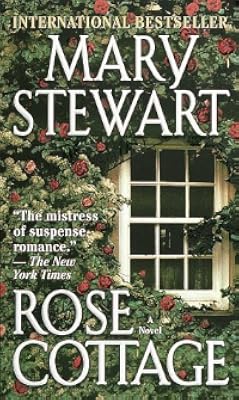
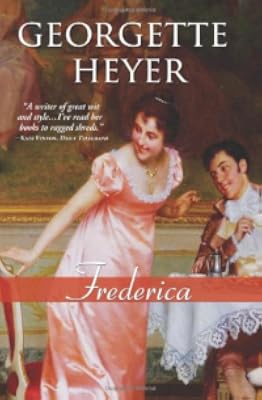
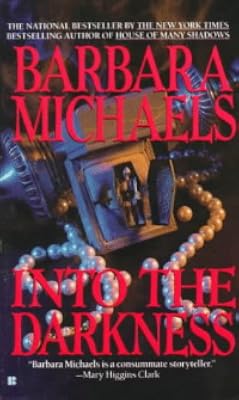
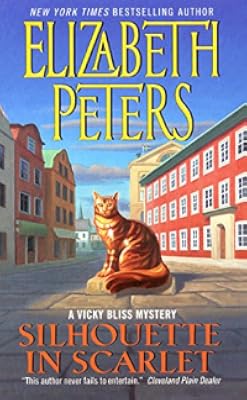
Herenya Mid 20th century; overseas holidays disrupted by murder. Although the tone of the mystery differs in each, they both feature characters called Simon who have a lot in common...
Member Reviews
“You find that the grave of Michael Lester is as moving and as important as the 'tomb of Agamemnon' at Mycenae, or Byron or Venizelos or Alexander. He, and the men like him, are a part of the same picture.” I stopped, and then said helplessly, “Greece. Damn it, what is that it does to one?
He was silent a moment, then he said, “I think the secret is that it belongs to all of us—to us of the West. We've learned to think in its terms, and to live in its laws. It's given us almost everything that our world has that is worth while. Truth, straight thinking, freedom, beauty. It's our second language, our second line of thought, our second country. We all have our own country—and Greece.”
On the heels of a broken engagement, show more 25-year-old Camilla Haven is traveling alone in Greece. Her money is almost exhausted and she'll have to return to England soon. While she's sitting in an Athens cafe trying to come up with a way to stretch her remaining money to allow for a trip to Delphi, a man appears with keys to the car that he insists she hired to drive to Delphi on a matter of life and death. There's obviously been some mistake, for the person who hired the car is described as “Simon's girl”, and Camilla doesn't know anyone named Simon. However, Camilla's six words of Greek aren't enough to get her out of this muddle. The man disappears before she can convince him he has the wrong person. With no way to return the car to its owner, she decides to drive it to Delphi and deliver it to Simon, who is surely there waiting for it. After all, it's a matter of life or death.
As luck would have it, Camilla finds Simon before she reaches Delphi, but he's as puzzled as she is about the car. Camilla feels responsible for the car, and Simon feels responsible for Camilla, so they join forces to look for another Simon. Meanwhile, this Simon has his own reason for being in Delphi. His older brother, Michael, had been there during World War II, and had died there. Simon's recent discovery of his brother's last letter home has brought him to Delphi to search for answers.
Mary Stewart helped to define the romantic suspense genre. Her novels are more than brain candy. They have weight and substance. Her main characters in this novel are well-read in the classics. They can see Homer and the pantheon of gods in the landscape and in the faces and bearing of the local residents. Readers will need to suspend their disbelief at some of the decisions required of Camilla and Simon to get them to the right location for the action to begin. The payoff is almost as rewarding as a trip to Greece, and much less expensive. show less
He was silent a moment, then he said, “I think the secret is that it belongs to all of us—to us of the West. We've learned to think in its terms, and to live in its laws. It's given us almost everything that our world has that is worth while. Truth, straight thinking, freedom, beauty. It's our second language, our second line of thought, our second country. We all have our own country—and Greece.”
On the heels of a broken engagement, show more 25-year-old Camilla Haven is traveling alone in Greece. Her money is almost exhausted and she'll have to return to England soon. While she's sitting in an Athens cafe trying to come up with a way to stretch her remaining money to allow for a trip to Delphi, a man appears with keys to the car that he insists she hired to drive to Delphi on a matter of life and death. There's obviously been some mistake, for the person who hired the car is described as “Simon's girl”, and Camilla doesn't know anyone named Simon. However, Camilla's six words of Greek aren't enough to get her out of this muddle. The man disappears before she can convince him he has the wrong person. With no way to return the car to its owner, she decides to drive it to Delphi and deliver it to Simon, who is surely there waiting for it. After all, it's a matter of life or death.
As luck would have it, Camilla finds Simon before she reaches Delphi, but he's as puzzled as she is about the car. Camilla feels responsible for the car, and Simon feels responsible for Camilla, so they join forces to look for another Simon. Meanwhile, this Simon has his own reason for being in Delphi. His older brother, Michael, had been there during World War II, and had died there. Simon's recent discovery of his brother's last letter home has brought him to Delphi to search for answers.
Mary Stewart helped to define the romantic suspense genre. Her novels are more than brain candy. They have weight and substance. Her main characters in this novel are well-read in the classics. They can see Homer and the pantheon of gods in the landscape and in the faces and bearing of the local residents. Readers will need to suspend their disbelief at some of the decisions required of Camilla and Simon to get them to the right location for the action to begin. The payoff is almost as rewarding as a trip to Greece, and much less expensive. show less
Camilla Haven, a young classics teacher at an English girls’ school, is on vacation in Greece, seeing the sights and trying to forget about her ex-fiancé Philip. She is just bemoaning the fact that nothing ever happens to her when an adventure lands in her lap: a stranger approaches her in a café and gives her the keys to a car which, he says, is urgently needed in Delphi by a man named Simon on “a matter of life and death.” Not knowing what to do, Camilla eventually decides to drive the car to Delphi herself and deliver it to Simon. Little does she know that this seemingly unimportant act will entangle her with a decades-old murder, a cache of treasure, and imminent danger to her own life.
Once again, this novel sticks pretty show more close to the Mary Stewart formula: a young woman in a strange country becomes involved in some sort of peril or mystery, meeting a handsome man in the process. In this case the book is set in Greece, and I found the descriptions of the country fascinating, if a little long-winded at times. The atmosphere of the story, especially the allusions to Greek history and mythology, really helped to heighten the suspense. There’s no particular mystery about the book, though, as it’s immediately obvious who the good guys and the bad guys are. I also found the romance a bit unsatisfying; though it’s developed throughout the book, it never really comes to fruition, in my opinion. Still, I always enjoy Stewart’s books, and this one was no exception. show less
Once again, this novel sticks pretty show more close to the Mary Stewart formula: a young woman in a strange country becomes involved in some sort of peril or mystery, meeting a handsome man in the process. In this case the book is set in Greece, and I found the descriptions of the country fascinating, if a little long-winded at times. The atmosphere of the story, especially the allusions to Greek history and mythology, really helped to heighten the suspense. There’s no particular mystery about the book, though, as it’s immediately obvious who the good guys and the bad guys are. I also found the romance a bit unsatisfying; though it’s developed throughout the book, it never really comes to fruition, in my opinion. Still, I always enjoy Stewart’s books, and this one was no exception. show less
Camilla is a teacher travelling around Greece. A case of mistaken identity means she's handed the keys to a car wanted urgently by a man in Delphi, and as she's unable to find the intended driver - and is desperate to go to Delphi - she drives the car there herself. Along the way she meets Simon - also a Classics teacher - who is investigating the circumstances of his brother's death during WWII.
The appeal of My Brother Michael is how it depicts a time and a place: Greece in the 1950s. It becomes an atmospheric setting for a tense mystery - more of a thriller than a murder mystery.
Mary Stewart's use of language and attention to detail is vivid and evocative; she effectively captures the landscape, the food, the personalities and show more mannerisms of her characters, and incorporates references to Greek mythology. I love how Stewart's heroines (generally) have an appreciation of poetry and literature.
The other thing I love the subtlety of the growing romance, which Camilla is not really ready to openly acknowledge. (They really haven't known each other that long. And Camilla has just broken things off with her former fiancé, so she has good reason to be cautious.)
But there are these ambiguous moments of conversation which elude to the - the romance, if you will. It's all very understated and all the more convincing in consequence.
This time, rereading it, I found myself wondering whether there were out-dated, sexist overtones to their relationship - manly, capable (physically fit and attractive) man rescues damsel in distress, because women are weak and men have a responsibility to rescue them, etc. I concluded that while Camilla and Simon both reflect the attitudes of their era - he holds open car doors for her and so on - this novel does not propagate problematic gender relationships. Their adventures are a team-effort which allow Camilla to prove she's courageous and resourceful, and allow Simon to demonstrate that he's understanding and is not going to leave her at home to get on with her knitting. And she gets to rescue him, before the end. (I discuss this in more detail here).
This is amongst my favourites of Stewart's novels. show less
The appeal of My Brother Michael is how it depicts a time and a place: Greece in the 1950s. It becomes an atmospheric setting for a tense mystery - more of a thriller than a murder mystery.
Mary Stewart's use of language and attention to detail is vivid and evocative; she effectively captures the landscape, the food, the personalities and show more mannerisms of her characters, and incorporates references to Greek mythology. I love how Stewart's heroines (generally) have an appreciation of poetry and literature.
The other thing I love the subtlety of the growing romance, which Camilla is not really ready to openly acknowledge. (They really haven't known each other that long. And Camilla has just broken things off with her former fiancé, so she has good reason to be cautious.)
But there are these ambiguous moments of conversation which elude to the - the romance, if you will. It's all very understated and all the more convincing in consequence.
This time, rereading it, I found myself wondering whether there were out-dated, sexist overtones to their relationship - manly, capable (physically fit and attractive) man rescues damsel in distress, because women are weak and men have a responsibility to rescue them, etc. I concluded that while Camilla and Simon both reflect the attitudes of their era - he holds open car doors for her and so on - this novel does not propagate problematic gender relationships. Their adventures are a team-effort which allow Camilla to prove she's courageous and resourceful, and allow Simon to demonstrate that he's understanding and is not going to leave her at home to get on with her knitting. And she gets to rescue him, before the end. (I discuss this in more detail here).
This is amongst my favourites of Stewart's novels. show less
An intriguing story of a woman travelling solo and her adventures when she falls into an unexpected situation from making a rather hare-brained choice. The story rattled along very much in the Mary Stewart style and it was thoroughly looking like a 4-star read.
Stewart is an evocative writer, with a fine talent in descriptions that bring the setting vividly to mind. Camilla (the main character) seemed a bit ditzy in the run up to where the action really begins. As the story progressed, I came to enjoy her naivety and fresh enthusiasms for ancient monuments and ruins. The other character that kept me engaged was Simon, the fellow looking for more detail about his brother (Michael). Simon was well-drawn and the touch of mystery about him show more was a clever ploy to keep reader interest in the opposing sides with all the Greek machinations.
For all that, I rated the novel only 3½-stars for two reasons: the pacing in the novel was uneven, with some actions slowly building tension, but petering out into something ordinary, perhaps with a little over-descriptive prose unrelated to moving the story forward. Forgivable, because this is an earlier book for author-Stewart. It was like teasers and she normally is more adroit (in my other titles) in keeping a bit of momentum.
The other reason for dropping the rating came from the last chapter or two. The plot comes to a boil and rushes to a rather unsatisfying end, with some actions a bit confusing and others overdone to some extent. I find Stewart's books usually leaving the romance aspect handled very lightly, more of a subtle hint here and there but confirmed by the end. In this book, the love-interest was so nebulous that the final scene left me with a sense that there was no enduring relationship in the future.
Still, it was a clever plot and effectively brought forward the realities of the Greek civil war after WW2. The treachery and guerrilla warfare happening in conjunction with a communist group is well documented in a Helen MacInnes novel I read years before (Decision at Delphi), so I was better prepared to understand the situation in this story. I do recommend Mary Stewart's books and this one too, because she's very assiduous in researching the background to her plots. show less
Stewart is an evocative writer, with a fine talent in descriptions that bring the setting vividly to mind. Camilla (the main character) seemed a bit ditzy in the run up to where the action really begins. As the story progressed, I came to enjoy her naivety and fresh enthusiasms for ancient monuments and ruins. The other character that kept me engaged was Simon, the fellow looking for more detail about his brother (Michael). Simon was well-drawn and the touch of mystery about him show more was a clever ploy to keep reader interest in the opposing sides with all the Greek machinations.
For all that, I rated the novel only 3½-stars for two reasons: the pacing in the novel was uneven, with some actions slowly building tension, but petering out into something ordinary, perhaps with a little over-descriptive prose unrelated to moving the story forward. Forgivable, because this is an earlier book for author-Stewart. It was like teasers and she normally is more adroit (in my other titles) in keeping a bit of momentum.
The other reason for dropping the rating came from the last chapter or two. The plot comes to a boil and rushes to a rather unsatisfying end, with some actions a bit confusing and others overdone to some extent. I find Stewart's books usually leaving the romance aspect handled very lightly, more of a subtle hint here and there but confirmed by the end. In this book, the love-interest was so nebulous that the final scene left me with a sense that there was no enduring relationship in the future.
Still, it was a clever plot and effectively brought forward the realities of the Greek civil war after WW2. The treachery and guerrilla warfare happening in conjunction with a communist group is well documented in a Helen MacInnes novel I read years before (Decision at Delphi), so I was better prepared to understand the situation in this story. I do recommend Mary Stewart's books and this one too, because she's very assiduous in researching the background to her plots. show less
The absolute joy of Mary Stewart is her ability to take you right out of this world and place you securely in her own. My Brother Michael is one of my favorite mystery/romances, with a stirring plot that moves rapidly and keeps you guessing to the end.
"Nothing ever happens to me" laments Camilla and right away we know the adventure is about to begin. Mary Stewart transformed the fainting heroine into a plucky girl regularly in her novels, but I especially love the way she takes this girl who is feeling less than confident at the outset and allows her to exhibit a very believable courage in a very scary situation.
I have set myself a goal of revisiting all of Mary Stewart's novels and this year I have done a number of them and enjoyed show more them all. So far, though, My Brother Michael has been my favorite of the mystery/romance genre. show less
"Nothing ever happens to me" laments Camilla and right away we know the adventure is about to begin. Mary Stewart transformed the fainting heroine into a plucky girl regularly in her novels, but I especially love the way she takes this girl who is feeling less than confident at the outset and allows her to exhibit a very believable courage in a very scary situation.
I have set myself a goal of revisiting all of Mary Stewart's novels and this year I have done a number of them and enjoyed show more them all. So far, though, My Brother Michael has been my favorite of the mystery/romance genre. show less
This was my first Mary Stewart, and I must say I did enjoy it. We're in a sort of female Eric Ambler world, here, without the politics: Europe in the 1950s, with the War looming large in the collective memory; this plot, though, is wholly personal.
Told from the point of view of the accidental heroine, the story gets off to a rather tediously drawn-out start (perhaps it's just old fashioned, this idea that driving a car is such a big deal!), but soon gathers a pretty good momentum, picking up some nicely unpleasant characters on the way. I loved the whole mental landscape: pure young James Mason as directed by Alfred Hitchcock.
Greece in general, and Delphi in particular, are rendered beautifully, and credibly. Apollo, too, makes a show more welcome appearance. show less
Told from the point of view of the accidental heroine, the story gets off to a rather tediously drawn-out start (perhaps it's just old fashioned, this idea that driving a car is such a big deal!), but soon gathers a pretty good momentum, picking up some nicely unpleasant characters on the way. I loved the whole mental landscape: pure young James Mason as directed by Alfred Hitchcock.
Greece in general, and Delphi in particular, are rendered beautifully, and credibly. Apollo, too, makes a show more welcome appearance. show less
When I was in school I had a habit of marking the end of the semesters by choosing a book by someone like Mary Stewart or Victoria Holt in order to really feel like I was on intellectual vacation. I hadn’t read this one before, but when I saw it recently on a list of suggested readings I thought it might be a change of pace.
It is in the first person, as many of these books seem to be, and that gives it simultaneously immediacy and a slow and gradual unfolding as the heroine learns about people and situations as they happen. The first half of the book, with its scene setting (Athens, Delphi in this case) is very well done, especially as I took the time to look up (briefly) some of the references to classics and history. Once the action show more starts it begins to seem really dated. Everyone smokes, and the repeated use of cigarettes and matches to mark attitudes, slow down conversations and show individual styles is startling. The heroine is trying to get over a failed relationship and make her own way, and ends up making some spur of the moment decisions that involve her in some relatively unlikely scenarios. While some actions do show a bit of spunk or growth, she is pretty superfluous for the results of the final confrontation. The most dispiriting quote, as the confrontation sets up and the hero comes into view, is “I only knew that [he] didn’t move, and I remember wondering, with a sick cold little feeling, if he was afraid.” Because you wouldn’t want a man who was afraid, would you? show less
It is in the first person, as many of these books seem to be, and that gives it simultaneously immediacy and a slow and gradual unfolding as the heroine learns about people and situations as they happen. The first half of the book, with its scene setting (Athens, Delphi in this case) is very well done, especially as I took the time to look up (briefly) some of the references to classics and history. Once the action show more starts it begins to seem really dated. Everyone smokes, and the repeated use of cigarettes and matches to mark attitudes, slow down conversations and show individual styles is startling. The heroine is trying to get over a failed relationship and make her own way, and ends up making some spur of the moment decisions that involve her in some relatively unlikely scenarios. While some actions do show a bit of spunk or growth, she is pretty superfluous for the results of the final confrontation. The most dispiriting quote, as the confrontation sets up and the hero comes into view, is “I only knew that [he] didn’t move, and I remember wondering, with a sick cold little feeling, if he was afraid.” Because you wouldn’t want a man who was afraid, would you? show less
Members
- Recently Added By
Lists

Books I've Read More Than Once
602 works; 49 members

The Top 100 Crime Novels of All Time
100 works; 15 members

Anthony Boucher's Best Crime Fiction of the Year
115 works; 5 members

Books Read in 2019
4,052 works; 108 members

Books Read in 2021
5,361 works; 113 members

Favourite Books
1,820 works; 311 members

Greece - a reading list
83 works; 4 members
Author Information

51+ Works 40,210 Members
Mary Stewart was born on September 17, 1916 in Sunderland, County Durham, England. She received a First Class Honours B.A. in English from Durham University in 1938 and a teaching certificate in 1939. She taught in elementary school until 1941 when she was offered a post at Durham University. She taught there until 1945 and received a M.A. in show more English during that time. Her first book, Madam, Will You Talk?, was published in 1955. Her other works included My Brother Michael, Touch Not the Cat, This Rough Magic, Nine Coaches Waiting, Thornyhold, Rose Cottage, and the Merlin Trilogy. She also wrote children's books including Ludo and the Star Horse and A Walk in Wolf Wood. She died on May 9, 2014 at the age of 97. (Bowker Author Biography) show less
Some Editions
Awards and Honors
Awards
Distinctions
Notable Lists
Series
Belongs to Publisher Series
Heyne Taschenbuch (447)
Work Relationships
Common Knowledge
- Canonical title
- My Brother Michael
- Original title
- My brother Michael
- Alternate titles*
- Mijn broer Michael
- Original publication date
- 1959
- People/Characters
- Camilla Haven; Simon Lester
- Important places
- Delphi, Greece; Athens, Greece
- Epigraph
- If you do not love the Greeks, you cannot love anything. Rex Warner.
- Dedication
- for KIM
In Loving Memory - First words
- Nothing ever happens to me.
- Last words
- (Click to show. Warning: May contain spoilers.)He took it from me gently and laid it beside the water pot, at the feet of the god.
- Original language
- English
*Some information comes from Common Knowledge in other languages. Click "Edit" for more information.
Classifications
Statistics
- Members
- 1,118
- Popularity
- 22,771
- Reviews
- 20
- Rating
- (3.82)
- Languages
- 7 — Danish, Dutch, English, Estonian, Finnish, German, Swedish
- Media
- Paper, Audiobook, Ebook
- ISBNs
- 29
- ASINs
- 30