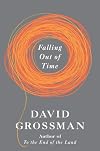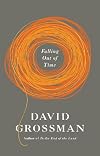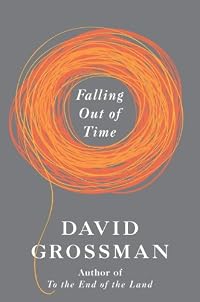
Falling Out of Time
by David Grossman
On This Page
Description
In Falling Out of Time, David Grossman has created a genre-defying drama -- part play, part prose, pure poetry -- to tell the story of bereaved parents setting out to reach their lost children. It begins in a small village, in a kitchen, where a man announces to his wife that he is leaving, embarking on a journey in search of their dead son. The man -- called simply Walking Man -- paces in ever-widening circles around the town. One after another, all manner of townsfolk fall into step with show more him (the Net-Mender, the Midwife, the Elderly Math Teacher, even the Duke), each enduring his or her own loss. The walkers raise questions of grief and bereavement: Can death be overcome by an intensity of speech or memory? Is it possible, even for a fleeting moment, to call to the dead and free them from their death? Grossman's answer to such questions is a hymn to these characters, who ultimately find solace and hope in their communal act of breaching death's hermetic separateness. show lessTags
Recommendations













Member Reviews
I read this book every year. Grossman’s masterful writing, is poignant, sorrowful, profound, compelling.
The book is a metaphor for death, and of all of the lingering aspects of loss, accepting loss and journeying forward, with endless grief. Grief has no timeline, contrary to what some think.
The book is a metaphor for death, and of all of the lingering aspects of loss, accepting loss and journeying forward, with endless grief. Grief has no timeline, contrary to what some think.
Een verhaal in stemmen. Flarden van afwisselende personages, zoals een nettenboetster, hertog oude schoolmeester, stadschroniquer, hertog, vroedvrouw, schoenmaker en een centaur, allen zoekend naar hun geliefde, maar overleden kind. David Grossman verloor zelf zijn zoon en soldaat Uri verloor in de strijd tussen Israël en de Palestijnen. Uniek is zijn verlies niet. In Uit de tijd gevallen (2012) weeft hij de worsteling dat ouders hun kinderen overleven, niet kunnen loslaten, graag hen 'daar' willen ontmoeten en het leven moeten hervinden tot een bijzonder boek. Hij mengt genres om de veelzijdigheid en emotionele lading van rouwverwerking vorm te geven. Of het nu Lili, Adam, Michaël, Channa, Adam of Oewi is. "De poëzie is van mijn show more rouw de taal." (p.121) en "De rouw wordt met de jaren ouder, maar op sommige dagen is die nieuw en fris. Zo ook de woede over alles wat je is ontnomen. Maar je bent niet meer. Je zelf is er niet meer. Je bent buiten de tijd. Hoe leg ik het je uit, als ook de uitleg vastzit in de tijd? Eens vertelde mij een man uit een ver land dat daar als iemand omkomt in een oorlog van hem wordt gezegd: 'Hij is gevallen'. En zo ook jij: je bent gevallen ut de tijd.....Ik zie je wel, maar raak je toch niet aan, ik reik niet tot je met mijn tijdantennen." (p.48).
Knap gecomponeerd, dat ben ik van Grossman gewend. Complimenten ook voor Ruben Verhasselt die structuur en taalspel intact liet bij het omzetten van Hebreeuws naar Nederlands. De auteur schreef ruim 2 jaar aan dit 144 pagina's tellende werk. Reken maar dat het met tranen gepaard is gegaan. De uitnodiging is aan de lezer - hoe bevreemdend de opzet ook mag lijken - dit universele, herkenbare thema eens zo te ervaren. show less
Knap gecomponeerd, dat ben ik van Grossman gewend. Complimenten ook voor Ruben Verhasselt die structuur en taalspel intact liet bij het omzetten van Hebreeuws naar Nederlands. De auteur schreef ruim 2 jaar aan dit 144 pagina's tellende werk. Reken maar dat het met tranen gepaard is gegaan. De uitnodiging is aan de lezer - hoe bevreemdend de opzet ook mag lijken - dit universele, herkenbare thema eens zo te ervaren. show less
A very differently structured book, this is the authors attempt to give voice to his grief, and to all parents whom have lost a child. An attempt to separate grief from memories, in some parents a way to forgive themselves and a wonderful ode to love and regret.
One can read the synopsis of the book, but that can not relate how powerful I found this little book. The words, the poetry, the commentary, so poignant, so raw. The outpouring of grief from all involved but also the hope that they can find a way to move forward, to live with their memories, to never forget. I read quite a few of these passages out loud, read many more than once but even with that I did not get the full effect of his words. That did not come until I had finished show more and realized I kept dwelling on the words, the images of all these grieving parents walking in ever widening circles looking for the way to once again go straight.
Grossman is, without doubt a brilliant writer, regardless of the structure he uses to convey what he needs to say. show less
One can read the synopsis of the book, but that can not relate how powerful I found this little book. The words, the poetry, the commentary, so poignant, so raw. The outpouring of grief from all involved but also the hope that they can find a way to move forward, to live with their memories, to never forget. I read quite a few of these passages out loud, read many more than once but even with that I did not get the full effect of his words. That did not come until I had finished show more and realized I kept dwelling on the words, the images of all these grieving parents walking in ever widening circles looking for the way to once again go straight.
Grossman is, without doubt a brilliant writer, regardless of the structure he uses to convey what he needs to say. show less
Falling Out of Time by David Grossman is a 193-page long prose poem that laments and explores the devastation of grief for parents of children who have died.
The characters are unnamed except for their roles in the book: The Walking Man, The Woman Who Left Home, The Town Chronicler, The Town Chronicler’s Wife, The Midwife, The Cobbler, The Net-Mender, The Centaur, The Elderly Math Teacher, the Duke.
Perhaps their ambiguity is purposed to broaden their mourning from a personal experience to one that is communal since many children died in the village in which this novel takes place. Perhaps their namelessness is in answer to the identity they have lost since the travesty of the death of their children.
A reader must come to this novel show more with an active patience, a keen and quiet attention, perhaps even the willingness to read the novel twice. Though the novel is not long, nor difficult, its language is poetic and written in such a way that the reader must actively piece together the story’s plot and to whom each speaker addresses.
While the story wallows in the depth and length of its language and the transition from one speaker to another is not always smooth enough to be made clear, the book is filled with a number of lyrical lines of verse that speak the eloquence of a poem.
To read the rest of my review, you're more than welcome to visit my blog, The Bibliotaphe Closet at: http://zaraalexis.wordpress.com
- Zara show less
The characters are unnamed except for their roles in the book: The Walking Man, The Woman Who Left Home, The Town Chronicler, The Town Chronicler’s Wife, The Midwife, The Cobbler, The Net-Mender, The Centaur, The Elderly Math Teacher, the Duke.
Perhaps their ambiguity is purposed to broaden their mourning from a personal experience to one that is communal since many children died in the village in which this novel takes place. Perhaps their namelessness is in answer to the identity they have lost since the travesty of the death of their children.
A reader must come to this novel show more with an active patience, a keen and quiet attention, perhaps even the willingness to read the novel twice. Though the novel is not long, nor difficult, its language is poetic and written in such a way that the reader must actively piece together the story’s plot and to whom each speaker addresses.
While the story wallows in the depth and length of its language and the transition from one speaker to another is not always smooth enough to be made clear, the book is filled with a number of lyrical lines of verse that speak the eloquence of a poem.
To read the rest of my review, you're more than welcome to visit my blog, The Bibliotaphe Closet at: http://zaraalexis.wordpress.com
- Zara show less
In this book, the Israeli author has created a genre-defying drama, part play, part prose, pure poetry, to tell the story of bereaved parents setting out to reach their lost children.
Le cœur me fend,
Mon trésor,
A la seule pensée
Que j’ai -
Peut-être -
Trouvé des mots
Pour le dire.
(explicit).
J’ai écouté ce texte sans rien en savoir au préalable sinon que j’avais aimé David Grossman dans [Une Femme fuyant l’annonce] et que j’étais restée hermétique à [Un cheval entre dans un bar]. Et ce texte m’a soufflée. L’écouter plutôt que le lire, pour cet auteur qui vient du milieu du théâtre, a été une bonne idée car cette écoute m’a permis de m’immerger dans le texte, de l’écouter d’une traite, en apnée, sans reprendre mon souffle, d’en sentir toute la poésie douloureuse parce que lue et incarnée par des voix.
Bien sûr, quand on connaît cet auteur, il est difficile show more d’ignorer son combat en faveur de la paix entre Israël et la Palestine et le fait qu’il ait perdu un de ses fils dans le conflit qui oppose ces deux forces. Ce texte qui met en scène et donne la parole à des parents qui ont perdu leur enfant, et ce quelle qu’en soit la raison, maladie, accident, guerre, est donc une œuvre qui se nourrit de la propre douleur de l’écrivain, même si c’est un texte hautement allégorique, une véritable œuvre littéraire et poétique, qui tente de dire le deuil contre nature, l’absence intolérable. Le cordonnier, la sage-femme, la ramendeuse de filets ou le centaure-écrivain réagissent tous à leur manière, faisant un kaléidoscope des possibles, dans un texte polyphonique qui ressemble à une fugue, autant au sens de l’œuvre musicale que de la fuite.
C’est un texte poignant sur le deuil d’un enfant. Je l’ai lu peu de temps après un décès dans ma famille (douloureux, mais beaucoup plus « dans l’ordre des choses » si je peux dire) et il a peut-être raisonné plus fort en moi à cause de cela, mais c’est un texte absolument merveilleux, d’une douleur acceptée, intrinsèque, impossible à effacer. Un livre qui ne choisit pas entre acceptation et révolte, qui mêle tous les moments du deuil pour en faire un texte difficile à lire du fait de l’immense tristesse qui en sourd, mais aussi, étrangement, un texte lumineux, d’une lumière noire et discrète, mais un texte que je crois pouvoir tout de même qualifier de lumineux. show less
Jun 22, 2023French
Rouwlyriek: het is altijd een delicaat genre, want het vervalt zo gemakkelijk in goedkoop zelfbeklag, oppervlakkig gewauwel, of een overdramatische toonzetting. Grossman schreef dit boek vijf jaar na de dood van zijn zoon Uri, die sneuvelde in de korte Israelisch-Libanese oorlog van 2006. Precies om de valkuilen van rouwlyriek te vermijden, koos hij voor een bijzondere stijl die het midden houdt tussen een theaterstuk en pure poëzie, of misschien zeg ik beter: poëtisch theater, of theatrale poëzie?
Mensen lopen plots weg van hun thuis, hun bezigheden, en gaan op zoek naar hun al langer verloren zoon of dochter; ze vinden elkaar zelfs in een soort van karavaan op zoek naar ‘daar’ waar hij/zij naartoe is; je hoort de betrokkenen show more zelf, in korte, aangrijpende monologen, gesprekken met zichzelf of met de gestorvene, heel verschillende emoties uitend. Geregeld grijpen de regels naar de keel, maken ze het rauwe gevoel van gemis tastbaar tot op het randje van het dragelijke.
Maar er is ook een chroniqueur, die beschrijft wat er gebeurt, en op de duur ook aan de slepende karavaan deelneemt, zogezegd in opdracht van zijn baas, de hertog. Dat doet wat vreemd-middeleeuws aan, zeker als je weet dat ook een centaur (een Griekse mythologische figuur) een van de figuranten is en inhoudelijk zelfs een vrij belangrijke rol speelt. Het verhaal zelf zit een beetje tussen de regels en lijkt met horten en stoten te gaan, of en toe zelfs te sputteren, sommige scenes zijn ronduit cryptisch; geregeld bekruipt je een gevoel van bevreemding, wellicht met opzet. En daardoor deden de stijl en de structuur van dit boek me erg denken aan de échte, klassieke, Griekse tragedies, vooral die van Sofokles en Euripides. Je moet al een hele grote zijn om je daar mee te kunnen meten; poëtisch lukt Grossman dat zeker, theatraal ben ik iets minder overtuigd. Maar dit is zonder de minste twijfel een authentieke, erg persoonlijke uiting van rouwlyriek. show less
Mensen lopen plots weg van hun thuis, hun bezigheden, en gaan op zoek naar hun al langer verloren zoon of dochter; ze vinden elkaar zelfs in een soort van karavaan op zoek naar ‘daar’ waar hij/zij naartoe is; je hoort de betrokkenen show more zelf, in korte, aangrijpende monologen, gesprekken met zichzelf of met de gestorvene, heel verschillende emoties uitend. Geregeld grijpen de regels naar de keel, maken ze het rauwe gevoel van gemis tastbaar tot op het randje van het dragelijke.
Maar er is ook een chroniqueur, die beschrijft wat er gebeurt, en op de duur ook aan de slepende karavaan deelneemt, zogezegd in opdracht van zijn baas, de hertog. Dat doet wat vreemd-middeleeuws aan, zeker als je weet dat ook een centaur (een Griekse mythologische figuur) een van de figuranten is en inhoudelijk zelfs een vrij belangrijke rol speelt. Het verhaal zelf zit een beetje tussen de regels en lijkt met horten en stoten te gaan, of en toe zelfs te sputteren, sommige scenes zijn ronduit cryptisch; geregeld bekruipt je een gevoel van bevreemding, wellicht met opzet. En daardoor deden de stijl en de structuur van dit boek me erg denken aan de échte, klassieke, Griekse tragedies, vooral die van Sofokles en Euripides. Je moet al een hele grote zijn om je daar mee te kunnen meten; poëtisch lukt Grossman dat zeker, theatraal ben ik iets minder overtuigd. Maar dit is zonder de minste twijfel een authentieke, erg persoonlijke uiting van rouwlyriek. show less
Jun 26, 2018Dutch
Members
- Recently Added By
Lists

Dublin Literary Award Longlist 2016
148 works; 4 members
Author Information

91+ Works 8,019 Members
David Grossman was born in Jerusalem on January 25, 1954, is an Israeli author of fiction, nonfiction, and youth and children's literature. His books have been translated into many languages. He is most known for his non-fiction work, The Yellow Wind. This is his study of the Palestinians in the Israeli-occupied West Bank and Gaza Strip. He was show more awarded the Prime Minister's Prize for Hebrew literature (1984) and the Israeli Publishers Association Prize for best Hebrew novel (1985). Grossman lives in Mevasseret Zion on the outskirts of Jerusalem. He is married to Michal Grossman, a child psychologist and the mother of his three children. (Bowker Author Biography) show less
Some Editions
Awards and Honors
Series
Belongs to Publisher Series
Common Knowledge
- Canonical title
- Falling Out of Time
- Original title
- Nofel mihutz lazman
- Original publication date
- 2011
- First words
- As they sit eating dinner, the man's face suddenly turns.
- Quotations
- - But what is there? There's no such place. There doesn't exist!
- If you go there, it does.
- But you don't come back. No one ever has.
- Because only the dead have gone.
For five years
we unspoke
that night.
You fell mute,
then I.
For you the quiet
was good,
and I felt it clutch
at my throat. One after
the other, the words
died, and we were
like a house
whe... (show all)re the lights
go slowly out,
until a sombre silence
fell - - Last words
- (Click to show. Warning: May contain spoilers.)Yet still it breaks my heart,
my son,
to think
that I have -
that one could -
that I have found
the words. - Original language
- Hebrew
Classifications
- Genres
- Fiction and Literature, General Fiction
- DDC/MDS
- 892.4 — Literature & rhetoric Literatures of other languages Afro-Asiatic literatures Jewish, Israeli, and Hebrew
- LCC
- PJ5054 .G728 .N6413 — Language and Literature Oriental languages and literatures Oriental philology and literature Hebrew Literature Individual authors and works
- BISAC
Statistics
- Members
- 306
- Popularity
- 103,713
- Reviews
- 11
- Rating
- (3.90)
- Languages
- 12 — Catalan, Danish, Dutch, English, French, German, Hebrew, Italian, Norwegian (Bokmål), Portuguese, Spanish, Swedish
- Media
- Paper, Ebook
- ISBNs
- 25
- ASINs
- 5