On This Page
Description
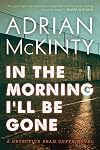
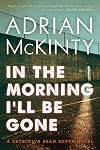
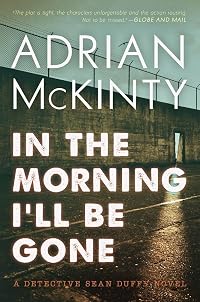
A Catholic cop tracks an IRA master bomber amidst the sectarian violence of the conflict in Northern Ireland It's the early 1980s in Belfast. Sean Duffy, a conflicted Catholic cop in the Protestant RUC (Royal Ulster Constabulary), is recruited by MI5 to hunt down Dermot McCann, an IRA master bomber who has made a daring escape from the notorious Maze prison. In the course of his investigations Sean discovers a woman who may hold the key to Dermot's whereabouts; she herself wants justice for show more her daughter who died in mysterious circumstances in a pub locked from the inside. Sean knows that if he can crack the "locked-room mystery," the bigger mystery of Dermot's whereabouts might be revealed to him as a reward. Meanwhile the clock is ticking down to the Conservative Party conference in Brighton in 1984, where Mrs. Thatcher is due to give a keynote speech. show lessTags
Recommendations




















Member Reviews
I am just loving this Sean Duffy series, and this was an excellent link in the chain. In this book we find Sean “retired” from the Belfast police force and drinking and smoking marijihauna and listening to music all day long. He gets a knock on his door and he finds himself working for MI5. His task is to track down the slippery leader of the IRA who happens to be an old school mate of his. The time is summer 1984 -and there is much unrest in Northern Ireland. Seizing the chance to get back into the force after his unjustified expulsion, he grabs the opportunity. His new task leads him to a cold case in a small county in Ireland and a whole mess of problems and danger. Another edge-of-the-seat thriller that’s fast becoming a show more favourite with me. show less
1983, Belfast, The Troubles, Sean Duffy, having upset too many Important people, particularly the FBI among many, is off the force. Apparently being reduced to Sergeant wasn’t enough and he was forced off with the offer of a full pension.
“I went to the dole office and they told me that there was no point signing on. With my retirement money coming in I would be means tested and would not be eligible for any other kind of income support. The unemployment officer told me I should move to Spain or Greece or Thailand or someplace where my monthly check from the RUC would go a long way.”
Wallowing in despair Duffy is approached by MI5 to assist them in finding Dermot McCann, IRA master bomber who had escaped from the Maze prison, show more whereabouts currently unknown.
Duffy is chosen because of two things, he knows McCann from when they were at High school together and he’s very good and what he does. Duffy negotiates a return to his old position Detective Inspector but under the banner of Special Branch.
Duffy’s time away from the forces has not mellowed him. He still has issues with 80’s music.
“Before I put the key in the ignition I got out again and looked underneath the vehicle for mercury tilt bombs. There were none, and I re-entered and stuck in a cassette of Robert Plant’s Principle of Moments. This was my fourth listen to Plant’s solo album and I still couldn’t bring myself to like it. It was all synthesizers, drum machines, and high-pitched vocals. It was a sign of the times, and with the autumn upon us it was safe to say that 1983 was turning out to be the worst year in popular music for about two decades.”
He still drinks far too much and enjoys the not so occasional spliff.
Interviewing all of McCann’s relatives brings him in contact with McCann’s ex-wife Anne and her Mother. The mother offers to help located McCann if Duffy can solve the mystery of her younger daughters’ Lizzies death. The trouble is that it is the classic ‘closed room’ murder. The body was found inside a locked room, locked and bolted from the inside. Solve the mystery and get McCann, simple.
With M15 pressuring him for results and the complex mystery of the locked room proving to be a stumbling block, finding McCann tales on even more urgency as the Conservative Party Conference in Brighton 1984 is coming up fast. Mrs Thatcher, fresh from the Falklands victory is giving the key note speech and is a prime IRA target.
McKinty has delivered a complex and enthralling mystery. How will it all play out, remember your history, all is not what it seems. show less
“I went to the dole office and they told me that there was no point signing on. With my retirement money coming in I would be means tested and would not be eligible for any other kind of income support. The unemployment officer told me I should move to Spain or Greece or Thailand or someplace where my monthly check from the RUC would go a long way.”
Wallowing in despair Duffy is approached by MI5 to assist them in finding Dermot McCann, IRA master bomber who had escaped from the Maze prison, show more whereabouts currently unknown.
Duffy is chosen because of two things, he knows McCann from when they were at High school together and he’s very good and what he does. Duffy negotiates a return to his old position Detective Inspector but under the banner of Special Branch.
Duffy’s time away from the forces has not mellowed him. He still has issues with 80’s music.
“Before I put the key in the ignition I got out again and looked underneath the vehicle for mercury tilt bombs. There were none, and I re-entered and stuck in a cassette of Robert Plant’s Principle of Moments. This was my fourth listen to Plant’s solo album and I still couldn’t bring myself to like it. It was all synthesizers, drum machines, and high-pitched vocals. It was a sign of the times, and with the autumn upon us it was safe to say that 1983 was turning out to be the worst year in popular music for about two decades.”
He still drinks far too much and enjoys the not so occasional spliff.
Interviewing all of McCann’s relatives brings him in contact with McCann’s ex-wife Anne and her Mother. The mother offers to help located McCann if Duffy can solve the mystery of her younger daughters’ Lizzies death. The trouble is that it is the classic ‘closed room’ murder. The body was found inside a locked room, locked and bolted from the inside. Solve the mystery and get McCann, simple.
With M15 pressuring him for results and the complex mystery of the locked room proving to be a stumbling block, finding McCann tales on even more urgency as the Conservative Party Conference in Brighton 1984 is coming up fast. Mrs Thatcher, fresh from the Falklands victory is giving the key note speech and is a prime IRA target.
McKinty has delivered a complex and enthralling mystery. How will it all play out, remember your history, all is not what it seems. show less
Detective Inspector Sean Duffy is, on multiple levels, a "cop who needs a break." He's embroiled in politics that threaten his very job, tasked by MI5 to stop an IRA bombing suspect whose location and plans are unknown, and waylaid from said task by a family member of the bombing suspect who refuses to talk unless Duffy can solve a cold case for her. To understate, the tension never lets up in this book. Sean Duffy is an angry, sarcastic, self-deprecating, persevering hero and Ireland in 1984 is a vivid, bleak setting for this mystery-fueled manhunt story.
In 1984, I was an American toddler. Going into this novel, I had almost no knowledge of its time and place. McKinty paints not only the landscape, the loss, the upheaval of the time; show more he also lets us glimpse the hearts and mindsets of the people and the reasons behind their views. None of it eclipses the plot or the protagonist, but (perhaps obviously) this plot and this protagonist would not exist in any other setting. The Troubles have shaped Sean Duffy into the man he is.
Speaking of Sean Duffy. What a wonderful character, and what a voice McKinty has given him. From that first scene (ignoring his emergency police beeper in favor of his Atari game), he's intriguing--smart, cynical, resentful. He turns out to be the kind of cop who underestimates himself before his enemy, who doesn't take condescension from anybody, and who doggedly works a case as long as it takes. He enjoys music of many genres, eats too little, drinks too much. He tells his story in a witty and lyrical voice that observes the quietly profound beauty and sorrow of the world around him. Yet Mr. McKinty understands author restraint. There's no theme-spouting here, from Sean or anyone else. The beliefs of the characters belong to themselves.
The plot unfolds rather oddly, jump-starting with the IRA bomb threats and then detouring almost entirely from that element to the cold case. A relative of the bomber, who believes a certain "accidental" death wasn't, demands closure in exchange for information. Without other leads, and despite his MI5 contact's lack of enthusiasm, Duffy agrees. It's an unusual author choice, and I can understand why not every reader would want to follow McKinty here, but it works for me. At first, upon finishing, I felt the bomber's story thread was too marginalized; there's personal history between him and Duffy, and I wanted to know more. But really, the book is understated, not underdeveloped. I want more not because something's missing but because I'm invested in what's here. It all works.
IN THE MORNING I'LL BE GONE succeeds on so many levels--dialogue, characterization, setting, mood, plot, and above all, voice. The first two Sean Duffy novels have just leaped to the top of my to-read list. show less
In 1984, I was an American toddler. Going into this novel, I had almost no knowledge of its time and place. McKinty paints not only the landscape, the loss, the upheaval of the time; show more he also lets us glimpse the hearts and mindsets of the people and the reasons behind their views. None of it eclipses the plot or the protagonist, but (perhaps obviously) this plot and this protagonist would not exist in any other setting. The Troubles have shaped Sean Duffy into the man he is.
Speaking of Sean Duffy. What a wonderful character, and what a voice McKinty has given him. From that first scene (ignoring his emergency police beeper in favor of his Atari game), he's intriguing--smart, cynical, resentful. He turns out to be the kind of cop who underestimates himself before his enemy, who doesn't take condescension from anybody, and who doggedly works a case as long as it takes. He enjoys music of many genres, eats too little, drinks too much. He tells his story in a witty and lyrical voice that observes the quietly profound beauty and sorrow of the world around him. Yet Mr. McKinty understands author restraint. There's no theme-spouting here, from Sean or anyone else. The beliefs of the characters belong to themselves.
The plot unfolds rather oddly, jump-starting with the IRA bomb threats and then detouring almost entirely from that element to the cold case. A relative of the bomber, who believes a certain "accidental" death wasn't, demands closure in exchange for information. Without other leads, and despite his MI5 contact's lack of enthusiasm, Duffy agrees. It's an unusual author choice, and I can understand why not every reader would want to follow McKinty here, but it works for me. At first, upon finishing, I felt the bomber's story thread was too marginalized; there's personal history between him and Duffy, and I wanted to know more. But really, the book is understated, not underdeveloped. I want more not because something's missing but because I'm invested in what's here. It all works.
IN THE MORNING I'LL BE GONE succeeds on so many levels--dialogue, characterization, setting, mood, plot, and above all, voice. The first two Sean Duffy novels have just leaped to the top of my to-read list. show less
Sean Duffy has earned a reputation as a highly motivated and committed police officer who won’t give up even when instructed to do so. This got him in a bit of trouble in the series’ previous installments, and this book opens with Duffy suspended from his position with the Royal Ulster Constabulary (RUC). But not to worry, MI5 thinks Duffy is just the man to track down IRA member Dermot McCann, who escaped prison and is currently in hiding, most likely outside of Ireland. MI5 believes Duffy’s childhood friendship with McCann and his current friendly relationship with McCann’s family will give him a leg up.
The problem is, McCann is a master at evading capture. Duffy has no leads and no idea how to proceed, until he learns the show more recent death of McCann’s sister-in-law Lizzie was ruled an accident despite its suspicious circumstances. McCann’s mother-in-law agrees to reveal his whereabouts if Duffy is able to identify what really caused Lizzie’s death.
I enjoy the fast pace and interesting plot twists in this series. This installment had the added bonus of Duffy’s investigation intersecting with two real-life events: Joseph Kennedy II’s visit to Ireland, and Margaret Thatcher’s 1984 Conservative Party leadership conference. This integration of fact and fiction was cleverly done, and I hope this continues in the next books. show less
The problem is, McCann is a master at evading capture. Duffy has no leads and no idea how to proceed, until he learns the show more recent death of McCann’s sister-in-law Lizzie was ruled an accident despite its suspicious circumstances. McCann’s mother-in-law agrees to reveal his whereabouts if Duffy is able to identify what really caused Lizzie’s death.
I enjoy the fast pace and interesting plot twists in this series. This installment had the added bonus of Duffy’s investigation intersecting with two real-life events: Joseph Kennedy II’s visit to Ireland, and Margaret Thatcher’s 1984 Conservative Party leadership conference. This integration of fact and fiction was cleverly done, and I hope this continues in the next books. show less
Sean Duffy, a detective with Northern Ireland's Royal Ulster Constabulary in the early 1980s, is currently on shaky ground with the force. He considers his options of demotion to foot patrol and keeping his pension, or resignation. As a Catholic cop in a largely Protestant police force he is seen as a traitor by childhood friends, particularly Dermot McCann who is one of a group of escapees from the Maze prison. Then a couple of MI5 agents approach him with a tempting alternative of finding McCann for them and keeping his job. In the course of the investigation he meets with McCann's mother-in-law, still mourning the death of her daughter, Lizzie. She promises to deliver McCann if Sean will investigate Lizzie's death and name the show more murderer. She was found in the family-owned pub, doors locked on the inside and no escape route. Although her injuries indicate an attack because of the locked room her death was ruled accidental. His perseverance pays off and the reward is a brief phone call, a tip-off to McCann's whereabouts. The location is not immediately a clue to his intentions, but ultimately reveals a plan to bomb the hotel in Brighton where Maggie Thatcher will be speaking at the Conservative Party conference.
A classic locked room mystery wrapped in the unique political conflict of Northern Ireland, using authentic events and real people, all of which give this mystery a captivating appeal. Location, time and well drawn characters make this fast-moving mystery thoroughly satisfying. show less
A classic locked room mystery wrapped in the unique political conflict of Northern Ireland, using authentic events and real people, all of which give this mystery a captivating appeal. Location, time and well drawn characters make this fast-moving mystery thoroughly satisfying. show less
Once again, Detective Sean Duffy finds himself in hot water with his superiors and is stuck at home on suspension. That changes when MI5 comes calling and asks his assistance on locating an IRA member who has escaped prison. They knew each other as kids. This also leads to a locked room mystery that Duffy needs to solve. This is third in the series and another winner.
The structure of trilogies must have some appeal for McKinty, not just because he has previous form. From the outside you can see that it could be quite a challenge to build a character's life and explore events in a proscribed number of books. And then it's over. For this reader it's a very bitter sweet experience. Especially when, from book number one, this series cemented itself as a big part of January's expectations.
Part of the appeal is obviously the central character Sean Duffy. An outsider in his own country and his own community, it's that viewpoint that makes him such an effective policeman. Not only is he not beholden, he sees everything in a slightly different manner. That idea of the cop as the ultimate outsider's nothing show more new, but there's something about the way that McKinty has built this scenario - within the framework of the Troubles - with the complications of religion, and ethnicity muddied further by cops versus crims, and the branches of the cops versus each other. It's a multi-layered environment drawn out elegantly by some clever, atmospheric and pointed story telling.
It also doesn't hurt that IN THE MORNING I'LL BE GONE opens with one of those openings we've come to expect:
"The beeper began to whine at 4.27pm on Wednesday, 25 September 1983. It was repeating a shrill C sharp at four-second intervals which meant - for those of us who had bothered to read the manual - that it was a Class 1 emergency. This was a general alert being sent to every off-duty policeman, police reservist and soldier in Northern Ireland. There were only five Class 1 emergencies and three of them were a Soviet nuclear strike, a Soviet invasion and what the civil servants who'd written the manual had nonchalantly called 'an extra-terrestrial trespass'."
From that moment on, until the final page is read, and the book is hugged just a little bit, the story builds. Set as it is in the time of the Troubles, there are cultural references throughout - music, clothes, and to the complications of life at that time. There's classical music references which cleverly reflect Duffy's mood and thinking, and there's humour. Beautifully dry, clever, dropped into the middle of conversations, type humour:
"I had to admit that he was impressive. You noticed the hair first. Kennedy hair was far in advance of anything Ireland had to offer. It was space-age hair. It was hair for the new millennium. Irish hair was stuck somewhere in 1927. Kennedy hair had put man on the fucking moon."
Built into all of the cultural and personality there is also a solid plot, interwoven with a good old fashioned locked room mystery. Which works - not just because of the timeframe, it's a good brain teaser. But the main focus remains that most difficult of issues, well known from the Troubles - terrorism and the IRA. Weaving the fictional into fact worked particularly well here, putting the timeframe into a definite context, and providing a real sense of the threat, and the grievance which gave rise to it.
If you're a fan of McKinty's books you'll also notice a Michael Forsythe cameo. Elegantly done and informative / clever into the bargain.
But then informative, clever, engaging and an undeniable favourite, IN THE MORNING I'LL BE GONE most definitely was. The only downside is that it's the third in the trilogy, and it's impossible not to feel very sad about that.
http://www.austcrimefiction.org/review/review-morning-ill-be-gone-adrian-mckinty show less
Part of the appeal is obviously the central character Sean Duffy. An outsider in his own country and his own community, it's that viewpoint that makes him such an effective policeman. Not only is he not beholden, he sees everything in a slightly different manner. That idea of the cop as the ultimate outsider's nothing show more new, but there's something about the way that McKinty has built this scenario - within the framework of the Troubles - with the complications of religion, and ethnicity muddied further by cops versus crims, and the branches of the cops versus each other. It's a multi-layered environment drawn out elegantly by some clever, atmospheric and pointed story telling.
It also doesn't hurt that IN THE MORNING I'LL BE GONE opens with one of those openings we've come to expect:
"The beeper began to whine at 4.27pm on Wednesday, 25 September 1983. It was repeating a shrill C sharp at four-second intervals which meant - for those of us who had bothered to read the manual - that it was a Class 1 emergency. This was a general alert being sent to every off-duty policeman, police reservist and soldier in Northern Ireland. There were only five Class 1 emergencies and three of them were a Soviet nuclear strike, a Soviet invasion and what the civil servants who'd written the manual had nonchalantly called 'an extra-terrestrial trespass'."
From that moment on, until the final page is read, and the book is hugged just a little bit, the story builds. Set as it is in the time of the Troubles, there are cultural references throughout - music, clothes, and to the complications of life at that time. There's classical music references which cleverly reflect Duffy's mood and thinking, and there's humour. Beautifully dry, clever, dropped into the middle of conversations, type humour:
"I had to admit that he was impressive. You noticed the hair first. Kennedy hair was far in advance of anything Ireland had to offer. It was space-age hair. It was hair for the new millennium. Irish hair was stuck somewhere in 1927. Kennedy hair had put man on the fucking moon."
Built into all of the cultural and personality there is also a solid plot, interwoven with a good old fashioned locked room mystery. Which works - not just because of the timeframe, it's a good brain teaser. But the main focus remains that most difficult of issues, well known from the Troubles - terrorism and the IRA. Weaving the fictional into fact worked particularly well here, putting the timeframe into a definite context, and providing a real sense of the threat, and the grievance which gave rise to it.
If you're a fan of McKinty's books you'll also notice a Michael Forsythe cameo. Elegantly done and informative / clever into the bargain.
But then informative, clever, engaging and an undeniable favourite, IN THE MORNING I'LL BE GONE most definitely was. The only downside is that it's the third in the trilogy, and it's impossible not to feel very sad about that.
http://www.austcrimefiction.org/review/review-morning-ill-be-gone-adrian-mckinty show less
Members
- Recently Added By
Lists

Books Read in 2015
3,299 works; 129 members

Irish writers
87 works; 17 members
Author Information

30+ Works 8,402 Members
Adrian McKinty was born in Northern Ireland. He read politics and philosophy at the University of Oxford. He is a crime fiction novelist, blogger and book reviewer. His novels include the Sean Duffy series and the Lighthouse Trilogy. He made the Ned Kelly 2015 shortlists in the category of Best Novel with his title Gun Street Girl. He won the 2017 show more Edgar Allan Poe Award for best paperback original with his novel, Rain Dogs. (Bowker Author Biography) show less
Some Editions
Awards and Honors
Awards
Series

Common Knowledge
- Canonical title
- In the Morning I'll Be Gone
- Original title
- In the Morning I'll Be Gone
- Original publication date
- 2014
- People/Characters
- Sean Duffy; Dermott McCann; Sgt. Pollock; Mrs. Campbell; Stephen Campbell; Det. Sgt. John McCrabban (show all 17); Constable Daniels; Sgt. Billy McGivvin; Chief Insp. Slater; Sammy McGinn; Tam; Margaret Thatcher; Annie McCann; Mrs. McDowell; Jim Fitzpatrick; Arnold Yeats; Joe Kennedy II
- Important places
- Northern Ireland, UK; Belfast, Northern Ireland, UK; Bella farm station; HM Prison Maze, Belfast, Northern Ireland, UK; Carrickfergus, County Antrim, Northern Ireland, UK; Ballycarry, County Antrim, Northern Ireland, UK (show all 11); South Armagh, County Armagh, Northern Ireland, UK; Bessbrook Army Baracks, County Armagh, Northern Ireland, UK; Libya; Royal Oak Pub; Donegal, County Donegal, Ireland
- Epigraph
- Take every dream that's breathing. Find every boat that's leaving. Shoot all the lights in the café, And in the morning I'll be gone.
--
Tom Waits "I'll Be Gone"
My friend you must understand that time forks perpetually into countless futures. And in at least one of them I have become your enemy. -- Jorge Luis Borges, The Garden Of Forking Paths (1941) - First words
- The beeper began to whine at 4.27 p.m. on Wednesday, 25th September 1983.
- Last words
- (Click to show. Warning: May contain spoilers.)I turned up the collar on my coat and walked towards the car, readying myself for what was evidently going to be a long, long war ...
- Blurbers
- Rankin, Ian; Burke, Declan; Neville, Stuart
- Original language
- English
Classifications
Statistics
- Members
- 435
- Popularity
- 70,839
- Reviews
- 38
- Rating
- (4.20)
- Languages
- English, French, German, Spanish
- Media
- Paper, Audiobook, Ebook
- ISBNs
- 23
- ASINs
- 18