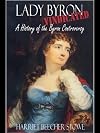
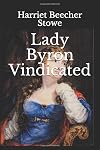
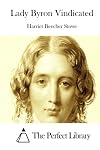
Lady Byron Vindicated
by Harriet Beecher Stowe
On This Page
Description
Trajectory presents classics of world literature with 21st century features! Our original-text editions include the following visual enhancements to foster a deeper understanding of the work: Word Clouds at the start of each chapter highlight important words. Word, sentence, paragraph counts, and reading time help readers and teachers determine chapter complexity. Co-occurrence graphs depict character-to-character interactions as well character to place interactions. Sentiment indexes show more identify positive and negative trends in mood within each chapter. Frequency graphs help display the impact this book has had on popular culture since its original date of publication. Use Trajectory analytics to deepen comprehension, to provide a focus for discussions and writing assignments, and to engage new readers with some of the greatest stories ever told. "Lady Byron Vindicated: A history of the Byron controversy from its beginning in 1816 to the present time" by Harriet Beecher Stowe is a novel that examines the Byron controversy and defends Lady Byron. show lessTags
Recommendations
























Members
- Recently Added By
Author Information

260+ Works 22,939 Members
Harriet Beecher was born in Litchfield, Connecticut, one of nine children of the distinguished Congregational minister and stern Calvinist, Lyman Beecher. Of her six brothers, five became ministers, one of whom, Henry Ward Beecher, was considered the finest pulpit orator of his day. In 1832 Harriet Beecher went with her family to Cincinnati, Ohio. show more There she taught in her sister's school and began publishing sketches and stories. In 1836 she married the Reverend Calvin E. Stowe, one of her father's assistants at the Lane Theological Seminary and a strong antislavery advocate. They lived in Cincinnati for 18 years, and six of her children were born there. The Stowes moved to Brunswick, Maine, in 1850, when Calvin Stowe became a professor at Bowdoin College. Long active in abolition causes and knowledgeable about the atrocities of slavery both from her reading and her years in Cincinnati, with its close proximity to the South, Stowe was finally impelled to take action with the passage of the Fugitive Slave Act in 1850. By her own account, the idea of Uncle Tom's Cabin (1852) first came to her in a vision while she was sitting in church. Returning home, she sat down and wrote out the scene describing the death of Uncle Tom and was so inspired that she continued to write on scraps of grocer's brown paper after her own supply of writing paper gave out. She then wrote the book's earlier chapters. Serialized first in the National Era (1851--52), an important abolitionist journal with national circulation, Uncle Tom's Cabin was published in book form in March 1852. It was an immediate international bestseller; 10,000 copies were sold in less than a week, 300,000 within a year, and 3 million before the start of the Civil War. Family legend tells of President Abraham Lincoln (see Vol. 3) saying to Stowe when he met her in 1862: "So this is the little lady who made this big war?" Whether he did say it or not, we will never know, since Stowe left no written record of her interview with the president. But he would have been justified in saying it. Certainly, no other single book, apart from the Bible, has ever had any greater social impact on the United States, and for many years its enormous historical interest prevented many from seeing the book's genuine, if not always consistent, literary merit. The fame of the novel has also unfortunately overshadowed the fiction that Stowe wrote about her native New England: The Minister's Wooing (1859), Oldtown Folks (1869), Poganuc People (1878), and The Pearl of Orr's Island (1862), the novel that, according to Sarah Orne Jewett, began the local-color movement in New England. Here Stowe was writing about the world and its people closest and dearest to her, recording their customs, their legends, and their speech. As she said of one of these novels, "It is more to me than a story. It is my resume of the whole spirit and body of New England." (Bowker Author Biography) Harriet Beecher Stowe (1811-1896) remains one of the most influential writers in American history. Following the publication of "Uncle Tom's Cabin" she became an instant celebrity, speaking against slavery in the United States & Europe. (Publisher Provided) show less
Common Knowledge
- People/Characters
- Lord Byron; Annabella Milbanke, Lady Byron
Classifications
- Genres
- Fiction and Literature, Biography & Memoir, Literature Studies and Criticism
- DDC/MDS
- 821.7 — Literature & rhetoric English & Old English literatures English Poetry 1800-1837, romantic period
- LCC
- PR4382 .S7 — Language and Literature English English Literature 19th century , 1770/1800-1890/1900
- BISAC
Statistics
- Members
- 21
- Popularity
- 1,236,122
- Languages
- English
- Media
- Paper, Ebook
- ISBNs
- 16
- ASINs
- 4