On This Page
Description
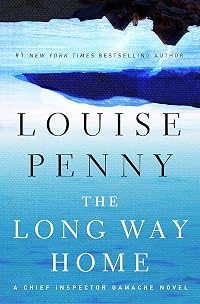
A #1 New York Times Bestseller, Louise Penny's The Long Way Home is an intriguing Chief Inspector Gamache Novel.Happily retired in the village of Three Pines, Armand Gamache, former Chief Inspector of Homicide with the Sûreté du Québec, has found a peace he'd only imagined possible. On warm summer mornings he sits on a bench holding a small book, The Balm in Gilead, in his large hands. "There is a balm in Gilead," his neighbor Clara Morrow reads from the dust jacket, "to make the wounded show more whole."
While Gamache doesn't talk about his wounds and his balm, Clara tells him about hers. Peter, her artist husband, has failed to come home. Failed to show up as promised on the first anniversary of their separation. She wants Gamache's help to find him. Having finally found sanctuary, Gamache feels a near revulsion at the thought of leaving Three Pines. "There's power enough in Heaven," he finishes the quote as he contemplates the quiet village, "to cure a sin-sick soul." And then he gets up. And joins her.
Together with his former second-in-command, Jean-Guy Beauvoir, and Myrna Landers, they journey deeper and deeper into Québec. And deeper and deeper into the soul of Peter Morrow. A man so desperate to recapture his fame as an artist, he would sell that soul. And may have. The journey takes them further and further from Three Pines, to the very mouth of the great St. Lawrence river. To an area so desolate, so damned, the first mariners called it the land God gave to Cain. And there they discover the terrible damage done by a sin-sick soul.
. show less
Tags
Recommendations












Member Reviews
It's so hard to write about Armand Gamache stories without giving them away, and that is, in my humble opionion, the worst sin a reviewer can commit. Every time I review a Louise Penny book, I find myself saying things like "It's quintessential Louise" or "Just when I thought she couldn't get better, she does" or other blathery, toady, almost syncophantic wind-blown compliments that are almost insulting they're so inflated.
BUT SHE'S JUST THAT GOOD.
I was fortunate enough to get my hands on an ARC earlier this summer, and waited to read it until I'd finished a re-read (this time in audio) of the previous nine books in the series, and lurked along in the on-line discussions. Quel fun!
All through the series, I've never liked the character show more of Peter, so I wasn't sure I was going to have much sympathy for him or the people trying to find him. When I sang in the choir several years ago, our choir director tried and tried and tried to get us to master the hymn "There is a Balm in Gilead" to the point that I HATED that hymn. And to put frosting on the proverbial cake, I had a pretty negative recollection of trying to get through Marilynne Robinson's Pulitzer winner Gilead when our book club read it several years ago. If this current book hadn't been written by Louise Penny, and hadn't been about my all-time favorite mystery personality, I probably wouldn't have wanted to read it. I wouldn't have wanted to see Armand's well-deserved retirement "ruined". I just wanted everything to stay in "Three Pines Fairyland". Fairyland it isn't. Life it is. The characters who have become so familiar to us continue to expand, to mature, and let us into their lives. Ruth Zardo, another of my favorite characters finally allows a tiny crack in her armor to let us in, so those of us who have loved her all along can at last begin to see why.
In the end, the only thing I can say is that once again, Louise Penny does not disappoint. She steals our heart, she takes our breath away, she causes us to lose a huge chunk of time since once we embark on this adventure, we neglect everything and everyone else in our lives. I can't wait for the publication date August 26 because I've already pre-ordered a hard back copy (something I rarely do), and the audio to go with it.
If you're not yet a fan, and think you don't like mysteries, give these a try. I don't think you'll be disappointed. show less
BUT SHE'S JUST THAT GOOD.
I was fortunate enough to get my hands on an ARC earlier this summer, and waited to read it until I'd finished a re-read (this time in audio) of the previous nine books in the series, and lurked along in the on-line discussions. Quel fun!
All through the series, I've never liked the character show more of Peter, so I wasn't sure I was going to have much sympathy for him or the people trying to find him. When I sang in the choir several years ago, our choir director tried and tried and tried to get us to master the hymn "There is a Balm in Gilead" to the point that I HATED that hymn. And to put frosting on the proverbial cake, I had a pretty negative recollection of trying to get through Marilynne Robinson's Pulitzer winner Gilead when our book club read it several years ago. If this current book hadn't been written by Louise Penny, and hadn't been about my all-time favorite mystery personality, I probably wouldn't have wanted to read it. I wouldn't have wanted to see Armand's well-deserved retirement "ruined". I just wanted everything to stay in "Three Pines Fairyland". Fairyland it isn't. Life it is. The characters who have become so familiar to us continue to expand, to mature, and let us into their lives. Ruth Zardo, another of my favorite characters finally allows a tiny crack in her armor to let us in, so those of us who have loved her all along can at last begin to see why.
In the end, the only thing I can say is that once again, Louise Penny does not disappoint. She steals our heart, she takes our breath away, she causes us to lose a huge chunk of time since once we embark on this adventure, we neglect everything and everyone else in our lives. I can't wait for the publication date August 26 because I've already pre-ordered a hard back copy (something I rarely do), and the audio to go with it.
If you're not yet a fan, and think you don't like mysteries, give these a try. I don't think you'll be disappointed. show less
Book 10. Really good story about finding Peter. KIRKUS REVIEWArmand Gamache, former chief inspector of homicide for the S?ret? du Qu?bec, is settling into retirement in the idyllic village of Three Pines¥but Gamache understands better than most that danger never strays far from home.With the help of friends and chocolate croissants and the protection of the village?s massive pines, Gamache is healing. His hands don?t shake as they used to; you might just mistake him and his wife, Reine-Marie, for an ordinary middle-age couple oblivious to the world?s horrors. But Gamache still grapples with a ?sin-sick soul?Â¥he can?t forget what lurks just beyond his shelter of trees. It?s his good friend Clara Morrow who breaks his fragile state of show more peace when she asks for help: Peter, Clara?s husband, is missing. After a year of separation, Peter was scheduled to return home; Clara needs to know why he didn?t. This means going out there, where the truth awaitsÂ¥but are Clara and Gamache ready for the darkness they might encounter? The usual cast of characters is here: observant bookseller Myrna; Gamache?s second in command, Jean-Guy Beauvoir; even the bitter old poet, Ruth, is willing to lend a hand to find Peter, an artist who?s lost his way. The search takes them across Quebec to the mouth of the St. Lawrence River, toward another sin-sick soul, one fighting to claw his way out of jealousy?s grasp. Penny develops the story behind Peter?s disappearance at a slow, masterful pace, revealing each layer of the mystery alongside an introspective glance at Gamache and his comrades, who can all sympathize with Peter?s search for purpose. The emotional depth accessed here is both a wonder and a joy to uncover; if only the different legs of Peter?s physical journey were connected as thoughtfully as his emotional one.Gamache?s 10th outing (How the Light Gets In, 2013, etc.) culminates in one breathless encounter, and readers may feel they weren?t prepared for this story to end. The residents of Three Pines will be back, no doubt, as they?ll have new wounds to mend. show less
Chief Inspector Gamache of the Surete du Quebec has retired with his wife, Reine-Marie, to the cozy village of Three Pines. Instead of being able to enjoy the quiet, however, he is asked by a friend, Clara Morrow, to help her find her husband, who had promised to come back after a year and was overdue.
I should just pre-order these books. Forget getting them out of the library, because it's not like I don't know I want them all on my own library shelves eventually. But no, I had to go and request the book and steal it from our shelves barely processed and take home to borrow. What can I say about the series that I haven't already, in trying to explain why I am so drawn to this story and these characters? Because despite the abundance of show more staccato fragments and an amazing amount of crime in one tiny village, I adore these books. These characters have become like real people to me, almost family, so I am carried along with emotions like a pendulum reading about their ups and downs and yelling to them (and the author) mentally when I don't like what's happening. This story, Clara's journey, was no different. I laughed, I cried, I read with bated breath, I stopped reading at points because I didn't want the story to end. I still feel somewhat battered and bruised, but of course I'd read it again in a heartbeat. show less
I should just pre-order these books. Forget getting them out of the library, because it's not like I don't know I want them all on my own library shelves eventually. But no, I had to go and request the book and steal it from our shelves barely processed and take home to borrow. What can I say about the series that I haven't already, in trying to explain why I am so drawn to this story and these characters? Because despite the abundance of show more staccato fragments and an amazing amount of crime in one tiny village, I adore these books. These characters have become like real people to me, almost family, so I am carried along with emotions like a pendulum reading about their ups and downs and yelling to them (and the author) mentally when I don't like what's happening. This story, Clara's journey, was no different. I laughed, I cried, I read with bated breath, I stopped reading at points because I didn't want the story to end. I still feel somewhat battered and bruised, but of course I'd read it again in a heartbeat. show less
Gamache is now retired and living in Three Pines but when a close neighbor needs help he, of course, steps up. But who insists on accompanying him on his search / investigation, and his allowing it is both surprising from a professional perspective, and not surprising knowing Gamache's calm, even-tempered wisdom.
I don't believe I've read any mystery containing as much humanity, kindness, understanding, insight, open-mindedness, tolerance and intelligence. And I've read many, many mysteries.
So for me the true mystery is how does Penny do it again and again?
And oh yes, Penny adds in just the right amount of humor, (Ruth and Gabri) and many descriptions of Canada's breath-taking and dazzling shores, woods and natural wonders.
I show more sincerely wish everyone would read Penny's books, and hope doing so would not just entertain but would make us better people! show less
I don't believe I've read any mystery containing as much humanity, kindness, understanding, insight, open-mindedness, tolerance and intelligence. And I've read many, many mysteries.
So for me the true mystery is how does Penny do it again and again?
And oh yes, Penny adds in just the right amount of humor, (Ruth and Gabri) and many descriptions of Canada's breath-taking and dazzling shores, woods and natural wonders.
I show more sincerely wish everyone would read Penny's books, and hope doing so would not just entertain but would make us better people! show less
The last we saw of Peter Morrow, in A Trick of the Light, his long-suffering wife Clara Morrow was insisting on a year-long trial separation. Clara, long used to living in the more famous Peter’s shadow as an artist, had finally discovered how he had been sabotaging her for years, too emotionally insecure to bear his wife’s beautiful paintings to eclipse his.
Now, after the harrowing events of The Beautiful Mystery and How the Light Gets In (can it only be a year?), Clara is awaiting Peter’s homecoming. Only it never happens. What has become of the charming, incredibly handsome if emotionally crippled abstract artist?
In this 10th Three Pines mystery, Armand Gamache has begun a well-deserved retirement in the beautiful but tiny show more village in Canada’s Eastern Townships, with his clever wife Reine-Marie at his side. But Gamache cannot ignore Clara’s pain and worry over Peter. So, aided by his longtime second-in-command and now son-in-law Jean-Guy Beauvoir and by another protégée, Isabelle Lacoste, now the new Chief Inspector of Homicide in the Sûreté du Québec, Gamache starts to painstakingly track what Peter Morrow has been up to for the last year. He finds that Morrow has crossed Europe — Paris, Florence, Venice; Dumphries, Scotland — before returning to Canada. But Peter’s trail vanished completely four months ago when he left Québec City after withdrawing $3,000. Where did he go? And why? Clara, Gamache, Jean-Guy, and Clara’s best friend, the psychiatrist-turned-bookstore owner Myrna Landers, collaborate in finding out.
The Long Way Home differs from the roller-coaster ride that was How the Light Gets In, its immediate predecessor, as much as can be; that The Long Way Home unfurls more slowly, but still no less mesmerizingly, is yet more evidence of Louise Penny’s gift as an author. However, toward the end, The Long Way Home packs as many twists and surprises as any of Penny’s novels. The harrowing ending will catch readers completely by surprise — especially considering the slower-paced narration that precedes the reversal. The ending packs quite a punch! Readers won’t be sorry to take The Long Way Home.
One last bit: Midway through the book, Penny includes an extended reference to a magical garden in Dumphries, Scotland: the Garden of Cosmic Speculation. As you can see here, the garden, which is only open one day a year for five hours, looks like an Alice-in-Wonderland vision — if the mushroom that young Alice nibbled had been a psilocybin one. Checkerboards alternate with double helixes worthy of DNA and an assortment of three-dimensional spirals. As with A Rule Against Murder, Penny has issued an invitation to another one-of-a-kind tourist spot to add to my bucket list. show less
Now, after the harrowing events of The Beautiful Mystery and How the Light Gets In (can it only be a year?), Clara is awaiting Peter’s homecoming. Only it never happens. What has become of the charming, incredibly handsome if emotionally crippled abstract artist?
In this 10th Three Pines mystery, Armand Gamache has begun a well-deserved retirement in the beautiful but tiny show more village in Canada’s Eastern Townships, with his clever wife Reine-Marie at his side. But Gamache cannot ignore Clara’s pain and worry over Peter. So, aided by his longtime second-in-command and now son-in-law Jean-Guy Beauvoir and by another protégée, Isabelle Lacoste, now the new Chief Inspector of Homicide in the Sûreté du Québec, Gamache starts to painstakingly track what Peter Morrow has been up to for the last year. He finds that Morrow has crossed Europe — Paris, Florence, Venice; Dumphries, Scotland — before returning to Canada. But Peter’s trail vanished completely four months ago when he left Québec City after withdrawing $3,000. Where did he go? And why? Clara, Gamache, Jean-Guy, and Clara’s best friend, the psychiatrist-turned-bookstore owner Myrna Landers, collaborate in finding out.
The Long Way Home differs from the roller-coaster ride that was How the Light Gets In, its immediate predecessor, as much as can be; that The Long Way Home unfurls more slowly, but still no less mesmerizingly, is yet more evidence of Louise Penny’s gift as an author. However, toward the end, The Long Way Home packs as many twists and surprises as any of Penny’s novels. The harrowing ending will catch readers completely by surprise — especially considering the slower-paced narration that precedes the reversal. The ending packs quite a punch! Readers won’t be sorry to take The Long Way Home.
One last bit: Midway through the book, Penny includes an extended reference to a magical garden in Dumphries, Scotland: the Garden of Cosmic Speculation. As you can see here, the garden, which is only open one day a year for five hours, looks like an Alice-in-Wonderland vision — if the mushroom that young Alice nibbled had been a psilocybin one. Checkerboards alternate with double helixes worthy of DNA and an assortment of three-dimensional spirals. As with A Rule Against Murder, Penny has issued an invitation to another one-of-a-kind tourist spot to add to my bucket list. show less
As The Long Way Home, by Louise Penny, begins it is just over a year since the artist Clara Morrow has asked her husband Peter, also an artist, to leave the family home because of his jealousy and active undermining of her work, but they make a promise to meet again in one year, to see where their relationship might be. When Peter doesn't show up as promised, Clara asks the retired Chief Inspector Armand Gamache, lately the head of the homicide division of the Quebec branch of the RCMP and now living happily with his wife Reine-Marie in Three Pines, to help her find him. Clara believes that Peter wouldn't have broken his promise unless something terrible had happened to him. But it seems Peter has just been flitting around the world, show more from one artistic nirvana to another, or maybe not - and maybe he's not gone entirely from Quebec after all in the end, even though he seems to have gone to the end of the world....Unlike much of the Gamache series, this one focuses on the world of art and artists, which have always been touchpoints in the series of course through Clara and others; but here Gamache is not in charge, but serving at the intuitions of another's Muse. And it works, as ever it works. Penny has a way of taking the reader into the hearts, minds and souls of her characters, a very rare gift indeed. I loved the book, kept trying to slow down reading it so as to prolong my immersion in its world while at the same time wanting to know what happens next right this minute dammit! And, yes, I cried (a lot) at the end. Highly recommended. show less
Happily retired in the village of Three Pines, Armand Gamache, former Chief Inspector of Homicide with the Sûreté du Québec, has found a peace he’d only imagined possible. On warm summer mornings he sits on a bench holding a small book, The Balm in Gilead, in his large hands. "There is a balm in Gilead," his neighbor Clara Morrow reads from the dust jacket, "to make the wounded whole."
While Gamache doesn’t talk about his wounds and his balm, Clara tells him about hers. Peter, her artist husband, has failed to come home. Failed to show up as promised on the first anniversary of their separation. She wants Gamache’s help to find him. Having finally found sanctuary, Gamache feels a near revulsion at the thought of leaving Three show more Pines. "There’s power enough in Heaven," he finishes the quote as he contemplates the quiet village, "to cure a sin-sick soul." And then he gets up. And joins her.
Together with his former second-in-command, Jean-Guy Beauvoir, and Myrna Landers, they journey deeper and deeper into Québec. And deeper and deeper into the soul of Peter Morrow. A man so desperate to recapture his fame as an artist, he would sell that soul. And may have. The journey takes them further and further from Three Pines, to the very mouth of the great St. Lawrence river. To an area so desolate, so damned, the first mariners called it The land God gave to Cain. And there they discover the terrible damage done by a sin-sick soul. show less
While Gamache doesn’t talk about his wounds and his balm, Clara tells him about hers. Peter, her artist husband, has failed to come home. Failed to show up as promised on the first anniversary of their separation. She wants Gamache’s help to find him. Having finally found sanctuary, Gamache feels a near revulsion at the thought of leaving Three show more Pines. "There’s power enough in Heaven," he finishes the quote as he contemplates the quiet village, "to cure a sin-sick soul." And then he gets up. And joins her.
Together with his former second-in-command, Jean-Guy Beauvoir, and Myrna Landers, they journey deeper and deeper into Québec. And deeper and deeper into the soul of Peter Morrow. A man so desperate to recapture his fame as an artist, he would sell that soul. And may have. The journey takes them further and further from Three Pines, to the very mouth of the great St. Lawrence river. To an area so desolate, so damned, the first mariners called it The land God gave to Cain. And there they discover the terrible damage done by a sin-sick soul. show less
Members
- Recently Added By
Lists

Crime and Mysteries to Read
746 works; 31 members

Recommend the 20 best books you've read in the last five years
2,168 works; 606 members

Favorite Books from the 2010s
75 works; 3 members

Books Bought & Received as Gifts in 2014
81 works; 1 member

Books I Own But Haven't Read
144 works; 2 members

Kirkus Reviews Best Fiction of 2014
100 works; 7 members

Carole's List
445 works; 13 members

Books Read in 2021
5,361 works; 114 members

Books recommended by Calgary Public Library staff
1,588 works; 4 members

Thriller Authors to read
59 works; 1 member
Author Information

40+ Works 63,377 Members
Louise Penny was born in Toronto, Canada in 1958. She earned a Bachelor of Applied Arts (Radio and Television) from Ryerson Polytechnical Institute (now Ryerson University) in 1979. Before she turned to writing mystery novels in 2004, she was a journalist and radio host for the Canadian Broadcasting Corporation in various cities across Canada for show more 25 years. She writes the Chief Inspector Gamache Novel series. She has won numerous awards including the New Blood Dagger, Arthur Ellis, Barry, Anthony, and Dilys awards for Still Life and the 2007 Agatha Award for Best Novel for A Fatal Grace. Louise's title, The Long Way Home, made the Hot Mystery Title's List for Summer 2014. Her titles The Nature of the Beast made The New York Times best seller list in 2015 and A Great Reckoning made The New York Times best seller list in 2016. (Bowker Author Biography) show less
Some Editions
Awards and Honors
Awards
Distinctions
Series

Work Relationships
Common Knowledge
- Canonical title
- The Long Way Home
- Original title
- The Long Way Home
- Original publication date
- 2014-08-26
- People/Characters
- Armand Gamache; Reine-Marie Gamache; Jean-Guy Beauvoir; Clara Morrow; Myrna Landers; Ruth Zardo (show all 11); Olivier Brulé; Gabri Dubeau; Marcel Chartrand - Art Gallery owner; Professor Paul Massey - Art Professor; Professor Sebastian Norman - Art Professor
- Important places
- Montréal, Québec, Canada; Three Pines, Québec, Canada; Tabaquen, Québec, Canada (fictitious); Baie-Saint-Paul, Québec, Canada
- Dedication
- For Michael
Surprised by Joy - First words
- As Clara Morrow approached, she wondered if he'd repeat the same small gesture he'd done every morning.
It was so tiny, so insignificant.j So easy to ignore; The first time. - Last words
- (Click to show. Warning: May contain spoilers.)And she opened it.
- Original language*
- Inglés
*Some information comes from Common Knowledge in other languages. Click "Edit" for more information.
Classifications
Statistics
- Members
- 2,595
- Popularity
- 7,302
- Reviews
- 147
- Rating
- (3.85)
- Languages
- 8 — Czech, English, Finnish, French, German, Italian, Spanish, Swedish
- Media
- Paper, Audiobook, Ebook
- ISBNs
- 40
- ASINs
- 16