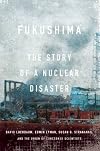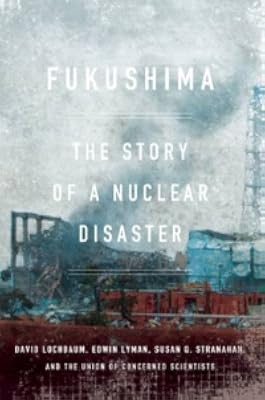
Fukushima: The Story of a Nuclear Disaster
by David Lochbaum
On This Page
Description
"In the first definitive account of the Fukushima disaster, two leading experts from the Union of Concerned Scientists ... team up with journalist Susan Q. Stranahan ... to tell this harrowing story, [which] combines [an] ... account of the tsunami and the nuclear emergency it created with an explanation of the science and technology behind the meltdown as it unfolded in real time"--Amazon.com.Tags
Recommendations


Member Reviews
Fukushima is not a climate change story, but it is a story about how nuclear design has not been required to take extreme scenarios seriously, such as an accident that cuts power to the plant—required for cooling, which itself is required to avoid meltdown—for more than 12 hours. I myself am willing to consider nuclear power as part of the mix, but I was convinced that I shouldn’t trust existing US regulators to make reactors safe (US standards are extremely influential, but they decided there was nothing to learn from Fukushima’s exposure to supposedly impossible conditions).
The Book-list review says that this book is "Thriller-like". It isn't. The first 20% of the book which recounts the facts of the story certainly holds one's attention, but the book is published by the Union of Concerned Scientists and it has an ax to grind with the Nuclear Regulatory Commission, who get worked over pretty well here. As a member of the UCS, I must say that I support their view point, it just can be a little dull. There is extensive detailed description of various committee meetings and there is considerable repetition. Most times that the NRC's RASCAL model is mentioned, it is also stated that it was only good to 50 miles out. By the middle of the book, I felt that I could pose as a RASCAL model expert; if anyone show more mentioned it, I would say, "please!..everyone knows that it is only good to 50 miles". show less
This ebook was a long slog about the post-Fukushima regulations (or lack of) by the U.S. National Regulatory Commission (NRC), with some history going back to Three Mile Island. The U.S. nuclear industry built the Fukushima plant but, after the disaster, still wasn't too concerned about similar risks at nuclear plants in the U.S., even though some are downstream of dams and could be knocked out by flooding.
Almost no U.S. safety regulations were changed after Fukushima, as the NRC had strong ties to the nuclear industry. At least not as of this publication date of 2013, two years after the event. That doesn't give me much confidence.
Most of the book was dry. (5 stars for importance, 3 stars for engagement.) I made it through because of show more my interest in the topic but was glad when the book finally ended. If you're looking for a dramatic first-person narrative about the Fukushima disaster, you'll have to look elsewhere. show less
Almost no U.S. safety regulations were changed after Fukushima, as the NRC had strong ties to the nuclear industry. At least not as of this publication date of 2013, two years after the event. That doesn't give me much confidence.
Most of the book was dry. (5 stars for importance, 3 stars for engagement.) I made it through because of show more my interest in the topic but was glad when the book finally ended. If you're looking for a dramatic first-person narrative about the Fukushima disaster, you'll have to look elsewhere. show less
David Lochbaum’s and Edwin Lyman’s book, ”Fukushima”, begins by describing the catastrophic consequences at the Fukushima nuclear power plant after the March, 2011 tsunami overwhelmed the plant. The beginning of the book read like an action - adventure novel. Unfortunately, we have to remember that the situation was a true disaster with real consequences, and not an exciting novel.
We all now recognize how the accident ended, but as the accident was developing, the outcome was in question, and the narrative captures that uncertainty. ”Fukushima” looks at what really was happening in the nuclear power plant as the accident evolved, through the eyes of those who were there. They describe the changes in plant conditions, what show more was likely to happen next, whether critical equipment could be restored, where necessary equipment could be obtained, what external resources will be required, how the rapidly changing condition in the plant was being communicated to the public, etc. These were all questions which needed immediate answers and on-going evaluations.
Understandably, the book has little positive to say about the Fukushima plant specifically, and the nuclear industry in general. Written by long-standing critics of nuclear power, the language often tended toward the extreme, and worst-case outcomes were frequently referred to as "expected" impact. Nonetheless, it made for a gripping tale and captured the mayhem of the initial response to the accident.
Subsequent comparisons in the book to the 1979 Three Mile Island accident in Pennsylvania seemed extreme, but that's consistent with the message the author's wish to convey, I imagine. They've been calling for limitations and / or elimination of nuclear power for decades, and this style of writing is in keeping with those beliefs. Also, the authors characterize the Nuclear Regulatory Commissioners (NRC) and staff as being biased toward the Industry positions, and only they and the NRC Chairman Jaczko are identified as being able to see the flaws in the industry expert's opinions that the U.S. nuclear power plants remain safe to continue operation.
Authors David Lochbaum and Edwin Lyman are nuclear watchdogs whose careers revolve around highlighting weaknesses, real or perceived, in nuclear power plants. Following the Fukushima nuclear plant accident in Japan, and seeing the widespread dispersal of nuclear contamination, it's not hard to see why they characterize the nuclear power Industry, and its regulators, in flawed terms. show less
We all now recognize how the accident ended, but as the accident was developing, the outcome was in question, and the narrative captures that uncertainty. ”Fukushima” looks at what really was happening in the nuclear power plant as the accident evolved, through the eyes of those who were there. They describe the changes in plant conditions, what show more was likely to happen next, whether critical equipment could be restored, where necessary equipment could be obtained, what external resources will be required, how the rapidly changing condition in the plant was being communicated to the public, etc. These were all questions which needed immediate answers and on-going evaluations.
Understandably, the book has little positive to say about the Fukushima plant specifically, and the nuclear industry in general. Written by long-standing critics of nuclear power, the language often tended toward the extreme, and worst-case outcomes were frequently referred to as "expected" impact. Nonetheless, it made for a gripping tale and captured the mayhem of the initial response to the accident.
Subsequent comparisons in the book to the 1979 Three Mile Island accident in Pennsylvania seemed extreme, but that's consistent with the message the author's wish to convey, I imagine. They've been calling for limitations and / or elimination of nuclear power for decades, and this style of writing is in keeping with those beliefs. Also, the authors characterize the Nuclear Regulatory Commissioners (NRC) and staff as being biased toward the Industry positions, and only they and the NRC Chairman Jaczko are identified as being able to see the flaws in the industry expert's opinions that the U.S. nuclear power plants remain safe to continue operation.
Authors David Lochbaum and Edwin Lyman are nuclear watchdogs whose careers revolve around highlighting weaknesses, real or perceived, in nuclear power plants. Following the Fukushima nuclear plant accident in Japan, and seeing the widespread dispersal of nuclear contamination, it's not hard to see why they characterize the nuclear power Industry, and its regulators, in flawed terms. show less
I feel the majority of people don't realise how close the events at Fukushima were to an extreme disaster. Based on my memory of the news coverage at the time, the reporting felt 'things aren't great but everything is under control, don't worry'. That wasn't really the case. This was a very thorough analysis of the incident at Fukushima and the neighbouring plant. It detailed the events leading up to the Level 7 accident and issues as they developed. There was a quite extensive look at the ongoing clean up of the site and the evacuated area including problems of storage of contaminated material. There was also an overview of the history of nuclear safety in Japan and other nuclear power sites which was particularly interesting as it show more discussed they ways in which hazard data is 'spun' to appear less damaging. Overall a good read, especially is you are interested in nuclear accidents. show less
The book was a bit too obviously written by committee and had more than enough filler chapters. Also, not clear that the authors have a coherent thought on whether nuclear power should exist or not.
Ratings
Members
- Recently Added By
Lists

Accidents, Disasters, and Tragedies
175 works; 7 members

Non-Fiction Nuclear History
28 works; 1 member
Author Information

6+ Works 137 Members
Classifications
- Genres
- Nonfiction, General Nonfiction, Science & Nature, Technology, History
- DDC/MDS
- 363.17 — Society, government, & culture Social problems and social services Public Safety - Police, Crime Investigation Public safety from hazards Hazardous materials
- LCC
- TK1365 .J3 .L63 — Technology Electrical engineering. Electronics. Nuclear engineering Electrical engineering. Electronics. Nuclear Production of electric energy or power.
- BISAC
Statistics
- Members
- 132
- Popularity
- 248,196
- Reviews
- 6
- Rating
- (3.43)
- Languages
- English
- Media
- Paper, Ebook
- ISBNs
- 4
- ASINs
- 2