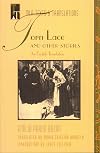
Torn Lace and Other Stories
by Emilia Pardo Bazán
On This Page
Description
Although written a century ago, the sixteen stories by Emilia Pardo Bazán collected in this volume are strikingly relevant to contemporary concerns. Noted for narrative complexity, stylistic variety, and feminist themes, Pardo Bazán's stories explore many aspects of the relationships between men and women. Readers of these stories, most of which are here translated into English for the first time, will encounter memorable and affecting characters. A mysterious nun spends her days in a show more convent crying over something that happened to her many years ago, when she was a young woman. A young man tries to uncover the true reason a scheming woman married his uncle. An unwed pregnant woman finds unexpected help from a misogynist doctor. A bachelor wishing to marry develops a special test for prospective wives, only to see it backfire. And in the title story, a bride suddenly calls off her wedding at the last possible moment without an explanation. Both outspoken and witty, melancholy and humorous, these stories will interest general readers as well as students and scholars of Spanish literature. show lessTags
Recommendations















Member Reviews
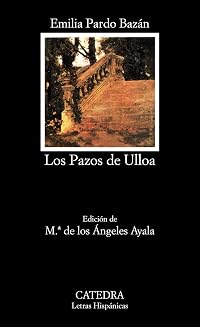
Pardo Bazán (1852-1921) wrote novels, short stories, and literary criticism. Her most famous novel, The House of Ulloa, took as its theme the moral (and actual) ruin of the aristocracy in Galicia and set it against a poetic depiction of country life. She met and learned from de Maupassant, infusing her stories with telling detail and psychological insight. Her stories are almost always quite short—pithy and to the point. She championed the rights of women and often took aspects of women’s daily lives as her themes. She taught literature at the University of Madrid and received the rare (in those days) distinction of being honored with an endowed chair in literature. This was my introduction to her writing and I was impressed enough show more that I will look for other stories of hers and maybe even crack open The House of Ulloa. show less
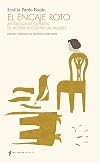
Aunque su faceta más conocida es la de novelista, Emilia Pardo Bazán fue, entre otras cosas, una fecunda autora de cuentos, de los que publicó alrededor de seiscientos cincuenta. Uno de los temas con mayor presencia en su obra cuentística es el de la violencia ejercida por los hombres contra las mujeres, asunto este que también aparece en algunas de sus novelas y en varios de sus artículos. Esta antología, editada y prologada por Cristina Patiño Eirín, profesora de la Universidad de Santiago de Compostela, reúne treinta y cinco de los cuentos de Pardo Bazán que giran en torno a este tema. Variados en cuanto al punto de vista, al tono, a la ambientación, a la clase social de sus personajes, a la relación que existe entre la show more mujer y el hombre (en la mayoría de los casos es su prometida, su esposa o su hija, pero en algunos no hay ningún vínculo entre ellos) y al tipo de violencia (la física, la psicológica, la sexual, la patrimonial, la social, la simbólica), estos relatos, obra de una escritora que nunca dejó de denunciar la desigualdad entre mujeres y hombres, ofrecen un amplio panorama de la violencia machista y muestran actitudes y comportamientos que siguen vigentes hoy en día. Varios de los cuentos recogidos en esta antología los protagonizan mujeres que no dudan en plantar cara a su maltratador o que se dan cuenta a tiempo de cómo es en realidad el hombre con el que se van a casar y actúan en consecuencia. show less
Mar 27, 2019Spanish
Ratings
Members
- Recently Added By
Author Information

200+ Works 1,728 Members
The Countess Emilia Pardo Bazan introduced the French naturalistic movement to Spain with The Burning Question (1881). While she recognized the excesses of naturalism in its exclusive concentration on the sordid aspects of life, she saw in it possibilities for directing the Spanish novel to social and political issues. The Son of the Bondwoman show more (Los Pasos de Ulloa, 1886), which deals with the degeneration of an aristocratic family, is naturalistic in subject and in its deterministic conclusion. (Bowker Author Biography) show less
Some Editions
Common Knowledge
- Canonical title
- Torn Lace and Other Stories
- Original title
- El encaje roto y otros cuentos
- Original publication date
- 1897
- Original language*
- Español
*Some information comes from Common Knowledge in other languages. Click "Edit" for more information.
Classifications
- Genres
- Fiction and Literature, General Fiction, Historical Fiction
- DDC/MDS
- 863.5 — Literature & rhetoric Spanish Literature Spanish fiction 19th century 1800–1900
- LCC
- PQ6629 .A7 .A613 — Language and Literature French, Italian, Spanish and Portuguese literatures Spanish literature Individual authors, 1868-1960
- BISAC
Statistics
- Members
- 49
- Popularity
- 616,675
- Reviews
- 2
- Rating
- (3.88)
- Languages
- English, Spanish
- Media
- Paper
- ISBNs
- 3
- ASINs
- 1