On This Page
Description
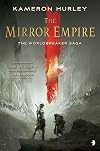
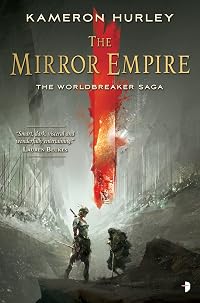
An ambitious tale of magic, war, and parallel worlds that pushes the boundaries of epic fantasy—from a two-time Hugo Award winnerOn the eve of a recurring catastrophic event known to extinguish nations and reshape continents, a troubled orphan evades death and slavery to uncover her own bloody past . . . while a world goes to war with itself.
In the frozen kingdom of Saiduan, invaders from another realm are decimating whole cities, leaving behind nothing but ash and ruin. At the heart show more of this war lie the pacifistic Dhai people, once enslaved by the Saiduan and now courted by their former masters to provide aid against the encroaching enemy.
As the dark star of the cataclysm rises, an illegitimate ruler is tasked with holding together a country fractured by civil war; a precocious young fighter is asked to betray his family to save his skin; and a half-Dhai general must choose between the eradication of her father's people or loyalty to her alien Empress. Through tense alliances and devastating betrayal, the Dhai and their allies attempt to hold against a seemingly unstoppable force as enemy nations prepare for a coming together of worlds as old as the universe itself. In the end, one world will rise—and many will perish.
Stretching from desolate tundras to steamy, semi-tropical climes seething with sentient plant life, this is an epic tale of blood mages and mercenaries, emperors and priestly assassins, who must unite to save a world on the brink of ruin.
File Under: Fantasy [ Orphaned Child | World at War | Blood Magic | The Fluidity of Gender]. show less
Tags
Recommendations







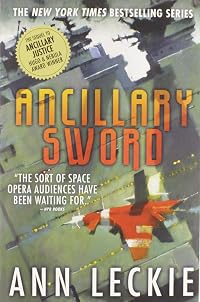
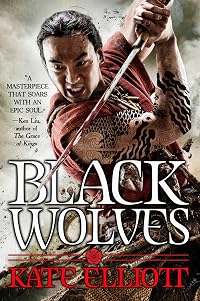
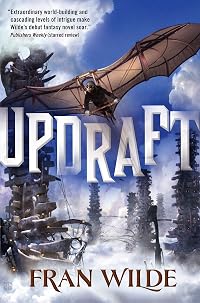
Member Reviews
Do you like Ursula le Guin?
And more specifically, do you like le Guin's anthropological world-building, where she takes the relationships and social constructs we take for granted, upends them, and writes a novel about it?
If so, you are likely to enjoy The Mirror Empire, but Hurley is going to make you work for it. It is as if every possible permutation of a society except for our own exists within its pages: there are men and women as equals, women as stronger and bigger than men, armies run by women, armies run by both, marriages of multiple men and women to each other, marriages where women are the boss of the men and the men are treated as women used to be, societies where the concept of consent is so sacred that you do not ever show more touch anyone without first asking them--and if you're anything like me, this will give you a fairly significant brain spasm in the first 75 pages or so. It's all very, very good, but there isn't a single solitary concept you can take for granted. There are no nuclear families as we know them, and men don't run anything (at least, not without strong female help). Some of the societies have two genders; some have three; and one has FIVE. And until the rules and constructs of this world start coming into focus, keeping it all straight takes a strong concentration.
However, it pays off. It's a strong first novel in an eventual trilogy, with a fairly inventive take on the multiple-worlds storyline. The non-social worldbuilding is very strong, with living buildings and people riding bears, for starters. The characters are interesting and endlessly inventive. The system of magic is vaguely astrological, but if you can suspend your disbelief on that score, it has a lot to offer. It is, at the very least, refreshing to read an epic fantasy novel where the social constructs and gender relations are as up for imaginative restructuring as the laws of physics, say. show less
And more specifically, do you like le Guin's anthropological world-building, where she takes the relationships and social constructs we take for granted, upends them, and writes a novel about it?
If so, you are likely to enjoy The Mirror Empire, but Hurley is going to make you work for it. It is as if every possible permutation of a society except for our own exists within its pages: there are men and women as equals, women as stronger and bigger than men, armies run by women, armies run by both, marriages of multiple men and women to each other, marriages where women are the boss of the men and the men are treated as women used to be, societies where the concept of consent is so sacred that you do not ever show more touch anyone without first asking them--and if you're anything like me, this will give you a fairly significant brain spasm in the first 75 pages or so. It's all very, very good, but there isn't a single solitary concept you can take for granted. There are no nuclear families as we know them, and men don't run anything (at least, not without strong female help). Some of the societies have two genders; some have three; and one has FIVE. And until the rules and constructs of this world start coming into focus, keeping it all straight takes a strong concentration.
However, it pays off. It's a strong first novel in an eventual trilogy, with a fairly inventive take on the multiple-worlds storyline. The non-social worldbuilding is very strong, with living buildings and people riding bears, for starters. The characters are interesting and endlessly inventive. The system of magic is vaguely astrological, but if you can suspend your disbelief on that score, it has a lot to offer. It is, at the very least, refreshing to read an epic fantasy novel where the social constructs and gender relations are as up for imaginative restructuring as the laws of physics, say. show less
If there's one thing that can be said about Kameron Hurley, she is today's dominatrix spinner of yarns pushing the boundaries of genre fantasy. With The Mirror Empire (the debut book in her new Worldbreaker Saga series), she practically pokes out the eyes of the genre itself.
I was first introduced to Hurley's work with her Bel Dame series starting with her award-winning God's War. I don't remember how I stumbled on it. I think I read an excerpt or a review on Tor.com. From the first few pages on, I was blown away and thoroughly hooked on her heroine, Nyx, a badass assassin mercenary. Hurley had somehow taken the fantasy genre, creaking in its sexist, medieval tropes, and made it postmodern, hardboiled, and even feminist. It was also the show more first time I'd heard of the subgenre, "bug punk." I think Hurley handcrafted this new category herself with Bel Dame. I became a Hurley fan.
It was with these high expectations that I devoured The Mirror Empire. And after a whirlwind of reading, when I turned that last page, I left the book on a high, but with mixed, even polarizing feelings.
As others here have waxed on about, Hurley turns the genre inside out again with this new book. The Mirror Empire starts with Lilia, a young blood witch. Their village is attacked by a ruthless invading force. To save her daughter, Lilia's mother opens a portal. Lilia is smuggled through only to find herself an orphan in a completely different place, far from the carnage. The surroundings are familiar to Lilia but also different, and it reminded me of that Freudian concept of "unheimlich"where you have that juxtaposition of the familiar and unfamiliar. Aside from Lilia, readers are bounced around to the POVs of other characters who play starring roles themselves.
The color of the sky tells the truth. As the story develops, we soon discover that Lilia's new life is actually in a new world—not the one to which she was born. Confused yet? The Mirror Empire isn't really that complex once you understand that there are actually two worlds. And so the true meaning of the title is made clear.
War is coming, but not along the old lines of dueling empires and tribes. There are two worlds, and those worlds are colliding.
Concept-wise, this is just brilliant: There are two planes of existence, connected through a portal that one side is building. But there are terms and conditions (which I won't reveal here), which causes confusion, chaos, and mayhem.
Writers have long dealt with the notion of parallel universes and realities in books, TV shows, and film, though it has often been the domain of science fiction rather than fantasy. (Think Star Trek's mirror universe storylines). The themes of parallel identities and perspectives are rich ore for any writer of any genre to mine, and I admire Hurley's nerve. In The Mirror Empire, Hurley gives us a world where one people are the conquerors; in its counterpart, the same people are scattered pacifist tribes. Instant conflict. Hurley sets up the idea … and yet something falls flat.
The constant switching from character to character, even within chapters was abrupt and jarring. With two worlds, and potentially two of each character, I didn't trust my characters as I was reading them. "Which world am I in?" I kept asking myself. For some reason, I thought Hurley would go back and forth between the two worlds, and yet we really only stay with one. Honestly, I think the book would have been better served if Hurley had housed her chapters into sections, and clearly alternated between one world and the other. Later, those parallel worlds do come closer, and the various characters cross paths and meet, and the novel's structure could have echoed that accordingly to better effect. Instead, we have something of a hodgepodge.
The use of multiple POVs was also clumsy. Some of Hurley's characters were better fleshed out than others. Lilia, for example, starts off as a fascinating lead character and ends up a fascinating hero-figure character by the end of the book, but her journey from point A to point B felt lacking. For most of the book, she is buffeted around, a simple pawn, and I grew tired of her storyline at times.
One of the best things about this book is the world-building. Some people found the gender role reversals weird, but I didn't; it fit the book's overall tone and style very well. Hurley creates two worlds and three or four societies within each without resorting to massive info dumps. Still, it was overwhelming at times keeping track of the jargon and cultural terms, and I often had to cross-reference the glossary at the back of the book.
More than anything, The Mirror Empire is showing us that everything has a shadow, a dark side. The Mirror Empire is a brutal book, and it doesn't hold back on the violence and atrocities of war. Characters die in grotesque ways. Hundreds of people are slaughtered indiscriminately. Hurley's story is otherworldly and yet there are parallels to our own very real world of genocide and ethnic cleansing. That's probably the most horrific part of all. Syria and Iraq, or the conflicts in central Africa are not too far way from the world of this book. The Mirror Empire is a sobering reminder of how our tendency to prejudice can lead to brutality.
Dark and imaginative, but ultimately in need of content editing and tightening, The Mirror Empire is a challenging read. But it's a worthy read just for the way it has enthusiastically defied so many fantasy conventions. Despite my reservations, I am eagerly anticipating Book 2. show less
I was first introduced to Hurley's work with her Bel Dame series starting with her award-winning God's War. I don't remember how I stumbled on it. I think I read an excerpt or a review on Tor.com. From the first few pages on, I was blown away and thoroughly hooked on her heroine, Nyx, a badass assassin mercenary. Hurley had somehow taken the fantasy genre, creaking in its sexist, medieval tropes, and made it postmodern, hardboiled, and even feminist. It was also the show more first time I'd heard of the subgenre, "bug punk." I think Hurley handcrafted this new category herself with Bel Dame. I became a Hurley fan.
It was with these high expectations that I devoured The Mirror Empire. And after a whirlwind of reading, when I turned that last page, I left the book on a high, but with mixed, even polarizing feelings.
As others here have waxed on about, Hurley turns the genre inside out again with this new book. The Mirror Empire starts with Lilia, a young blood witch. Their village is attacked by a ruthless invading force. To save her daughter, Lilia's mother opens a portal. Lilia is smuggled through only to find herself an orphan in a completely different place, far from the carnage. The surroundings are familiar to Lilia but also different, and it reminded me of that Freudian concept of "unheimlich"where you have that juxtaposition of the familiar and unfamiliar. Aside from Lilia, readers are bounced around to the POVs of other characters who play starring roles themselves.
The color of the sky tells the truth. As the story develops, we soon discover that Lilia's new life is actually in a new world—not the one to which she was born. Confused yet? The Mirror Empire isn't really that complex once you understand that there are actually two worlds. And so the true meaning of the title is made clear.
War is coming, but not along the old lines of dueling empires and tribes. There are two worlds, and those worlds are colliding.
Concept-wise, this is just brilliant: There are two planes of existence, connected through a portal that one side is building. But there are terms and conditions (which I won't reveal here), which causes confusion, chaos, and mayhem.
Writers have long dealt with the notion of parallel universes and realities in books, TV shows, and film, though it has often been the domain of science fiction rather than fantasy. (Think Star Trek's mirror universe storylines). The themes of parallel identities and perspectives are rich ore for any writer of any genre to mine, and I admire Hurley's nerve. In The Mirror Empire, Hurley gives us a world where one people are the conquerors; in its counterpart, the same people are scattered pacifist tribes. Instant conflict. Hurley sets up the idea … and yet something falls flat.
The constant switching from character to character, even within chapters was abrupt and jarring. With two worlds, and potentially two of each character, I didn't trust my characters as I was reading them. "Which world am I in?" I kept asking myself. For some reason, I thought Hurley would go back and forth between the two worlds, and yet we really only stay with one. Honestly, I think the book would have been better served if Hurley had housed her chapters into sections, and clearly alternated between one world and the other. Later, those parallel worlds do come closer, and the various characters cross paths and meet, and the novel's structure could have echoed that accordingly to better effect. Instead, we have something of a hodgepodge.
The use of multiple POVs was also clumsy. Some of Hurley's characters were better fleshed out than others. Lilia, for example, starts off as a fascinating lead character and ends up a fascinating hero-figure character by the end of the book, but her journey from point A to point B felt lacking. For most of the book, she is buffeted around, a simple pawn, and I grew tired of her storyline at times.
One of the best things about this book is the world-building. Some people found the gender role reversals weird, but I didn't; it fit the book's overall tone and style very well. Hurley creates two worlds and three or four societies within each without resorting to massive info dumps. Still, it was overwhelming at times keeping track of the jargon and cultural terms, and I often had to cross-reference the glossary at the back of the book.
More than anything, The Mirror Empire is showing us that everything has a shadow, a dark side. The Mirror Empire is a brutal book, and it doesn't hold back on the violence and atrocities of war. Characters die in grotesque ways. Hundreds of people are slaughtered indiscriminately. Hurley's story is otherworldly and yet there are parallels to our own very real world of genocide and ethnic cleansing. That's probably the most horrific part of all. Syria and Iraq, or the conflicts in central Africa are not too far way from the world of this book. The Mirror Empire is a sobering reminder of how our tendency to prejudice can lead to brutality.
Dark and imaginative, but ultimately in need of content editing and tightening, The Mirror Empire is a challenging read. But it's a worthy read just for the way it has enthusiastically defied so many fantasy conventions. Despite my reservations, I am eagerly anticipating Book 2. show less
On one hand, this is an amazingly deep, original and good book - it feels like Malazan written by Jemisin. On the other hand, it is a terribly tiring reading experience (again, like Malazan) and I felt like studying for an exam while reading it. So a 5/5 book, but a 2/5 experience.
This is really excellent, full of amazing imagination and solid characters. It's written with deftness and flair that never get in each others' way, and has big, chewy plot.
It's also almost no fun at all. There is heaps of amazing going on, but very little chance for moments of wonder and delight. And maybe three nice things happens to characters in the entirety of the book. (And a couple of those are sort of subjective or fleeting. Even when one character is saved from the brink of death, I found myself thinking, "Maybe you'd be better off out of this...")
And look, I guess that's kind of the point? Survival is a powerful motivator, and human beings get nasty on that knife-edge more often than they get generous (though there is a corker show more of a moral quandary in that regard at the centre of this series). But oh my gosh, it makes this something of a hard slog to read.
So while it is undeniably and unhesitatingly four-stars-of-great, it never had anything like a shot at the fifth star of "and I enjoyed this so much". show less
It's also almost no fun at all. There is heaps of amazing going on, but very little chance for moments of wonder and delight. And maybe three nice things happens to characters in the entirety of the book. (And a couple of those are sort of subjective or fleeting. Even when one character is saved from the brink of death, I found myself thinking, "Maybe you'd be better off out of this...")
And look, I guess that's kind of the point? Survival is a powerful motivator, and human beings get nasty on that knife-edge more often than they get generous (though there is a corker show more of a moral quandary in that regard at the centre of this series). But oh my gosh, it makes this something of a hard slog to read.
So while it is undeniably and unhesitatingly four-stars-of-great, it never had anything like a shot at the fifth star of "and I enjoyed this so much". show less
So… I made the mistake of reading The Language of Knives (short story) at the same time as this. And the two paired just give a whole new meaning to bringing relatives to dinner. Okay, having said that, and having read the Bel Dame Apocrypha, I knew what I was getting into here: Hurley is a master (mistress?) of the creation of TRULY unique worlds with intricate worldbuilding, but also being able to delicately throw that information at the reader. I have absolutely zero doubt that she’s figured out plumbing for each of her cultures, but she has the grace not to explain it to the reader. I have to admit that most of her writing leaves me in the mind of China Mieville, who I consider the king of the New Weird genre, but honestly? I show more think she’s better at it. Unfortunately for me, I’m not a huge fan of New Weird, so while I enjoyed the uniqueness of the setting, it also had a tendency to get under my skin. THIS IS NOT TO SAY this is not an awesome book, because it is -- it is to say that I’m not one for this much complexity in my reading. show less
Like so many new books I read these days, this one is excellent, but again, not for the faint of heart. Herein is an abundance of brutal violence, sexual and otherwise, as well as some cutting critique of static gender roles in more conventional books of the fantasy genre. This book features a culture with five genders, one with three genders, and one where male/female gender roles are "reversed," as it were, with women running everything and going off to war while the men are confined at home as objects of sexual gratification. The latter case is exemplified by a POV character, a ruthless general named Zezili, and her husband Anavha, who have a rather abusive, dysfunctional relationship that many readers may find show more disturbing.
Nevertheless, if one is unfazed by the above, the book has much to recommend it. Kameron Hurley's world building is excellent as always, and the aforementioned non-standard gendered cultures all feel totally plausible and the result of a natural societal evolution, rather than gimmicks contrived to shock and awe. The idea of having the magic system based off satellites, where adepts are only powerful when their star is ascendant, is an inspired one, and is also worked well into the world building and culture. Fans of her previous series, the Nyx Apocrypha, will know that the author is particularly fond of organic technology, and that is present here as well, in the form of magically grown plant-based weaponry, architecture, et al.
While all of this is interesting and I greatly enjoyed the book, comparisons to God's War are inevitable, and I didn't find myself enjoying this book quite as much as Kameron Hurley's previous work. There are boatloads of characters, as is to be expected from the genre, and I had some difficulty keeping them all straight, forcing me to refer to the glossary at the back a few times. Further, I felt that the political intrigue to bloody violence ratio was just a bit higher in this book, and I occasionally found some of the politics tedious. The book is also a bit longer than I usually like, but in the end, all these criticisms are largely subjective in nature and offset by the book's positive qualities. Four stars, and I look forward to the next one. show less
Nevertheless, if one is unfazed by the above, the book has much to recommend it. Kameron Hurley's world building is excellent as always, and the aforementioned non-standard gendered cultures all feel totally plausible and the result of a natural societal evolution, rather than gimmicks contrived to shock and awe. The idea of having the magic system based off satellites, where adepts are only powerful when their star is ascendant, is an inspired one, and is also worked well into the world building and culture. Fans of her previous series, the Nyx Apocrypha, will know that the author is particularly fond of organic technology, and that is present here as well, in the form of magically grown plant-based weaponry, architecture, et al.
While all of this is interesting and I greatly enjoyed the book, comparisons to God's War are inevitable, and I didn't find myself enjoying this book quite as much as Kameron Hurley's previous work. There are boatloads of characters, as is to be expected from the genre, and I had some difficulty keeping them all straight, forcing me to refer to the glossary at the back a few times. Further, I felt that the political intrigue to bloody violence ratio was just a bit higher in this book, and I occasionally found some of the politics tedious. The book is also a bit longer than I usually like, but in the end, all these criticisms are largely subjective in nature and offset by the book's positive qualities. Four stars, and I look forward to the next one. show less
Pros: lots of political intrigue, culturally diverse, brilliant world-building, interesting story
Cons: some issues with genders, several protagonists became unlikeable
The dark star of Oma is rising, infusing power into blood magics that were lost for 2000 years. Dhai on a dying world use that power to form gates to a mirror world they wish to conquer, one like theirs but where history went in a different direction, leaving the Dhai pacifists among more warlike neighbours. But not everyone wants to see their reflections on this new world enslaved, and as more and more people on the imperilled world learn what’s happening, they start fighting back.
There’s a lot going on here and a ton of characters to keep track of, many of whom have show more similar sounding names. There is a glossary of characters and terms at the back to help you if you forget who someone is. The different nations are all distinct, with vastly different governments, attitudes, cultures, and languages. It was fascinating reading about how each nation dealt with different problems.
The politics of the different nations, and how they interacted, was fascinating. I enjoyed how Hurley brought in past battles and showed that various nations’ wars helped shape the current political climate.
There were a wide variety of characters the story followed (several men and women at different levels of power and skintone). I started off liking most of them, though some of their choices as the book continued made me less sympathetic towards them. In a few cases I ended up respecting what they achieved, even if I didn’t much like them as people anymore.
The magic system of drawing power from stars/satellites, was pretty cool. I liked how that contrasted the satellite plus blood combination necessary for calling on Oma. The deadly flora of the world was also cool to read about.
I did have some issues with the world building, mostly with how gender was used/defined. The Dhai, we are told, use five genders: female-assertive, female-passive, male-assertive, male-passive, and ungendered. I couldn’t understand how being passive vs assertive changed your gender. I understand that you can have a linguistic marker of politeness or class (Japanese uses different pronouns to denote this), but again, how does it change gender? That leaves 3 genders, which is what the Saiduan use, denoting male, female, and ataisa. Why then does Roh, a Dhai, have trouble understanding which pronoun to use for the ataisa when his language has something similar (ungendered)? Yes, the two languages use different words (ze vs hir), but that’s a linguistic difference, not, necessarily a gender difference. I was left wondering if the ataisa and ungendered were in fact different genders, rather than different words for the same ‘doesn’t fit into male or female’ category.
I also disliked how the genders in Dorinah are basically swapped. Women are larger, stronger, better educated, assertive, domineering etc. than men. Men, meanwhile, are only around as possessions, useful for status, sex, and children. They’re weaker and powerless over their own lives, fully submissive to the women who own them (their mothers and wives). I was ok with the idea of gender swapping the country (making it matriarchal), but when you give the men all the stereotypical characteristics of women and all the women the stereotypical characteristics of men, you’re basically saying that traditionally female attributes are weak/useless and male ones are strong/worthwhile. Rather than pitying Anavha, Zezili’s husband, I found myself reviling him, and felt bad about it considering he’s basically a stand in for an 18th century British woman (stereotypically speaking, of course).
I did enjoy the sexual politics of the different countries, how many husbands/wives different groups had and whether that was a matter of status or openness of their cultures. Seeing the Dhai culture’s openness with regards to loving both genders freely was also refreshing. I’d have like to learn more of how the Dhai deal with marriages, as I imagine genealogies would be hard to track with multiple husbands and wives in the same marriage (and an openness to affairs), as would preventing incest (assuming that’s not allowed there, which isn’t a given, considering Ahkio and Liaro are cousins).
Lilia’s actions towards the end of the book felt rushed. While much of the book took time to thoroughly develop things, Lilia manages to take several important actions with little preparation or training, which didn’t seem as realistic as what happened earlier.
This was a slower read for me, mainly because so much was happening. I needed to take my time with the book in order to keep track of everything. It had some things I loved, some things I liked and some things that irritated me. On the whole, it’s a fascinating story with some great in depth world-building and some intricate real world style politics. I’ll be curious to see what happens next. show less
Cons: some issues with genders, several protagonists became unlikeable
The dark star of Oma is rising, infusing power into blood magics that were lost for 2000 years. Dhai on a dying world use that power to form gates to a mirror world they wish to conquer, one like theirs but where history went in a different direction, leaving the Dhai pacifists among more warlike neighbours. But not everyone wants to see their reflections on this new world enslaved, and as more and more people on the imperilled world learn what’s happening, they start fighting back.
There’s a lot going on here and a ton of characters to keep track of, many of whom have show more similar sounding names. There is a glossary of characters and terms at the back to help you if you forget who someone is. The different nations are all distinct, with vastly different governments, attitudes, cultures, and languages. It was fascinating reading about how each nation dealt with different problems.
The politics of the different nations, and how they interacted, was fascinating. I enjoyed how Hurley brought in past battles and showed that various nations’ wars helped shape the current political climate.
There were a wide variety of characters the story followed (several men and women at different levels of power and skintone). I started off liking most of them, though some of their choices as the book continued made me less sympathetic towards them. In a few cases I ended up respecting what they achieved, even if I didn’t much like them as people anymore.
The magic system of drawing power from stars/satellites, was pretty cool. I liked how that contrasted the satellite plus blood combination necessary for calling on Oma. The deadly flora of the world was also cool to read about.
I did have some issues with the world building, mostly with how gender was used/defined. The Dhai, we are told, use five genders: female-assertive, female-passive, male-assertive, male-passive, and ungendered. I couldn’t understand how being passive vs assertive changed your gender. I understand that you can have a linguistic marker of politeness or class (Japanese uses different pronouns to denote this), but again, how does it change gender? That leaves 3 genders, which is what the Saiduan use, denoting male, female, and ataisa. Why then does Roh, a Dhai, have trouble understanding which pronoun to use for the ataisa when his language has something similar (ungendered)? Yes, the two languages use different words (ze vs hir), but that’s a linguistic difference, not, necessarily a gender difference. I was left wondering if the ataisa and ungendered were in fact different genders, rather than different words for the same ‘doesn’t fit into male or female’ category.
I also disliked how the genders in Dorinah are basically swapped. Women are larger, stronger, better educated, assertive, domineering etc. than men. Men, meanwhile, are only around as possessions, useful for status, sex, and children. They’re weaker and powerless over their own lives, fully submissive to the women who own them (their mothers and wives). I was ok with the idea of gender swapping the country (making it matriarchal), but when you give the men all the stereotypical characteristics of women and all the women the stereotypical characteristics of men, you’re basically saying that traditionally female attributes are weak/useless and male ones are strong/worthwhile. Rather than pitying Anavha, Zezili’s husband, I found myself reviling him, and felt bad about it considering he’s basically a stand in for an 18th century British woman (stereotypically speaking, of course).
I did enjoy the sexual politics of the different countries, how many husbands/wives different groups had and whether that was a matter of status or openness of their cultures. Seeing the Dhai culture’s openness with regards to loving both genders freely was also refreshing. I’d have like to learn more of how the Dhai deal with marriages, as I imagine genealogies would be hard to track with multiple husbands and wives in the same marriage (and an openness to affairs), as would preventing incest (assuming that’s not allowed there, which isn’t a given, considering Ahkio and Liaro are cousins).
Lilia’s actions towards the end of the book felt rushed. While much of the book took time to thoroughly develop things, Lilia manages to take several important actions with little preparation or training, which didn’t seem as realistic as what happened earlier.
This was a slower read for me, mainly because so much was happening. I needed to take my time with the book in order to keep track of everything. It had some things I loved, some things I liked and some things that irritated me. On the whole, it’s a fascinating story with some great in depth world-building and some intricate real world style politics. I’ll be curious to see what happens next. show less
Members
- Recently Added By
Lists

Bookriot's 100 Must-Read Sci-Fi Fantasy Novels By Female Authors
100 works; 9 members

LGBTQ+ Speculative Fiction
821 works; 51 members

infjsarah's wishlist
408 works; 2 members

mom
729 works; 1 member

Books Read in 2015
3,299 works; 129 members
Author Information

71+ Works 6,027 Members
All Editions
Some Editions
Awards and Honors
Series

Work Relationships
Is contained in
Common Knowledge
- Canonical title
- The Mirror Empire
- Original publication date
- 2014-08-26
- People/Characters
- Lilia Sona; Maralah Daonia; Ahkio Javia Garika; Taigan Masano; Zezili Hasaria; Nasaka Lokana Saiz
- Epigraph
- "We take our shadows with us."
Dhai saying - Dedication
- For Renny, Heidi and Ryan: the thief, the queen, the jester.
- First words
- When Lilia was four years old, her mother filled a shallow dish with Lilia's blood and fed it to the boars that patrolled the thorn fence.
- Last words
- (Click to show. Warning: May contain spoilers.)"I don't know," Nasaka said. "But I intend to find out."
- Publisher's editor
- Harris, Lee; Rutter, Amanda
- Blurbers
- Elliott, Kate; Staveley, Brian; Tchaikovsky, Adrian; McKenna, Juliet E; Knight, Francis; Schafer, Courtney (show all 7); Beaulieu, Bradley
Classifications
Statistics
- Members
- 874
- Popularity
- 31,052
- Reviews
- 53
- Rating
- (3.53)
- Languages
- English
- Media
- Paper, Audiobook, Ebook
- ISBNs
- 5
- ASINs
- 3