The Famine Ships: The Irish Exodus to America
by Edward Laxton
On This Page
Description
Between 1846 and 1851, more than one-million people--the potato famine emigrants--sailed from Ireland to America. Now, 150 years later, The Famine Ships tells of the courage and determination of those who crossed the Atlantic in leaky, overcrowded sailing ships and made new lives for themselves, among them the child Henry Ford and the twenty-six-year-old Patrick Kennedy, great-grandfather of John F. Kennedy. Edward Laxton conducted five years of research in Ireland and interviewed the show more emigrants' descents in the U.S. Portraits of people, ships, and towns, as well as facsimile passenger lists and tickets, are among the fascinating memorabilia in The Famine Ships. show lessTags
Recommendations








































Member Reviews
Rating: 4* of five, I guess, though less for organization than for effectiveness
This is a non-fictional indictment of the heinous politically engineered, prejudice-motivated famine the English inflicted on the Catholic Irish from 1845-1851. Two and a half million people died or emigrated; Ireland was permanently radicalized; and still the goddamned perps haven't apologized, still less made amends...though, now that I've said that, how would that even be possible? Money won't resurrect the dead.
The book. Yes.
Laxton tells the tale via facts and figures, anecdotes drawn from the documents and media of the day. The unusual facet of this book's focus, for a US audience, is that he uses the Irish ships and the Irish crews as well as the show more Irish emigrants as the sources. It remains underappreciated, at this distance in time, that the Famine wasn't universal in Ireland; there were Irish who ate and lived as normal even at the lowest depth of the crisis. Laxton tells us the story of the downtrodden, but he does so via the lens of the lucky. He even reminds us that Henry Ford, he of the Ford Motor Company and designer of the Model T, was the son of a Famine emigrant. If not for the hideous, vile, evil people who perpetrated the Famine, the world would not look the way it does today for both good and ill.
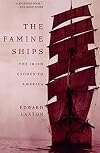
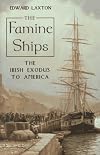
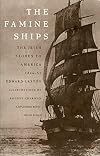
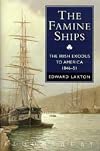
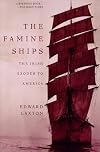
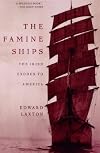
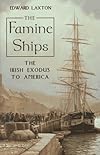
There are many period illustrations, facsimilies of documents, and two signatures of lovely color plates reproducing paintings of the ships of the title. The jacket is a Rodney Charman painting of an imagined embarkation from Ireland; his work is all marine-themed painting or drawing, and it is lovely. I'd recommend the book for someone wanting to know factually what happened in a compact telling that doesn't stint on sources or on stories. show less
This is a non-fictional indictment of the heinous politically engineered, prejudice-motivated famine the English inflicted on the Catholic Irish from 1845-1851. Two and a half million people died or emigrated; Ireland was permanently radicalized; and still the goddamned perps haven't apologized, still less made amends...though, now that I've said that, how would that even be possible? Money won't resurrect the dead.
The book. Yes.
Laxton tells the tale via facts and figures, anecdotes drawn from the documents and media of the day. The unusual facet of this book's focus, for a US audience, is that he uses the Irish ships and the Irish crews as well as the show more Irish emigrants as the sources. It remains underappreciated, at this distance in time, that the Famine wasn't universal in Ireland; there were Irish who ate and lived as normal even at the lowest depth of the crisis. Laxton tells us the story of the downtrodden, but he does so via the lens of the lucky. He even reminds us that Henry Ford, he of the Ford Motor Company and designer of the Model T, was the son of a Famine emigrant. If not for the hideous, vile, evil people who perpetrated the Famine, the world would not look the way it does today for both good and ill.
There are many period illustrations, facsimilies of documents, and two signatures of lovely color plates reproducing paintings of the ships of the title. The jacket is a Rodney Charman painting of an imagined embarkation from Ireland; his work is all marine-themed painting or drawing, and it is lovely. I'd recommend the book for someone wanting to know factually what happened in a compact telling that doesn't stint on sources or on stories. show less
In general this was an interesting history, but not particularly well written. Just the cold, hard facts, without much to fill out the bare bones.
Fine condition. Owner's name in ink inside front cover.
Ratings
Members
- Recently Added By
Author Information
2 Works 233 Members
Common Knowledge
- Original publication date
- 1996
- People/Characters
- Thomas Hore; Denis Mahon; Enoch Train
- Important places
- Ireland; Grosse Isle, Québec, Canada; Cork, County Cork, Ireland; Boston, Massachusetts, USA; New York, New York, USA
- Important events
- Irish Potato Famine (1845 | 1852)
- First words
- Introduction: These Desperate People
For 700 years prior to the Great Famine, the Irish had gradually become a nation of tenants in their own homeland.
1
From Dublin's Fair City
For an island nation during the last century, the sea was the only link with the outside world.
Classifications
- Genres
- History, Nonfiction, General Nonfiction
- DDC/MDS
- 973.049162 — History & geography History of North America United States United States Ethnic And National Groups Other Groups Irish Americans
- LCC
- E184 .I6 .L39 — History of the United States United States Elements in the population Afro-Americans
- BISAC
Statistics
- Members
- 232
- Popularity
- 139,858
- Reviews
- 3
- Rating
- (3.65)
- Languages
- English
- Media
- Paper, Audiobook, Ebook
- ISBNs
- 7
- ASINs
- 3