On This Page
Description
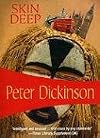
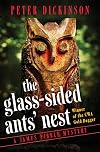
Winner of the CWA Gold Dagger: Scotland Yard's James Pibble puzzles over the murder of a pygmy tribesman in the middle of London in this "first class" mystery (The Times Literary Supplement).Oddball cases are James Pibble's specialty. But the brutal bludgeoning of the revered elder of a New Guinea tribesman may be his strangest yet.
The corpse, in striped pajamas, lies in the middle of a room completely absent of furniture. Seven women squat on the floorboards. One knits. Another sits show more cross-legged at his feet. They all chant incantations in a strange language. The murder weapon, a wooden balustrade ornament in the shape of an owl, could have been wielded by any of the myriad suspects Pibble meets at Flagg Terrace, the London residence where the Ku family currently lives. And the only clue seems to be an Edwardian penny.
So who killed bearded, four-foot-tall Aaron Ku? Everyone seems to have an alibi, including a local real estate agent, a professional escort, and an anthropologist whose marriage into the tribe was forbidden. In a house where men and women live in separate quarters, Pibble must follow a hierarchy of primitive rituals and gender-role reversals to unmask a surprising killer.
The Glass-Sided Ants' Nest is the 1st book in the James Pibble Mysteries, but you may enjoy reading the series in any order.. show less
Tags
Recommendations


















Member Reviews
The cover of my copy carries an illustration of a dark-skinned person wearing some kind of grass skirt and an enormous stylised mask, and carrying a spear. The back cover trails “dark rituals . . . a high-class call girl, a dead New Guinea tribal chief, [and] a homosexual marriage”. Things aren’t promising, folks, and as the casual racial epithets pile up in the first few pages, it seems like they’re going to deliver on that failure of promise.
But actually, you know what, this is not bad—neither aesthetically nor morally. In fact, it’s pretty good. The plot is essentially a well-structured whodunnit, resolved satisfyingly, with the solution hidden in plain sight if you knew where you were looking. The protagonist, Jimmy show more Pibble, is cursed with an awful name, but doesn’t seem to have let it get to him: he’s a thoughtful and somewhat put-upon copper with a general air of decency and duty about him. He has a remarkably deep knowledge of architecture. The style is straightforward, somewhat writerly in places but never overly so, except perhaps in a stream-of-semi-consciousness passage towards the end. One nice touch: this is the first of a series, but there are scattered allusions to previous cases and incidents, in a tone of familiarity. This somehow makes the reader feel comfortably at home with the character and the setting. It’s a neat trick which I always appreciate when it’s pulled off well.
Hang on, though: what about all that lurid and dubious material with which we were threatened? Is that not all a rather large problem? Well, the blurb oversells; the book doesn’t titillate. It is true that the plot centres on a very small Papua New Guinean tribe that has wholly relocated to London under the care of an anthropological white saviour in the aftermath of the second world war. Now, this is a fantastical contrivance, though Dickinson manages to make it just believable enough. But it’s not in itself an abhorrent notion, and the main purpose of the contrivance is simply to provide the structure for the whodunnit: the closed list of suspects, the interlocking interests and motives. It is, again, true that there is plentiful material about the rituals and customs of the tribe, but this is all given a very straight description, as if the author has been immersed in and is dutifully reciting the most neutral anthropology he can find: there’s nothing much by way of exoticisation here. The “homosexual marriage” is between the white saviour (a woman) and a male tribe member; it’s homosexual by virtue of the white woman being treated as a man under the customs of the tribe. This is the sort of detail that I feel couldn’t possibly have been made up. And it is, again, true that there are rather more racial epithets than one might like, but they’re mainly deployed in a morally inert way in accordance with the insensitivities of the time. In fact, we’re carefully given a scene involving Pibble and some London locals whose sole purpose is to demonstrate that he, unlike them, is pure of any hint of racism.
All in all, this was pretty enjoyable, all the more so for being short. Which is lucky, because next on the menu is more Dickinson and more Pibble. show less
But actually, you know what, this is not bad—neither aesthetically nor morally. In fact, it’s pretty good. The plot is essentially a well-structured whodunnit, resolved satisfyingly, with the solution hidden in plain sight if you knew where you were looking. The protagonist, Jimmy show more Pibble, is cursed with an awful name, but doesn’t seem to have let it get to him: he’s a thoughtful and somewhat put-upon copper with a general air of decency and duty about him. He has a remarkably deep knowledge of architecture. The style is straightforward, somewhat writerly in places but never overly so, except perhaps in a stream-of-semi-consciousness passage towards the end. One nice touch: this is the first of a series, but there are scattered allusions to previous cases and incidents, in a tone of familiarity. This somehow makes the reader feel comfortably at home with the character and the setting. It’s a neat trick which I always appreciate when it’s pulled off well.
Hang on, though: what about all that lurid and dubious material with which we were threatened? Is that not all a rather large problem? Well, the blurb oversells; the book doesn’t titillate. It is true that the plot centres on a very small Papua New Guinean tribe that has wholly relocated to London under the care of an anthropological white saviour in the aftermath of the second world war. Now, this is a fantastical contrivance, though Dickinson manages to make it just believable enough. But it’s not in itself an abhorrent notion, and the main purpose of the contrivance is simply to provide the structure for the whodunnit: the closed list of suspects, the interlocking interests and motives. It is, again, true that there is plentiful material about the rituals and customs of the tribe, but this is all given a very straight description, as if the author has been immersed in and is dutifully reciting the most neutral anthropology he can find: there’s nothing much by way of exoticisation here. The “homosexual marriage” is between the white saviour (a woman) and a male tribe member; it’s homosexual by virtue of the white woman being treated as a man under the customs of the tribe. This is the sort of detail that I feel couldn’t possibly have been made up. And it is, again, true that there are rather more racial epithets than one might like, but they’re mainly deployed in a morally inert way in accordance with the insensitivities of the time. In fact, we’re carefully given a scene involving Pibble and some London locals whose sole purpose is to demonstrate that he, unlike them, is pure of any hint of racism.
All in all, this was pretty enjoyable, all the more so for being short. Which is lucky, because next on the menu is more Dickinson and more Pibble. show less
The final 18 members of the Ku clan, a Stone-Age tribe from New Guinea decimated by the Japanese during World War II, are relocated to a spacious row house in London. Despite being so primitive that they see their door keys as symbols of their membership in the tribe and have been assigned Ku as a surname, the Kus have been muddling along in the years they have been in England. But now their chief, Aaron, has been murdered — and in such a fashion as to suggest that a fellow tribesman has committed the murder.
Enter Detective Superintendent Jimmy Pibble. The novel’s title comes from one character’s comparison of the Ku clan in London to a glass ant farm through which a child can observe the ants scurrying in their daily activities. show more And, indeed, the London house has been remodeled into a Ku sanctuary of sorts, with different large, spacious rooms serving as separate “huts” and tropical foliage everywhere. Author Paul Dickinson provides Pibble — and us — a window into a group trying to assimilate 5,000 years of progress.
Author Peter Dickinson lards the novel with unforgettable characters: Dr. Eve Ku, the Scottish-born anthropologist who marries into the tribe; her husband and former houseboy Paul, who joins his wife in straddling both worlds; Eve’s father, the Reverend Dr. John Mackenzie, a missionary revered by the tribe but who held some very odd, syncretic ideas about proselytizing; Robin, a 14-year-old boy with one foot in the world of Ringo Starr and another in the world of jungle drums from that abandoned New Guinean island; the selfish, smug, self-aggrandizing Bob Caine, who thoughtlessly nearly wipes out the tribe; and not least, the jaded, conflicted Pibble himself.
As cliché as it sounds, The Glass-Sided Ant’s Nest really is a novel like no other. How wonderful to see that Open Road Integrated Media is re-issuing the 1968 CWA Gold Dagger Award-winning novel (and 1969 Edgar Award finalist) that began the six-novel Pibble series.
In the spirit of full disclosure, I received this ebook free from NetGalley and Open Road Integrated Media in return for an honest review. show less
Enter Detective Superintendent Jimmy Pibble. The novel’s title comes from one character’s comparison of the Ku clan in London to a glass ant farm through which a child can observe the ants scurrying in their daily activities. show more And, indeed, the London house has been remodeled into a Ku sanctuary of sorts, with different large, spacious rooms serving as separate “huts” and tropical foliage everywhere. Author Paul Dickinson provides Pibble — and us — a window into a group trying to assimilate 5,000 years of progress.
Author Peter Dickinson lards the novel with unforgettable characters: Dr. Eve Ku, the Scottish-born anthropologist who marries into the tribe; her husband and former houseboy Paul, who joins his wife in straddling both worlds; Eve’s father, the Reverend Dr. John Mackenzie, a missionary revered by the tribe but who held some very odd, syncretic ideas about proselytizing; Robin, a 14-year-old boy with one foot in the world of Ringo Starr and another in the world of jungle drums from that abandoned New Guinean island; the selfish, smug, self-aggrandizing Bob Caine, who thoughtlessly nearly wipes out the tribe; and not least, the jaded, conflicted Pibble himself.
As cliché as it sounds, The Glass-Sided Ant’s Nest really is a novel like no other. How wonderful to see that Open Road Integrated Media is re-issuing the 1968 CWA Gold Dagger Award-winning novel (and 1969 Edgar Award finalist) that began the six-novel Pibble series.
In the spirit of full disclosure, I received this ebook free from NetGalley and Open Road Integrated Media in return for an honest review. show less
Dickinson's first Inspector Pibble story is a work of true genius, creating a universe and a crime that are both bizarre yet utterly believable: the remnant of a Stone-Age New Guinean tribe shifted to a London boarding house. This is crime fiction as anthropological and psychological exploration: thoughtful, witty, and encompassing the very essence of British quirkiness. This man makes me proud to be classified as a mystery writer.
The Glass-Sided Ants’ Nest by Peter Dickinson was originally published in 1968. It was the winner of the CWA Gold Dagger for best crime novel of the year, but unfortunately, I just didn’t relate to this quirky mystery at all. The story introduces Scotland Yard superintendent James Pibble, who has a knack for solving oddball cases. And this case of the brutal bludgeoning of the revered elder of a New Guinea tribesman is certainly very different.
An entire tribe from New Guinea has been brought to London by an anthropologist who sets them up in a large house that she owns but someone has decided to bash in the head of the chief and it’s up to Pibble to find out who the murderer is. I found the story very disjointed and confusing and show more it wasn’t long before I really didn’t care who the killer was.
I chose to read The Glass-Sided Ants’ Nest as it is included on Keatings List of the 100 best Crime and Mystery Books but this is the first book from the list that I really didn’t like. I wasn’t expecting this as I have read this author before and one of my all time favorite books is by him. Sadly, I found this mystery to be quite dated and more than a little weird. show less
An entire tribe from New Guinea has been brought to London by an anthropologist who sets them up in a large house that she owns but someone has decided to bash in the head of the chief and it’s up to Pibble to find out who the murderer is. I found the story very disjointed and confusing and show more it wasn’t long before I really didn’t care who the killer was.
I chose to read The Glass-Sided Ants’ Nest as it is included on Keatings List of the 100 best Crime and Mystery Books but this is the first book from the list that I really didn’t like. I wasn’t expecting this as I have read this author before and one of my all time favorite books is by him. Sadly, I found this mystery to be quite dated and more than a little weird. show less
And the book is an original too. This is the first of Peter Dickinson's books, and it should be read for that at least. This is probably the most unusual book that I've ever read. Picture a tribe of New Guinea aborigines transplanted intact into a London house. The chief is found murdered and that puts Chief Superintendent Pibble on the hunt in this rabbit's warren of a building, for a murderer. What he discovers as he searches is bizarre - a bowl of blood, a world where the women live in the Women's hut and the men live in the Men's hut, and strange smells to name a few. I certainly cannot do justice in this review to this highly original story, so you must read it for yourself, and be prepared to mesmerized and baffled until the dark show more and terrible end. show less
Colorful mystery with some interesting cultural components. Guessed the murderer but was still surprised by the conclusion
This is a murder mystery with too many twists. A tribe from New Guinea was being decimated during the war and was whisked to the U.K. The tribal leader, Aaron, was murdered and Mr. Pibble was assigned to investiage and find the killer.
I've read many books by British authors and had little trouble understanding them. This author uses so many British colloquialisms I had to constantly refer to a dictionary to understand the story.
This book is so disjointed I couldn't keep everything in perspective. A new chapter started a new story and I kept wondering what this had to do with anything. The authors attempt to include so many different facts that it became extremely tedious to read. It didn't take long before I decided I didn't care who show more killed Aaron.
I found this book extremely confusing. The writer tried to add so many different facts that instead of informing became confusing. I finally just gave up. show less
I've read many books by British authors and had little trouble understanding them. This author uses so many British colloquialisms I had to constantly refer to a dictionary to understand the story.
This book is so disjointed I couldn't keep everything in perspective. A new chapter started a new story and I kept wondering what this had to do with anything. The authors attempt to include so many different facts that it became extremely tedious to read. It didn't take long before I decided I didn't care who show more killed Aaron.
I found this book extremely confusing. The writer tried to add so many different facts that instead of informing became confusing. I finally just gave up. show less
Members
- Recently Added By
Lists

501 Must-Read Books
529 works; 72 members

Crime Writers' Association Daggers
76 works; 4 members

H.R.F. Keating's 100 Best Crime & Mystery Books
100 works; 8 members

Books Read in 2019
4,052 works; 110 members

Must Read Detective Stories (Nick Fuller)
278 works; 2 members
Talk Discussions
Past Discussions
Ant's Nest in Good Show Sir! — bad science fiction and fantasy covers (April 2025)
Author Information

109+ Works 10,500 Members
Peter Dickinson was born in Livingstone, Northern Rhodesia, now Zambia on December 16, 1927. He served in the British Army before receiving a B.A. in English literature from King's College, Cambridge in 1951. He was an assistant editor and reviewer for Punch Magazine for seventeen years. His first book, The Weathermonger, was published in 1968. He show more has written over 50 books for adults and young adults. His works for adults include Death of a Unicorn, Skeleton-in-Waiting, Perfect Gallows, The Yellow Room Conspiracy, and Some Deaths Before Dying. His works for young adults include The Iron Lion, The Ropemaker, Angel Isle, and In the Palace of the Khans. He has won several awards including the Boston Globe Horn Book Award in 1989 for Eva, the Carnegie Medal in 1979 for Tulku and in 1980 for City of Gold, the Whitbread Children's Prize for Tulku, and the Crime Writer's Golden Dagger for Skin Deep in 1968 and A Pride of Heroes in 1969. In 2009, he was awarded the OBE for services to literature. He died after a brief illness on December 16, 2015 at the age of 88. (Bowker Author Biography) show less
Awards and Honors
Awards
Series

Common Knowledge
- Canonical title
- The Glass-Sided Ants' Nest
- Original title
- Skin Deep
- Alternate titles*
- Rächende Vergangenheit
- Original publication date
- 1968
- People/Characters
- Superintendent James Pibble
- Important places
- London, England, UK
- First words
- "Slower, please."
- Last words
- (Click to show. Warning: May contain spoilers.)The Minister has recently refused to place a preservation order on Flagg Terrace.
- Original language*
- Englisch
*Some information comes from Common Knowledge in other languages. Click "Edit" for more information.
Classifications
Statistics
- Members
- 235
- Popularity
- 137,970
- Reviews
- 8
- Rating
- (3.49)
- Languages
- Danish, English, German
- Media
- Paper, Ebook
- ISBNs
- 12
- ASINs
- 9