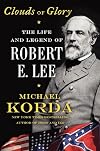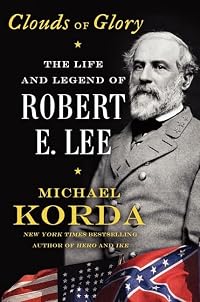
Clouds of Glory: The Life and Legend of Robert E. Lee
by Michael Korda
On This Page
Description
"Portrait of Lee as a brilliant general, a devoted family man, and principled gentleman who disliked slavery and disagreed with secession, yet who refused command of the Union Army in 1861 because he could not "draw his sword" against his beloved Virginia. Well-rounded and realistic, Clouds of Glory analyzes Lee's command during the Civil War and explores his responsibility for the fatal stalemate at Antietam, his defeat at Gettysburg (as well the many troubling controversies still show more surrounding it) and ultimately, his failed strategy for winning the war. As Korda shows, Lee's dignity, courage, leadership, and modesty made him a hero on both sides of the Mason-Dixon Line and a revered American icon who is recognized today as the nation's preeminent military leader" -- show lessTags
Recommendations









Member Reviews
The United States has a few secular saints, and some of them (Abraham Lincoln, John F. Kennedy and Martin Luther King) died at the hands of an assassin. Not so Robert E. Lee, who lived a full life. He is revered today as much in northern states as southern states, despite the fact that Lee, after spending most of his life as an officer in the U.S. Army, fought against that army when the Civil War broke out. Yet he is remembered today as more of another George Washington than another Benedict Arnold.
Michael Korda explores this remarkable man in his fine 2014 biography "Clouds of Glory: The Life and Legend of Robert E. Lee."
Lee, like so many great individuals, was a study in contradictions. He was excited by combat (Korda calls war "his show more one intoxication"), yet he hated personal confrontation (Korda calls this Lee's Achilles heel). He opposed secession and disliked slavery, but when Virginia seceded, he chose his state over his country. He did not regard blacks as equal to whites, and said so publicly even after the war, yet he often treated blacks as equals. He may have been a strait-laced Southern gentleman, but that didn't stop him from flirting with young, pretty women at every opportunity. As a general, he respected his men and sacrificed for them, yet his treatment of deserters was as harsh as that of any other general.
To some Civil War scholars, especially those of the South, Lee could do no wrong. When a battle was lost, it was always somebody else's fault, usually James Longstreet's. But Korda, while usually praising Lee, also doesn't hesitate to point out his errors, both military and personal. The author, who has written several other military books, including biographies of Grant and Eisenhower, neatly compares and contrasts Lee with other generals down through the centuries, including Napoleon. By reading "Clouds of Glory," you know more not just about the Civil War but about military history in general.
Yet Korda, like Lee, is hardly perfect. He tends to repeat himself. Once he says something in a footnote, then repeats the same information in the text on the next page. He also contradicts himself. On the very same page he writes about Lee: "his orders were often unclear" and "his written orders are as detailed and clear as anybody could wish."
Korda writes, near the end of his book, "Lee lost nothing by being portrayed as a fallible human being." True enough. And "Clouds of Glory" loses nothing by being an imperfect biography of an imperfect man. show less
Michael Korda explores this remarkable man in his fine 2014 biography "Clouds of Glory: The Life and Legend of Robert E. Lee."
Lee, like so many great individuals, was a study in contradictions. He was excited by combat (Korda calls war "his show more one intoxication"), yet he hated personal confrontation (Korda calls this Lee's Achilles heel). He opposed secession and disliked slavery, but when Virginia seceded, he chose his state over his country. He did not regard blacks as equal to whites, and said so publicly even after the war, yet he often treated blacks as equals. He may have been a strait-laced Southern gentleman, but that didn't stop him from flirting with young, pretty women at every opportunity. As a general, he respected his men and sacrificed for them, yet his treatment of deserters was as harsh as that of any other general.
To some Civil War scholars, especially those of the South, Lee could do no wrong. When a battle was lost, it was always somebody else's fault, usually James Longstreet's. But Korda, while usually praising Lee, also doesn't hesitate to point out his errors, both military and personal. The author, who has written several other military books, including biographies of Grant and Eisenhower, neatly compares and contrasts Lee with other generals down through the centuries, including Napoleon. By reading "Clouds of Glory," you know more not just about the Civil War but about military history in general.
Yet Korda, like Lee, is hardly perfect. He tends to repeat himself. Once he says something in a footnote, then repeats the same information in the text on the next page. He also contradicts himself. On the very same page he writes about Lee: "his orders were often unclear" and "his written orders are as detailed and clear as anybody could wish."
Korda writes, near the end of his book, "Lee lost nothing by being portrayed as a fallible human being." True enough. And "Clouds of Glory" loses nothing by being an imperfect biography of an imperfect man. show less
Newtonian in its expression, there is one dynamic of the human condition that remains constant, which is to say, there is no inoculation against a man from violating the principles he holds as the foundation of nobility. Two inescapable facts deny Robert E. Lee, considered a genuinely spiritual man by those who knew him North and South and affirmed by those who have written about him over the last 150 years, his opportunity to remembered for his nobility. He was a traitor to the United States of America and chose to violate the oath he took before it’s citizens to defend the constitution. Lee used every ounce of his considerable skill to keep millions of humans enslaved. Clouds of Glory, Michael Korda’s biography of Robert E. Lee, show more is a great book, and aptly named. When the clouds part, as they did on the fields of Gettysburg 150 years ago in a scene Korda beautifully describes, the stark truth of reality is plain for all to see. Lee, as well as the country he served until 1861, violated all aspects of the noble ideal that all men are created equal. show less
The recently released Michael Korda Clouds of Glory-the Life and Legend of R.E. Lee is a long, laborious, plodding account of his life. Did I mention it is also slow?
While there is mostly the same old material that most of us are used to, Korda has also quietly and almost inconspicuously managed to make a very compelling argument that I never saw raised before.
It is that R.E. Lee because of the character / personality of the man was the cause of the South not doing better than it did in the war. More specifically, he describes continuously throughout how very much Robert E. Lee was locked into a Romantic ideal of always having to play the part of the polite, unflappable, gracious, Southern gentleman. In doing so, he was unable to handle show more personal confrontations throughout the war that he should have addressed and yet failed to do so.
For instance, he could never bring himself to send direct orders to his commanders but rather only gently worded suggestions that they take certain specific appropriate action when they deemed it appropriate. This obviously resulted in real problems with Longstreet at Gettysburg, and in many other situations with other commanders. There were commanders he should have replaced and orders that he should have forced out; however his reserve, politeness, and deference to the ideal of that which he deemed courteous, proper, and polite forbade him from doing so.
Neither his wife, nor his daughters, when told to move to safer lodgings followed his guidance, despite his repeated requests and orders to do so in the most courteous of terms.
Of course he was a brilliant tactician, second in his class at West Point, and a tremendously popular general to his army and the people of the South. But it was this character flaw and his inability to handle personal face to face hostile confrontations that crippled him throughout his years of command of his army.
Yes, the North had more manufacturing, manpower, resources, railroads, navy, and a worthy cause to fight for. The South lacked them all, and the reading of this book shows that there were very many battles when the South could just as easily have won. However, it was Lee’s virtue of fulfilling the role of the Sorthern gentleman that was also his fatal flaw when it came to leading an army to the necessary successes on the battlefield and the ultimate victory.
As the book suggests, being a living, breathing apotheosis of the Southern gentleman of his time had its drawbacks. show less
While there is mostly the same old material that most of us are used to, Korda has also quietly and almost inconspicuously managed to make a very compelling argument that I never saw raised before.
It is that R.E. Lee because of the character / personality of the man was the cause of the South not doing better than it did in the war. More specifically, he describes continuously throughout how very much Robert E. Lee was locked into a Romantic ideal of always having to play the part of the polite, unflappable, gracious, Southern gentleman. In doing so, he was unable to handle show more personal confrontations throughout the war that he should have addressed and yet failed to do so.
For instance, he could never bring himself to send direct orders to his commanders but rather only gently worded suggestions that they take certain specific appropriate action when they deemed it appropriate. This obviously resulted in real problems with Longstreet at Gettysburg, and in many other situations with other commanders. There were commanders he should have replaced and orders that he should have forced out; however his reserve, politeness, and deference to the ideal of that which he deemed courteous, proper, and polite forbade him from doing so.
Neither his wife, nor his daughters, when told to move to safer lodgings followed his guidance, despite his repeated requests and orders to do so in the most courteous of terms.
Of course he was a brilliant tactician, second in his class at West Point, and a tremendously popular general to his army and the people of the South. But it was this character flaw and his inability to handle personal face to face hostile confrontations that crippled him throughout his years of command of his army.
Yes, the North had more manufacturing, manpower, resources, railroads, navy, and a worthy cause to fight for. The South lacked them all, and the reading of this book shows that there were very many battles when the South could just as easily have won. However, it was Lee’s virtue of fulfilling the role of the Sorthern gentleman that was also his fatal flaw when it came to leading an army to the necessary successes on the battlefield and the ultimate victory.
As the book suggests, being a living, breathing apotheosis of the Southern gentleman of his time had its drawbacks. show less
Korda presents an expansive, 700 page picture of the life of Robert E. Lee. I received the book as a Christmas gift and found it fascinating for the most part. Korda looks at Lee's upbringing and time at West Point for critical insights to his personality and motives for his battlefield actions. At times slogging through the field maneuvers in the Civil War as if walking through knee-high peanut butter proved tiresome for me. (Admittedly military/Civil War buffs will find it interesting.) However, even within the tedium of troop movements, Korda enlightens the reader with Lee's personal tendencies and anecdotes that make the slog worthwhile.
Loved it. Was afraid it would view Lee strictly with rose colored glasses, but it was well balanced and highly informative. Makes me want to read more about this fascinating character.
I am not a Civil War buff, but enjoyed the book. I knew very little about Robert E. Lee before reading this book and now substantially more about him. For a true Civil War buff, this has got to be the book to own. Great inside information on the key battles and strategies. Two thumbs up.
This was a well done accounting of the life of Robert E Lee. He was a complicated person who did not actually agree with slavery and did not want to go to war against his country. It was long on battles which loses me in the details, but overall, it was an interesting read.
Members
- Recently Added By
Talk Discussions
Past Discussions
Robert E. Lee and the American Civil War in History: On learning from and writing history (August 2014)
Author Information

50+ Works 5,290 Members
Michael Korda was born on October 8, 1933 in London, England. He was educated at Le Rosey in Switzerland and at Magdalen College, Oxford. While serving in the Royal Air Force, he took part in the Hungarian Revolution of 1956. On its fiftieth anniversary, he was awarded the Order of Merit of the People's Republic of Hungary. He is the former editor show more in chief of Simon & Schuster. He is also the author of numerous books including Hero: The Life and Legend of Lawrence of Arabia, With Wings Like Eagles: A History of the Battle of Britain, Clouds of Glory: The Life and Legend of Robert E. Lee, and Cat People, co-authored with his wife Margaret. (Bowker Author Biography) show less
Awards and Honors
Distinctions
Common Knowledge
- Original publication date
- 2014
Classifications
Statistics
- Members
- 380
- Popularity
- 82,080
- Reviews
- 9
- Rating
- (3.97)
- Languages
- English
- Media
- Paper, Audiobook, Ebook
- ISBNs
- 9
- ASINs
- 6