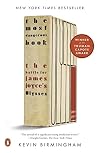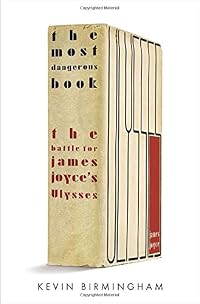
The Most Dangerous Book: The Battle for James Joyce's Ulysses
by Kevin Birmingham
On This Page
Description
An account of the dramatic writing of and fight to publish James Joyce's "Ulysses" reveals how the now classic book was the subject of a landmark federal obscenity trial in 1933 that overturned key censorship laws.Tags
Recommendations










Member Reviews
"Ulysses" is regarded as genius, smut, babble, brilliance, and blasphemy. The ramblings of a sick mind, and the redefining of what a novel can be.
"The Most Dangerous Book" is much more than the story of the controversies that surrounded Joyce's seminal novel. Aside from the attempts to censor the book in America and Europe, Birmingham also does a remarkable job of capturing the story of Joyce's personal and writing life from his youngest days in Dublin to his adult life abroad. For me, the most intriguing aspects of the book were how The Comstock Law affected "Ulysses" here in the States, the polarizing reaction Joyce's writing received from other popular writers of his era, the unlikely allies who fiercely supported Joyce show more (artistically and financially), and Joyce's horrific vision issues, which led to medieval attempts to ease his suffering and stave off blindness. Birmingham also does a fine job explaining Joyce's earlier works in context to the culture and the times.
I'm just now starting "Ulysses". I'm a chapter or two in, and from what I'm told, I'll hit some roadblocks that rival the Great Wall of China. However, now I have a greater appreciation for Joyce's journey to write and publish his novel, and am better prepared for the surreal, profane ride ahead of me.
This is the story of a book, the audacious man who wrote it, and the decades of furor it created. Well-researched, filled with humor, and a solid, accessible bridge to the world of Joyce. show less
"The Most Dangerous Book" is much more than the story of the controversies that surrounded Joyce's seminal novel. Aside from the attempts to censor the book in America and Europe, Birmingham also does a remarkable job of capturing the story of Joyce's personal and writing life from his youngest days in Dublin to his adult life abroad. For me, the most intriguing aspects of the book were how The Comstock Law affected "Ulysses" here in the States, the polarizing reaction Joyce's writing received from other popular writers of his era, the unlikely allies who fiercely supported Joyce show more (artistically and financially), and Joyce's horrific vision issues, which led to medieval attempts to ease his suffering and stave off blindness. Birmingham also does a fine job explaining Joyce's earlier works in context to the culture and the times.
I'm just now starting "Ulysses". I'm a chapter or two in, and from what I'm told, I'll hit some roadblocks that rival the Great Wall of China. However, now I have a greater appreciation for Joyce's journey to write and publish his novel, and am better prepared for the surreal, profane ride ahead of me.
This is the story of a book, the audacious man who wrote it, and the decades of furor it created. Well-researched, filled with humor, and a solid, accessible bridge to the world of Joyce. show less
The Most Dangerous Book attempts something big, and to a large extent pulls it off. To tell not only the story of how James Joyce came to write Ulysses, his struggle to get it published in the face of critical and legal adversitities, and through that lens the story of how Victorian moralities and censorship laws were forced to make way for the modern(ist) world, never to be heard of again... uh, maybe.
Joyce's novel represented not a finished monument of high culture but an ongoing fight for freedom.
And as a pure biography of Ulysses and the soil it sprang from - Joyce's youth, the early modernist writers and the surrounding world of new political and literary ideas that weren't always always all that pleasant or peaceful, Joyce's love show more for Nora Barnacle, and the various unlikely characters who midwifed the novel (strikingly many of them women) - it's both well-researched and well written; at times thrilling, funny, heartbreaking. There are certainly more in-depth works on Ulysses as a work of literature, but that's not what Birmingham is going for here.
What's uncanny about censorship in a liberal society is that sooner or later the government's goal is not just to ban objectionable books. It is to act as if they don't exist. The bans themselves should, whenever possible, remain secret.
Because then you get to the big issue here - the one that gave the book its title. The actual question of just what feathers Ulysses ruffled, and how it could take more than 10 years for it to be legally published in most English-speaking countries. (Birmingham being American, the world is pretty much limited to the US, the UK, and Paris.) And I'm not saying these parts of the book aren't just as good; between the historical background on censorship laws and the ideas and methods that went into them back when postal workers were essentially Big Brother, the various attempts to get att what the hell "obscene" even means, and the minutiae of everything surrounding the troubled road to legality... It makes for a hell of a literary thriller, coupled with what is obviously a love for Ulysses itself, and I can't wait to re-read the damn tome again.
The legalization of Ulysses announced the transformation of a culture. A book that the American and British governments had burned en masse a few years earlier was now a modern classic, part of the heritage of Western civilization. Official approval of Ulysses, in prominent federal decisions and behind closed doors, indicated that the culture of the 1910s and 1920s - a culture of experimentation and radicalism, Dada and warfare, little magazines and birth control - was not an aberration. It had taken root. Or, more accurately, it indicated that rootedness itself was a fiction.(...) By sanctioning Ulysses, British and American authorities had, to some small but important degree, become philosophical anarchists. (...) There was no absolute authority, no singular vision for our society, no monolithic ideas towering over us.
Obviously the book could have done more - said more about modernism as a whole, continued to draw parallels to political developments past the publication of Ulysses, etc, but that's not the focus here, so that's fine. The main thing that irks me somewhat is that I feel like Birmingham tends to treat the central concept here, that of freedom of speech (well, print) just a tiny little bit too simplified; as if it was something you either have or don't have, and that it was entirely the work of Joyce and his cheerleaders that shepherded the world from one side to the other. Almost as if "Freedom" was a simple commodity, a word that means something in itself.
But eh, you can't have everything. Except of course by reading Ulysses.
...and the word that shakes it all down is YES. show less
Joyce's novel represented not a finished monument of high culture but an ongoing fight for freedom.
And as a pure biography of Ulysses and the soil it sprang from - Joyce's youth, the early modernist writers and the surrounding world of new political and literary ideas that weren't always always all that pleasant or peaceful, Joyce's love show more for Nora Barnacle, and the various unlikely characters who midwifed the novel (strikingly many of them women) - it's both well-researched and well written; at times thrilling, funny, heartbreaking. There are certainly more in-depth works on Ulysses as a work of literature, but that's not what Birmingham is going for here.
What's uncanny about censorship in a liberal society is that sooner or later the government's goal is not just to ban objectionable books. It is to act as if they don't exist. The bans themselves should, whenever possible, remain secret.
Because then you get to the big issue here - the one that gave the book its title. The actual question of just what feathers Ulysses ruffled, and how it could take more than 10 years for it to be legally published in most English-speaking countries. (Birmingham being American, the world is pretty much limited to the US, the UK, and Paris.) And I'm not saying these parts of the book aren't just as good; between the historical background on censorship laws and the ideas and methods that went into them back when postal workers were essentially Big Brother, the various attempts to get att what the hell "obscene" even means, and the minutiae of everything surrounding the troubled road to legality... It makes for a hell of a literary thriller, coupled with what is obviously a love for Ulysses itself, and I can't wait to re-read the damn tome again.
The legalization of Ulysses announced the transformation of a culture. A book that the American and British governments had burned en masse a few years earlier was now a modern classic, part of the heritage of Western civilization. Official approval of Ulysses, in prominent federal decisions and behind closed doors, indicated that the culture of the 1910s and 1920s - a culture of experimentation and radicalism, Dada and warfare, little magazines and birth control - was not an aberration. It had taken root. Or, more accurately, it indicated that rootedness itself was a fiction.(...) By sanctioning Ulysses, British and American authorities had, to some small but important degree, become philosophical anarchists. (...) There was no absolute authority, no singular vision for our society, no monolithic ideas towering over us.
Obviously the book could have done more - said more about modernism as a whole, continued to draw parallels to political developments past the publication of Ulysses, etc, but that's not the focus here, so that's fine. The main thing that irks me somewhat is that I feel like Birmingham tends to treat the central concept here, that of freedom of speech (well, print) just a tiny little bit too simplified; as if it was something you either have or don't have, and that it was entirely the work of Joyce and his cheerleaders that shepherded the world from one side to the other. Almost as if "Freedom" was a simple commodity, a word that means something in itself.
But eh, you can't have everything. Except of course by reading Ulysses.
...and the word that shakes it all down is YES. show less
Joyce University
The Most Dangerous Book is a life’s work about a life’s work. Kevin Birmingham has performed mountainous research, which he assimilates, assembles and displays in logical order, in easy to read sections, and in great depth and drama. It is a first rate thriller all the way. Joyce, the faulty, complex, highly imperfect being he was, makes the adventure riveting.
There was something about the turn of the century that caused the western world to churn. It started in about 1895 with Art Nouveau, a radical departure from standard architecture, that spread to décor and household items. Classical music very suddenly went postmodern, atonal, and asymmetrical. It actually spurned the audience in favor of style. Picasso, about show more the only person who realized what was going on (sitting in his favorite bar listening to the new music in Art Nouveau-crazed Barcelona), consciously decided art needed a total breakout too. His response was cubism. Politically, anarchists were attempting to destroy the whole socio-political infrastructure. Joyce began to do the same to the novel. All of these sudden developments were discomfiting, strange, and difficult to digest. Like typical revolutions, they all reverted to the mean, leaving marks mostly historically. The Most Dangerous Book drags us through the ups and downs of a heroic struggle of epic proportions. Because in this case there were laws against it.
Joyce was a most unlikely candidate for this kind of reverence. He was “a blushing trembling man with weak eyes and a fear of dogs”, according to Sylvia Beach. He was afraid of the ocean, heights, horses, machinery, and thunderstorms. He was rude, crude, unhelpful, unkind, unco-operative and stubborn. But what he wrote changed people’s outlook on life as well as literature. As a result, he got generous personal donations, underground offers of publication, and people eager to risk all by smuggling his book into countries like the USA, which actively practiced book burning.
The parallels with NSA today are striking. The post office was the overseer of communications then, and it rifled through periodicals and packages, looking for anything even remotely unpatriotic, or obscene, however the postmaster chose to define it. Once you got on its suspects list, you remained a target. Conviction was all but a certainty. Customs routinely seized items deemed unworthy of presence in America, and sent a note that effect, to which you had to agree or be prosecuted. The Religious Right was out to tell everyone how to live their lives, mostly in ignorance, and they had laws passed they could enforce themselves, notably the Comstock Act. Women were not permitted to see many words in print, or even hear them in a courtroom. They needed to be protected from such corruption as would surely result if they saw them. Ironically, three quarters of the people who helped Joyce were precisely those upstanding women. Bookstore owners, editors, librarians, activists and benefactors all sought to spread the availability of Ulysses.
The climax comes in an American courtroom, where the book, not the author, is on trial for obscenity. Capital punishment awaits the usual verdict. After a year’s delaying tactics for judge-shopping, the payoff comes as a big relief – to readers, to publishers, to authors, and to freedom of expression, which was all but suppressed until this landmark case. Judge Woolsey decided ”…when such a great artist in words, as Joyce undoubtedly is, seeks to draw a true picture of the lower middle class in a European city, ought it to be impossible legally for the American public to see that picture?” And the walls came tumbling down.
When Joyce was born, obscenity was pretty much anything any authority deemed it. You couldn’t predict it in advance. Its mere presence nullified any other value in the book. By the time he died, obscenity was a flexible, more fleeting occurrence, whose presence might be noted, but was usually not fatal. In Kevin Birmingham’s words, “The most dangerous fiction is our innocence.”
David Wineberg show less
The Most Dangerous Book is a life’s work about a life’s work. Kevin Birmingham has performed mountainous research, which he assimilates, assembles and displays in logical order, in easy to read sections, and in great depth and drama. It is a first rate thriller all the way. Joyce, the faulty, complex, highly imperfect being he was, makes the adventure riveting.
There was something about the turn of the century that caused the western world to churn. It started in about 1895 with Art Nouveau, a radical departure from standard architecture, that spread to décor and household items. Classical music very suddenly went postmodern, atonal, and asymmetrical. It actually spurned the audience in favor of style. Picasso, about show more the only person who realized what was going on (sitting in his favorite bar listening to the new music in Art Nouveau-crazed Barcelona), consciously decided art needed a total breakout too. His response was cubism. Politically, anarchists were attempting to destroy the whole socio-political infrastructure. Joyce began to do the same to the novel. All of these sudden developments were discomfiting, strange, and difficult to digest. Like typical revolutions, they all reverted to the mean, leaving marks mostly historically. The Most Dangerous Book drags us through the ups and downs of a heroic struggle of epic proportions. Because in this case there were laws against it.
Joyce was a most unlikely candidate for this kind of reverence. He was “a blushing trembling man with weak eyes and a fear of dogs”, according to Sylvia Beach. He was afraid of the ocean, heights, horses, machinery, and thunderstorms. He was rude, crude, unhelpful, unkind, unco-operative and stubborn. But what he wrote changed people’s outlook on life as well as literature. As a result, he got generous personal donations, underground offers of publication, and people eager to risk all by smuggling his book into countries like the USA, which actively practiced book burning.
The parallels with NSA today are striking. The post office was the overseer of communications then, and it rifled through periodicals and packages, looking for anything even remotely unpatriotic, or obscene, however the postmaster chose to define it. Once you got on its suspects list, you remained a target. Conviction was all but a certainty. Customs routinely seized items deemed unworthy of presence in America, and sent a note that effect, to which you had to agree or be prosecuted. The Religious Right was out to tell everyone how to live their lives, mostly in ignorance, and they had laws passed they could enforce themselves, notably the Comstock Act. Women were not permitted to see many words in print, or even hear them in a courtroom. They needed to be protected from such corruption as would surely result if they saw them. Ironically, three quarters of the people who helped Joyce were precisely those upstanding women. Bookstore owners, editors, librarians, activists and benefactors all sought to spread the availability of Ulysses.
The climax comes in an American courtroom, where the book, not the author, is on trial for obscenity. Capital punishment awaits the usual verdict. After a year’s delaying tactics for judge-shopping, the payoff comes as a big relief – to readers, to publishers, to authors, and to freedom of expression, which was all but suppressed until this landmark case. Judge Woolsey decided ”…when such a great artist in words, as Joyce undoubtedly is, seeks to draw a true picture of the lower middle class in a European city, ought it to be impossible legally for the American public to see that picture?” And the walls came tumbling down.
When Joyce was born, obscenity was pretty much anything any authority deemed it. You couldn’t predict it in advance. Its mere presence nullified any other value in the book. By the time he died, obscenity was a flexible, more fleeting occurrence, whose presence might be noted, but was usually not fatal. In Kevin Birmingham’s words, “The most dangerous fiction is our innocence.”
David Wineberg show less
https://nwhyte.livejournal.com/2927887.html
I am vaguely familiar with Joyce and Ulysses; I must say I had not appreciated just how strong the censorship regimes were in both the UK and the USA at the turn of the century, and the extent to which literary innovation was tied into political radicalism - The Little Review, which initially serialised Ulysses in America, was closely linked to Emma Goldman and generally sympathetic to anarchism. I also hadn't realised the crucial role of Ulysses in the origins of Random House. It's a fascinating story, well told.
Joyce himself comes across as a demanding, self-centred individual, constantly needing financial subvention from (mostly female) donors, his body riddled by venereal disease, driving show more his family mad. But there's something about his prose that catches your soul, and while there are parts of Ulysses that miss the mark, there are parts that very much hit it. Birmingham makes the very strong case that censorship was wrong and unjustifiable in principle, but the fact that it was being used against a work as hefty (in many ways) as Ulysses made the case for continued censorship weaker (though not in Ireland, where Ulysses was never formally tested but there was a tough regime for censorship of books from 1929 to 1967,, parts lasting until 1998). show less
I am vaguely familiar with Joyce and Ulysses; I must say I had not appreciated just how strong the censorship regimes were in both the UK and the USA at the turn of the century, and the extent to which literary innovation was tied into political radicalism - The Little Review, which initially serialised Ulysses in America, was closely linked to Emma Goldman and generally sympathetic to anarchism. I also hadn't realised the crucial role of Ulysses in the origins of Random House. It's a fascinating story, well told.
Joyce himself comes across as a demanding, self-centred individual, constantly needing financial subvention from (mostly female) donors, his body riddled by venereal disease, driving show more his family mad. But there's something about his prose that catches your soul, and while there are parts of Ulysses that miss the mark, there are parts that very much hit it. Birmingham makes the very strong case that censorship was wrong and unjustifiable in principle, but the fact that it was being used against a work as hefty (in many ways) as Ulysses made the case for continued censorship weaker (though not in Ireland, where Ulysses was never formally tested but there was a tough regime for censorship of books from 1929 to 1967,, parts lasting until 1998). show less
Birmingham weaves an engrossing tale of Joyce, his creative process, the writing and publication of Ulysses, and finally the battle against its censorship. Every personality is fleshed out in detail, but the text never becomes tedious or pedantic. There's something here for just about everyone. Whether you're a fan of Joyce, have an interest in censorship battle, the artist's creative process, or the rise of a new way of viewing the reality (modernism, in this case), this is the book for you.
It's too soon to say whether it will push me to actually attempt to read Ulysses, but it just might. The book, which looms large in the mind for its fabled impenetrability and bizarre style, now seems like bit tamed. Once you know something's show more backstory, it perhaps is less intimidating. That's all to the good. Until then, I'll start with the more accessible Dubliners and Portrait of the Artist as a Young Man. Finnigan's Wake, never. show less
It's too soon to say whether it will push me to actually attempt to read Ulysses, but it just might. The book, which looms large in the mind for its fabled impenetrability and bizarre style, now seems like bit tamed. Once you know something's show more backstory, it perhaps is less intimidating. That's all to the good. Until then, I'll start with the more accessible Dubliners and Portrait of the Artist as a Young Man. Finnigan's Wake, never. show less
One of the best books that I've read in the past two years. On the surface it appears to be about the big 1930s censorship case against Ulysses, which had been banned for 20 years due to obscenity. The case basically changes US and later UK censorship laws and how Western culture viewed obscenity.
But, Birmingham, also provides a rather in-depth historical perspective/accounting of:
1. feminism in the 1920s and 1930s
2. the women's suffrage movement
3. the publishing industry - including the beginnings/creation of The Modern Library, Random House, Simon and Schuster, and Great Books Foundation (which I found interesting since that was my father's first real job.)
4. censorship laws
5. the magazine industry
6. piracy
7. US copyright law
8. show more modernism
9. obscenity laws
10. First Amendment
11. Beginnings of the American Civil Liberties Union
We also get bits and pieces on Virgina Woolfe (who refused to publish Ulysses), Ezra Pound, Ernest Hemingway, F.Scott Fitzgerald, Edith Wharton, Katherine Mansfield, Nabokov, and TS Eliot (one of Joyce's major supporters, and the one who finally got Ulysses published in the UK in 1939.)
A couple of quotes:
" To legalize what was once patently unspeakable, however, is to replace silence with both debate and debatability. It is to invite deep- even systemic-uncertainty. For to change moral standards is to upset what we assumed was natural (nothing serves systems of power more than the conviction that things cannot change), and few modes of expression seem more natural- more instinctive and indisputable , less amenable to logic or academic study - than what we find offensive or obscene. If obscenity can change, anything can." - Kevin Birmingham, The Most Dangerous Book: The Battle over James Joyce's Ulysses.
And..
Margaret Anderson, editor of the Little Review - is quoted as follows in the book:
"First, the artist has no responsibility to the public whatever." The public, in fact, was responsible to the artist. "Second, the position of the great artist is impregnable... You can no more limit his expression, patronizingly suggest that his genius present itself in channels personally pleasing to you, than you can eat the stars."
And ...from Ernst Morris, the co-founder of the ACLU:
Censorship was a tactic used by entrenched powers to quell democracy's inherent turbulence, and groups like the New York Society for the Suppression of Vice, Ernst thought, were their moral instruments. Censorship was what happens when power brokers who benefit from the status quo team up with moralists who believe society is perpetually on the brink of collaspe.
To fight for the freedom of books was to fight for the priniciple of self-governance that had inspired the American Revolution. For Ernst, there was no strict separation between political and sexual ideas - burning books sent a chill across the entire culture.
"Censorship," he wrote, "had a pervading influence on the subconscious recesses of individual minds." It altered the way the country approached science, public health, psychology and history. Only a blinkered Victorian mentality, Ernst thought, could think that the Roman Empire fell because of its moral decadence.
The worst part about the censorship regime was that it was maddeningly arbitrary. Books that circulated for years might be banned without warning. Customs officials might declare a book legal only to have the Post Office issue it's own ban. A judge or jury could acquit a book one day and condemn it the next, and the wording of the statues themselves stoked confusion.
"
Finally...my favorite quote...
One of the paradoxes of the printed word is that whatever strength and durability it has is inseparable from its inherent weakness. Even a book like Ulysses, we consider essential to our cultural heritage book, might never have happened - might have ended in a New York police court or with the outbreak of a world war - if it were not for a handful of awestruck people. Joyce's novel, with its intricacies and schoolboy adventures, with each measured and careful page, gave them what it gives us: a way to sally forth into the greater world, to walk out into the garden, to see the heaventree of stars as if for the first time and affirm against the incalculable odds, our own diminutive existence. It is the fragility of our affirmations - no matter how indecorous they may be - that makes them so powerful.
This is a book that I'd recommend to anyone who has studied Joyce, loves literature, or is interested in censorship laws. But it also is a book about publishing, and the frustrations along the way. And ultimately how much our culture has changed.
Definitely one of the best books I've read. Highly recommend. show less
But, Birmingham, also provides a rather in-depth historical perspective/accounting of:
1. feminism in the 1920s and 1930s
2. the women's suffrage movement
3. the publishing industry - including the beginnings/creation of The Modern Library, Random House, Simon and Schuster, and Great Books Foundation (which I found interesting since that was my father's first real job.)
4. censorship laws
5. the magazine industry
6. piracy
7. US copyright law
8. show more modernism
9. obscenity laws
10. First Amendment
11. Beginnings of the American Civil Liberties Union
We also get bits and pieces on Virgina Woolfe (who refused to publish Ulysses), Ezra Pound, Ernest Hemingway, F.Scott Fitzgerald, Edith Wharton, Katherine Mansfield, Nabokov, and TS Eliot (one of Joyce's major supporters, and the one who finally got Ulysses published in the UK in 1939.)
A couple of quotes:
" To legalize what was once patently unspeakable, however, is to replace silence with both debate and debatability. It is to invite deep- even systemic-uncertainty. For to change moral standards is to upset what we assumed was natural (nothing serves systems of power more than the conviction that things cannot change), and few modes of expression seem more natural- more instinctive and indisputable , less amenable to logic or academic study - than what we find offensive or obscene. If obscenity can change, anything can." - Kevin Birmingham, The Most Dangerous Book: The Battle over James Joyce's Ulysses.
And..
Margaret Anderson, editor of the Little Review - is quoted as follows in the book:
"First, the artist has no responsibility to the public whatever." The public, in fact, was responsible to the artist. "Second, the position of the great artist is impregnable... You can no more limit his expression, patronizingly suggest that his genius present itself in channels personally pleasing to you, than you can eat the stars."
And ...from Ernst Morris, the co-founder of the ACLU:
Censorship was a tactic used by entrenched powers to quell democracy's inherent turbulence, and groups like the New York Society for the Suppression of Vice, Ernst thought, were their moral instruments. Censorship was what happens when power brokers who benefit from the status quo team up with moralists who believe society is perpetually on the brink of collaspe.
To fight for the freedom of books was to fight for the priniciple of self-governance that had inspired the American Revolution. For Ernst, there was no strict separation between political and sexual ideas - burning books sent a chill across the entire culture.
"Censorship," he wrote, "had a pervading influence on the subconscious recesses of individual minds." It altered the way the country approached science, public health, psychology and history. Only a blinkered Victorian mentality, Ernst thought, could think that the Roman Empire fell because of its moral decadence.
The worst part about the censorship regime was that it was maddeningly arbitrary. Books that circulated for years might be banned without warning. Customs officials might declare a book legal only to have the Post Office issue it's own ban. A judge or jury could acquit a book one day and condemn it the next, and the wording of the statues themselves stoked confusion.
"
Finally...my favorite quote...
One of the paradoxes of the printed word is that whatever strength and durability it has is inseparable from its inherent weakness. Even a book like Ulysses, we consider essential to our cultural heritage book, might never have happened - might have ended in a New York police court or with the outbreak of a world war - if it were not for a handful of awestruck people. Joyce's novel, with its intricacies and schoolboy adventures, with each measured and careful page, gave them what it gives us: a way to sally forth into the greater world, to walk out into the garden, to see the heaventree of stars as if for the first time and affirm against the incalculable odds, our own diminutive existence. It is the fragility of our affirmations - no matter how indecorous they may be - that makes them so powerful.
This is a book that I'd recommend to anyone who has studied Joyce, loves literature, or is interested in censorship laws. But it also is a book about publishing, and the frustrations along the way. And ultimately how much our culture has changed.
Definitely one of the best books I've read. Highly recommend. show less
Really interesting book on the writing and publishing of Ulysses, and also functions as a biography of James Joyce. Mostly it's the story of censorship and the growth of the First Amendment into what we understand it to be today, and how changes in writing and literature precipitated the legal changes. I read it slowly over several months and really didn't want it to end.
Members
- Recently Added By
Lists

Top Five Books of 2018
802 works; 265 members

2015 Notable Books for Adults
26 works; 4 members
Author Information

4 Works 638 Members
Awards and Honors
Awards
Work Relationships
Reference guide/companion to
Common Knowledge
- Canonical title
- The Most Dangerous Book: The Battle for James Joyce's Ulysses
- Original publication date
- 2014
- People/Characters
- James Joyce
- Dedication
- For Dad, who taught me about freedom of expression
Classifications
Statistics
- Members
- 458
- Popularity
- 66,398
- Reviews
- 14
- Rating
- (4.21)
- Languages
- English
- Media
- Paper, Audiobook, Ebook
- ISBNs
- 9
- ASINs
- 2