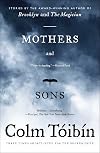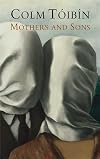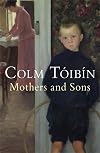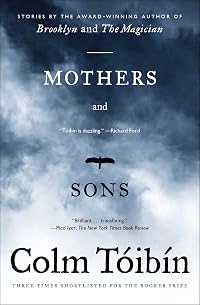
Mothers and Sons
by Colm Tóibín
On This Page
Description
Award-winning novelist Tóibín brings to this stunning first collection of short works an acute understanding of human frailty and longing. These nine beautifully written, intensely intimate stories explore the psychological push and pull between mother and son. Each story is centered on a transformative moment that alters the delicate balance of power in that relationship and changes the way mother and son perceive one another. With exquisite grace and eloquence, Tóibín writes of men and show more women bound by convention, by unspoken emotions, and by the stronghold of the past. Many are trapped in lives they would not choose again. Through the unique lens of each complex mother-son relationship, surprising hidden facets of character are revealed. Note: this collection contains adult subject matter that may be unsettling to some. show lessTags
Recommendations








Member Reviews
The stories collected here are muted, almost stripped of emotion despite some highly charged events occurring. It is as though Colm Tóibín wants the reader to take a step back and view these events calmly, dispassionately, perhaps forensically. And for some stories that works great. I like it especially in “The Use of Reason” and “A Priest in the Family”. Perhaps not so much in “Famous Blue Raincoat” or “A Summer Job”.
Most of these stories are straight-ahead short stories, narrow in scope and character, limited to a short time period, realistic both in terms of psychology and locale. In short, however much they mine the thematic connections between mothers and sons (which they all do), they do not breathe new life into show more the short form itself. I suspect that is probably a sign that Tóibín is more comfortable in the longer, novel form.
Inevitably different readers will prefer one or another of the stories here (they are all worthy), but for me it was “The Name of the Game” that stood out. Not unusually, a death initiates the action, which again not unusually, involves a life struggle, or, perhaps better, a struggle for survival. Class difference, which is not a major issue in most of these stories, is front and centre here, and because the action takes place at a distance from Dublin, Dublin can stand as an ideal, however misplaced, for the female protagonist, Nancy. Nancy’s struggle to transform the economic mess she has been left in by the untimely death of her husband reveals hidden strength in her, and no small amount of cunning. That I would gladly have seen the story expanded into a novel may just reveal my own preference for Tóibín’s longer, leisurely paced, novels. Well, to each their own, I guess. Gently recommended. show less
Most of these stories are straight-ahead short stories, narrow in scope and character, limited to a short time period, realistic both in terms of psychology and locale. In short, however much they mine the thematic connections between mothers and sons (which they all do), they do not breathe new life into show more the short form itself. I suspect that is probably a sign that Tóibín is more comfortable in the longer, novel form.
Inevitably different readers will prefer one or another of the stories here (they are all worthy), but for me it was “The Name of the Game” that stood out. Not unusually, a death initiates the action, which again not unusually, involves a life struggle, or, perhaps better, a struggle for survival. Class difference, which is not a major issue in most of these stories, is front and centre here, and because the action takes place at a distance from Dublin, Dublin can stand as an ideal, however misplaced, for the female protagonist, Nancy. Nancy’s struggle to transform the economic mess she has been left in by the untimely death of her husband reveals hidden strength in her, and no small amount of cunning. That I would gladly have seen the story expanded into a novel may just reveal my own preference for Tóibín’s longer, leisurely paced, novels. Well, to each their own, I guess. Gently recommended. show less
this book really grew on me. i started out liking the writing so much more than the people presented, but by the end i also cared very much about the characters. toibin's descriptions of both peoople and places are so well presented, and he frequently tells details that coukd be inconsequential, but in his hands, they had so much to the character's lives. i was often disappointed when the story ended, but i also knew that in life we need to live it to know the ending.
Good short story writers amaze me, and Toibin definitely falls in that category. Each of these stories is marked by a rich sense of place and character. With just a few words, Toibin brings us into the lives of his characters, making us feel as though we've been there all along. The melancholy that often marks stories of the Irish soaks through each story, practically dripping from the pages.
While each of these stories is linked by the common theme of relationships between mothers and sons, Toibin isn't looking for any easy generalizations. Instead, he uses the few pages he has been given to draw us into the particularities of each situation, leaving us as full at the end of each story as if we had just read an epic novel. This is show more simply a masterful collection. show less
While each of these stories is linked by the common theme of relationships between mothers and sons, Toibin isn't looking for any easy generalizations. Instead, he uses the few pages he has been given to draw us into the particularities of each situation, leaving us as full at the end of each story as if we had just read an epic novel. This is show more simply a masterful collection. show less
Com Toibin's beautiful prose is the standout feature of this collection. He writes with precision and delicacy and evokes emotion with patience and restraint. However the plotting, characterisation and themes are somewhat inconsistent. The settings are very Irish, all dead mothers and villages where everybody knows your business, which I struggle to relate to unless there are more universal themes addressed.
The first two stories, "The Use of Reason" and "A Song" left me cold, as they described situations that were neither familiar nor interesting to me. I decided to persist and was glad I did when the subtle realism of "The Name of the Game" was up next. I wavered again in "Famous Blue Raincoat", but from there the stories alternated show more between wonderful and disappointing.
One of my great frustrations with short stories, and one of the reasons I don't often read them, is that by the time I've decided if a story is any good, it's almost over. There's rarely the chance to settle into a story knowing that the next pages will be worth savouring. Obviously this collection doesn't do anything to change that reservation, but the rewards - in the form of moving, emotionally true stories - are worth the frustrations, in my view. show less
The first two stories, "The Use of Reason" and "A Song" left me cold, as they described situations that were neither familiar nor interesting to me. I decided to persist and was glad I did when the subtle realism of "The Name of the Game" was up next. I wavered again in "Famous Blue Raincoat", but from there the stories alternated show more between wonderful and disappointing.
One of my great frustrations with short stories, and one of the reasons I don't often read them, is that by the time I've decided if a story is any good, it's almost over. There's rarely the chance to settle into a story knowing that the next pages will be worth savouring. Obviously this collection doesn't do anything to change that reservation, but the rewards - in the form of moving, emotionally true stories - are worth the frustrations, in my view. show less
I finished reading Colm Toibin’s collection of stories, Mothers and Sons, and I must say, Toibin is writing at such a high level right now that he’s incapable of an insipid piece of work. The book is suffused with a somber, dark tone and a theme that centers on a mother and son that makes it more of an organic whole than just a group of individual stories. In a weird sort of way it’s like a novel with several different plot lines where everything comes together in the last story which is really a novella. I don’t know how he does it, but when a situation presented in one story is encountered again in another, each seems to make the other all the more richer. Even without the stunning variations of continuity I still think these show more stories are so well crafted that they can stand on their own without the support of the others. It’s very similar to what MacLaverty successfully pulled off in Matters of Life and Death. show less
Colm Tóibín's writing never fails to move me in its quietly powerful simplicity and these wonderful short stories are every bit as satisfying as his novels. The exploration of relationships between mothers and sons is full of insightful reflections and the quality of the writing is, at times. quite breathtaking. This is a collection of stories which needs to be savoured and I know that I will be returning to them in order to enjoy the beauty of the prose.
Through nine stories, Colm Tóibín's "Mothers and Sons" examines the complicated and frequently tense relationships between mothers and sons, emphasizing themes of unsaid feelings, lost connections, and the influence of the past on the present. A beautiful introduction to the oeuvre of Colm Toibin.
Members
- Recently Added By
Published Reviews
From Publishers Weekly
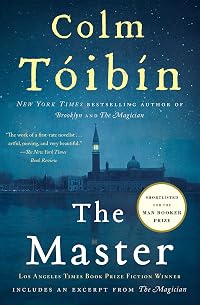
Nine stories from the author of The Master, The Blackwater Lightship and three other novels explore what happens when mothers and sons confront one another as adults. The sons include a middle-aged petty criminal, a young alienated pub musician and a regular guy whose drug-fueled mourning takes him into new sexual territory. The mothers include a widow who married above show more her class, a woman whose son's depression hangs over her and her husband's lives and a woman whose son is a priest being charged with abuse. In "The Name of the Game," the widowed Nancy Sheridan finds herself saddled with three children and a debt-ridden supermarket. In "Famous Blue Raincoat," former–folk-rock sensation-turned-smalltime-photographer Lisa is distressed by her son Luke's interest in her band, but refuses to tread on his curiousity, which forces her to reconfront the band's painful end. Longing, frustrated expectations and an offhandedly gorgeous Ireland run steadily throughout—except in the concluding, near-novella-length "A Long Winter," set in a Spanish village, and featuring Miguel, his younger brother, Jordi, and their mother, whose drinking may not be the only secret Miguel discovers during preparations for Jordi's departure for his military service. Wistful, touching and complex, these stories form a panoramic portrait of loss. (Jan.)
Copyright © Reed Business Information, a division of Reed Elsevier Inc. All rights reserved. --This text refers to an out of print or unavailable edition of this title. show less
Nine stories from the author of The Master, The Blackwater Lightship and three other novels explore what happens when mothers and sons confront one another as adults. The sons include a middle-aged petty criminal, a young alienated pub musician and a regular guy whose drug-fueled mourning takes him into new sexual territory. The mothers include a widow who married above show more her class, a woman whose son's depression hangs over her and her husband's lives and a woman whose son is a priest being charged with abuse. In "The Name of the Game," the widowed Nancy Sheridan finds herself saddled with three children and a debt-ridden supermarket. In "Famous Blue Raincoat," former–folk-rock sensation-turned-smalltime-photographer Lisa is distressed by her son Luke's interest in her band, but refuses to tread on his curiousity, which forces her to reconfront the band's painful end. Longing, frustrated expectations and an offhandedly gorgeous Ireland run steadily throughout—except in the concluding, near-novella-length "A Long Winter," set in a Spanish village, and featuring Miguel, his younger brother, Jordi, and their mother, whose drinking may not be the only secret Miguel discovers during preparations for Jordi's departure for his military service. Wistful, touching and complex, these stories form a panoramic portrait of loss. (Jan.)
Copyright © Reed Business Information, a division of Reed Elsevier Inc. All rights reserved. --This text refers to an out of print or unavailable edition of this title. show less
added by RochelleJewelShapiro
Lists

Fiction (Non-Fantasy) by Irish Authors Set in Ireland
87 works; 3 members
Author Information

88+ Works 25,509 Members
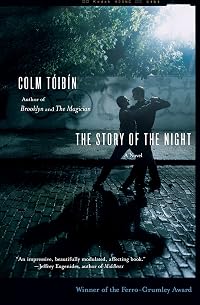
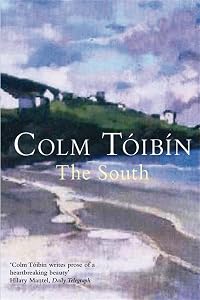
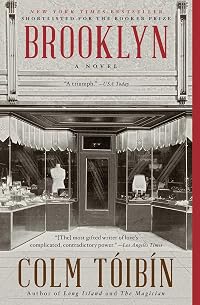
Colm Tóibín was born in Enniscorthy, Ireland in 1955. He studied history and English at University College Dublin, earning his B.A. in 1975. After graduating he moved to Barcelona for three years and taught at the Dublin School of English. In 1978 he returned to Dublin and began working on an M.A. in Modern English and American Literature. He show more wrote for In Dublin, Hibernia, and The Sunday Tribune. He became the Features Editor of In Dublin in 1981, and then a year later accepted the position of Editor for the Irish current affairs magazine Magill. His first book, Walking Along the Border, was published in 1987 and his first novel, The South, was published in 1990. He wrote for The Sunday Independent as a drama or television critic and political commentator. He writes regularly for The London Review of Books. He has written several other novels including The Story of the Night, The Blackwater Lightship, Brooklyn, The Testament of Mary, and Nora Webster. The Heather Blazing received the 1993 Encore Award and The Master received the 2006 International IMPAC Dublin Literary Award, the Stonewall Book Award, and the Lambda Literary Award. In 2015 he made The New Zealand High Profile Titles List with All The Light We Cannot See. He was short listed for the 2015 Folio Prize for his title Nora Webster. (Bowker Author Biography) show less
Some Editions
Awards and Honors
Series
Belongs to Publisher Series
Keltainen pokkari (87)
Keltainen kirjasto (445)
Work Relationships
Contains
Common Knowledge
- Canonical title
- Mothers and Sons
- Original title
- Mothers and sons
- Original publication date
- 2007
- Important places
- Ireland
- Dedication
- For Michael Loughlin and Veronica Rapalino
- First words
- The city was a great emptiness.
- Last words
- (Click to show. Warning: May contain spoilers.)Manolo held him hard to make sure that he did not move any closer to the dying bird and the carcass, half torn asunder now, no use to anyone.
- Blurbers
- Bolger, Dermot
Classifications
Statistics
- Members
- 799
- Popularity
- 34,886
- Reviews
- 17
- Rating
- (3.73)
- Languages
- 8 — Catalan, English, Finnish, French, German, Italian, Portuguese, Spanish
- Media
- Paper, Audiobook, Ebook
- ISBNs
- 39
- ASINs
- 12