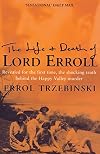
The Life and Death of Lord Erroll: The Truth Behind the Happy Valley Murder
by Errol Trzebinski
On This Page
Description
In 1941, just outside Nairobi, Kenya's Assistant Military Secretary, Josslyn Hay, 22nd Earl of Erroll, was found dead in his car. This book examines the life and mysterious murder of the most glamorous member of Kenya's Happy Valley set.Tags
Recommendations











Member Reviews
This is a fairly conventional well written biography of Lord Erroll, best known as the aristocrat favoured by the wives of British settlers in Kenya in the 1920's and 30's whose death - a bullet in the back of the head - created an enduring scandal and mystery. There is an engaging description of the diplomatic world of Europe in the early 1900's, and the colonial world of Kenya, and of the bohemian characters that the reader might already be familiar with through the book and movie 'White Mischief'. The author (no relation) claims to correct a few errors in James Fox's book, but used largely the same methods of personal interviews to fill in the substantial gaps in the official records. Both Fox and Erroll T. particularly mentioned show more that even with the passage of time people were reluctant to talk, and while many promised that they'd leave notes 'revealing the truth' after they died, these would never turn up.
Fox's theory is that Lord Erroll was shot by the jealous husband of the wife he 'stole', noting that this man had a history of quite sophisticated insurance frauds which involved laying false trails and obscuring evidence. Erroll T. on the other hand claims to have been given a statement by a former intelligence officer detailing a very complicated plot by the British Government to assassinate Lord Erroll. Lord Erroll had - it's agreed - flirted with the British Fascist party, but was generally thought to have put this behind him at the time of his death when he was a key figure in the British administration of Kenya. The book loses a little of its authority as the assassination plot is described. I don't doubt it is credible, but an incredible story is pretty much galloped through here, jammed in the back of the book. There are tantalizing references to what may have been other assassinations of middle ranking fascists in the British military and diplomatic arenas, but there is no time to tease those stories out. There's much more to tell here, but as soon as Errol T. gets near the British Fascist connection her research started churning up more mud than miles on the road. The British are very good at keeping secrets.
The author goes on to suggest that Lord Erroll was targeted particularly for assassination not because he was an active Nazi sympathiser, but because having renounced his association with the British Fascists he was thought capable of spilling the beans publicly on the whole organisation, including some links high in the British aristocracy. Erroll T. even suggests that Lord Erroll had evidence that Churchill himself had at one time considered giving in to Germany and dividing Europe (and Africa) amongst each other while Germany tackled Russia. Simply arresting Lord Erroll would not have stopped him telling his side of the story, particularly in Kenya where the British Government did not have as rigid control on affairs as they might have had at home. The suggestion is that this was the last thing Churchill needed at a time when he was assiduously courting the US with a picture of Britons (and the Empire) standing united on the beaches defying the German war machine. It's apparent that this is another whole book, but it is disappointing that Erroll T. ends her (otherwise very well researched) book with such a substantial accusation without presenting any evidence or argument. There's a mountain of material on Lord Halifax and Churchill debating whether to fight or give in (and which of them would lead the country in war) that remains untapped here.
Personally I don't think it is necessary to argue that the rather extreme step of assassination was brought about some theory that Churchill was trying to cover up his own involvement in appeasing Germany. It may indeed have come down to some senior person in British Intelligence with aristocratic connections seeing Lord Erroll as someone who'd let the side down with his dubious connections with both Fascists and other people's wives. And whereas this sort of behaviour was nothing out of the ordinary amongst the British aristocracy, Lord Erroll had committed the unforgivable sin of conducting his extra-marital affairs in the public eye. I rather suspect the decision to assassinate Lord Erroll (and I tend to agree it was assassination) was based on a view that Lord Erroll was not quite the sort of chap they wanted to have on their team, a 'bad egg' in fact. It's not beyond the bounds of possibility that Lord Erroll might just at one point have flirted with the wife of the man who ordered his removal. Again, fertile waters that Erroll T. has left untrawled.
But for all of that this is a much more satisfying, if less titillating, story of the Lord Erroll and Happy Valley than you'll find in James Fox's 'White Mischief'. Ideally read both together. Recommended. show less
Fox's theory is that Lord Erroll was shot by the jealous husband of the wife he 'stole', noting that this man had a history of quite sophisticated insurance frauds which involved laying false trails and obscuring evidence. Erroll T. on the other hand claims to have been given a statement by a former intelligence officer detailing a very complicated plot by the British Government to assassinate Lord Erroll. Lord Erroll had - it's agreed - flirted with the British Fascist party, but was generally thought to have put this behind him at the time of his death when he was a key figure in the British administration of Kenya. The book loses a little of its authority as the assassination plot is described. I don't doubt it is credible, but an incredible story is pretty much galloped through here, jammed in the back of the book. There are tantalizing references to what may have been other assassinations of middle ranking fascists in the British military and diplomatic arenas, but there is no time to tease those stories out. There's much more to tell here, but as soon as Errol T. gets near the British Fascist connection her research started churning up more mud than miles on the road. The British are very good at keeping secrets.
The author goes on to suggest that Lord Erroll was targeted particularly for assassination not because he was an active Nazi sympathiser, but because having renounced his association with the British Fascists he was thought capable of spilling the beans publicly on the whole organisation, including some links high in the British aristocracy. Erroll T. even suggests that Lord Erroll had evidence that Churchill himself had at one time considered giving in to Germany and dividing Europe (and Africa) amongst each other while Germany tackled Russia. Simply arresting Lord Erroll would not have stopped him telling his side of the story, particularly in Kenya where the British Government did not have as rigid control on affairs as they might have had at home. The suggestion is that this was the last thing Churchill needed at a time when he was assiduously courting the US with a picture of Britons (and the Empire) standing united on the beaches defying the German war machine. It's apparent that this is another whole book, but it is disappointing that Erroll T. ends her (otherwise very well researched) book with such a substantial accusation without presenting any evidence or argument. There's a mountain of material on Lord Halifax and Churchill debating whether to fight or give in (and which of them would lead the country in war) that remains untapped here.
Personally I don't think it is necessary to argue that the rather extreme step of assassination was brought about some theory that Churchill was trying to cover up his own involvement in appeasing Germany. It may indeed have come down to some senior person in British Intelligence with aristocratic connections seeing Lord Erroll as someone who'd let the side down with his dubious connections with both Fascists and other people's wives. And whereas this sort of behaviour was nothing out of the ordinary amongst the British aristocracy, Lord Erroll had committed the unforgivable sin of conducting his extra-marital affairs in the public eye. I rather suspect the decision to assassinate Lord Erroll (and I tend to agree it was assassination) was based on a view that Lord Erroll was not quite the sort of chap they wanted to have on their team, a 'bad egg' in fact. It's not beyond the bounds of possibility that Lord Erroll might just at one point have flirted with the wife of the man who ordered his removal. Again, fertile waters that Erroll T. has left untrawled.
But for all of that this is a much more satisfying, if less titillating, story of the Lord Erroll and Happy Valley than you'll find in James Fox's 'White Mischief'. Ideally read both together. Recommended. show less
An interestingly different view of the Happy Valley murder from James Fox's in "White Mischief", written 20 years earlier. This book claims that Erroll was killed by the British secret service for political reasons, with his womanising used as a smokescreen by the powers that be in their cover-up of what really happened. It would explain some of the gaps in the jealous husband theory, and why people were scared to talk about it to James Fox 40 years later, but there are still discrepancies, so who knows what really happened.
It was interesting to see Erroll as his neighbours in Kenya saw him; a hard-working farmer, who was active in local politics, liked children and hardly drank alcohol, rather than an aristocratic verandah-farmer who show more held wild parties, went to orgies and seduced other men's wives at the drop of a hat. show less
It was interesting to see Erroll as his neighbours in Kenya saw him; a hard-working farmer, who was active in local politics, liked children and hardly drank alcohol, rather than an aristocratic verandah-farmer who show more held wild parties, went to orgies and seduced other men's wives at the drop of a hat. show less
Ratings
Members
- Recently Added By
Author Information
9+ Works 325 Members
Awards and Honors
Common Knowledge
Classifications
- Genres
- Nonfiction, Biography & Memoir, General Nonfiction, History, Politics and Government
- DDC/MDS
- 364 — Social sciences Social problems and social services Criminology
- LCC
- HV6535 .K4 .T79 — Social sciences Social pathology. Social and public welfare. Criminology Social pathology. Social and public welfare. Criminology Crimes and offenses
- BISAC
Statistics
- Members
- 47
- Popularity
- 634,262
- Reviews
- 2
- Rating
- (3.40)
- Languages
- English
- Media
- Paper
- ISBNs
- 3
- ASINs
- 1