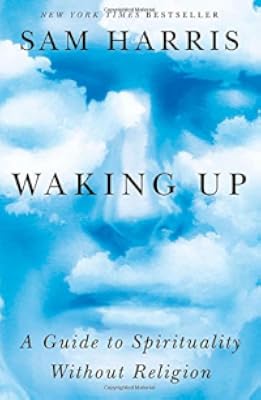
Waking Up: A Guide to Spirituality Without Religion
by Sam Harris
On This Page
Description
For the millions of Americans who want spirituality without religion, Waking Up is a guide to meditation as a rational practice informed by neuroscience and psychology. From Sam Harris, neuroscientist and author of numerous New York Times bestselling books, Waking Up is for the twenty percent of Americans who follow no religion but who suspect that important truths can be found in the experiences of such figures as Jesus, the Buddha, Lao Tzu, Rumi, and the other saints and sages of history. show more Throughout this book, Harris argues that there is more to understanding reality than science and secular culture generally allow, and that how we pay attention to the present moment largely determines the quality of our lives. Waking Up is part memoir and part exploration of the scientific underpinnings of spirituality. No other book marries contemplative wisdom and modern science in this way, and no author other than Sam Harris—a scientist, philosopher, and famous skeptic—could write it. show lessTags
Recommendations



Member Reviews
Sam Harris, a most rational spiritualist, offers this concise guide to striving for meaning and happiness. The appeal is neither to theology nor to the conventional sources of happiness alone: hedonic pleasure, family, wealth, contribution to others. In this he follows the Buddhist insight that while these these may bring temporary happiness, they are transitory, and that there is more enduring serenity and bliss to be found beyond these through greater clarity about human life and the workings of our minds.
The book is in part memoir of Harris’ own spiritual journey. He credits early drug experiences with offering him the perspective that there is more joy to be found in life than he had previously understood. He subsequently spent show more many years with Buddhist teachers in Asia. Harris came away with a Buddhist meditation practice that he regards as among the most important of spiritual tools.
To me, the first chapter on spirituality is a useful encapsulation of the problem of happiness and Buddhist perspectives on it. Harris then attempts to integrate his Buddhist practice and his experiences with his knowledge of Western science, especially neuroscience, and philosophy. I find this part of his thinking less useful. He offers tools for beginning a meditation practice, and a structure for thinking about spirituality without appeal to faith. Overall, he has performed a valuable service.
Harris became a voice of the New Atheism after The End of Faith. Perhaps he owes his readership this book, a way back to spirituality. show less
The book is in part memoir of Harris’ own spiritual journey. He credits early drug experiences with offering him the perspective that there is more joy to be found in life than he had previously understood. He subsequently spent show more many years with Buddhist teachers in Asia. Harris came away with a Buddhist meditation practice that he regards as among the most important of spiritual tools.
To me, the first chapter on spirituality is a useful encapsulation of the problem of happiness and Buddhist perspectives on it. Harris then attempts to integrate his Buddhist practice and his experiences with his knowledge of Western science, especially neuroscience, and philosophy. I find this part of his thinking less useful. He offers tools for beginning a meditation practice, and a structure for thinking about spirituality without appeal to faith. Overall, he has performed a valuable service.
Harris became a voice of the New Atheism after The End of Faith. Perhaps he owes his readership this book, a way back to spirituality. show less
Waking Up: A Guide to Spirituality Without Religion by Sam Harris is a thought-provoking and refreshing exploration of consciousness, mindfulness, and the human search for meaning, without relying on traditional religious frameworks. As I read it, I found myself both challenged and intrigued. Harris, being both a neuroscientist and a long-time meditator, bridges science and spirituality in a way that feels grounded and rational, yet still deeply introspective. His writing encourages readers to look inward, to question the nature of the self, and to experience awareness not as a belief, but as a direct and tangible state of being.
From a reader’s perspective, I appreciated how Harris managed to make complex philosophical and show more neurological concepts accessible, though there were moments where the tone felt a bit dense or overly analytical. Some readers might find his critiques of religion a little sharp, but I saw them as part of his honest attempt to separate genuine spiritual experience from dogma. What stood out most was his ability to make meditation feel less like a mystical practice and more like a science-backed tool for understanding our minds.
Overall, Waking Up is an enlightening and intellectually stimulating read that pushes you to rethink what spirituality can mean in a modern, secular world. It’s not a light or sentimental book, it’s more of a mental workout, but by the end, I felt like I understood myself, and the nature of awareness, just a little bit better. For anyone curious about finding depth and meaning without religion, this book is a powerful guide. show less
From a reader’s perspective, I appreciated how Harris managed to make complex philosophical and show more neurological concepts accessible, though there were moments where the tone felt a bit dense or overly analytical. Some readers might find his critiques of religion a little sharp, but I saw them as part of his honest attempt to separate genuine spiritual experience from dogma. What stood out most was his ability to make meditation feel less like a mystical practice and more like a science-backed tool for understanding our minds.
Overall, Waking Up is an enlightening and intellectually stimulating read that pushes you to rethink what spirituality can mean in a modern, secular world. It’s not a light or sentimental book, it’s more of a mental workout, but by the end, I felt like I understood myself, and the nature of awareness, just a little bit better. For anyone curious about finding depth and meaning without religion, this book is a powerful guide. show less
This book would be better if it positioned itself as an essay collection rather than a coherent book. All of the chapters did have a common theme of spirituality, but they jumped all over the place.
"Wait," you say, "spirituality?" Are we talking about that Sam Harris, the atheist? Yes!
What would noted New Atheist Sam Harris have to say about spirituality? Aren't New Atheists contemptuous of anything that is even tinged with the taint of religion? Harris addresses that, and it is, in my view, the most important part of the book. I'll let Harris speak for himself.
What does he mean by spiritual?
But it's not all about ease and feeling better. Harris also points out that many practices traditionally labeled spiritual can help give insight into the nature of the mind — they can help give one a better understanding of reality.
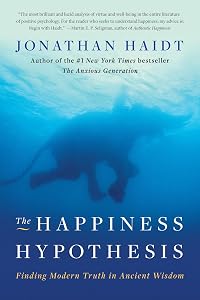
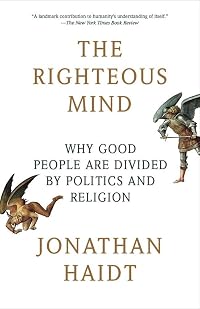
Harris is not the first to point out that a limitation of secularism is that it fails to embrace the transcendence, but unlike a Jonathan Haidt or an Alain de Botton, Harris runs no risk of being considered sympathetic to religion, so while his endorsement of spirituality does not mean more than that of others, it does speak in a language more amenable to our most skeptical skeptics.
All that was covered in the first chapter. Chapters 2 and 3 were an exploration of consciousness and the sense of self which were interesting, but somewhat muddled. Harris believes that it is likely that consciousness is irreducible. He admits that people once had similar concerns about the nature of life, and that we now have an objective definition of "alive". Consciousness seems unlikely to be similarly reducible because it relies on inner experience. I grant his point that observing inner experience is a difficult challenge, but his contrasting consciousness with life shows hindsight bias. To people a few hundred years ago, the idea that the life force could be reduced to a set of objective bullet points would have seemed infeasible. I see no reason to assume that we now are any different than they then.
Moving on, chapter 4 is a very brief introduction to meditation, with focus on his favorite techniques. There are better introductions. Chapter 5 is an entertaining but somewhat incidental exploration of other methods of achieving alternate states of consciousness including drugs and near death experiences.
So, overall, a so-so book, but the first chapter makes a critical contribution to the conversation around non-religious spirituality and is worth a read if the topic interests you. show less
"Wait," you say, "spirituality?" Are we talking about that Sam Harris, the atheist? Yes!
What would noted New Atheist Sam Harris have to say about spirituality? Aren't New Atheists contemptuous of anything that is even tinged with the taint of religion? Harris addresses that, and it is, in my view, the most important part of the book. I'll let Harris speak for himself.
Our world is dangerously riven by religious doctrines that all educated people should condemn, and yet there is more to understanding the human condition than science andshow more
secular culture generally admit. ... many nonbelievers now consider all things "spiritual" to be contaminated by medieval superstition. I do not share their semantic concerns. ... there is no other term — apart from the even more problematic term mystical or the more restrictive contemplative — with which to discuss the efforts people make, through meditation, psychedelics, or other means, to bring their minds into the present or to induce nonordinary states of consciousness. And no other word links this spectrum of experience to our ethical lives.
What does he mean by spiritual?
We seem to do little more than lurch between wanting and not wanting. Thus, the question naturally arises: Is there more to life than this? Might it be possible to feel much better (in every sense of better) than one tends to feel? Is it possible to find lasting fulfillment despite the inevitability of change?
Spiritual life begins with the suspicion that the answer to such questions could well be "yes." And a true spiritual practitioner is someone who has discovered that it is possible to be at ease in the world for no reason, if only for a few moments at a time, and that such ease is synonymous with transcending the boundaries of the self.
But it's not all about ease and feeling better. Harris also points out that many practices traditionally labeled spiritual can help give insight into the nature of the mind — they can help give one a better understanding of reality.
Our conventional sense of self is an illusion; positive emotions, such as compassion and patience, are teachable skills; and the way we think directly influences our experience of the world.
Harris is not the first to point out that a limitation of secularism is that it fails to embrace the transcendence, but unlike a Jonathan Haidt or an Alain de Botton, Harris runs no risk of being considered sympathetic to religion, so while his endorsement of spirituality does not mean more than that of others, it does speak in a language more amenable to our most skeptical skeptics.
All that was covered in the first chapter. Chapters 2 and 3 were an exploration of consciousness and the sense of self which were interesting, but somewhat muddled. Harris believes that it is likely that consciousness is irreducible. He admits that people once had similar concerns about the nature of life, and that we now have an objective definition of "alive". Consciousness seems unlikely to be similarly reducible because it relies on inner experience. I grant his point that observing inner experience is a difficult challenge, but his contrasting consciousness with life shows hindsight bias. To people a few hundred years ago, the idea that the life force could be reduced to a set of objective bullet points would have seemed infeasible. I see no reason to assume that we now are any different than they then.
Moving on, chapter 4 is a very brief introduction to meditation, with focus on his favorite techniques. There are better introductions. Chapter 5 is an entertaining but somewhat incidental exploration of other methods of achieving alternate states of consciousness including drugs and near death experiences.
So, overall, a so-so book, but the first chapter makes a critical contribution to the conversation around non-religious spirituality and is worth a read if the topic interests you. show less
You know I have to have a very high regard for Mr. Harris to read a whole book exhorting me to consider Buddhism and meditation. And I do. He presents an empiricist's take throughout.
I still really need to sit down with somebody who practices these things and ask all my questions.
I guess first off, WHY. Why do you want to transcend the self in the first place? The self is all we have. Harris' main claim however is that the self is an illusion. Well, so is free will; but do you wake up every morning and lay there doing nothing, saying, let's see what I do today?
And if you can alter your consciousness and see that the self is an illusion, if this is a way to mitigate anxiety and bad feelings, doesn't it get rid of the good feelings too? show more Why would you want to live that way?
It's sold as a way to get off the hedonic treadmill. We are constantly chasing pleasure, avoiding pain, bounced around among our emotions, seeking something that can never be permanent. Yup. That's called the HUMAN CONDITION. The pursuit of happiness... it's what life is ABOUT. I don't get why you'd want to spend the effort fighting human nature, eliminating the joy that comes from achieving goals and looking forward to the future and looking back at happy times, in exchange for some steady state of emotion-free selflessness.
I know I'm not getting it entirely. That's why I need to sit down with somebody.
I really do appreciate Harris' efforts here. He is against every form of faith-based religion and claims nothing that is not empirically testable. My readings here and elsewhere about meditation and psychedelic use have 'opened my mind' a bit - to the extent I actually can read about Buddhism and meditation without running away screaming (much).
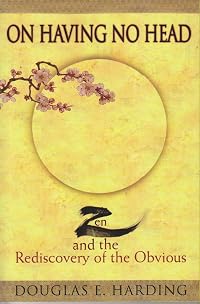
One exercise I did enjoy much was about "having no head." You can't see your head. Try pretending you don't have one. Just pretend for a moment, don't dwell on it. Look around. How does the world look? Douglas Harding: "This hole where a head should have been, was no ordinary vacancy, no mere nothing... It was a vast emptiness vastly filled, a nothing that found room for everything: room for grass, trees, shadowy distant hills..." Trippy. show less
I still really need to sit down with somebody who practices these things and ask all my questions.
I guess first off, WHY. Why do you want to transcend the self in the first place? The self is all we have. Harris' main claim however is that the self is an illusion. Well, so is free will; but do you wake up every morning and lay there doing nothing, saying, let's see what I do today?
And if you can alter your consciousness and see that the self is an illusion, if this is a way to mitigate anxiety and bad feelings, doesn't it get rid of the good feelings too? show more Why would you want to live that way?
It's sold as a way to get off the hedonic treadmill. We are constantly chasing pleasure, avoiding pain, bounced around among our emotions, seeking something that can never be permanent. Yup. That's called the HUMAN CONDITION. The pursuit of happiness... it's what life is ABOUT. I don't get why you'd want to spend the effort fighting human nature, eliminating the joy that comes from achieving goals and looking forward to the future and looking back at happy times, in exchange for some steady state of emotion-free selflessness.
I know I'm not getting it entirely. That's why I need to sit down with somebody.
I really do appreciate Harris' efforts here. He is against every form of faith-based religion and claims nothing that is not empirically testable. My readings here and elsewhere about meditation and psychedelic use have 'opened my mind' a bit - to the extent I actually can read about Buddhism and meditation without running away screaming (much).
One exercise I did enjoy much was about "having no head." You can't see your head. Try pretending you don't have one. Just pretend for a moment, don't dwell on it. Look around. How does the world look? Douglas Harding: "This hole where a head should have been, was no ordinary vacancy, no mere nothing... It was a vast emptiness vastly filled, a nothing that found room for everything: room for grass, trees, shadowy distant hills..." Trippy. show less
A Curate's Egg for me. Large parts of the discussion are very hard to follow for a neophyte, but feel very important and will definitely be ripe for a re-read.
The last chapter was out of step with the rest of the book and I drew very little from it.
The last chapter was out of step with the rest of the book and I drew very little from it.
Some may find this a surprising work from famed atheist writer, Sam Harris. Spirituality? I found it insightful and clear (and a wonderful invitation into meditation practice). Harris points to some of the places where he and his "horsemen" companions (e.g. Dennett, Hitchens) disagree, and this helps to illuminate his own take on spirituality. "Spirituality begins with a reverence for the ordinary that can lead us to insights and experiences that are anything but ordinary. And the conventional opposition between humility and hubris has no place here. Yes, the cosmos is vast and appears indifferent to our mortal schemes, but every present moment of consciousness is profound." Amen.
Just did not care for this book—apparently I fail even at spirituality for atheists. :P
In general I take issue with movement atheists and therefore did not get on with Harris for the first chapter or so. I feel that secularism conceals a lot of hidden biases and falls into the trap of assuming that behaviors are functional if and only if they are rational or bring us closer to objective truth. As someone who tends toward rational skepticism, I find this to be a lovely idea, but based on my observation of the rest of humanity, it just ain't so.
I did enjoy his discussions of neuroscience and philosophy and was really excited for the rest of the book. However, once we got to the meat of his argument about meditation, I was literally show more frustrated to tears. His insistence on the illusion of the self only filled me with a kind of existential anxiety. I feel certain he is onto something, but I was simply unable to grok his explanation or figure out how I could possibly come to this conclusion on my own via meditation.
Undoubtedly this would be a great book for the right reader, but I need something about meditation and mindfulness that's more guided and less didactic and will allow me to develop my own vocabulary and best practices for understanding and regulating my mind. show less
In general I take issue with movement atheists and therefore did not get on with Harris for the first chapter or so. I feel that secularism conceals a lot of hidden biases and falls into the trap of assuming that behaviors are functional if and only if they are rational or bring us closer to objective truth. As someone who tends toward rational skepticism, I find this to be a lovely idea, but based on my observation of the rest of humanity, it just ain't so.
I did enjoy his discussions of neuroscience and philosophy and was really excited for the rest of the book. However, once we got to the meat of his argument about meditation, I was literally show more frustrated to tears. His insistence on the illusion of the self only filled me with a kind of existential anxiety. I feel certain he is onto something, but I was simply unable to grok his explanation or figure out how I could possibly come to this conclusion on my own via meditation.
Undoubtedly this would be a great book for the right reader, but I need something about meditation and mindfulness that's more guided and less didactic and will allow me to develop my own vocabulary and best practices for understanding and regulating my mind. show less
Members
- Recently Added By
Lists

Books on Spirituality
7 works; 1 member

Guttabois
27 works; 1 member

Simon & Schuster
136 works; 4 members
Author Information

14+ Works 15,618 Members
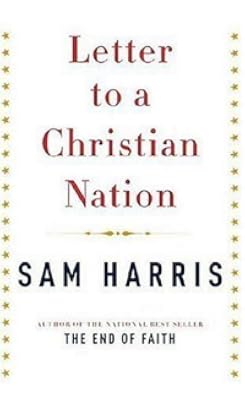
Sam Harris received a degree in philosophy from Stanford University and a Ph. D in neuroscience from UCLA. His works include Letter to a Christian Nation, The Moral Landscape, and Free Will. The End of Faith won the 2005 PEN Award for Nonfiction. He is the co-founder and CEO of Project Reason, a nonprofit foundation devoted to spreading scientific show more knowledge and secular values in society. His title Waking Up: A Guide to Spirituality Without Religion made The New York Times Best Seller List. (Bowker Author Biography) show less
Work Relationships
Is contained in
Common Knowledge
- Original title
- Waking Up: A Guide to Spirituality Without Religion
- Original publication date
- 2014
- Original language
- English
Classifications
Statistics
- Members
- 1,625
- Popularity
- 13,965
- Reviews
- 44
- Rating
- (3.69)
- Languages
- 8 — Dutch, English, Finnish, French, German, Polish, Portuguese, Spanish
- Media
- Paper, Audiobook, Ebook
- ISBNs
- 22
- UPCs
- 2
- ASINs
- 9