On This Page
Description
"A long-buried family secret resurfaces when one of Aloysius Pendergast's most implacable enemies shows up on his doorstep as a murdered corpse. The mystery has all the hallmarks of the perfect murder, save for an enigmatic clue: a piece of turquoise lodged in the stomach of the deceased. The gem leads Pendergast to an abandoned mine on the shore of California's desolate Salton Sea, which in turn propels him on a journey of discovery deep into his family's sinister past. But Pendergast show more learns there is more at work than a ghastly episode of family history: he is soon stalked by a subtle killer bent on vengeance over an ancient transgression. In short order, Pendergast is caught in a wickedly clever plot, which will leave him stricken in mind and body...and may well end with his death"-- show lessTags
Recommendations













Member Reviews
Blue Labyrinth is an interesting and exciting ride, but I found it a bit of a departure from what I've come to expect from the Pendergast series. A familiar character returns for this one, which was nice. In general, normally secondary characters take centerstage for this story, so if you're looking for a story centered on the Agent, this would not be your first choice.
SPOILERS AHEAD!
Pendergast starts out in true form -- picking up on obscure clues and disappearing on the hunt, but not explaining his actions to anyone. The book begins in a Sherlockian fashion, opening with the dead body of Alban, and Pendergast pursued the clues with more determination than ever. But in a novel twist, Pendergast is hit with the poison that killed show more Alban, becoming the next victim of his son's killer.
From here, we saw a different Pendergast. At one point, I thought we were glimpsing a sign of human frailty in him, which was unusual enough, when the day after a physical fight in which he was equally matched, he was stiff and sore. But we soon found that he'd been poisoned.
The symptoms continued to produce behavior out of the ordinary for Agent Pendergast, such as the sudden listlessness when he saw the picture of his attacker as the suspect in the Museum murder. He soon became more erratic and unhinged. During his whole trip to Brazil, he was weak, frail. The fact that he was looking for his son added another dimension of vulnerability. It was tough watching Pendergast in such a state.
Towards the end, he'd given up on surviving. On one hand, it was logical, as no one had survived before. On the other hand, he's never been one to give up. But the elixir was working on his mind, and he wasn't as sharp as he might have been.
What was more unusual -- and more disturbing -- was that he was in need of help in this story. In fact, he needed saving in the end. This is a different turn than any previous book.
His relationship to Constance was different as well. He was more open with her, more honest, revealing. And yes, there was the kiss, but Constance seemed to place more importance on the fact that he called her his oracle. Which he then threw back in her face in a way only Pendergast could pull off -- and live, apparently. Constance showed her claws in this one -- and they are sharp.
I'm disappointed the authors decided to get rid of Alban so quickly. I'm sure they had good reasons, but he seemed to have potential to be a formidable and worthy adversary for Pendergast. Now, we'll never know.
Overall a fun ride, full a suspense, mystery, and tension. Just not what I was expecting. show less
SPOILERS AHEAD!
Pendergast starts out in true form -- picking up on obscure clues and disappearing on the hunt, but not explaining his actions to anyone. The book begins in a Sherlockian fashion, opening with the dead body of Alban, and Pendergast pursued the clues with more determination than ever. But in a novel twist, Pendergast is hit with the poison that killed show more Alban, becoming the next victim of his son's killer.
From here, we saw a different Pendergast. At one point, I thought we were glimpsing a sign of human frailty in him, which was unusual enough, when the day after a physical fight in which he was equally matched, he was stiff and sore. But we soon found that he'd been poisoned.
The symptoms continued to produce behavior out of the ordinary for Agent Pendergast, such as the sudden listlessness when he saw the picture of his attacker as the suspect in the Museum murder. He soon became more erratic and unhinged. During his whole trip to Brazil, he was weak, frail. The fact that he was looking for his son added another dimension of vulnerability. It was tough watching Pendergast in such a state.
Towards the end, he'd given up on surviving. On one hand, it was logical, as no one had survived before. On the other hand, he's never been one to give up. But the elixir was working on his mind, and he wasn't as sharp as he might have been.
What was more unusual -- and more disturbing -- was that he was in need of help in this story. In fact, he needed saving in the end. This is a different turn than any previous book.
His relationship to Constance was different as well. He was more open with her, more honest, revealing. And yes, there was the kiss, but Constance seemed to place more importance on the fact that he called her his oracle. Which he then threw back in her face in a way only Pendergast could pull off -- and live, apparently. Constance showed her claws in this one -- and they are sharp.
I'm disappointed the authors decided to get rid of Alban so quickly. I'm sure they had good reasons, but he seemed to have potential to be a formidable and worthy adversary for Pendergast. Now, we'll never know.
Overall a fun ride, full a suspense, mystery, and tension. Just not what I was expecting. show less
Title – Blue Labyrinth
Author – Douglas Preston & Lincoln Child
Summary -
Special Agent Aloysius Pendergast has had many adversaries over the years. Both human and not completely human. But the one who has cost him the most is his own son, Alban. Gifted with the charm and good looks of his father, but with a mind of hate and revenge, Alban has been a threat to Pendergast and all he holds dear. So as he sets to have dinner with his ward and guests, there is a knock on his door…
“…For a moment, the figure remained standing, swaying ever so slightly, fitfully illuminated by flashes of lightning-and then it began to fall, like a tree toppling, slowly at first and then faster, before crashing facedown across the threshold.
Constance show more backed up with a cry, Pendergast arrived at a run, followed by Proctor. Pendergast grasped her, pulled her aside, and quickly knelt over the young man. He gripped the figure by the shoulder and turned him over, brushing the hair from his eyes, and feeling for the pulse that was so obviously absent beneath the cold flesh of the neck.
“Dead,” he said, his voice low and unnaturally composed.
“My God,’ Constance said, her own voice breaking. “Its your son Tristram.”
“No,” Pendergast said. “It’s Alban…”
Delivered to his doorstep was Pendergast’s son, enemy, adversary. Dead. Murdered. So begins the 14th installment of the Agent Pendergast series.
Pendergast will need to search into his own past and his own family’s transgressions to find the murderer of his estranged son. He will also need to help solve a murder in the New York Museum of Natural History where many of the horrors of Pendergast’s career began. From New York to Arizona to Brazil to Switzerland, and back to New York, Pendergast will follow the trail of the killer. Only learning perhaps too late that the killer has taken vengeance on Pendergast himself. Can he solve this murder before his own life is gone?
Review -
What is so awesome about a Preston/Child novel is that they don’t insult the intelligence of the reader. In fact they challenge it. With obscure science and forensics, the have created in Agent Pendergast a hybrid of James Bond and Sherlock Holmes. Immensely intelligent and not shy with a gun when required. The supporting cast has also grown over the novels. Detective D’Agosta, Constance Green and others fill the world of these novels and carry their own quite well.
In Blue Labyrinth they have to carry more then their normal share as Pendergast is infected with a poison of his own ancestor’s making and is slowly dying. It is left to Constance and the team to catch the murderer and find an antidote to save Pendergast.
Constance has always been something of an anomaly in the novels. A character from another time that is part damsel in distress and part ninja. In this novel she steps up recklessly and boldly, her affections for Pendergast a protective nature that unleashes abilities once before hidden. One can only wonder if a solo novel of Constance Green is somewhere in the works.
The team of Pendergast and Green is formidable and with any hope will be together for many novels to come.
That is what Preston/Child have accomplished with these novels. They have developed the characters and not accepted any limitations to how they may evolve.
Well done.
Another fun and exciting read. show less
Author – Douglas Preston & Lincoln Child
Summary -
Special Agent Aloysius Pendergast has had many adversaries over the years. Both human and not completely human. But the one who has cost him the most is his own son, Alban. Gifted with the charm and good looks of his father, but with a mind of hate and revenge, Alban has been a threat to Pendergast and all he holds dear. So as he sets to have dinner with his ward and guests, there is a knock on his door…
“…For a moment, the figure remained standing, swaying ever so slightly, fitfully illuminated by flashes of lightning-and then it began to fall, like a tree toppling, slowly at first and then faster, before crashing facedown across the threshold.
Constance show more backed up with a cry, Pendergast arrived at a run, followed by Proctor. Pendergast grasped her, pulled her aside, and quickly knelt over the young man. He gripped the figure by the shoulder and turned him over, brushing the hair from his eyes, and feeling for the pulse that was so obviously absent beneath the cold flesh of the neck.
“Dead,” he said, his voice low and unnaturally composed.
“My God,’ Constance said, her own voice breaking. “Its your son Tristram.”
“No,” Pendergast said. “It’s Alban…”
Delivered to his doorstep was Pendergast’s son, enemy, adversary. Dead. Murdered. So begins the 14th installment of the Agent Pendergast series.
Pendergast will need to search into his own past and his own family’s transgressions to find the murderer of his estranged son. He will also need to help solve a murder in the New York Museum of Natural History where many of the horrors of Pendergast’s career began. From New York to Arizona to Brazil to Switzerland, and back to New York, Pendergast will follow the trail of the killer. Only learning perhaps too late that the killer has taken vengeance on Pendergast himself. Can he solve this murder before his own life is gone?
Review -
What is so awesome about a Preston/Child novel is that they don’t insult the intelligence of the reader. In fact they challenge it. With obscure science and forensics, the have created in Agent Pendergast a hybrid of James Bond and Sherlock Holmes. Immensely intelligent and not shy with a gun when required. The supporting cast has also grown over the novels. Detective D’Agosta, Constance Green and others fill the world of these novels and carry their own quite well.
In Blue Labyrinth they have to carry more then their normal share as Pendergast is infected with a poison of his own ancestor’s making and is slowly dying. It is left to Constance and the team to catch the murderer and find an antidote to save Pendergast.
Constance has always been something of an anomaly in the novels. A character from another time that is part damsel in distress and part ninja. In this novel she steps up recklessly and boldly, her affections for Pendergast a protective nature that unleashes abilities once before hidden. One can only wonder if a solo novel of Constance Green is somewhere in the works.
The team of Pendergast and Green is formidable and with any hope will be together for many novels to come.
That is what Preston/Child have accomplished with these novels. They have developed the characters and not accepted any limitations to how they may evolve.
Well done.
Another fun and exciting read. show less
A knock on the door starts this 14th adventure. When the door is opened, the body of Pendergast’s son is discovered. Of course, the obvious question is who could possibly have murdered Pendergast’s son? The culprit(s) are leaving a fairly obvious trail for Pendergast to follow. The reader will get to know a whole new and different side of Pendergast. We are allowed to see the real man and all his emotions laid bare. Characters are brought back from previous books and even from previous locations. On the surface it appears to be a secondary murder plot...but the reader soon realizes that the crimes are all tied together. One of the biggest differences is that in this book the interaction increases dramatically between De’Agosta, show more Margot and Constance as they attempt to save Pendergast. I have enjoyed all of the Pendergast novels, but perhaps this one is, or is very close to being, my favorite. I really can't comment much on the rest of the story as that would certainly give away things that the reader will enjoy learning themselves. I can say that, as we long-time readers all know... Pendergast can be, and is, egotistical, petulant and self-centered, but you can't help but love the man. In Blue Labyrinth we see him suffer and perhaps show the more "human" side that we may have missed. show less
The book starts off with a bang! The murdered corpse of an enemy shows up on the doorstep to Agent Aloysius Pendergast's home and later on during the autopsy a turquoise is found in the stomach of the deceased. This stone will lead Pendergast on a hunt to find the killer of his enemy and this killer is out for revenge that will put Pendergast life in danger!
It's action from the start, just the way I like it. It's great to read another excellent book by Preston & Child about Agent Pendergast. I did miss Corrie Swanson in this story, but she had a prominent role in the last book so I shouldn't pout. It was good to have Vincent D'Agosta andMargo Green helping Pendergast in this book. Constance Greene is also lending a hand, which is a show more good thing because of her knowledge of the Pendergast family history and Pendergast will need all help he can get!
Someone in the Pendergast family caused something years ago that affects present time and now Pendergast has to fight for his life and his friends must do their utmost to save his life.
It's a great book. Very enjoyable and forward driven all the time. I didn't like it as much as the last book White Fire, but as I stated above, I just adore Corrie Swanson, I have since the first time I read Still Life with Crows one of the best books in the series. But anyway, it's still a really, really good book!
Btw: I still wait for Hollywood make movies about Agent Pendergast with Paul Bettany in the title role! I need a remake of The Relic with Agent Pendergast in it!
Thank you Netgalley for providing me with a free copy for an honest review! show less
It's action from the start, just the way I like it. It's great to read another excellent book by Preston & Child about Agent Pendergast. I did miss Corrie Swanson in this story, but she had a prominent role in the last book so I shouldn't pout. It was good to have Vincent D'Agosta and
Someone in the Pendergast family caused something years ago that affects present time and now Pendergast has to fight for his life and his friends must do their utmost to save his life.
It's a great book. Very enjoyable and forward driven all the time. I didn't like it as much as the last book White Fire, but as I stated above, I just adore Corrie Swanson, I have since the first time I read Still Life with Crows one of the best books in the series. But anyway, it's still a really, really good book!
Btw: I still wait for Hollywood make movies about Agent Pendergast with Paul Bettany in the title role! I need a remake of The Relic with Agent Pendergast in it!
Thank you Netgalley for providing me with a free copy for an honest review! show less
Six-word review: Pendergast finally comes back to life.
Extended review:
The last few Pendergast books have seemed borderline insipid to me, despite some feverish action and weird over-the-top drama with the Helen story and the twins. It was as if--not uncommonly for series writers--Preston and Child were running out of steam with their protagonist, and maybe even turning to NaNoWriMo plot ninjas for their story twists. In fact, for a while I suspected them of willing him to die.
With this one, they seem to have resurrected the Pendergast of old, albeit channeling the spirit of Sherlock Holmes in a way that he never did until recently.
What's markedly different, however, is the project team. There's a fierce and very tight circle of show more partisan collaborators who are willing to dare anything and risk everything to save him when he is beyond the possibility of saving himself. These are characters we've seen in previous episodes, but bonded and coordinated now in ways they haven't been before. Even though I've happily admired Pendergast's prowess as the cat that walks by himself, I'm glad to see the extent of loyal collaboration on his behalf, which tells us more about his character than any amount of authorial description.
In this wide-ranging tale of witting and unwitting evil, madness, desperation, and revenge, Pendergast faces demons spawned by his personal and family history. Not without the almost obligatory underground chase (back in the museum once again), it also ranges from New York to California to Brazil to Switzerland and offers realistic-sounding glimpses of unknown landscapes. As is often the case, I find myself wondering if the authors have invented such places as the crimehold in Rio and the abandoned desert hotel, or based them on research, or visited them themselves. The descriptions always sound vividly authentic, a quality I value. I even appreciate the totally bizarre touches such as the room full of whale eyeballs, which is far too outlandish to be anything but real.
This fourteenth installment also seems to have been blessed by tighter editing. There are relatively few conspicuous lapses aside from a heavy, and often not quite apt, use of -ing participles ("Moving quickly now down the hallway, she descended the steps..." [page 311]), which express simultaneity but here are used way too often to speed up depiction of consecutive actions. Nevertheless, I saw very little use of a wrong word, and "dogleg" occurred only once, and if anyone sported anything, it escaped my notice. Instead the story moved right along, held my attention, and proved a highly satisfactory page-turner just when I needed one.
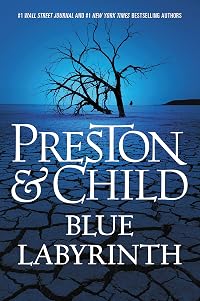
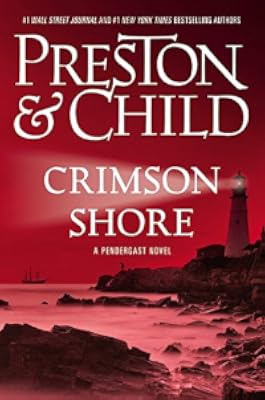
What puzzles me, in the end, aside from a few loose ends (how did the turquoise actually come to rest where it was found?), is the title. Series books often have titles that seem only to label the volume and not to describe the contents, typically with some sort of overall consistency or recognizable pattern that distinguishes the series; but usually one can find some sort of connection to the novel, however tenuous (Cemetery Dance, White Fire). But here, even though a labyrinth would be entirely in keeping with the plot elements of many Pendergast novels (and the idea is enforced by the incorporation of a maze device at every chapter head), there is no labyrinth in this book, much less a blue one. The title seems arbitrary, a grabber, possibly even one forced on the book by a marketing team with little regard to fitness. (Were they drawing one from column A and one from column B?) I notice that the preceding book uses "white" in the title and the following "crimson," as if we were now going to borrow the palette of John D. MacDonald's color-titled Travis McGee series.
If we now have a Crayola box of Pendergast stories to come, that sounds fine to me. I'm still following. show less
Extended review:
The last few Pendergast books have seemed borderline insipid to me, despite some feverish action and weird over-the-top drama with the Helen story and the twins. It was as if--not uncommonly for series writers--Preston and Child were running out of steam with their protagonist, and maybe even turning to NaNoWriMo plot ninjas for their story twists. In fact, for a while I suspected them of willing him to die.
With this one, they seem to have resurrected the Pendergast of old, albeit channeling the spirit of Sherlock Holmes in a way that he never did until recently.
What's markedly different, however, is the project team. There's a fierce and very tight circle of show more partisan collaborators who are willing to dare anything and risk everything to save him when he is beyond the possibility of saving himself. These are characters we've seen in previous episodes, but bonded and coordinated now in ways they haven't been before. Even though I've happily admired Pendergast's prowess as the cat that walks by himself, I'm glad to see the extent of loyal collaboration on his behalf, which tells us more about his character than any amount of authorial description.
In this wide-ranging tale of witting and unwitting evil, madness, desperation, and revenge, Pendergast faces demons spawned by his personal and family history. Not without the almost obligatory underground chase (back in the museum once again), it also ranges from New York to California to Brazil to Switzerland and offers realistic-sounding glimpses of unknown landscapes. As is often the case, I find myself wondering if the authors have invented such places as the crimehold in Rio and the abandoned desert hotel, or based them on research, or visited them themselves. The descriptions always sound vividly authentic, a quality I value. I even appreciate the totally bizarre touches such as the room full of whale eyeballs, which is far too outlandish to be anything but real.
This fourteenth installment also seems to have been blessed by tighter editing. There are relatively few conspicuous lapses aside from a heavy, and often not quite apt, use of -ing participles ("Moving quickly now down the hallway, she descended the steps..." [page 311]), which express simultaneity but here are used way too often to speed up depiction of consecutive actions. Nevertheless, I saw very little use of a wrong word, and "dogleg" occurred only once, and if anyone sported anything, it escaped my notice. Instead the story moved right along, held my attention, and proved a highly satisfactory page-turner just when I needed one.
What puzzles me, in the end, aside from a few loose ends (how did the turquoise actually come to rest where it was found?), is the title. Series books often have titles that seem only to label the volume and not to describe the contents, typically with some sort of overall consistency or recognizable pattern that distinguishes the series; but usually one can find some sort of connection to the novel, however tenuous (Cemetery Dance, White Fire). But here, even though a labyrinth would be entirely in keeping with the plot elements of many Pendergast novels (and the idea is enforced by the incorporation of a maze device at every chapter head), there is no labyrinth in this book, much less a blue one. The title seems arbitrary, a grabber, possibly even one forced on the book by a marketing team with little regard to fitness. (Were they drawing one from column A and one from column B?) I notice that the preceding book uses "white" in the title and the following "crimson," as if we were now going to borrow the palette of John D. MacDonald's color-titled Travis McGee series.
If we now have a Crayola box of Pendergast stories to come, that sounds fine to me. I'm still following. show less
The fact that I am still having this much fun 14 books into this series is a testament to the collective creative genius of the writing team of Preston and Child. Having read some of their separately written novels I think I can pick out who writes which scenes and where the ideas come from, but it is like the Beatles--the combination of the talents creates something very special.
The plot in this latest installment was ingenious. Complex yet fitting so satisfying. And still packing some surprises. I particularly loved the fact that Constance and Margo got so much page time here. Constance is a real bad ass when she gets pissed off!
Set aside a day or two (because you will read pretty much non-stop) and enjoy.
The plot in this latest installment was ingenious. Complex yet fitting so satisfying. And still packing some surprises. I particularly loved the fact that Constance and Margo got so much page time here. Constance is a real bad ass when she gets pissed off!
Set aside a day or two (because you will read pretty much non-stop) and enjoy.
Someone has dumped the body of Pendergast’s son, Alban, on the doorstep of his mansion. Although he doesn’t mourn his son’s death – Alban was one of the most cunning and dangerous criminals he has ever encountered – he realizes that the murder is meant as both a message and a challenge to him and he has no choice but to accept. However, it becomes very clear that his adversary, as impossible as it seems, can only be Alban himself and, in what could possibly be Pendergast’s last case, he may be no match of his dead son.
Blue Labyrinth is the 14th novel in this series by Douglas Preston and Lincoln Child and it’s all about the past both Pendergast’s and the series. Pendergast is much more present in this novel than he was show more in the last one, White Fire. But, after a deadly encounter that leaves him on the brink of death, it is left to his friends Vincent, Margot, and Constance to solve the case and, as it turns out, the female may really be the most deadly of the species.
In Blue Labyrinth, Preston and Child return to the roots of the story and they ratchet up the suspense and excitement to turbo-charge. This is one fast-paced, nail-biting roller coaster of a ride. It seemed for a while that the series was losing its oomph but this novel brings it back with a vengeance. show less
Blue Labyrinth is the 14th novel in this series by Douglas Preston and Lincoln Child and it’s all about the past both Pendergast’s and the series. Pendergast is much more present in this novel than he was show more in the last one, White Fire. But, after a deadly encounter that leaves him on the brink of death, it is left to his friends Vincent, Margot, and Constance to solve the case and, as it turns out, the female may really be the most deadly of the species.
In Blue Labyrinth, Preston and Child return to the roots of the story and they ratchet up the suspense and excitement to turbo-charge. This is one fast-paced, nail-biting roller coaster of a ride. It seemed for a while that the series was losing its oomph but this novel brings it back with a vengeance. show less
Members
- Recently Added By
Lists

Top Five Books of 2014
1,064 works; 397 members

Books Read in 2015
3,299 works; 126 members

mom
729 works; 1 member

Books Read in 2020
4,379 works; 124 members

Books Read in 2023
5,638 works; 147 members
Author Information

115+ Works 86,216 Members
Douglas Jerome Preston was born on May 20, 1956 in Cambridge, Massachusetts. He received a B.A. in English literature from Pomona College in 1978. His career began at the American Museum of Natural History, where he worked as an editor and writer from 1978 to 1985. He also was a lecturer in English at Princeton University. He became a full-time show more writer of both fiction and nonfiction books in 1986. Many of his fiction works are co-written with Lincoln Child including Relic, Riptide, Thunderhead, The Wheel of Darkness, Cemetery Dance, and Gideon's Corpse. His nonfiction works include Dinosaurs in the Attic; Cities of Gold: A Journey Across the American Southwest in Pursuit of Coronado; Talking to the Ground; and The Royal Road. He has written for numerous magazines including The New Yorker; Natural History; Harper's; Smithsonian; National Geographic; and Travel and Leisure. He became a New York Times Best Selling author with his titles Two Graves and Crimson Shores which he co-wrote with Lincoln Child, and his titles White Fire, The Lost Island Blue Labyrinth and The Lost City of the Monkey God. (Bowker Author Biography) show less

91+ Works 78,658 Members
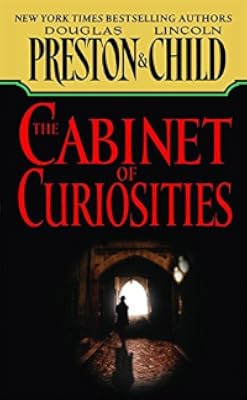
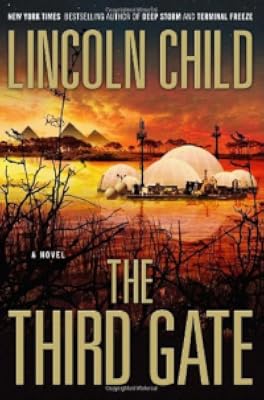
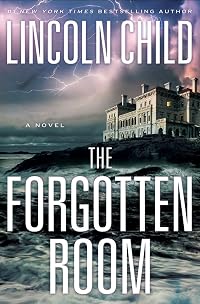
Lincoln Child was born in Westport, Connecticut in 1957. He received a degree in English from Carleton College in Northfield, Minnesota. After graduation, he obtained a position as an editorial assistant at St. Martin's Press and eventually became a full editor in 1984. He left St. Martin's Press in 1987 for a job at MetLife and began writing. show more Child has co-written numerous books with Douglas Preston including Relic, White Fire, Cold Vengeance, Riptide, Thunderhead, The Wheel of Darkness, Cemetery Dance, Gideon's Corpse, Blue Labyrinth, and Two Graves. In 2003, he published his first solo novel entitled Utopia. His other solo works include Death Match, Deep Storm, Terminal Freeze, The Third Gate, and The Forgotten Room. (Bowker Author Biography) show less
Some Editions
Awards and Honors
Awards
Series

Work Relationships
Has as a student's study guide
Common Knowledge
- Canonical title
- Blue Labyrinth
- Original publication date
- 2014-11-11
- People/Characters
- Aloysius Pendergast (2nd name Xingú | 3rd name Leng | FBI Special Agent | PhD); Vincent D'Agosta (Lt. NYPD | Pendergast's friend); Margo Green (PhD | ethnopharmacologist for non-profit Pearson Institute); Constance Greene (Pendergast's ward); Loomis Slade (Sergeant NYPD | former FBI Special Agent); Alban Pendergast (Pendergast's son by his late wife Helen Esterhazy Pendergast) (show all 20); Tristam Pendergast (Alban's twin); Lt. Peter Angler (NYPD); Dr. Finister Todden; Kyoko Ishimora (deaf-mute housekeeper of Pendergast's apartment at the Dakota); Det. Jiminez; Dr. Patchett; Charles Smith; Count Asdvedio; Mrs. Trask (Pendergast's housekeeper for his 891 Riverside Drive mansion); Mrs. Rudd; Felicity Borbeau; Hezekiah Pendergast (Pendergast's great-great-grandfather | got rich from his elixir); John Barbeaux (CEO Red Mountain Industries private military consulting firm); Constance Leng Pendergast (Hezekiah's wife | poisoned by his elixir)
- Important places
- Museum of Natural History, New York, New York, USA; Sunnyside, Queens, New York, USA; Aquatic House; Red Mountain Industries, Adirondack, New York (fictional); Pendergast's apartment, the Dakota, 1 W 72nd St, New York, New York, USA; 891 Riverside Drive, New York, New York, USA (fictional Beaux Arts mansion a block long) (show all 7); Salton Sea, California, USA
- First words
- The stately Beaux Arts mansion on Riverside Drive between 137th and 138th Streets, while carefully tended and impeccably preserved, appeared to be untenanted.
Classifications
Statistics
- Members
- 1,476
- Popularity
- 15,872
- Reviews
- 74
- Rating
- (3.93)
- Languages
- 8 — Dutch, English, Finnish, French, German, Italian, Polish, Spanish
- Media
- Paper, Audiobook, Ebook
- ISBNs
- 43
- ASINs
- 19