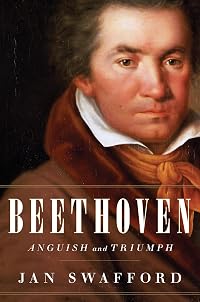
Beethoven: Anguish and Triumph
by Jan Swafford
On This Page
Description
Jan Swafford's biographies have established him as a revered music historian, capable of bringing his subjects vibrantly to life. His magnificent new biography of Ludwig van Beethoven peels away layers of legend to get to the living, breathing human being who composed some of the world's most iconic music.Swafford mines sources never before used in English-language biographies to reanimate the revolutionary ferment of Enlightenment-era Bonn, where Beethoven grew up and imbibed the ideas that show more would shape all of his future work. Swafford then tracks his subject to Vienna, capital of European music, where Beethoven built his career in the face of critical incomprehension, crippling ill health, romantic rejection, and "fate's hammer," his ever-encroaching deafness. show lessTags
Recommendations
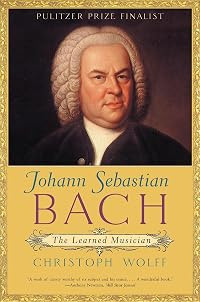


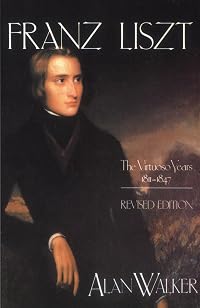
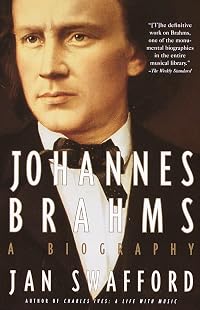
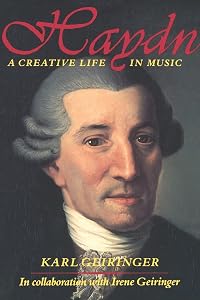






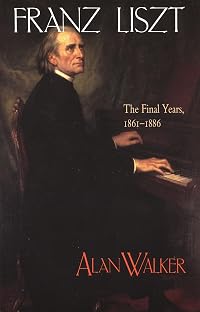

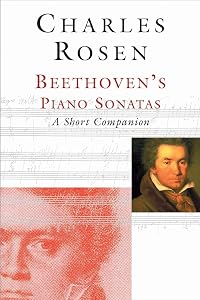
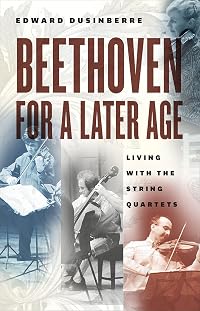
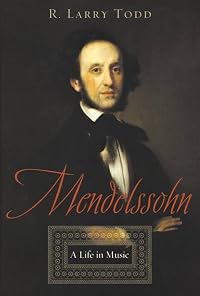



Member Recommendations
Member Reviews
I've been reading this 1077 page biography of one of the most famous composers for the past 3 months. I barely know where to begin in reviewing this book.
As a professional classical musician, I knew a lot about Beethoven going in to this. I've played almost all of his symphonies (and extensively studied and listened to the few I haven't performed) and I've played all of his chamber music that uses the horn. He's also such a big name that I've picked up a lot of the facts of his life in various classes. I guess I wasn't sure how much I was going to learn that was new out of this book. In the end, I think it was beneficial to have everything gathered in to one book and it really clarified Beethoven's influence for me. I also enjoyed that show more Swafford placed Beethoven in his times. There is enough discussion of the Napoleonic wars and the impact on Vienna, where Beethoven lived, to solidly ground the book historically without losing focus on Beethoven. I also thought the portrait of Beethoven's character was well within the known facts and didn't over-romanticize his life, something that has often been done.
Some highlights of what I took away from this book:
- that Beethoven was grounded in the Aufklarung (Enlightenment) philosophy. Though he was adopted by the Romantics and his music definitely pushes out of the bounds of classical music, he didn't think of himself as a Romantic. ETA Hoffmann was a music critic who really embraced Beethoven's music and sort of adopted him into the Romantic trend. Beethoven's eccentric character and habits lent themselves well to the image of the tortured artist.
- There was a ton of censorship of all the arts in Vienna, but Beethoven largely escaped scrutiny because instrumental music was too hard to pin down to a philosophy. He had freedom to pursue his composition however he liked.
- As a performer Beethoven was an amazing improviser his improvisation skills greatly influenced his compositional technique, especially in his piano music. His other over-riding compositional style was to come up with a whole idea and create the entire multi-movements works to serve the whole.
- The main genres he influenced (has been virtually unsurpassed in even to this day) are the symphonies, string quartets, and piano sonatas.
- He used instruments in new ways, stretching the capabilities particularly of the string bass, horn, and vocalists. Also the string quartet as a whole.
- I knew, of course, that he lost his hearing, but I didn't realize how much of his life he was plagued with chronic stomach pain. He was basically never healthy as an adult.
- Interesting sections on the tuning of pianos and the perceived character of different keys. Also the different pianos available at the time.
- fascinating information on publishing and how impossible it was for a composer to ensure both quality of publication and get compensation for his compositions
Overall, I wouldn't say this is a book for a non-musician. There is a lot of technical language in the description of Beethoven's major works (Swafford details all of Beethoven's major works). Swafford does a good job of explaining himself and has a good appendix that gives a little music theory refresher and discussion of forms but I still think it would be confusing to anyone without at least a little music knowledge or at least a good grasp on listening to Beethoven's music. It would be fairly easy to skip the musical analysis (or skim) and read the rest as a biography. That would make it closer to 600 or 700 pages.
I'm glad a took the time to read this even though it was a big commitment. show less
As a professional classical musician, I knew a lot about Beethoven going in to this. I've played almost all of his symphonies (and extensively studied and listened to the few I haven't performed) and I've played all of his chamber music that uses the horn. He's also such a big name that I've picked up a lot of the facts of his life in various classes. I guess I wasn't sure how much I was going to learn that was new out of this book. In the end, I think it was beneficial to have everything gathered in to one book and it really clarified Beethoven's influence for me. I also enjoyed that show more Swafford placed Beethoven in his times. There is enough discussion of the Napoleonic wars and the impact on Vienna, where Beethoven lived, to solidly ground the book historically without losing focus on Beethoven. I also thought the portrait of Beethoven's character was well within the known facts and didn't over-romanticize his life, something that has often been done.
Some highlights of what I took away from this book:
- that Beethoven was grounded in the Aufklarung (Enlightenment) philosophy. Though he was adopted by the Romantics and his music definitely pushes out of the bounds of classical music, he didn't think of himself as a Romantic. ETA Hoffmann was a music critic who really embraced Beethoven's music and sort of adopted him into the Romantic trend. Beethoven's eccentric character and habits lent themselves well to the image of the tortured artist.
- There was a ton of censorship of all the arts in Vienna, but Beethoven largely escaped scrutiny because instrumental music was too hard to pin down to a philosophy. He had freedom to pursue his composition however he liked.
- As a performer Beethoven was an amazing improviser his improvisation skills greatly influenced his compositional technique, especially in his piano music. His other over-riding compositional style was to come up with a whole idea and create the entire multi-movements works to serve the whole.
- The main genres he influenced (has been virtually unsurpassed in even to this day) are the symphonies, string quartets, and piano sonatas.
- He used instruments in new ways, stretching the capabilities particularly of the string bass, horn, and vocalists. Also the string quartet as a whole.
- I knew, of course, that he lost his hearing, but I didn't realize how much of his life he was plagued with chronic stomach pain. He was basically never healthy as an adult.
- Interesting sections on the tuning of pianos and the perceived character of different keys. Also the different pianos available at the time.
- fascinating information on publishing and how impossible it was for a composer to ensure both quality of publication and get compensation for his compositions
Overall, I wouldn't say this is a book for a non-musician. There is a lot of technical language in the description of Beethoven's major works (Swafford details all of Beethoven's major works). Swafford does a good job of explaining himself and has a good appendix that gives a little music theory refresher and discussion of forms but I still think it would be confusing to anyone without at least a little music knowledge or at least a good grasp on listening to Beethoven's music. It would be fairly easy to skip the musical analysis (or skim) and read the rest as a biography. That would make it closer to 600 or 700 pages.
I'm glad a took the time to read this even though it was a big commitment. show less
Beethoven vividly placed in his time as Enlightenment artist and nascent Romantic. A transitional figure, "[a]s usual, he conceives his ideas in terms of familiar formal outlines." But into those outlines, he pours a fiery and experimental Romanticism and "bend[s] formal traditions...nearly beyond recognition." Swafford sees Beethoven's character as shaped by external forces--his abusive father, illness, etc. Irascible and implacably confident, tragic in his impending deafness from age 27, he is also amazingly resilient and defiant. A composer himself, Swafford extracts Beethoven's process from his sketchbooks and offers insightful, often quite detailed analysis of the works. Repetitive on some points, but an achievement.
(Interesting to show more chart the rise of the artist through Haydn, who, as court composer, wrote almost exclusively to order; Beethoven, who still wrote many works on commission; to Chopin, who was completely independent and followed his inspiration. So different from Chopin--in so many ways--in this, too: "[Beethoven] based all his pieces on a story or an image and wrote the music to fit it.") show less
(Interesting to show more chart the rise of the artist through Haydn, who, as court composer, wrote almost exclusively to order; Beethoven, who still wrote many works on commission; to Chopin, who was completely independent and followed his inspiration. So different from Chopin--in so many ways--in this, too: "[Beethoven] based all his pieces on a story or an image and wrote the music to fit it.") show less
In the introduction to his biography of the Big B, Swafford says he wishes to avoid the Romanticizing (or Freudianizing) indulged in by other Beethoven biographers. He avoids terms like "genius" and "masterpiece"; he plays down the conventional "three periods" approach to the music; he describes Beethoven's relationship to classical forms as not so much revolutionary as "radically evolutionary" (a phrase he credits to Joseph Kerman). Instead of the Titan shaking his fist at heaven, Swafford's Beethoven is a human being: terrible at relationships, plagued by ill health, living through a whiplash era of revolution and counterrevolution, tirelessly experimenting in musical forms while juggling the demands of aristocratic patrons, music show more publishers, and an emerging bourgeois audience.
Yet much is familiar here. Last winter I read Maynard Solomon's Beethoven, and Swafford's 1,000 pages added surprisingly little to what I learned from that book. On some very interesting and important subjects (Haydn, aristocratic patronage, the music publishing industry, the renaming of the Bonaparte Symphony) Swafford is surprisingly less informative than Solomon, despite having twice the pages to work with. The growing deafness, the Heiligenstadt Testament, Napoleon: these are related to the music in the usual way. Swafford may eschew the phrase "Heroic Period" but the term he substitutes, the "New Path," is used to signify roughly the same thing. There are, despite the disclaimers, Romantic references to Beethoven's "courage, his defiance of fate" (308). Unlike Solomon, Swafford keeps speculation to a minimum--he does not claim to have solved the mystery of the "Immortal Beloved," for example. But Beethoven came alive in Solomon's biography as he didn't (for me) here.
I think this is in part because Swafford never arrives at a strong point of view on his subject to replace the Romantic or Freudian ones he rejects. He tells the life primarily through the music and the result is rather episodic, as the reader is marched through one opus after another. (While musical examples are provided, the analysis is not such to scare off the casual reader: these are colorfully descriptive rather than analytical. A few works--the Eroica, the Missa Solemnis, the Ninth Symphony, get a more lengthy discussion, and there is more "nitty-gritty" analysis to be found in the hundred pages of footnotes, some of it really insightful--although I found it easy to get lost in them as they are not keyed to page numbers.) One gets the impression, particularly in the second half, that one is reading a series of self-contained program notes linked by the thinnest of connecting tissue. The narrative momentum suffers for this.
I happened upon one factual error: Swafford more than once identifies the key of the Archduke Trio as E-flat major, rather than B-flat major. This is not a misprint, because Swafford makes a point of grouping it with the "Harp" quartet, "Emperor" concerto, and "Lebewohl" sonata as one of Beethoven's major 1809-1811 works composed in E-flat (534). (The key is correctly given as B-flat major on page 1018.)
More problematic is a confusing index, a real concern with a book of this length. An entry for "Piano Sonata in C Minor" (no opus number is provided) leads to pages concerning the Op. 111 sonata, although Beethoven wrote three piano sonatas in that key. The Op. 10/1 C Minor sonata is discussed on 213-214, but does not seem to be indexed. The Op. 13 C Minor sonata is listed under its familiar nickname "Pathetique." Moreover, while the non-nicknamed sonatas (as well as trios and quartets) are indexed by genre, symphonies are not: whose idea was it to enter Symphony No. 9 as "Ninth Symphony" (under N)!? Surely it would have made sense to index the works consistently, preferably by genre, and perhaps grouped under the entry for "Beethoven" as is often done.
If you've never read a Beethoven biography--and have strong forearms-- Swafford's lengthy, meticulous, well-researched biography that attempts to avoid Romantic gloss (but check out that subtitle!) may serve you well. However, those who have already read Solomon's classic biography will not find much new in these 1,000 pages. Solomon's book is still the one I would recommend to someone looking for a biography of this composer. show less
Yet much is familiar here. Last winter I read Maynard Solomon's Beethoven, and Swafford's 1,000 pages added surprisingly little to what I learned from that book. On some very interesting and important subjects (Haydn, aristocratic patronage, the music publishing industry, the renaming of the Bonaparte Symphony) Swafford is surprisingly less informative than Solomon, despite having twice the pages to work with. The growing deafness, the Heiligenstadt Testament, Napoleon: these are related to the music in the usual way. Swafford may eschew the phrase "Heroic Period" but the term he substitutes, the "New Path," is used to signify roughly the same thing. There are, despite the disclaimers, Romantic references to Beethoven's "courage, his defiance of fate" (308). Unlike Solomon, Swafford keeps speculation to a minimum--he does not claim to have solved the mystery of the "Immortal Beloved," for example. But Beethoven came alive in Solomon's biography as he didn't (for me) here.
I think this is in part because Swafford never arrives at a strong point of view on his subject to replace the Romantic or Freudian ones he rejects. He tells the life primarily through the music and the result is rather episodic, as the reader is marched through one opus after another. (While musical examples are provided, the analysis is not such to scare off the casual reader: these are colorfully descriptive rather than analytical. A few works--the Eroica, the Missa Solemnis, the Ninth Symphony, get a more lengthy discussion, and there is more "nitty-gritty" analysis to be found in the hundred pages of footnotes, some of it really insightful--although I found it easy to get lost in them as they are not keyed to page numbers.) One gets the impression, particularly in the second half, that one is reading a series of self-contained program notes linked by the thinnest of connecting tissue. The narrative momentum suffers for this.
I happened upon one factual error: Swafford more than once identifies the key of the Archduke Trio as E-flat major, rather than B-flat major. This is not a misprint, because Swafford makes a point of grouping it with the "Harp" quartet, "Emperor" concerto, and "Lebewohl" sonata as one of Beethoven's major 1809-1811 works composed in E-flat (534). (The key is correctly given as B-flat major on page 1018.)
More problematic is a confusing index, a real concern with a book of this length. An entry for "Piano Sonata in C Minor" (no opus number is provided) leads to pages concerning the Op. 111 sonata, although Beethoven wrote three piano sonatas in that key. The Op. 10/1 C Minor sonata is discussed on 213-214, but does not seem to be indexed. The Op. 13 C Minor sonata is listed under its familiar nickname "Pathetique." Moreover, while the non-nicknamed sonatas (as well as trios and quartets) are indexed by genre, symphonies are not: whose idea was it to enter Symphony No. 9 as "Ninth Symphony" (under N)!? Surely it would have made sense to index the works consistently, preferably by genre, and perhaps grouped under the entry for "Beethoven" as is often done.
If you've never read a Beethoven biography--and have strong forearms-- Swafford's lengthy, meticulous, well-researched biography that attempts to avoid Romantic gloss (but check out that subtitle!) may serve you well. However, those who have already read Solomon's classic biography will not find much new in these 1,000 pages. Solomon's book is still the one I would recommend to someone looking for a biography of this composer. show less
An incredibly well written biography that was hard to put down when the author was talking about Beethoven. However, as a music lover, but not a music major or critic, I found some of the analyses of Beethoven's work a bit over the top. That said, as I continue to build my library of and familiarity with Beethoven's works, I will return to this book and hopefully gain a greater appreciation of the analytical content.
Read this in and out over a number of months this past year. The best of the Beethoven biographies I've read. Very much like the Brahms bio—straight ahead, not much supposition or invention, very detailed. Good analysis of the music. One odd thing missing was an accounting of Schubert's late visit to Beethoven when on his deathbed. I believe it is agreed upon that it happened, just little if any information about it. I don't believe it was even mentioned.
What more can you say about a 1000 page book than - I wish it were longer! Simply superb.
As an aside, I read Edmund Morris' review in the NYT Book Review. Having read Morris' bio of Beethoven, I assume his snarky review was written out of jealousy - it wasn't 1/10th the book this one is (and I'm not talking page length). I also note that while Swafford seems to have used every great previous biography as a source, Morris doesn't show up in the Works Cited. I can't imagine why.
As an aside, I read Edmund Morris' review in the NYT Book Review. Having read Morris' bio of Beethoven, I assume his snarky review was written out of jealousy - it wasn't 1/10th the book this one is (and I'm not talking page length). I also note that while Swafford seems to have used every great previous biography as a source, Morris doesn't show up in the Works Cited. I can't imagine why.
Comprehensive and insightful without being opinionated. No need to read any other books about the man.
Members
- Recently Added By
Lists

In Our Time books
4,934 works; 2 members
Author Information

Awards and Honors
Distinctions
Series
Belongs to Publisher Series
El Acantilado (357)
Common Knowledge
- Original title
- Beethoven: Anguish and Triumph
- Original publication date
- 2014
- People/Characters
- Ludwig van Beethoven
- Original language
- English
Classifications
Statistics
- Members
- 431
- Popularity
- 71,373
- Reviews
- 9
- Rating
- (4.44)
- Languages
- English, Portuguese
- Media
- Paper, Audiobook, Ebook
- ISBNs
- 10
- UPCs
- 2
- ASINs
- 6